A good everyday light is mostly used for boring things. Looking behind a desk for a cable, checking a fuse box, reading a serial number off the bottom of a router, finding the car key in a bag. Very few of those jobs need a beam that reaches 200 metres, and almost all of them would be easier with a light that stands on its own and points where you need it.
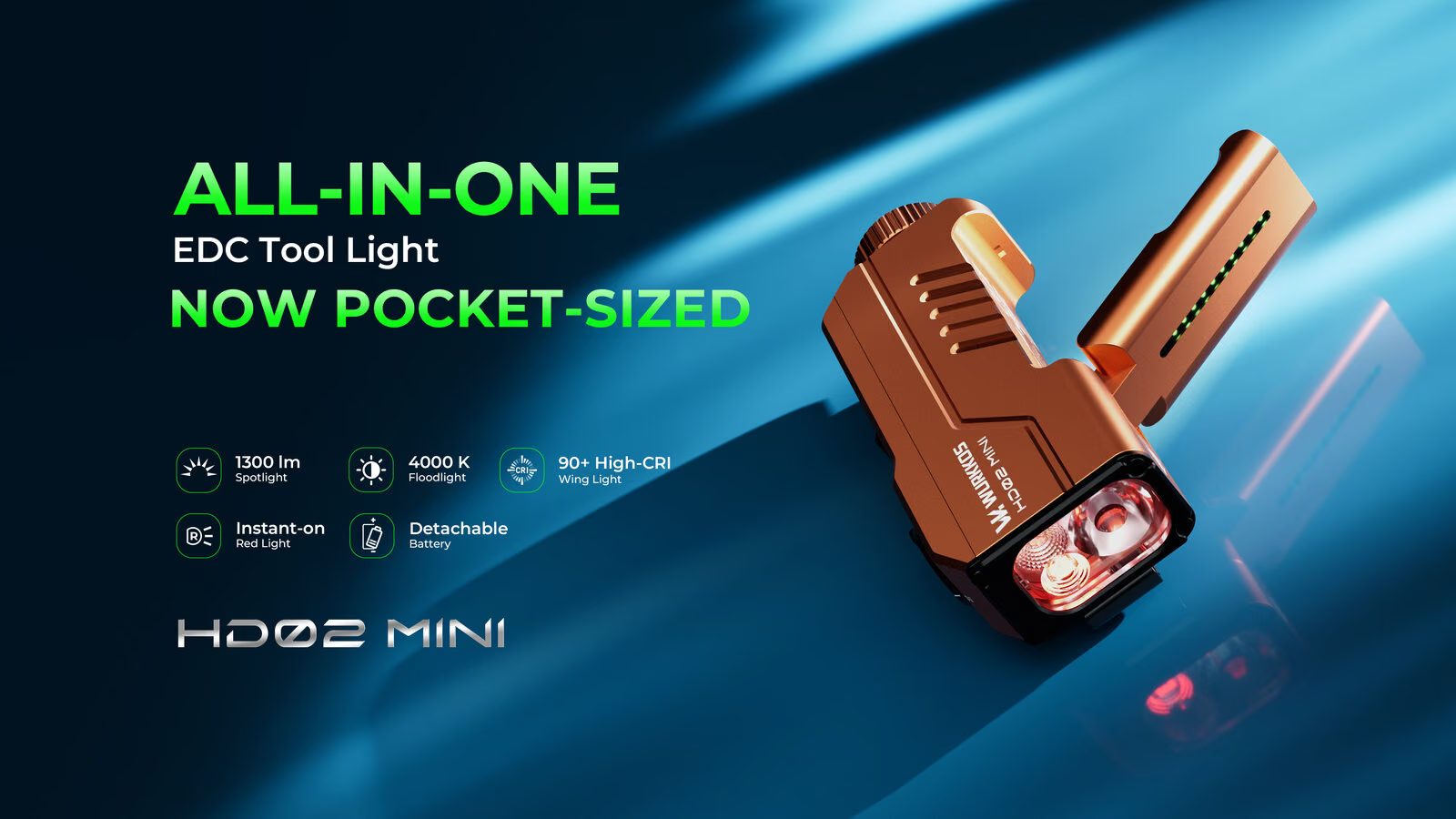
The Wurkkos HD02 Mini is built around that observation. It is a shrunk version of the HD02 tool light, 82.3 by 27.2 by 35.7 mm according to Wurkkos, with four separate light sources: a spotlight, a floodlight, a red light and a folding side panel Wurkkos calls the wing light, rated at 90+ CRI. It runs on a 14500 lithium-ion cell or an ordinary AA battery, charges over USB-C, and has a magnet, a clip and a tripod thread in the tailcap. On paper it is one of the most practical small lights I have come across this year, and it is also a light with a few rough edges worth knowing about before buying.
Disclosure: Wurkkos sent this HD02 Mini free of charge for review and I keep it. No money changed hands, and Wurkkos had no approval over the text.
A tool light rather than a torch
The shape gives it away. The HD02 Mini is a flat rectangular block rather than a tube, closer to a small multimeter than to a classic flashlight. The front carries the spot and flood emitters side by side under one window, the face carries a rotary selector with a button in its centre and a slide switch below it, and one side carries a hinged panel that swings out to 135 degrees and lights up when opened.
That last part is the reason the light exists. A tube flashlight has to be held or wedged to light a work area, and it lights it from the direction you point it, which is usually where your hands are. A panel that folds out and stands on a table, or clings to a steel cabinet by its magnetic tail, gives you even, soft light on the job while both hands are free. It is a camping lantern, a reading light and a work light in something that fits in a coin pocket.
Related reading
Four channels and what each one is for
Wurkkos rates the spotlight at 1,300 lumens and 204 metres of throw at 6,000 K, and the floodlight at 400 lumens at 4,000 K. The wing light is rated at 320 lumens at 5,000 K and 90+ CRI. The red channel tops out at 50 lumens. BudgetLightForum’s detailed review adds the emitter names from Wurkkos: LatticePower HM for the spot, HF for the flood and HFL for the red, with the wing made up of 36 small 3014 LEDs behind a diffuser.
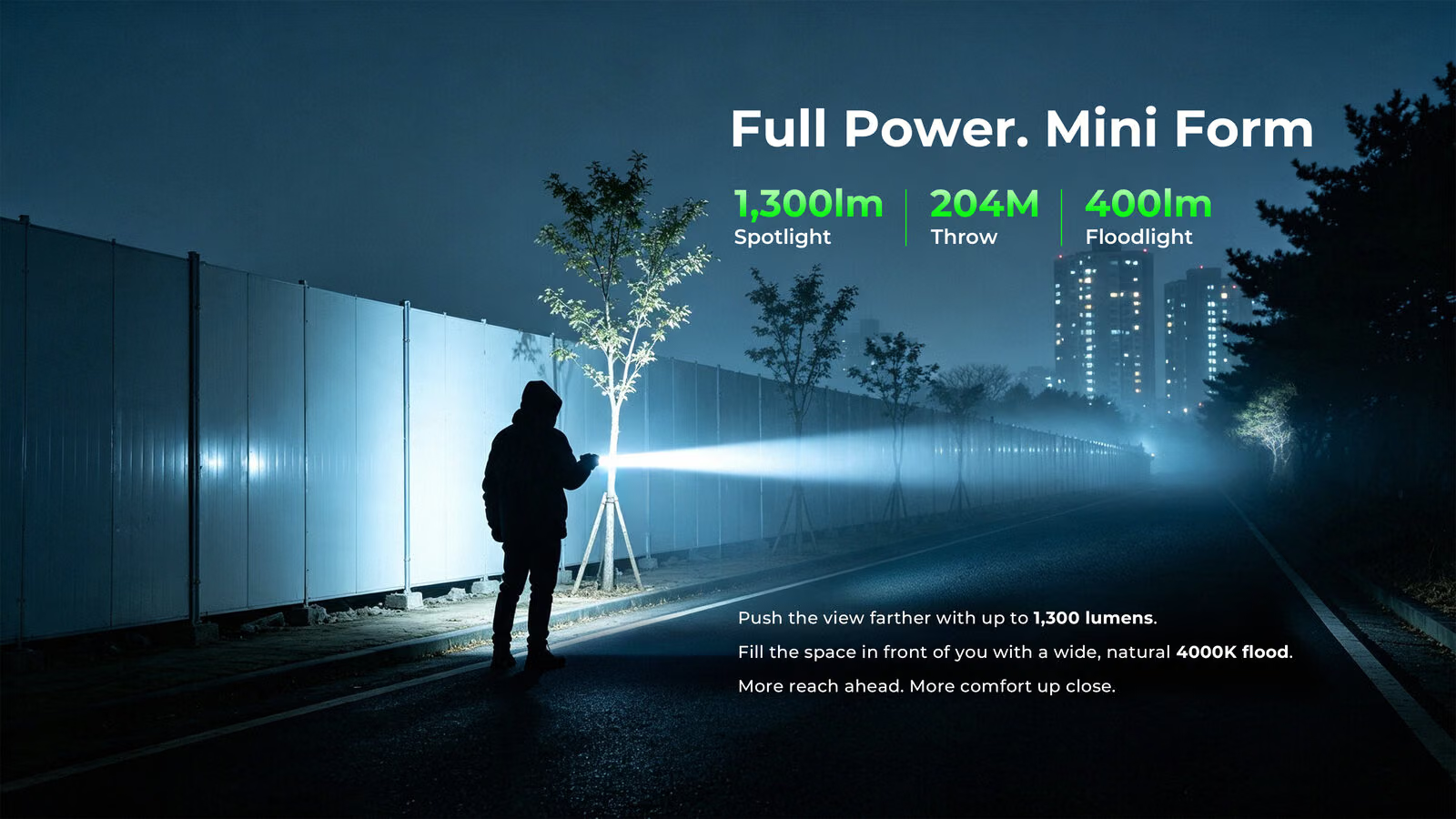
The spot is the outdoor channel. Two hundred metres is not thrower territory, the TS11 V2 is the light for that, but it is plenty for a path, a car park or the far side of a garden. The flood is the channel I expect to use most. At 4,000 K it is warmer than the spot, which makes it more pleasant indoors, and its wide beam suits the close-range work that dominates everyday use.
The wing is the specialist. High CRI means colours look closer to how they do in daylight, which matters more than it sounds. Telling a brown wire from a red one, a ripe tomato from an unripe one, or a bruise from a shadow is genuinely easier under 90 CRI light than under the cool, low-CRI spot most small lights rely on. A soft panel instead of a hotspot also means no glare when reading or working on something reflective.
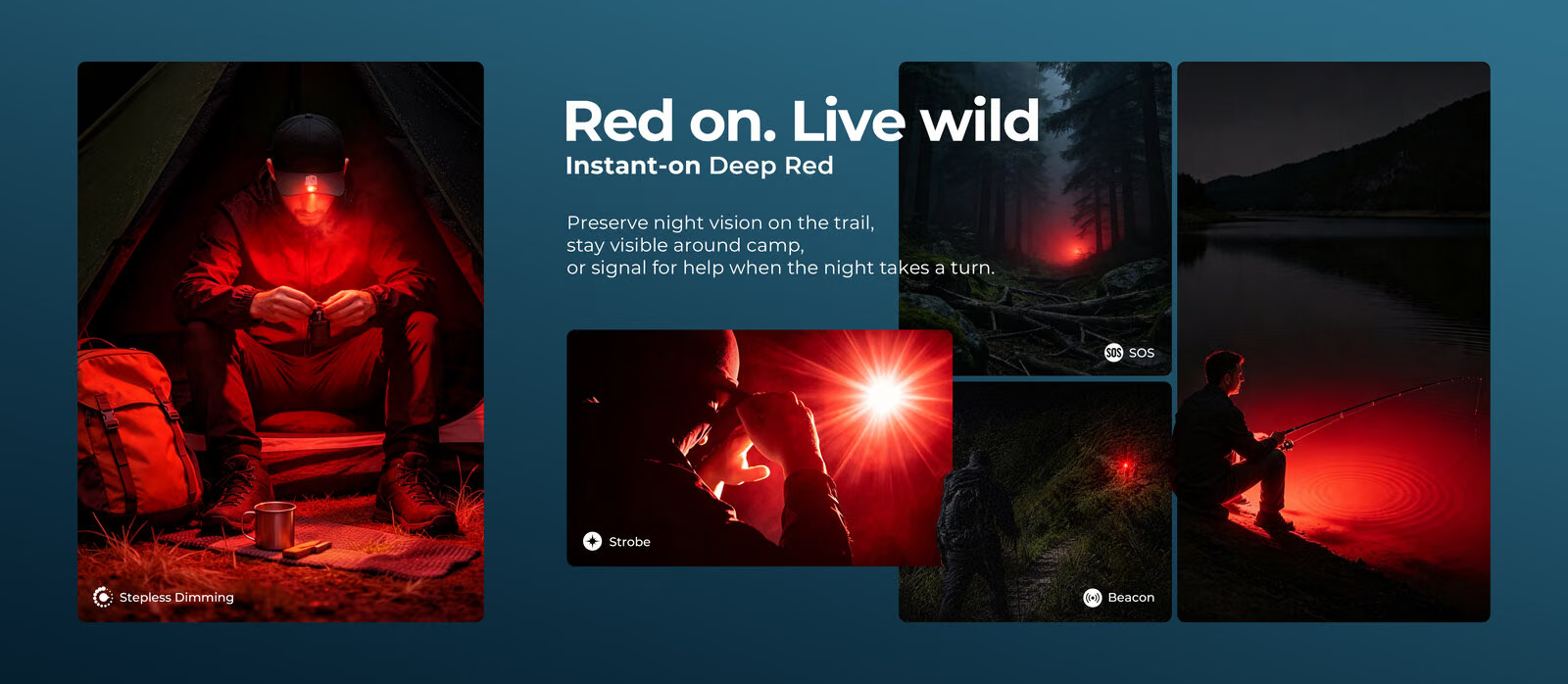
The red channel is for preserving night vision and for being discreet. Red light does not reset dark adaptation the way white light does, so it is the right choice for checking a map at night, moving around a tent without waking anyone, or looking at the sky. Wurkkos lists it as 660 nm deep red in its listings, while BLF’s reviewer was told by the manufacturer that the emitter is a 620 nm part. The difference matters to astronomers, who prefer deeper red, so it is worth confirming with Wurkkos before buying the light for that use.
Controls: a rotary selector, a button and a lockout
The interface is simpler than most enthusiast lights, and that is a strength. The ring around the button selects the channel, marked R for red, a spot icon and a sun icon for the flood. The button does the rest. One click turns the selected channel on and off, holding it ramps the brightness smoothly, two clicks jump to maximum and three clicks start the strobe. From off, holding the button gives moonlight at 0.5 lumens.
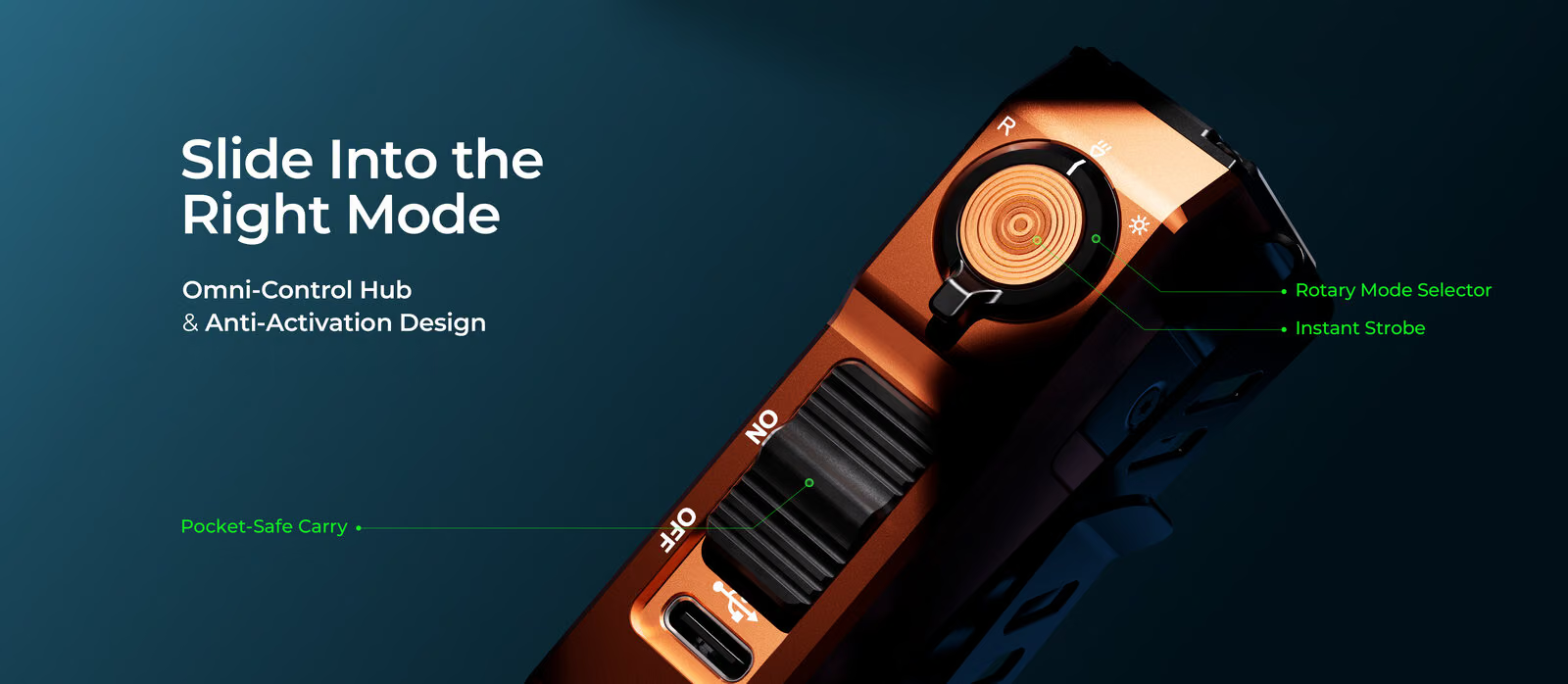
The rotary ring uses Hall sensors, according to BLF, which means it detects a magnet inside the ring rather than a mechanical contact. That is a good design for durability. The flip side is that a strong external magnet can confuse it, which is worth knowing if you stick the light to a magnetic tool rack.
The slide switch below the selector is the lockout, and it covers the USB-C port when closed. That is a neat piece of design, one control that protects both the light and the port in a pocket. BLF’s reviewer found it a little too easy to move, and with the lockout engaged a click still gives two warning flashes and a hold gives momentary low output. I would rather it were stiffer.
The wing has its own logic. Opening it turns on the side light at medium brightness, and closing it turns it off, but only when running on a lithium-ion cell. On AA it stays a manual affair. BLF also documented two firmware quirks: folding the wing in after changing its brightness can switch to the front light instead of turning off, and changing the front channel while the wing is open briefly flashes the previous channel when the wing closes. Neither is dangerous, but both are the kind of thing a firmware update should fix, and the Mini, like most lights in this price range, has no user-updatable firmware.
Batteries: 14500 when you can, AA when you must
The HD02 Mini ships with a Wurkkos 14500 cell, which BLF lists as a 900 mAh unprotected button-top. A 14500 has the same physical size as an AA battery but runs at lithium-ion voltage, roughly 3.7 V instead of 1.5 V. The light also accepts a standard AA, either a NiMH rechargeable such as an Eneloop or an alkaline cell from any shop.
Related reading
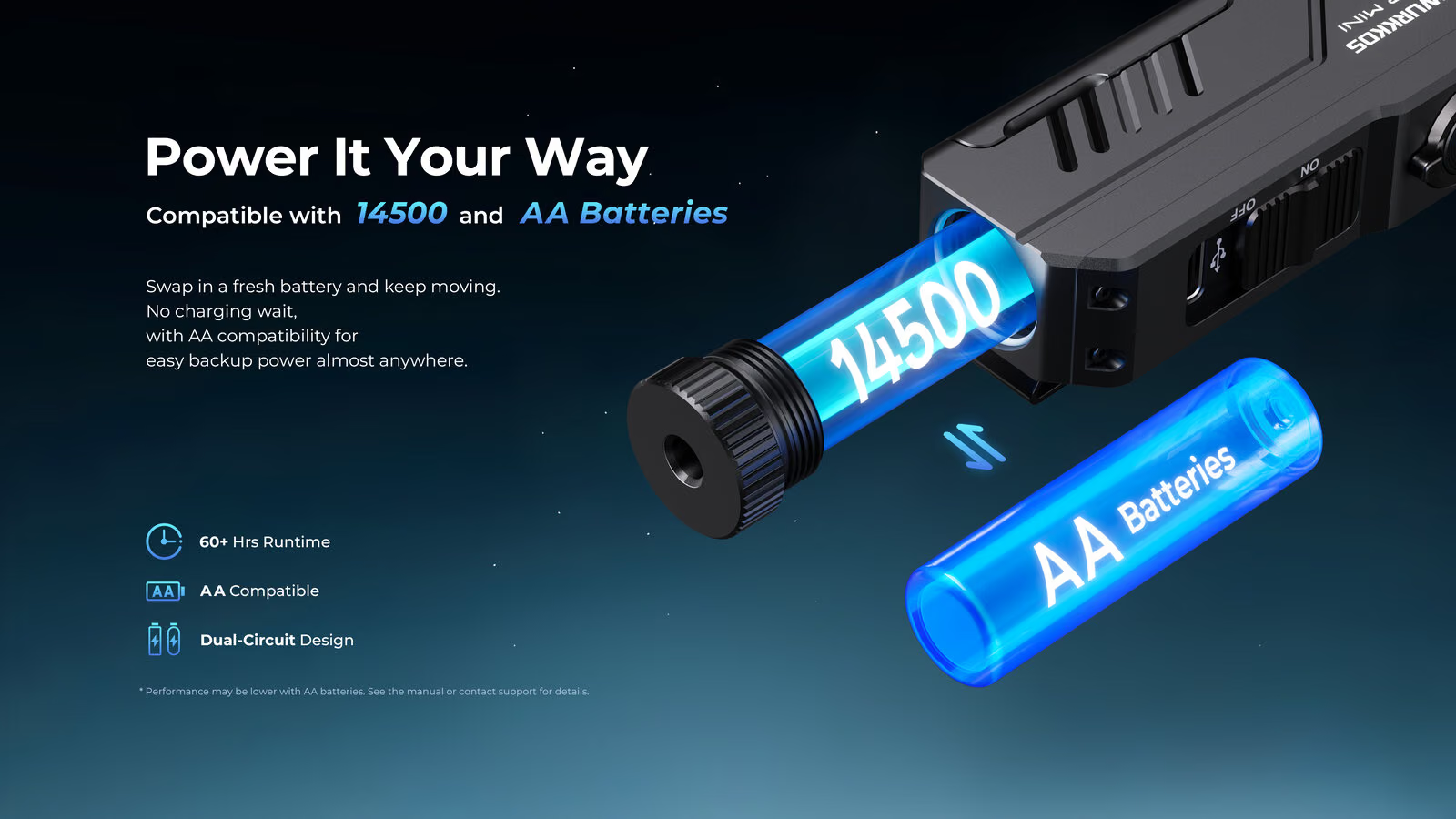
That flexibility is the most underrated feature of the light. A 14500 gives full performance and can be charged in the light. An AA gives a fallback that you can buy anywhere in the world, which is exactly what you want from a light that lives in a glovebox or a travel bag. The cost is output: Wurkkos’s own table drops the spotlight from 1,300 to 350 lumens on AA, the flood from 400 to 240 and the wing from 320 to 240, with correspondingly shorter runtimes. That is normal physics for a 1.2 V or 1.5 V cell, and the light is honest about it.
Two warnings from Wurkkos and BLF matter here. USB-C charging only works with the 14500 inside, and Wurkkos explicitly says not to connect a charger with an AA installed. And reverse polarity protection means only button-top cells fit, so a flat-top 14500 from another light will not make contact.
Charging over USB-C runs at up to about 900 mA in BLF’s measurement and took roughly 75 minutes from empty, with an 11-segment bar graph on the body moving from red through orange to green. The light can be used while charging and, without a battery, runs at medium brightness from USB power, which turns it into a desk light from a power bank in a pinch.
Runtimes on paper
Wurkkos publishes a full FL1 table for both battery types. On the 14500, the spotlight’s 1,300 lumens last about two minutes before stepping to 510 lumens for 32 minutes and then 170 lumens for 24 more. The flood at 400 lumens steps to 220 lumens after 30 minutes. The wing at 320 lumens lasts three minutes before settling at 210 lumens for an hour and 28 minutes. At the bottom of the range, the 15 lumen spot and the 18 lumen flood run for about 17 hours, and moonlight on either channel is rated at just over 60 hours.
Those figures are manufacturer claims, and BLF’s reviewer noted that the spotlight’s turbo drops by almost 20 percent after about five seconds. The realistic reading is that the Mini’s high levels are short bursts, and its medium levels are where it lives. For a tool light that is the right priority. Nobody needs 1,300 lumens to read a serial number, and 200 lumens of high-CRI wing light for over an hour covers a long evening of tinkering or a night in a tent.
Carry, mounting and build
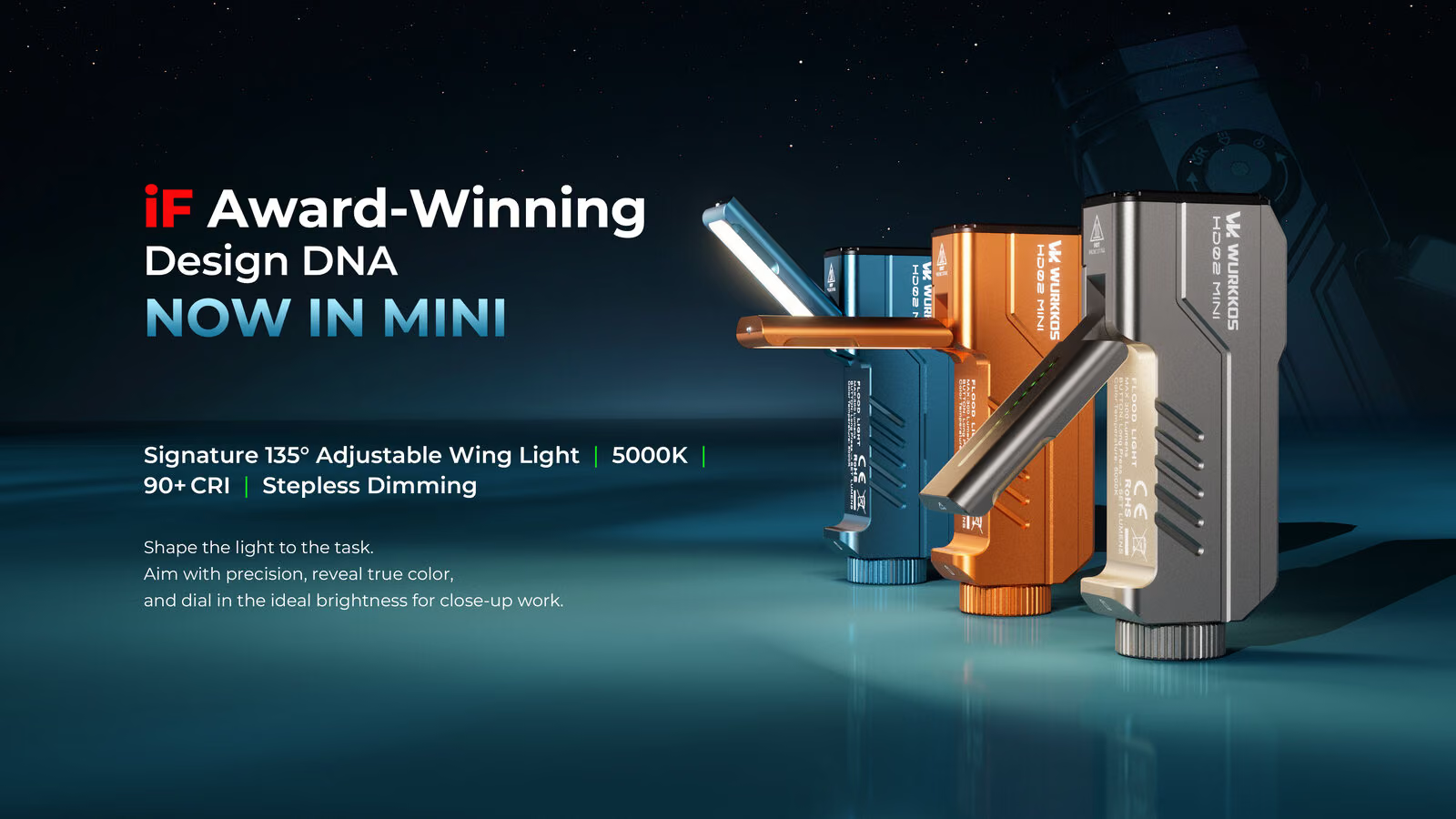
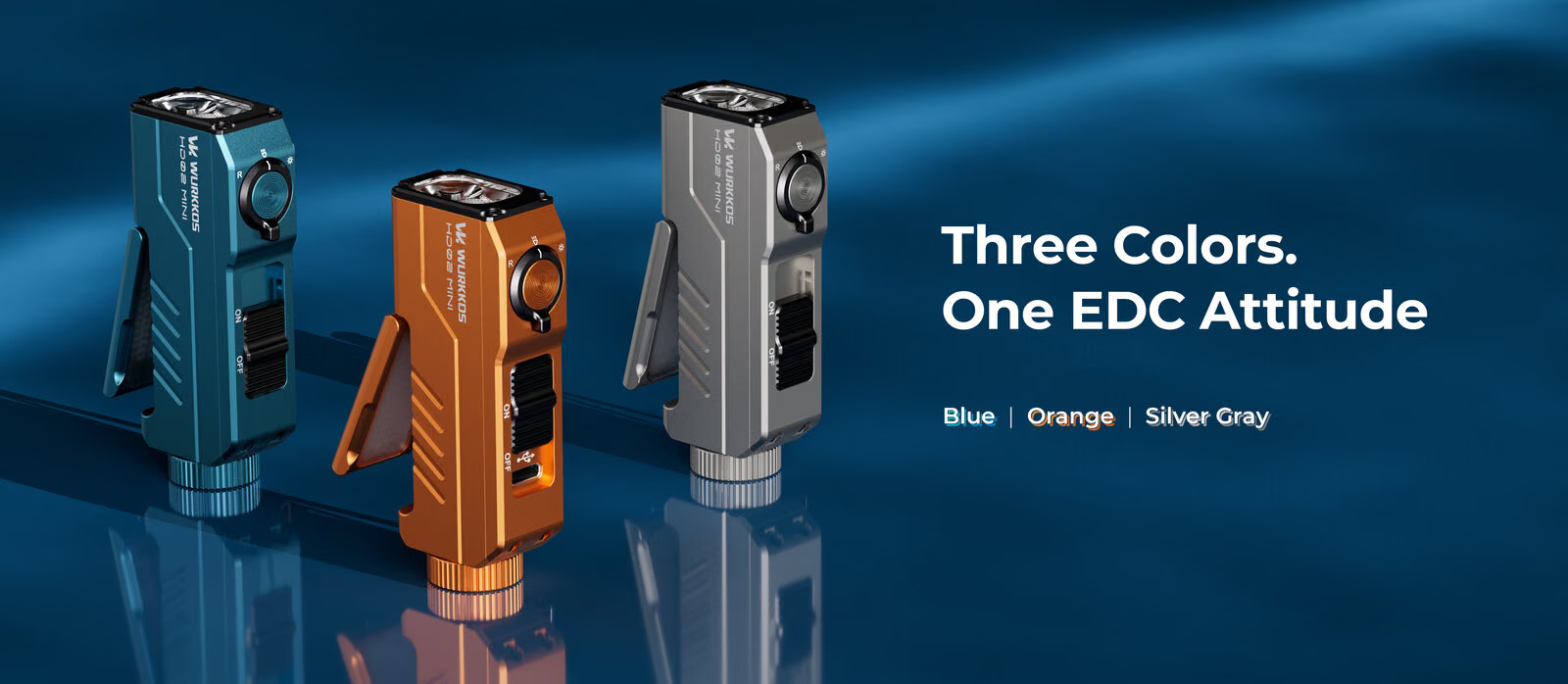
Wurkkos specifies an aluminium body in blue, orange or silver grey, IPX6 water resistance and a 1.5 metre impact rating. BLF weighed the body at 91.3 g without battery and 111 g with the supplied 14500. IPX6 means protection against strong water jets, so rain and splashes are fine and dunking it is not. That is a more modest rating than the TS11 V2’s IP68, and it reflects the hinged wing and the open USB port under the slider.
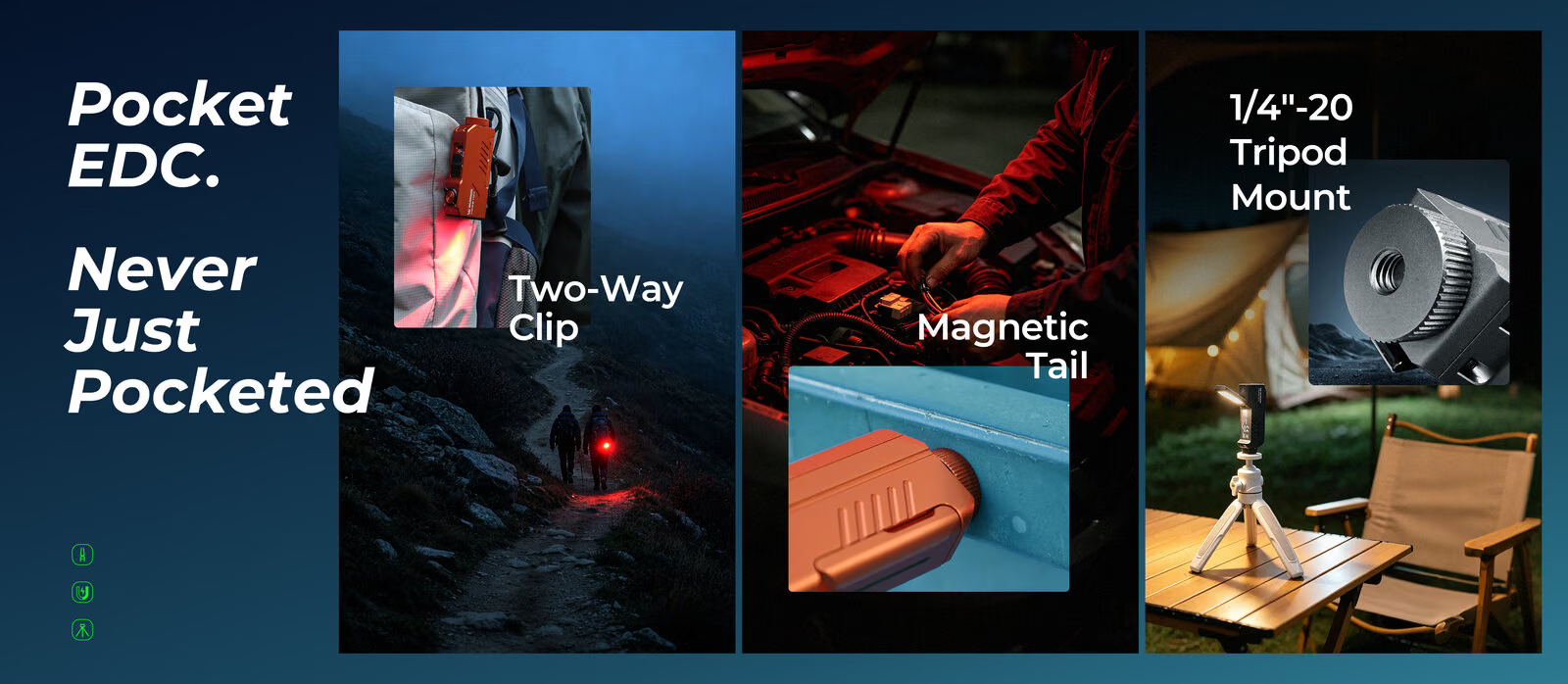
The clip is two-way and runs most of the length of the body, fixed with two T6 screws. The tailcap carries a strong magnet and a 1/4 inch tripod thread, which is the same thread as a camera, so the light can sit on a small tripod as a lantern or on a camera rig as a fill light. There is no dedicated lanyard hole, which is a small omission on a light that will often be carried on a bag strap.
Two build observations from BLF are worth repeating. The optic is plastic without a glass cover, which is normal at this price but will scratch over years of pocket carry. And on the HD02 family the wing diffuser’s adhesive has been reported to loosen when the side light runs at high brightness for long, because of heat and expanding air behind the panel. Wurkkos reportedly said the issue was fixed, while a community member with a contact at the factory said work was still ongoing. Until that is settled, I would not leave the wing at maximum for hours on end.
Price and alternatives
Wurkkos lists the HD02 Mini at around $40, with a 3X Runtime Kit that adds two extra 14500 cells for a few dollars more, and a combo price with the TS11 V2. Halloween pricing was running at the time of writing, so it is worth checking the current offer.
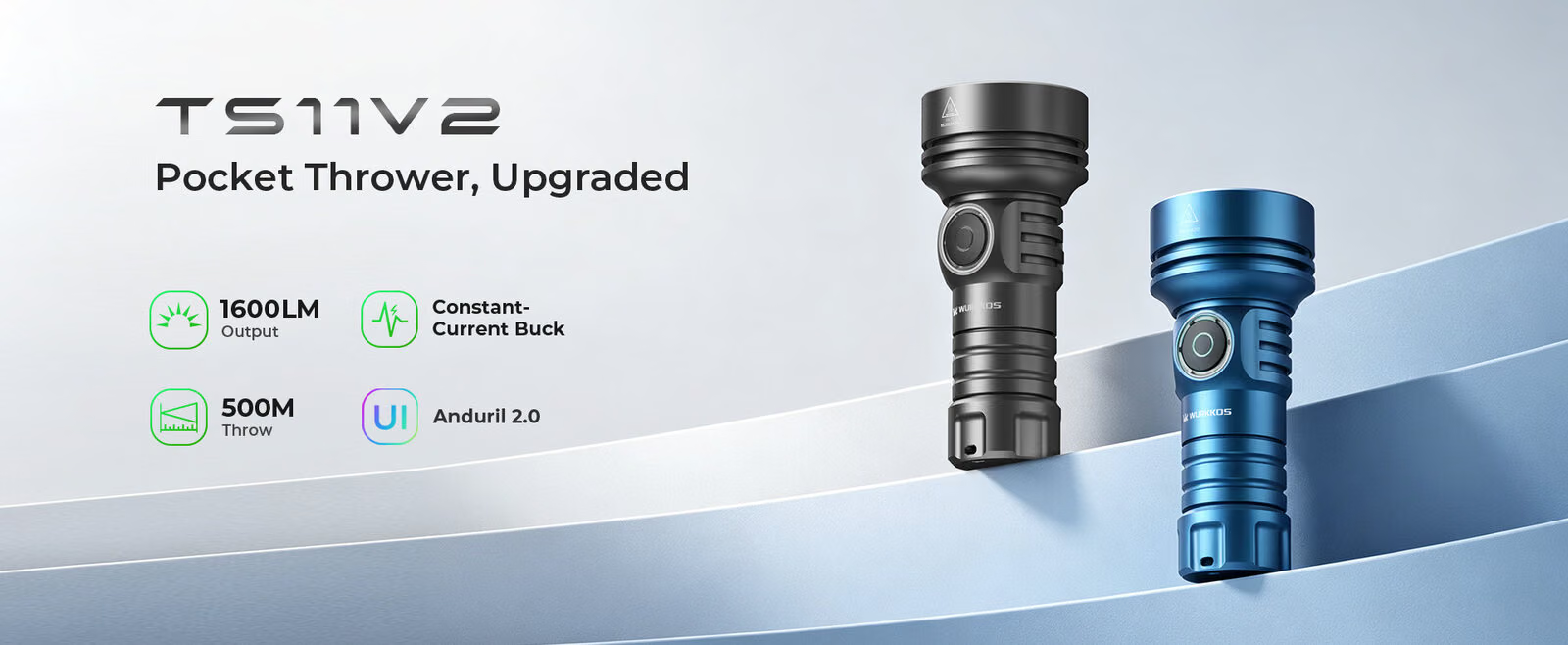
The closest alternative is Wurkkos’s own HD02 and HD02 Pro, larger lights on 21700 cells with higher outputs and, on the Pro, UV and a green laser. They are better lights for a car or a toolbox and worse ones for a pocket. Outside Wurkkos, the comparison is a classic 14500 or AA tube light with a high-CRI emitter, which will be slimmer and simpler and will not stand up on its own or light a work area as evenly. The Mini’s argument is that the wing panel and the four channels earn their extra bulk.
Related reading
What this review is based on
The HD02 Mini arrived on 21 October 2026 together with the TS11 V2. This review is built on Wurkkos’s product page, FAQ and published FL1 table, and on BudgetLightForum’s detailed review for emitters, weights, charging behaviour and firmware quirks. Every output and runtime figure above is Wurkkos’s unless it is attributed to BLF.
I do not publish my own measurements. The figures are Wurkkos’s and BLF’s as attributed, and the verdict is mine.
Verdict
On paper the HD02 Mini is one of the most sensible small lights Wurkkos makes. It covers the real everyday jobs, close work, reading, a path at night, a dark tent, with four purpose-built channels instead of one beam asked to do everything. The folding 90 CRI wing is the headline, and it is a genuinely useful idea rather than a gimmick. The AA fallback is the quiet feature that makes it a light you can rely on anywhere.
It suits someone who wants one small light for the house, the bag and the car, people who work with their hands on electronics, bikes or cars, campers who want a lantern that also throws, and anyone who has ever held a torch in their teeth to free up a hand. It does not suit people who want maximum throw, which is what the TS11 V2 is for, anyone who needs a light that survives submersion, or anyone who will be irritated by small firmware quirks they cannot update away.
The HD02 Mini is my default recommendation for a first serious everyday light, ideally bought with the extra cells, and alongside the TS11 V2 for anyone who also wants reach.
Product images: Wurkkos.
One email a month: new articles, reviews and the upcoming live webinar + free recording. No spam, unsubscribe anytime.