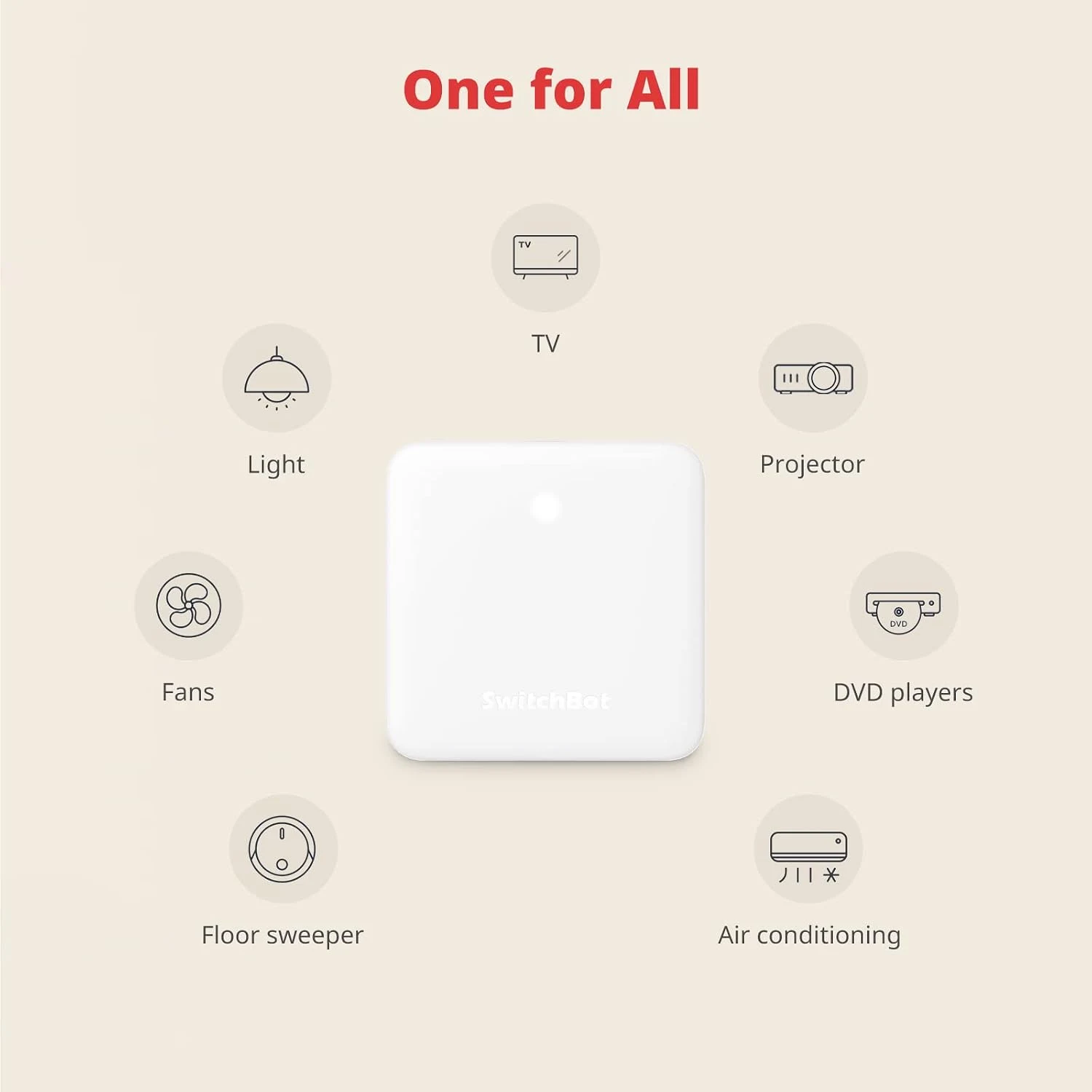
I like smart-home products that begin with something already useful. A television, fan or air conditioner does not become a bad appliance because its remote control has no app. The original SwitchBot Hub Mini offers an appealing middle step: keep the appliance and give its infrared commands another way to be used. That is a more understandable reason to buy a hub than collecting another box labelled smart.
Review context: I assess infrared compatibility, placement, command state and the differences between similarly named SwitchBot hubs.
Quick verdict
I would shortlist it for the focused role described here.
Best for: An identified infrared appliance within a clear SwitchBot control plan.
Main benefit: Existing compatible infrared appliances can gain another control path without replacement.
Biggest drawback: The original Hub Mini lacks the Matter and offline-infrared functions documented for some newer hubs.
Worth the price?: Worth considering for that narrow route; buy a documented Matter-enabled hub when bridging is the requirement.
Reviewed version: Original SwitchBot Hub Mini, white, W0202200
Compatibility: The original Hub Mini, a supported infrared remote profile, suitable power and the documented app and network arrangement. A Bluetooth or RF remote is a different technology.
Original SwitchBot Hub Mini, white, W0202200
Amazon US · US
Check price and availability: Original SwitchBot Hub Mini, white, W0202200 at Amazon USAffiliate link. As an Amazon Associate I earn from qualifying purchases.
My recommendation depends on that exact job. I would shortlist the original Hub Mini for a compatible infrared appliance and an existing SwitchBot plan. I would choose a different hub if native Matter bridging or documented offline infrared control is the reason for the purchase. Those functions differ within SwitchBot’s range, and the similar names should not hide that difference.
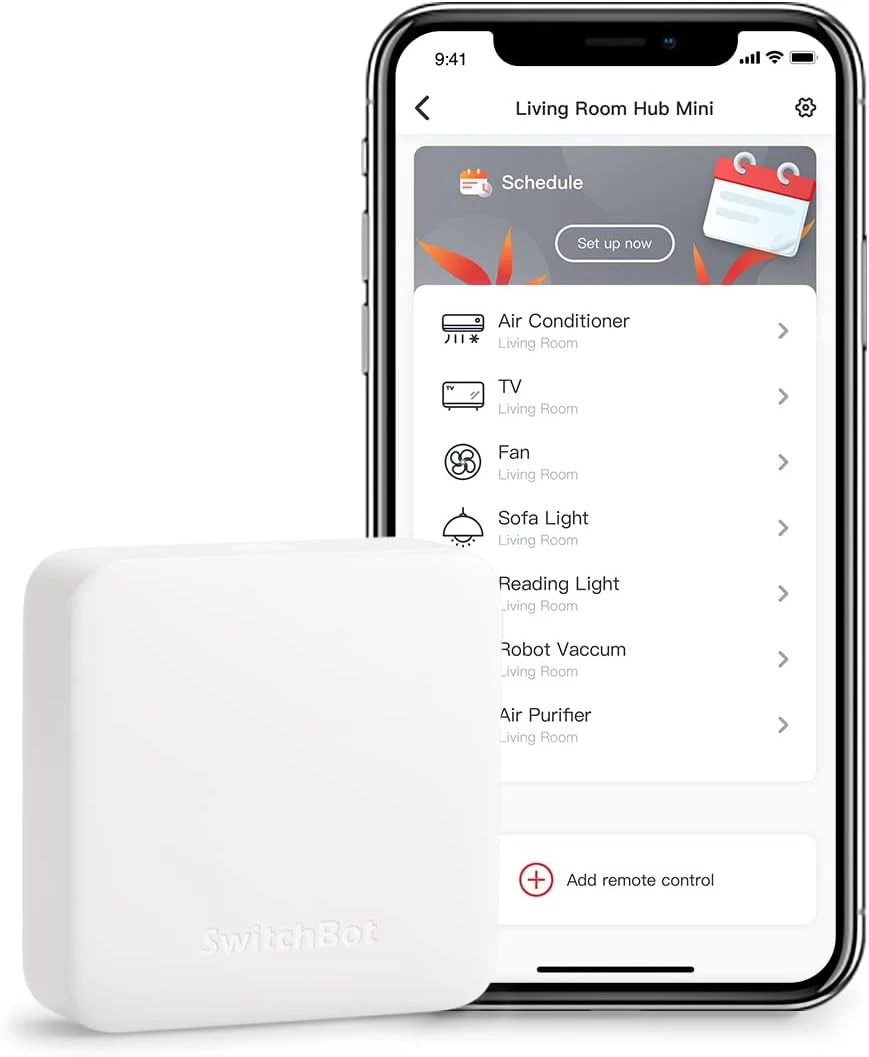
The original Mini is a specific product
Product images: the verified retailer gallery and any original manufacturer illustration credited in the sources. These are not personal test photographs.
Related reading
SwitchBot’s hub comparison separates the original Hub Mini from Hub 2, Hub Mini Matter Enabled and Hub 3. The original is listed without Matter functionality. I would keep that distinction beside the purchase link, because a later model’s feature does not become available merely by reading its guide.
The comparison also distinguishes sensors, connection terminals and offline infrared functions. I would check the delivered product and current setup instructions before finding a place for it. A USB power connection still needs a sensible power source and cable route. Leaving the hub powered from something that switches off with the television could undermine the reason for adding it.
For my own buying decision, the product family is less important than one sentence: which appliance should this hub control, from where, and through which service? If that sentence remains vague, I would postpone the purchase. A hub is useful when it completes a route, rather than when it becomes the starting point for finding something to automate.
Infrared needs a clear path
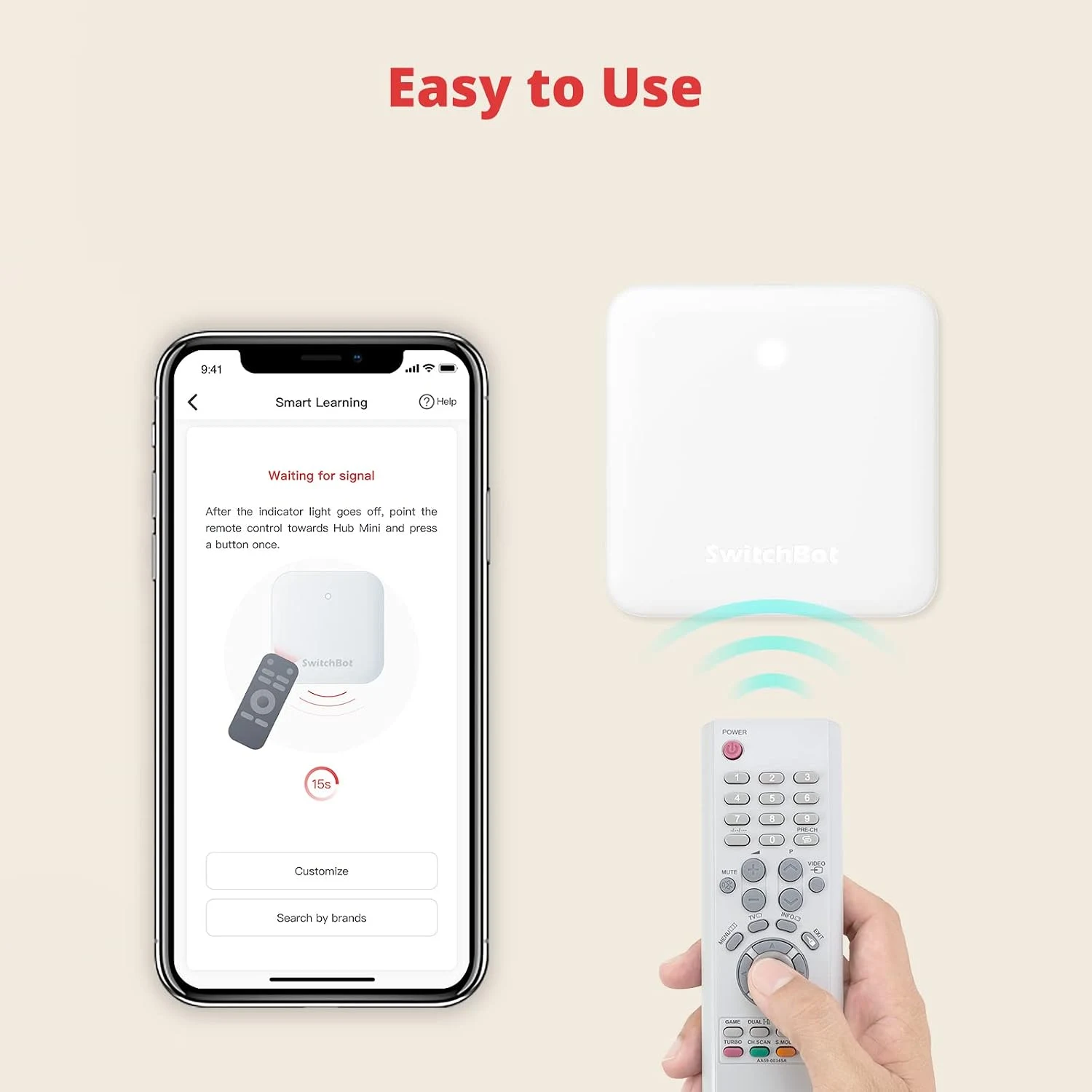
The company’s remote-control explanation distinguishes infrared from Bluetooth and radio-frequency remotes. That matters because the existence of a handheld remote does not prove compatibility. I would identify what the actual remote uses before treating the hub as a replacement.
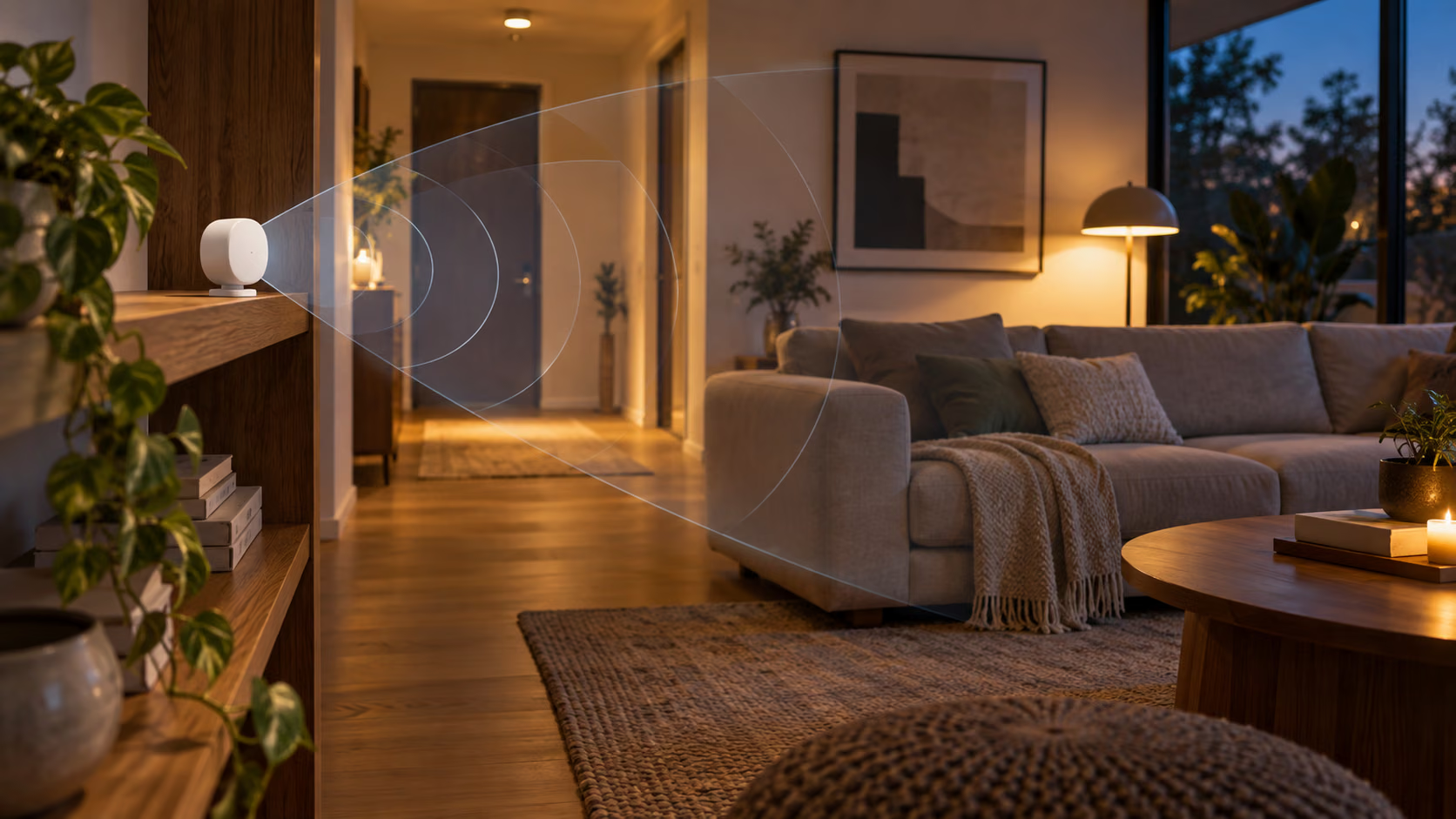
Infrared also makes placement a practical decision. I would look for a clear working path to the appliance rather than hide the hub in a closed cabinet because the box looks tidy. Different rooms and appliance positions can need different arrangements. A remote command is only useful if it reaches the receiver from the place the hub will remain.
The original remote would stay available. It provides a simple fallback and helps another person use the appliance without understanding the automation. I do not want a modest upgrade to turn an ordinary fan or television into something only one member of the household knows how to operate.
Related reading
Sending a command is not knowing the result
This is the distinction I would spend the most time understanding. A command such as power can be a toggle rather than an explicit on or off instruction. If someone also uses the physical remote, the automation’s assumed state may differ from reality. I would not mistake an app animation for a sensor proving what the appliance did.
Where the supported remote profile provides separate commands, that can make a routine easier to reason about. Where it only provides a toggle, I would keep the automation modest and make the current state easy to inspect. The useful question is whether the result is predictable for the household, not whether another button appears on a phone.
I would be especially deliberate with heating and cooling. The appliance’s own controls, limits and instructions remain responsible for normal operation. An infrared hub adds a command path; it does not supply every safety or environmental condition an automation might need. A simple, reversible routine is a better starting point than an elaborate schedule built around an uncertain state.
Learning should follow the actual remote
SwitchBot’s infrared setup guide explains adding appliances to the hub. I would begin with one exact model and the commands that matter, then check them at the appliance. That is more useful than adding several devices and later trying to remember which profile behaved differently.
Names should describe the thing and room plainly. A family member can understand Living-room fan more easily than a manufacturer’s internal code. I would also check what a scene changes and what a voice command is expected to mean. Clear naming reduces accidental actions when several devices have similar roles.
The online-service path deserves the same clarity. Before relying on remote access, I would understand the current app, account and network requirements and what remains possible during an outage. SwitchBot’s comparison gives newer hubs different offline functions, so I would not assume the original Mini offers the same fallback.
The alternative can be another hub or no hub
If Apple Home or another Matter ecosystem is the actual requirement, I would compare a supported Matter-enabled SwitchBot hub using the current compatibility table. That is a direct product choice, not a reason to force the original Mini into a role it does not document. I would also check which exact appliances and functions the bridge exposes.
Related reading
If one simple physical action is the problem instead, the SwitchBot Bot is a different approach. It operates a suitable physical control rather than replacing infrared. The mounting and mechanical questions are different, so I would choose it only when that is the route the appliance needs.
My verdict is positive for the original Mini’s defined purpose. I like the possibility of keeping a useful appliance and making its existing infrared controls more convenient. I would buy after confirming the remote technology, the exact model and the intended service path. If the original remote already solves the whole job, keeping that simpler arrangement is a perfectly good result too.
What worked
Existing compatible infrared appliances can gain another control path without replacement.
What bothered me
The original Hub Mini lacks the Matter and offline-infrared functions documented for some newer hubs.
Who should not buy it
The original Hub Mini lacks the Matter and offline-infrared functions documented for some newer hubs.
Alternatives I would consider
A supported Matter-enabled SwitchBot hub. I would choose the documented bridge model when the required ecosystem needs Matter.
SwitchBot Bot. I would choose the mechanical route for a suitable physical button rather than an infrared remote. Read my SwitchBot Bot review.
Evidence and sources
Specifications are attributed to the linked documentation. Images: Amazon product gallery. These are not personal test photographs or measurements.
Features, compatibility and rated figures from the maker are manufacturer information. My opinions are identified in the review.
My final verdict
I would shortlist it for the focused role described here. Worth considering for that narrow route; buy a documented Matter-enabled hub when bridging is the requirement.
Original SwitchBot Hub Mini, white, W0202200
Amazon US · US
Check price and availability: Original SwitchBot Hub Mini, white, W0202200 at Amazon USAffiliate link. As an Amazon Associate I earn from qualifying purchases.
One email a month: new articles, reviews and the upcoming live webinar + free recording. No spam, unsubscribe anytime.