A camera card has a less glamorous job than a camera. It has to accept another recording, then another, without asking for attention. That is why I find the SanDisk High Endurance 128GB more interesting than a card chosen only by its largest transfer-speed number. Its stated purpose fits repeated recording, which is exactly the question I would ask before buying storage for a dashcam or a compatible home camera.
Review context: I assess repeated recording, retention, playback checks and the difference between a rated lifetime and recoverable footage.
Quick verdict
I would shortlist it for the focused role described here.
Best for: A supported dashcam or indoor camera repeatedly overwriting video.
Main benefit: The product family is explicitly designed for repeated camera recording.
Biggest drawback: An endurance rating does not tell you how many days of video remain or guarantee recovery of a lost clip.
Worth the price?: Worth it when recording endurance is the requirement; ordinary file storage can call for a different card.
Reviewed version: SanDisk High Endurance microSDXC 128GB with adapter, SDSQQNR-128G-GN6IA
Compatibility: A device explicitly supporting 128GB microSDXC and the required recording class. Follow its supported-card and formatting guidance.
SanDisk High Endurance microSDXC 128GB with adapter, SDSQQNR-128G-GN6IA
Amazon US · US
Check price and availability: SanDisk High Endurance microSDXC 128GB with adapter, SDSQQNR-128G-GN6IA at Amazon USAffiliate link. As an Amazon Associate I earn from qualifying purchases.
I like the idea of choosing a card by the workload. I would consider this one for a device that repeatedly overwrites old video, provided that the device explicitly supports the capacity and card class. I would not treat the word endurance as a promise that recordings can never be lost. The useful purchase includes the card, the camera’s storage behaviour and a way to notice a problem.
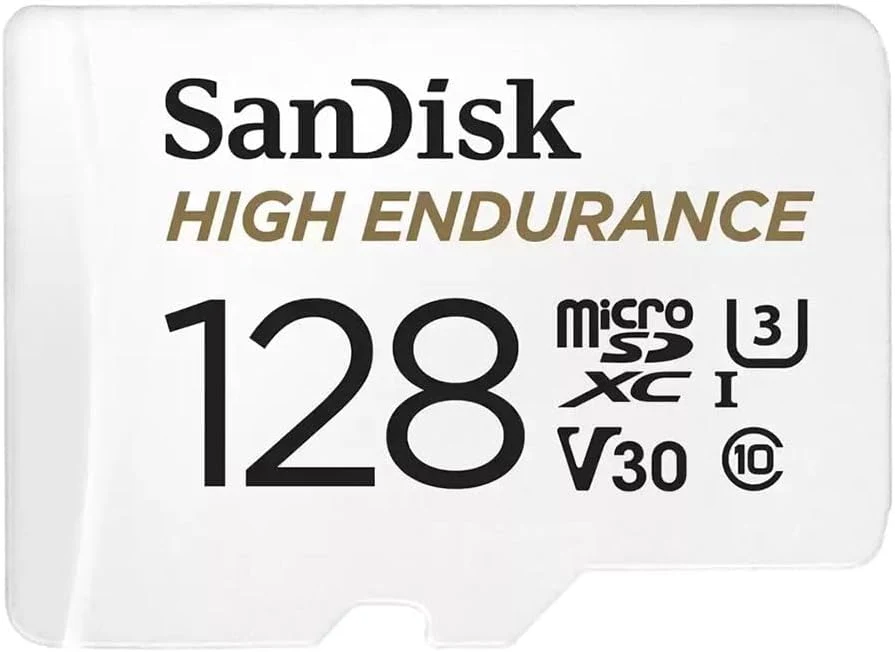
The intended workload is the main feature
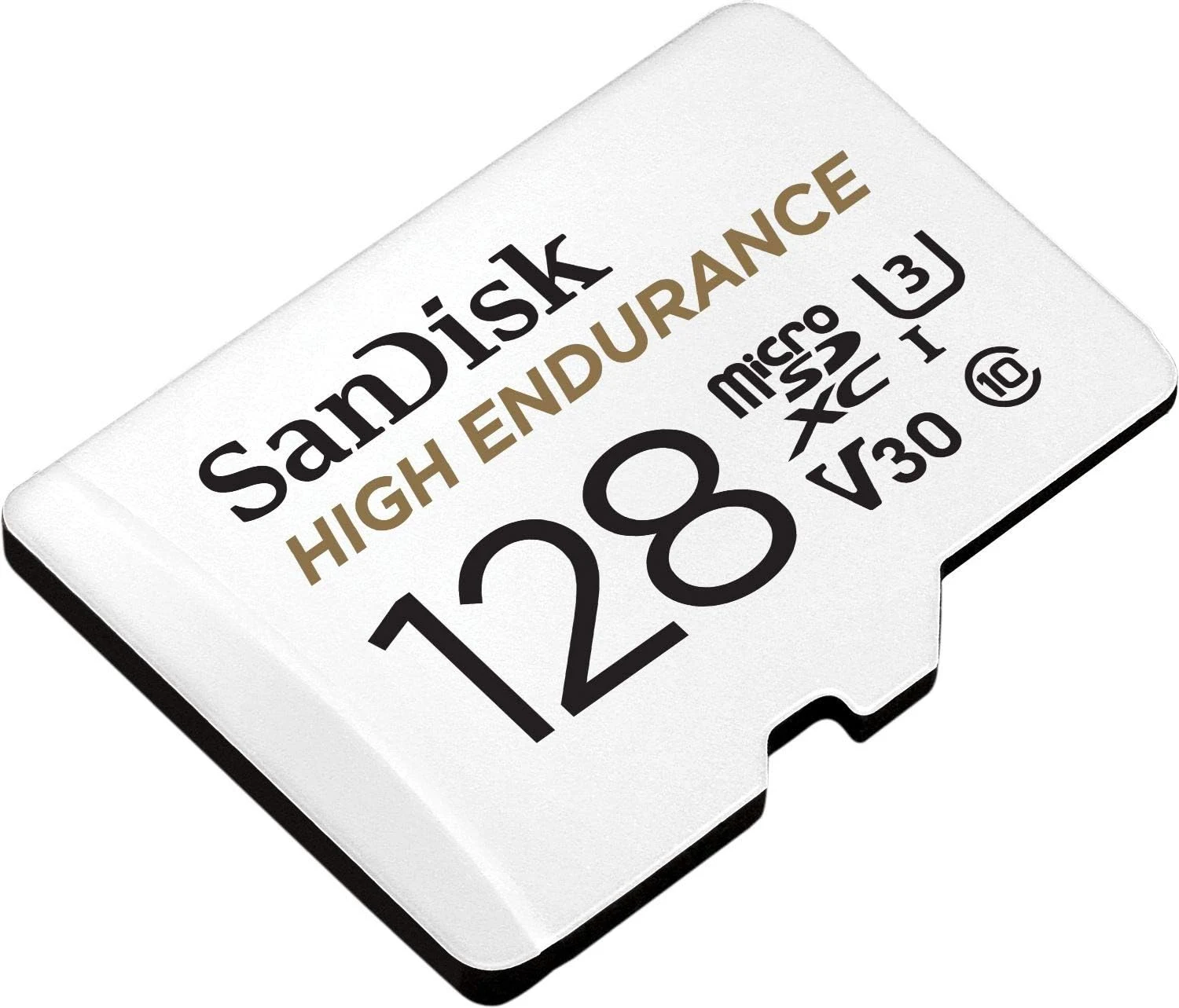
Product images: the verified retailer gallery and any original manufacturer illustration credited in the sources. These are not personal test photographs.
Related reading
SanDisk’s 128GB product page positions this family for recording devices. Its data sheet gives the 128GB version an endurance claim of up to 10,000 hours of Full HD recording under the stated conditions. That is a manufacturer rating, not a test period I have completed.
The important distinction is between recording life and how much history remains on the card. A card may be rated to accept a large amount of writing over its life while holding only a limited window of video at one time. The camera’s bitrate, resolution and recording schedule determine that window. Those are separate questions, and I would answer both before deciding whether 128GB is enough.
I would choose the capacity around the time I may be away from the camera. A household that regularly exports useful clips has a different requirement from one that might discover an incident several days later. Buying a larger card can extend the available history when the device supports it. It does not remove the need to save an important recording somewhere else.
Compatibility comes before the speed label
The exact camera manual is the place I would start. It should identify the accepted card type, maximum capacity and recording requirements. A microSDXC slot is not a blanket promise about every card or recording mode. Firmware versions and product revisions can also change the supported list, so I would match the actual device rather than a similar model mentioned in a discussion.
SanDisk lists read and write figures for this product family, but the camera’s requirement matters more than a headline maximum. A fast transfer to a computer and a steady recording workload are different jobs. I would not pay for a card reader’s best-case speed if the card will spend nearly all its time inside a camera.
Related reading

Loop recording needs an ownership routine
I like loop recording when the limits are clear. It keeps a camera useful without asking someone to empty the card every day. The trade-off is that old material may disappear automatically. An important clip should be exported deliberately rather than left in a moving window of ordinary footage.
The small check I would build into ownership is playback. A storage icon is less useful than opening an actual recording and making sure the expected time is there. I would also learn what happens when the card is missing or rejected. A camera that continues to show a live picture can still have a recording problem, because displaying video and storing it are different functions.
For a dashcam, I would include the power-off process in the routine. Follow the device’s guidance before removing the card, and avoid pulling storage while the camera is writing. A recording that matters deserves a careful export, preferably with another copy before changing or formatting the original card. These are simple habits, but they are more useful than assuming a special card makes file handling irrelevant.
The rating is useful without becoming a guarantee
The endurance figure helps explain why this product exists. It is not a personal prediction for every combination of camera, temperature and bitrate. The stated conditions belong beside the number, and a different capacity can have a different rating. I would not copy the figure for a larger card onto this 128GB version.
The same care applies to warranty language. I would read the current terms for the exact product and country, including its intended uses. A warranty can provide a replacement route for a qualifying failure. It does not recreate a lost recording or establish that every recording system is covered. The data and the physical card remain different things to protect.
When another card makes more sense
For ordinary photographs and occasional file transfers, I would compare a suitable general-purpose card such as the SanDisk Extreme microSDXC 256GB. The point is not that a faster-sounding family is always better. I would choose the class and capacity that the device and recording mode actually require.
Related reading
For continuous recording with a stronger documented lifetime requirement, I would compare SanDisk’s higher-endurance offerings using the exact capacity’s current specifications. I would not assume that changing the family name alone proves compatibility. A camera’s supported-card guidance can be more valuable than a small difference in a card’s advertised speed.
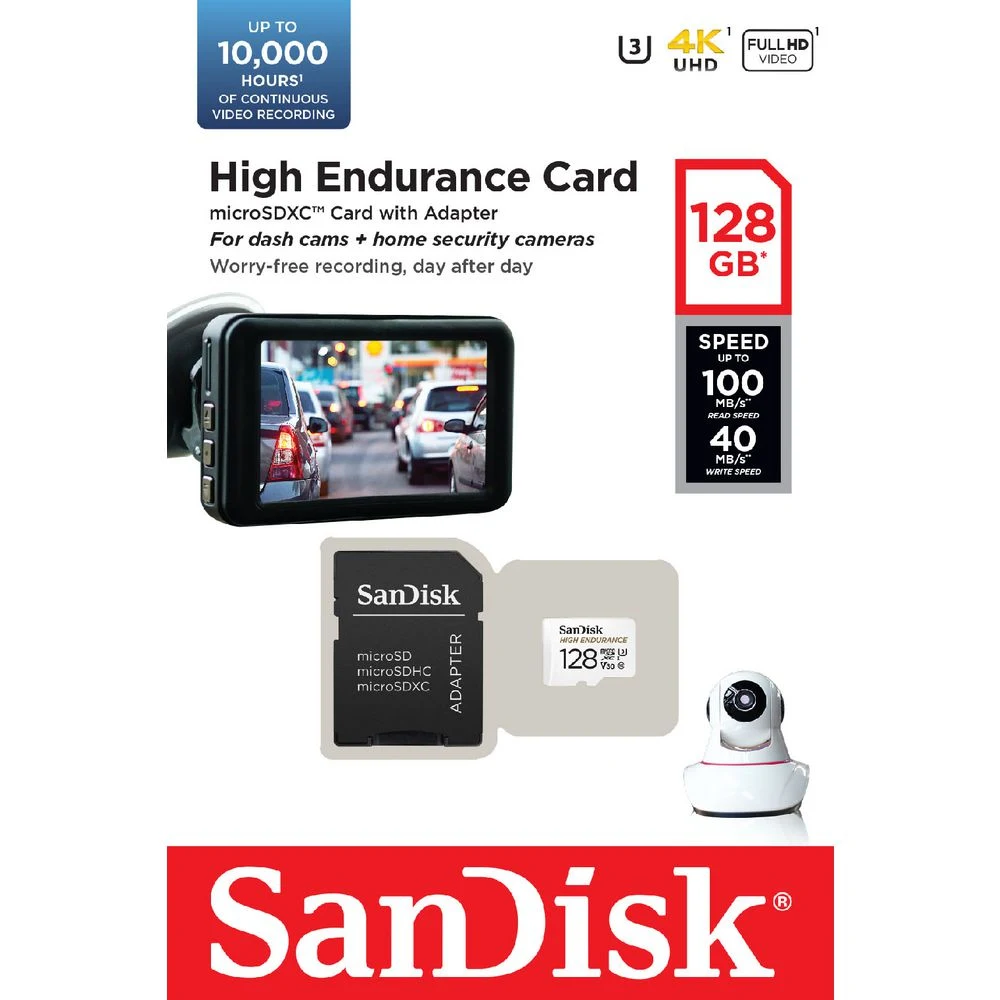
The High Endurance 128GB has a clear place in my shortlist. Its documented purpose matches repeated camera writing, and the capacity is a practical middle ground when the device supports it. I would choose it with a retention plan, a playback habit and a clear way to save important clips. That makes it a considered storage purchase, rather than a tiny object expected to take responsibility for the whole camera system.
What worked
The product family is explicitly designed for repeated camera recording.
What bothered me
An endurance rating does not tell you how many days of video remain or guarantee recovery of a lost clip.
Who should not buy it
An endurance rating does not tell you how many days of video remain or guarantee recovery of a lost clip.
Alternatives I would consider
SanDisk Extreme microSDXC 256GB. I would compare a general-purpose performance card when the task is ordinary camera files or transfer, rather than continuous overwriting. Read my SanDisk Extreme microSDXC 256GB review.
A higher-endurance model approved by the camera maker. I would choose the stronger documented rating when the recording workload calls for it, checking the exact capacity and warranty.
Evidence and sources
Specifications are attributed to the linked documentation. Images: Amazon product gallery and retailer packaging photograph. These are not personal test photographs or measurements.
Features, compatibility and rated figures from the maker are manufacturer information. My opinions are identified in the review.
My final verdict
I would shortlist it for the focused role described here. Worth it when recording endurance is the requirement; ordinary file storage can call for a different card.
SanDisk High Endurance microSDXC 128GB with adapter, SDSQQNR-128G-GN6IA
Amazon US · US
Check price and availability: SanDisk High Endurance microSDXC 128GB with adapter, SDSQQNR-128G-GN6IA at Amazon USAffiliate link. As an Amazon Associate I earn from qualifying purchases.
One email a month: new articles, reviews and the upcoming live webinar + free recording. No spam, unsubscribe anytime.