The DJI Mini 4K appeals to me as a small tool for learning a deliberate kind of video. I would consider it when an aerial view adds something to a project and I want to plan the framing, movement and final edit. Its folding form is appealing, but the more useful reason to buy is having a clear idea of the work it will do.
Quick verdict
I would shortlist the Mini 4K for a deliberate first camera-drone setup when its documented features meet the planned work.
Best for: A buyer who wants to learn controlled aerial framing and include the controller, phone, card and charging routine in the plan.
Main benefit: A compact folding design with a mechanically stabilised camera gives it a clear aerial-video purpose.
Biggest drawback: It has no obstacle avoidance, and its advertised flight maximum is not a practical promise for every session.
DJI Mini 4K, selected aircraft and controller package
Amazon US · US
Check price and availability: DJI Mini 4K, selected aircraft and controller package at Amazon USAffiliate link. As an Amazon Associate I earn from qualifying purchases.
Reviewed version: DJI Mini 4K, selected aircraft and controller package
Compatibility: DJI Fly on a supported phone, the specified controller and a suitable microSD card. Confirm exact package contents and local product support before buying.
Review context: I assess the documented camera arrangement, recording workflow and whole starter setup for planned aerial compositions.
The selected offer is the Mini 4K with its controller, rather than an assumed larger accessory bundle. I would compare the complete package before deciding whether the price is attractive. Extra batteries, a charging hub and a bag can change the total, and a familiar product name does not establish that every seller includes the same parts.
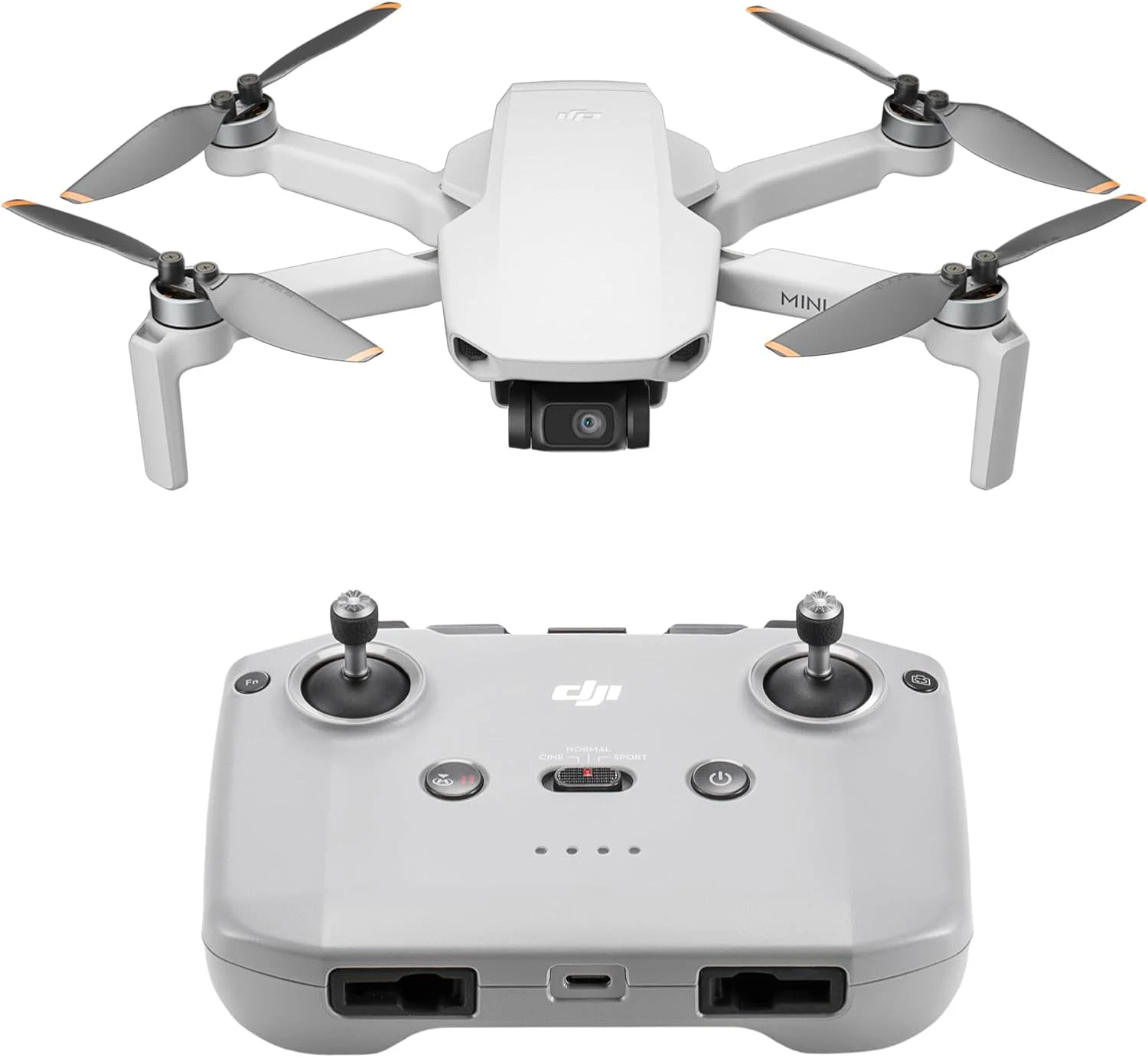
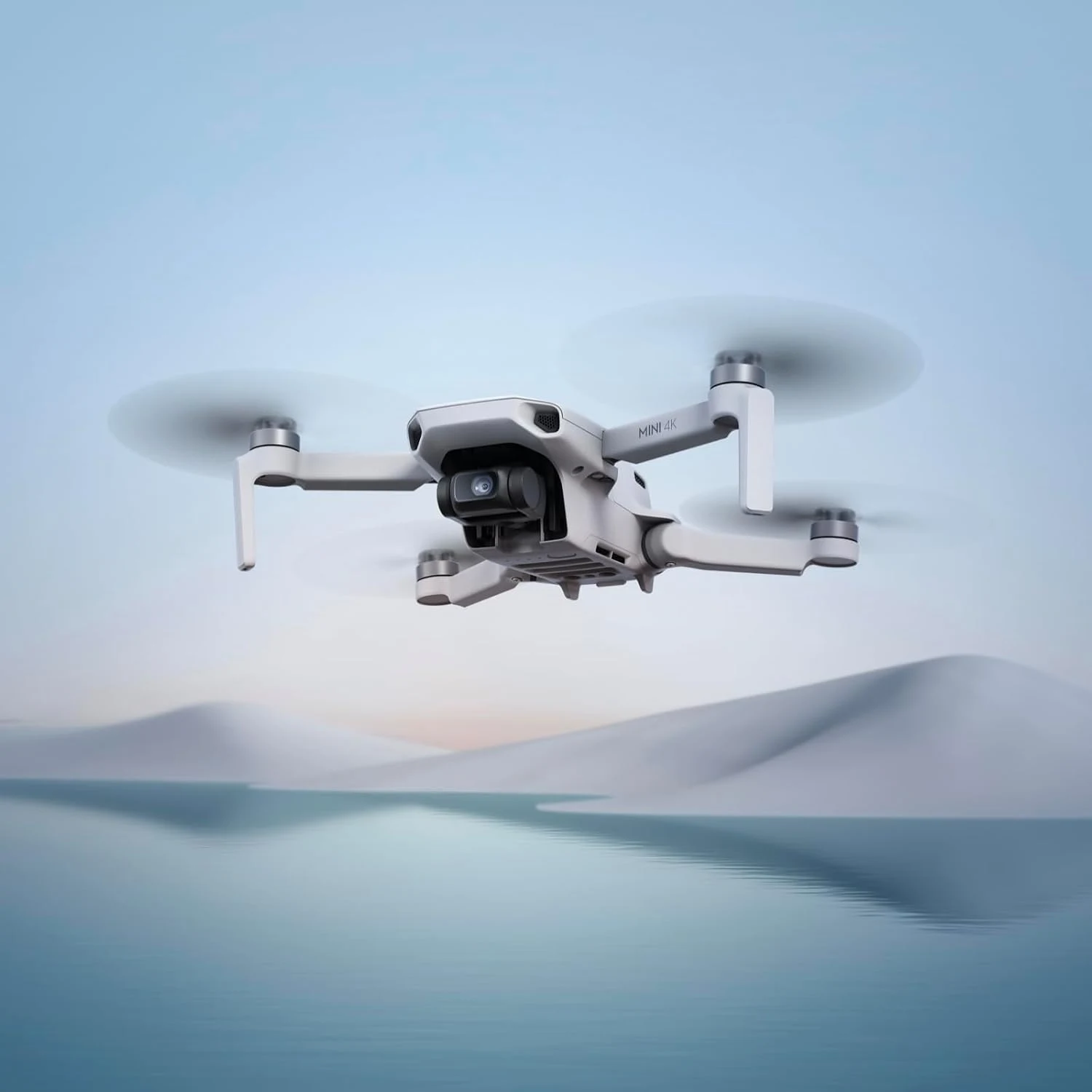
The photographs and product illustration are credited listing material. They show the selected hardware, rather than aerial pictures presented as results from a flight of my own.
Related reading

Start with a shot worth making
I would begin by thinking about the finished sequence. A slow reveal, a clear overview or a controlled change in perspective gives a camera drone a purpose beyond simply going up. That approach also makes it easier to decide what equipment needs to travel with it and how much preparation a session deserves.
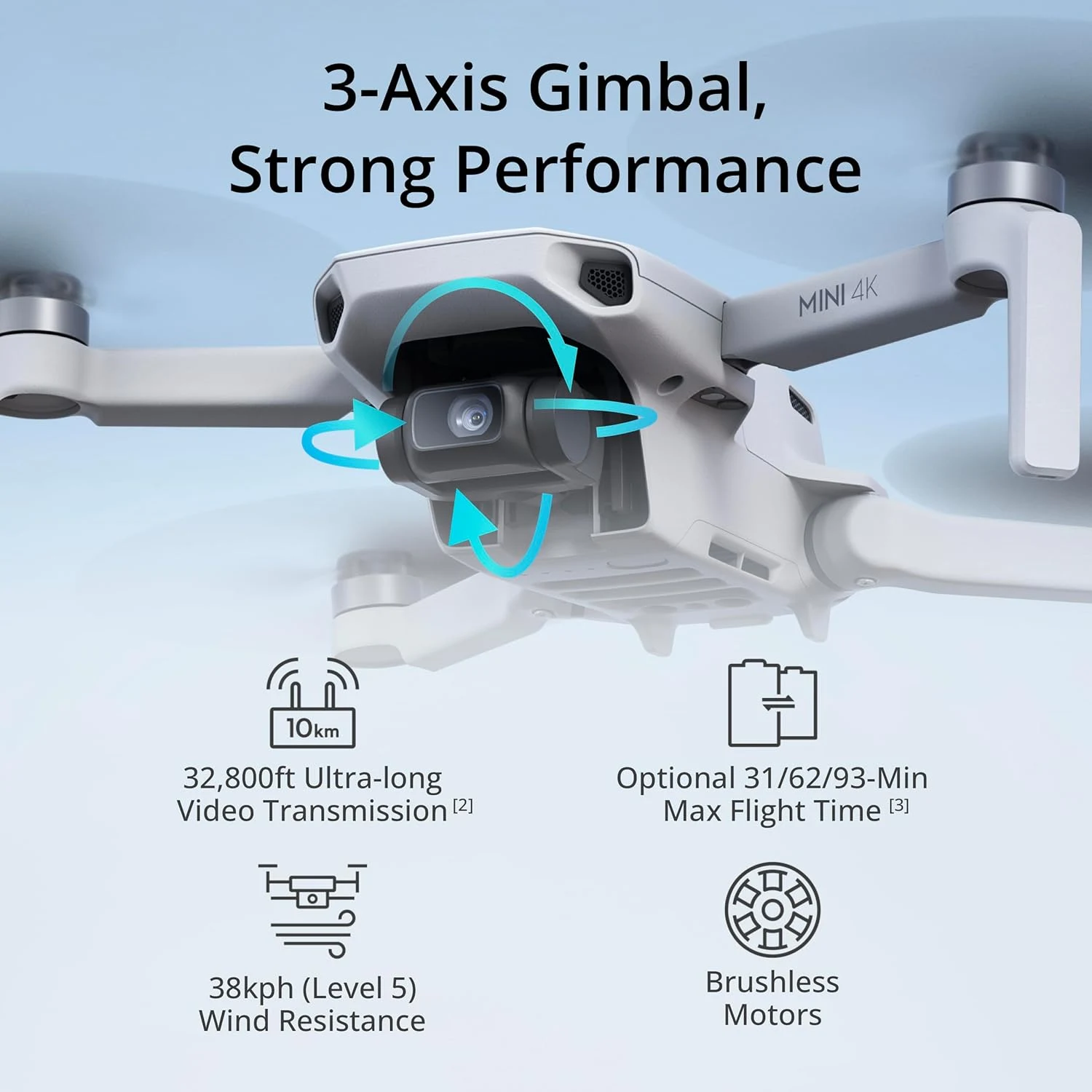
DJI documents a three-axis mechanical gimbal for this camera arrangement. I see that as a useful part of a planned video setup, while keeping the camera’s capability separate from the operator’s choices. A stabilised camera cannot decide which movement serves the story or whether a scene is worth including in the finished edit.
What the 4K version changes
The official comparison specifications distinguish Mini 4K recording from the Mini 2 SE’s lower maximum resolution. I would choose between them using the intended output, room for editing and the current complete offers. I would not decide purely from two similar-looking aircraft in a shopping result.
A higher recording option can be useful when it fits the project, but it also needs a suitable card and a practical editing route. I would check what my phone or computer can handle before treating the camera as an isolated purchase. The useful result is a finished video that fits its destination, rather than files chosen only because a larger setting was available.
Understand the limits before the first plan
This model has no obstacle avoidance. The downward positioning system should not be mistaken for a general ability to detect objects around the aircraft. I would keep that distinction clear when deciding whether this is the right starting point, especially if the intended shots depend on operating close to obstacles.
DJI’s maximum flight-time figure also comes from defined controlled conditions. I would keep room for getting ready, returning and landing instead of using a marketing maximum as a complete usable shooting schedule. Weather, location and the actual task are part of the plan, not details to discover after buying the aircraft.
Related reading

The phone and controller form one working setup
I would check the current DJI Fly device requirements and the physical phone arrangement before ordering. A comfortable controller layout depends on the device that will sit in it as well as the aircraft in the box. The right cable and a supported phone are small details with a direct effect on whether the package is ready to use.
I would also make space for learning the documented controls before planning an important recording. That includes understanding the operating modes and the procedures in DJI’s support material. Familiarity is part of the value I would expect to build, rather than something the resolution label can supply on its own.
Include the work after landing
I would budget for a suitable microSD card and a transfer method that fits the editor. DJI lists no internal recording storage for this model, so the card is part of the actual setup. Keeping important recordings in a separate checked copy would be my next step before clearing space for another outing.
The intended locations matter just as much. I would check current official operating requirements for the place and type of use before making the purchase decision. Neither a low weight nor a long advertised transmission figure tells me that a particular filming plan is appropriate or permitted. Knowing where the tool will be useful makes its value much clearer.
The alternatives clarify the purpose
The Mini 2 SE would stay in the comparison when its recording options are sufficient and its whole offer is meaningfully better. I would compare condition, support and accessories together, because a cheaper headline can conceal a less complete setup.
Related reading

The DJI Neo 2 points towards a different personal-video routine. I would explore it when that control style is the real attraction, rather than force the Mini 4K to answer a different question. For planned controller-based aerial compositions, the Mini 4K remains a coherent choice to investigate.
My verdict is positive when the complete package matches a realistic filming plan. I like its clear purpose and the opportunity to learn deliberate camera movement. I would choose it with an appropriate location, a supported phone and a complete workflow in mind, while choosing another model when its missing features are requirements.
What worked
A compact folding design with a mechanically stabilised camera gives it a clear aerial-video purpose.
What bothered me
It has no obstacle avoidance, and its advertised flight maximum is not a practical promise for every session.
Who should not buy it
I would pass if automatic obstacle avoidance or a palm-operated personal-video workflow is a core requirement.
Alternatives I would consider
DJI Mini 2 SE. I would consider the older model only when its lower recording resolution is sufficient and the complete offer makes a clear saving. Read my DJI Mini 2 SE review.
DJI Neo 2. I would choose this direction when a small personal-video tool and its different control approach better fit the project. Read my DJI Neo 2 review.
Evidence and sources
Product details are attributed to the linked documentation. The photographs and credited technical illustrations show the selected product; they are not personal test photographs.
Features, compatibility and rated figures from the maker are manufacturer information. My opinions are identified in the review.
Conclusion
Attractive when the exact complete offer is competitive and the intended locations make the purchase useful.
DJI Mini 4K, selected aircraft and controller package
Amazon US · US
Check price and availability: DJI Mini 4K, selected aircraft and controller package at Amazon USAffiliate link. As an Amazon Associate I earn from qualifying purchases.
One email a week with practical Mac workflows, useful comparisons and honest tech recommendations.