I am the author of The Complete AI Model & Mode Selection Guide for Software Engineers. This page explains the book from that position. I earn royalties, and a purchase through the labelled Amazon link can also earn an affiliate commission. My recommendation is an author’s judgement about fit, not an independent customer’s review.
Quick verdict
I recommend considering it when choosing a model and interaction mode is a repeated software-engineering decision.
Best for: Working software engineers matching AI workflows to bounded edits, investigation and larger changes.
Main benefit: The published scope connects model choice with modes, repository instructions and parallel work.
Biggest drawback: Named models, interfaces and plans change; edition-specific comparisons are not permanent rankings.
The Complete AI Model & Mode Selection Guide
Amazon US · US
Check price and availability: The Complete AI Model & Mode Selection Guide at Amazon USAffiliate link. As an Amazon Associate I earn from qualifying purchases.
Reviewed version: The Complete AI Model & Mode Selection Guide: For Software Engineers
Compatibility: The selected Amazon edition is B0GNH74YGT. Confirm reading format and sample; the catalogue scope is not a promise of every current model or plan.
Review context: The recommendation uses the published author description and scope. It does not claim an independently verified reading result or invent chapter contents.
The problem behind this book is one I find more interesting than a simple league table. A capable AI model can still be a poor choice for a particular task or an unsuitable way of working. I want the choice to begin with what the engineer needs to accomplish, how much context is available and what evidence will establish that the result is good enough.
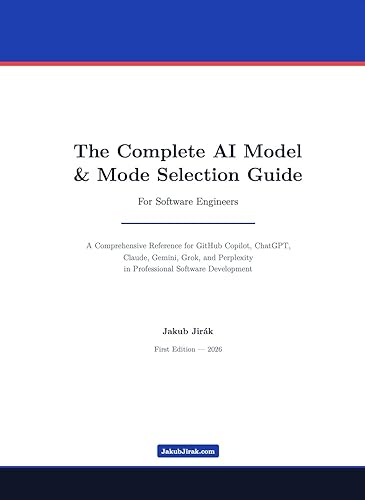
The Complete AI Model & Mode Selection Guide — actual author-owned cover Author catalogue source.
A guide for working engineers
The published scope is aimed at software engineers choosing models, interaction modes and workflows. It names several AI products and describes model comparisons alongside practical engineering tasks. I would recommend considering it when those choices have become a repeated part of the working day, rather than a one-off curiosity.
A reader does not need to be convinced that AI exists or that it can generate code. The more useful question is why one approach works for a small explanation while another is needed for a change across a repository. I would read with examples of both a successful task and a disappointing one in mind.
I would be less likely to begin here with someone who wants their first plain-language introduction to AI at work. AI for Non-Technical People has a different intended audience. The model-selection guide assumes that the software task itself is part of the reader’s context, even where the choices around AI need clarification.
The task comes before the model name
My preferred starting point is to describe the outcome in ordinary language. Is the reader asking for an explanation, a small bounded edit or a change that needs several steps and checks? That description makes the choice more useful than selecting a model because it was impressive in an unrelated demonstration.
I would also write down the cost of a wrong answer. A speculative design discussion and a production change deserve different levels of verification. The point is not to make every request heavy. It is to give the chosen approach an appropriate amount of context and an honest standard for accepting the result.
The catalogue describes comparisons across more than ten models. I would use comparisons as a way to understand trade-offs at the edition’s point in time, not as an everlasting ranking. Product names, available plans and capabilities change. The durable reading question is why a model fits a task, rather than which name must always be chosen.
Modes change the working relationship
The book’s published scope includes ASK, EDIT and AGENT interaction modes. I like discussing those separately because asking for help and authorising a series of changes are different working arrangements. More autonomy is useful only when the task and the surrounding controls make it appropriate.
I would use an explanation-oriented mode when I need to understand unfamiliar code before deciding on a change. I would consider an editing workflow for a bounded modification with a clear target. I would consider a wider agent workflow when there is a concrete objective, useful tools and a way to check progress. These are reading examples, not a universal rule for every product’s current interface.
The labels themselves can also vary between services and versions. I would match the edition’s discussion with the current product documentation before relying on a particular control. A book can provide a useful decision structure while the application supplies the current command or setting.
Repository instructions should be useful context
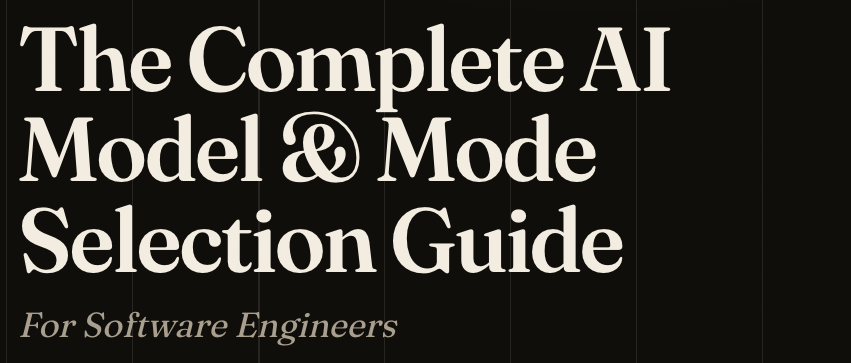
Title and description presentation from my author catalogue; this is not an interior page. Author catalogue source.
The author catalogue identifies instruction files and custom agents as part of the scope. My interest is in making the project legible to the tool. An engineer already knows many local conventions that are not obvious from a single source file. Those conventions need a clear home if an assistant is expected to respect them repeatedly.
I would begin with a small set of accurate instructions: how the project is organised, which checks matter and what a completed change should look like. A long file full of stale rules can be less helpful than a short one that matches the real repository. The maintenance of that context matters alongside its initial creation.
I would also keep task-specific instructions distinct from lasting project information. A temporary workaround should not silently become a permanent convention. While reading, I would ask which facts an assistant needs every time and which belong only to the current objective. That makes the repository guidance easier for people to maintain too.
Parallel work needs clear boundaries
CLI tools and Git worktree parallelisation appear in the published highlights. I find this area appealing when independent tasks can progress together without confusing ownership. The practical benefit comes from reducing a real wait, not from creating the largest possible collection of simultaneous agents.
Before dividing work, I would identify which files or decisions each task owns and what the result must contain. Independent investigation and implementation can be useful in parallel. Closely connected edits can require sequencing so that everyone works from the same decisions. The shape of the problem should lead the arrangement.
I would keep the final integration step visible from the beginning. Several successful individual results do not automatically form a coherent change. Someone still needs to inspect the combined behaviour, run the relevant checks and explain what is actually ready. I would read the parallel-work subject with that responsibility in mind.
A specification should make the result reviewable
The catalogue includes spec-driven development and GitHub’s Spec Kit among the topics. I would approach that subject by asking what the specification helps the engineer decide. A useful description gives enough detail to recognise success without pretending that every implementation question is already solved.
For a small task, a short acceptance statement can be enough. A larger change may need examples, constraints and a discussion of the interfaces involved. I would not make the document longer merely because an AI tool can generate it quickly. The value is in reducing uncertainty that would otherwise create rework.
While reading, I would compare the proposed description with a task that previously drifted. Which missing fact caused the difficulty? Could a reviewer understand the expected result before seeing the code? Those questions make the subject useful even if the team chooses a different specification tool.
Domain context changes the choice
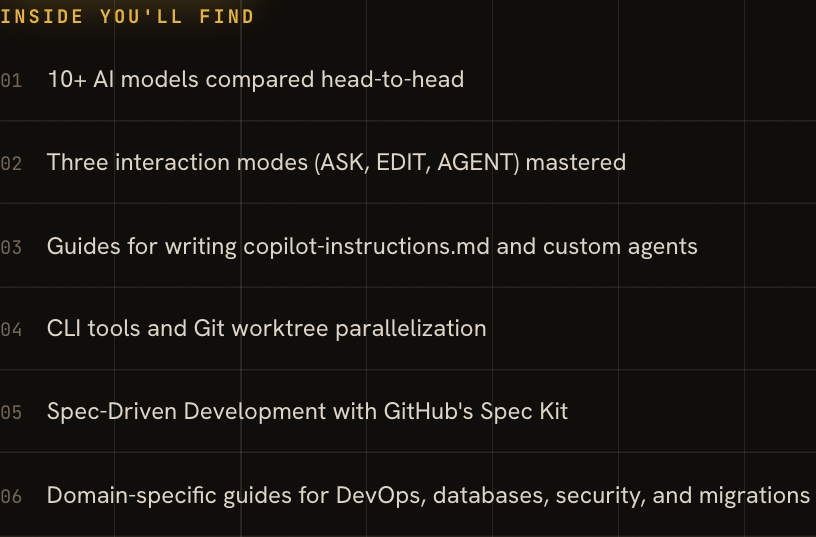
Published scope from my author catalogue; this is not an interior page. Author catalogue source.
The published scope names DevOps, databases, security and migrations as engineering domains. I would not treat them as interchangeable requests for code. Each has its own constraints, recovery needs and evidence. A migration plan, for example, needs an understanding of what happens to existing data as well as what the new code should do.
I would bring the relevant project’s real constraints into the reading exercise. What can be changed locally? Which decisions require a human review? What is the rollback or recovery arrangement? Clear answers help the engineer choose an appropriate level of autonomy without making every task follow the same script.
I would also keep authoritative product documentation available. An attractive explanation can still use an outdated option or assume a feature the current environment lacks. A model-selection guide supports the reasoning around the work; it should not displace the sources that establish the exact system being changed.
How I would use the book
I would choose one recurring task and compare two plausible ways of handling it. The task might be a repository explanation, a bounded implementation or a planning exercise. I would record the context supplied and what made the result acceptable. That creates a useful basis for learning without turning a personal impression into a universal benchmark.
I would then revisit the choice when the task changes. A workflow that suits a small local edit may not suit a cross-system migration. The purpose of a selection framework is to make that reconsideration easier. It should help the reader ask better questions instead of memorising one default answer for every future request.
The main limitation I want buyers to see
This is a fast-moving subject. The public catalogue’s named models and products describe the book’s scope, not a guarantee that every comparison matches today’s available plan or version. I would check the current sample, edition and official product details if one specific model is the reason for buying.
For terminal-focused implementation, The Power User’s Guide to AI-Powered CLI Tools is the more focused companion. For agent systems as software, Build AI Agents That Actually Work enters the subject from another direction. I would choose according to the actual problem rather than buy all three for the same immediate need.
My author recommendation
I recommend considering this guide when model and mode choice has become a regular engineering decision. I like its task-first purpose and the connection to repository context, parallel work and verification. I would buy it for that framework, while using current documentation for exact interfaces and a more introductory book when software engineering is not the reader’s starting point.
What worked
The published scope connects model choice with modes, repository instructions and parallel work.
What bothered me
Named models, interfaces and plans change; edition-specific comparisons are not permanent rankings.
Who should not buy it
I would choose a plain introductory guide for a reader whose work does not begin with software-engineering tasks.
Alternatives I would consider
AI for Non-Technical People. I would start here for practical AI use without a software-engineering background. Read my AI for Non-Technical People author overview.
The Power User's Guide to AI-Powered CLI Tools. I would choose its narrower terminal-workflow focus for daily repository work. Read my The Power User's Guide to AI-Powered CLI Tools author overview.
Evidence and sources
The stated scope comes from my published author catalogue. The images show the actual cover and author-catalogue presentation, not interior pages or independent customer evidence.
This is the author's account of the book's scope and intended reader. Check the selected Amazon edition for its current format, sample and availability.
Conclusion
Worth considering for the selection framework, alongside current official documentation for exact product behaviour.
The Complete AI Model & Mode Selection Guide
Amazon US · US
Check price and availability: The Complete AI Model & Mode Selection Guide at Amazon USAffiliate link. As an Amazon Associate I earn from qualifying purchases.