I am the author of AI for Non-Technical People: A Complete Guide for Professionals Without an IT Background. I earn royalties from the book, and the labelled Amazon link can also earn an affiliate commission. This page explains my intended reader and the book’s fit from that author perspective, rather than pretending to be an independent customer review.
Quick verdict
I recommend considering it for a plain-English route from a familiar work task to deliberate AI assistance.
Best for: Professionals without an IT background who can judge the quality of their own work tasks.
Main benefit: The published scope connects a clear prompt framework with reusable tasks, multi-tool workflows and team adoption.
Biggest drawback: Outputs still need appropriate human review, and named tools, plans and features change over time.
AI for Non-Technical People
Amazon US · US
Check price and availability: AI for Non-Technical People at Amazon USAffiliate link. As an Amazon Associate I earn from qualifying purchases.
Reviewed version: AI for Non-Technical People: A Complete Guide for Professionals Without an IT Background
Compatibility: Check the sample and format at ASIN B0GNHLT1LM. Use workplace-approved tools and current plan information; the book is not a promise of every present-day feature.
Review context: The recommendation uses the published author description and scope. It does not claim an independently verified reading result or invent chapter contents.
The idea I like most is that useful AI work should not require someone to become a programmer first. A professional already understands many parts of their own job: the audience, the context and what a good result looks like. The challenge is turning that knowledge into a clear request and then judging the answer with the same care used for other work.
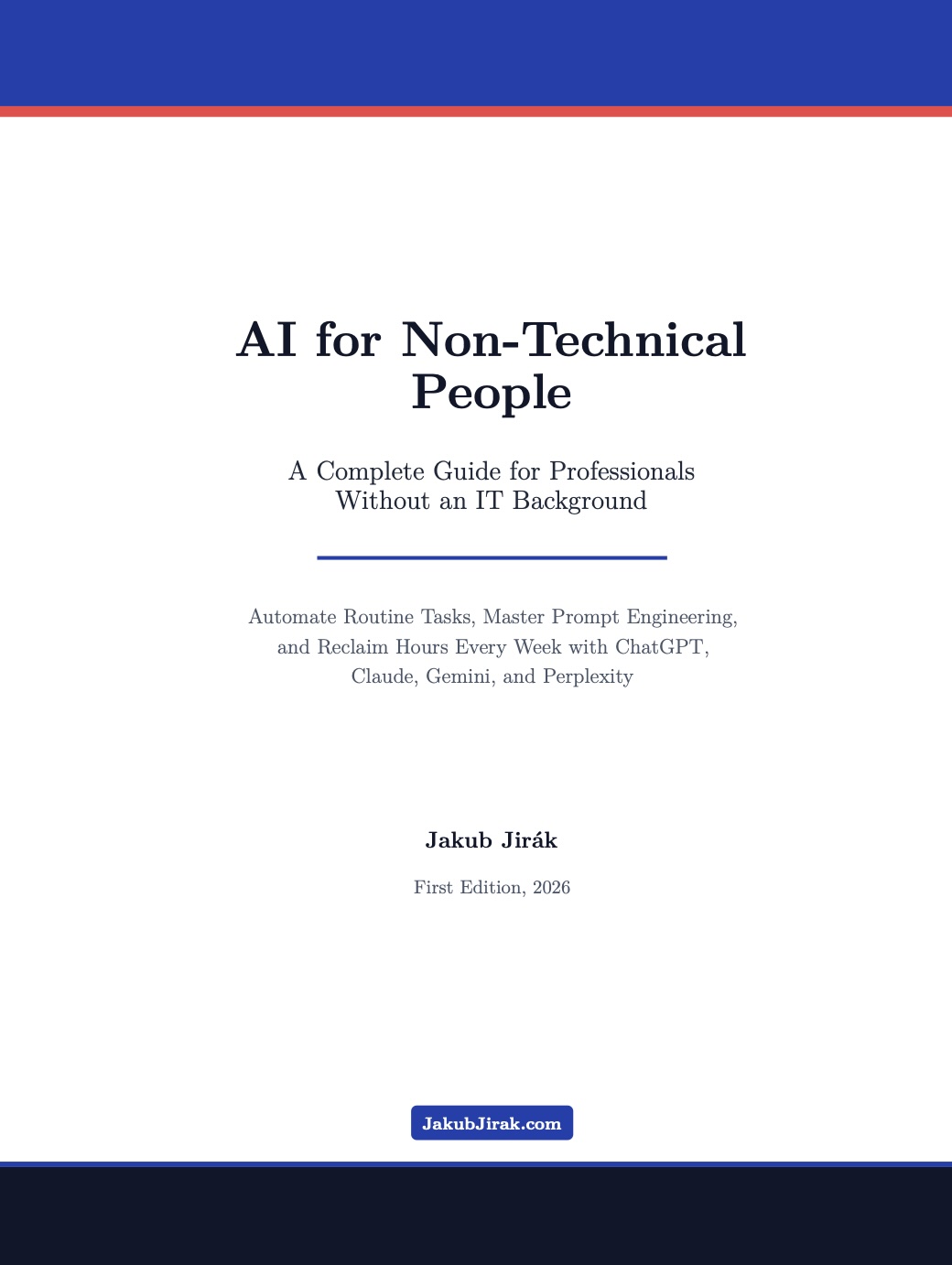
AI for Non-Technical People — actual author-owned cover Author catalogue source.
The reader I have in mind
The public description presents this as a practical guide in simple English for people without an IT background. I would recommend considering it when AI feels relevant to the working day but the technical vocabulary makes the subject unnecessarily distant. The aim is a usable relationship with the tools, not a new identity as a software developer.
I would come to it with one ordinary task that takes effort. It might involve preparing a clear draft, organising information or turning notes into a useful report. The task should be familiar enough that the reader can recognise a good result and notice what is missing. That knowledge is an advantage, not an obstacle.
I would choose a more technical reference when the actual goal is building an application, writing an agent system or administering infrastructure. Those are valid needs, but they belong to a different starting point. A plain introduction is most useful when it stays close to the professional’s own work and decisions.
A tour is a way to choose, not collect subscriptions
The published scope describes a practical tour of six AI tools and model comparison tables. I would use that breadth to understand why one tool might suit a task better than another. I would not interpret it as a shopping list that must be purchased in full before useful work can begin.
I would start with a tool that is available under the reader’s workplace rules and supports the intended task. Learning one complete workflow can be more useful than trying several interfaces without finishing anything. Once that first route is understood, another tool has a clearer standard to meet.
The names and available features will change over time. I would check the current plan and official documentation if a specific capability decides the purchase. A book can make the choices easier to understand while the service’s current information establishes exactly what the selected account can do today.
RCGFE gives a request a visible shape
The author catalogue identifies the RCGFE framework: Role, Context, Goal, Format and Examples. I like a framework that makes missing information easier to see. A request becomes more useful when the tool knows what job it is helping with, what situation matters and what a usable answer should look like.
I would begin with the goal rather than fill every heading mechanically. If the goal is unclear, adding a role name or a long example may not repair it. The useful result is a request that another person could also understand, with enough context to avoid an unnecessary guess.
I would then check the required format. A short email, a comparison table and a briefing for a manager need different outputs even when the underlying facts are the same. Making that choice explicit can reduce the work needed after the first answer. The point is less reformatting and clarification, not a magic phrase that guarantees correctness.
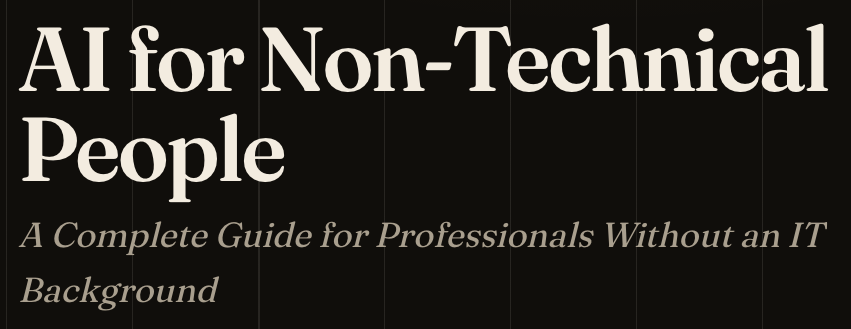
Title and description presentation from my author catalogue; this is not an interior page. Author catalogue source.
Examples should explain the standard
The published scope includes reusable prompts for eight professional roles. I would treat an example as a starting point to adapt, not a form that knows the reader’s workplace. The actual audience, terminology and constraints need to be supplied honestly for the current job.
I would be careful with an example that looks polished but contains facts I cannot verify. A confident tone does not make an invented detail acceptable in a client message or internal report. The reader’s own professional knowledge remains essential when reviewing the output before it is used.
I would also keep successful requests with a short note about when they work. That makes a small prompt library easier to reuse responsibly. A prompt copied without its conditions can be confusing later, especially when a colleague applies it to a different task and expects the same kind of result.
Combining tools needs a clear handoff
The author catalogue describes workflows involving Perplexity, Claude, ChatGPT and Gemini. I would approach a multi-tool workflow by deciding what each step contributes. Moving text between products is not automatically a quality improvement. The next step needs a purpose and a clear understanding of what the previous one actually established.
For a research-supported draft, I would keep source information connected to the claims that use it. A fluent summary can lose important qualifications while passing between tools. The useful final result should still let the human author check the facts, not require trust in a chain of increasingly polished paraphrases.
I would begin with as few handoffs as the task needs. If one tool and a careful human review are enough, that is an attractive simple arrangement. I would add another tool when it provides a specific missing capability or a useful independent check, rather than because a complex workflow looks more advanced.
Automation should follow a working manual route
Email, data extraction and report generation appear among the stated automation subjects. I would first complete the task with a human watching the process. That reveals which inputs are clear, where judgement is needed and what happens when the material does not fit the expected pattern.
I would then choose a bounded part to automate. Preparing a draft for review and sending a message automatically are different levels of authority. The reader should know which result is being produced and which action remains theirs to approve. A convenient workflow should make responsibility clearer, not hide it.
I would also decide what happens when an input is incomplete or a tool cannot finish. A useful process needs somewhere for uncertainty to go. Returning a clear question to the person can be a better result than quietly producing a plausible answer with an invented detail.
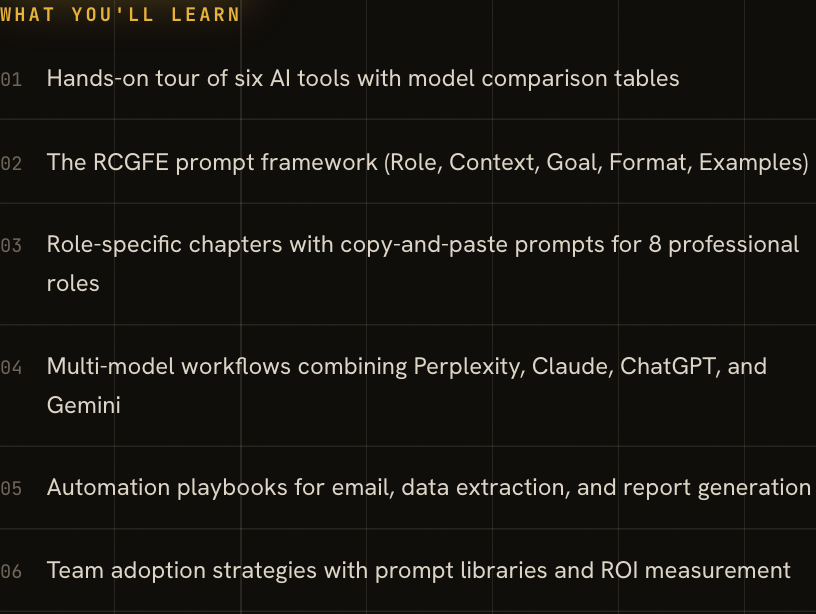
Published scope from my author catalogue; this is not an interior page. Author catalogue source.
Check information before it leaves your desk
My practical expectation is that AI output receives an appropriate human review. The intensity depends on the task and the consequence of a mistake. A brainstorm and a client-facing statement do not need the same process, but neither should be confused with a verified fact simply because a tool generated it.
I would follow the employer’s rules for confidential material and approved tools. Removing a person’s name alone may not remove sensitive context from a document. A useful learning task should be chosen with those boundaries already in mind, rather than discovering them after uploading real work to an unsuitable account.
I would keep original source material available while editing. That makes it easier to check whether a summary omitted a condition or changed the meaning. The professional remains responsible for the final communication, including the parts that became easier to prepare with assistance.
A team needs shared habits
Team adoption, prompt libraries and return-on-investment measurement are part of the public scope. I would start with a small shared use case and an agreed review standard. A team can learn more from one clearly documented useful process than from a broad announcement that everyone should use AI more.
I would measure the task in a way that includes review and correction, not only the first draft’s speed. A quick answer that takes longer to repair may not be an improvement. A modest time saving that also produces a clearer result can be worthwhile. The team should know what evidence would justify continuing or changing the arrangement.
The alternative I would choose
For a software engineer selecting models and coding interaction modes, The Complete AI Model & Mode Selection Guide is the more focused choice. For building an agent system, Build AI Agents That Actually Work has another purpose. I would not use those technical subjects as prerequisites for this book’s ordinary workplace starting point.
My author recommendation
I recommend considering AI for Non-Technical People when you want a plain-English route from a familiar work task to a more deliberate use of AI. I like its practical focus on requests, reusable workflows and team habits. I would buy it for that starting point, keep human review central and choose a specialist reference when the job itself becomes a technical implementation project.
What worked
The published scope connects a clear prompt framework with reusable tasks, multi-tool workflows and team adoption.
What bothered me
Outputs still need appropriate human review, and named tools, plans and features change over time.
Who should not buy it
I would choose a technical reference when building an application, agent system or infrastructure is the immediate job.
Alternatives I would consider
The Complete AI Model & Mode Selection Guide. I would choose it for repeated model and interaction-mode decisions in software engineering. Read my The Complete AI Model & Mode Selection Guide author overview.
Build AI Agents That Actually Work. I would choose it when the objective is designing agent software rather than ordinary workplace assistance. Read my Build AI Agents That Actually Work author overview.
Evidence and sources
The stated scope comes from my published author catalogue. The images show the actual cover and author-catalogue presentation, not interior pages or independent customer evidence.
This is the author's account of the book's scope and intended reader. Check the selected Amazon edition for its current format, sample and availability.
Conclusion
Worth considering as an approachable starting point with one real task; it does not require buying every tool described.
AI for Non-Technical People
Amazon US · US
Check price and availability: AI for Non-Technical People at Amazon USAffiliate link. As an Amazon Associate I earn from qualifying purchases.