I am the author of The Power User’s Guide to AI-Powered CLI Tools for Software Engineers. I receive royalties from sales, and the labelled Amazon link can also earn an affiliate commission. This is my explanation of the intended reader and the book’s fit, rather than an independent review of my own work.
Quick verdict
I recommend considering it for a clear, bounded and reviewable terminal AI workflow in an existing repository.
Best for: Software engineers already comfortable with terminals and version control.
Main benefit: The published scope connects project instructions, CLI execution, parallel work and verification.
Biggest drawback: Named tool interfaces and model generations change, and orchestration adds integration work rather than guaranteeing a better result.
The Power User's Guide to AI-Powered CLI Tools
Amazon US · US
Check price and availability: The Power User's Guide to AI-Powered CLI Tools at Amazon USAffiliate link. As an Amazon Associate I earn from qualifying purchases.
Reviewed version: The Power User's Guide to AI-Powered CLI Tools: For Software Engineers
Compatibility: Check the sample and format at ASIN B0GND1MWSL. Confirm current CLI, host and account requirements before relying on an edition-specific interface.
Review context: The recommendation uses the published author description and scope. It does not claim an independently verified reading result or invent chapter contents.
I like the terminal as a place where AI assistance can meet the real project. The files, commands and version-control history are close to the task. That can make an assistant useful in a concrete way, but it also makes clear instructions, appropriate authority and verification more important. A tool that can change a repository deserves more thought than a tool that only suggests a paragraph.
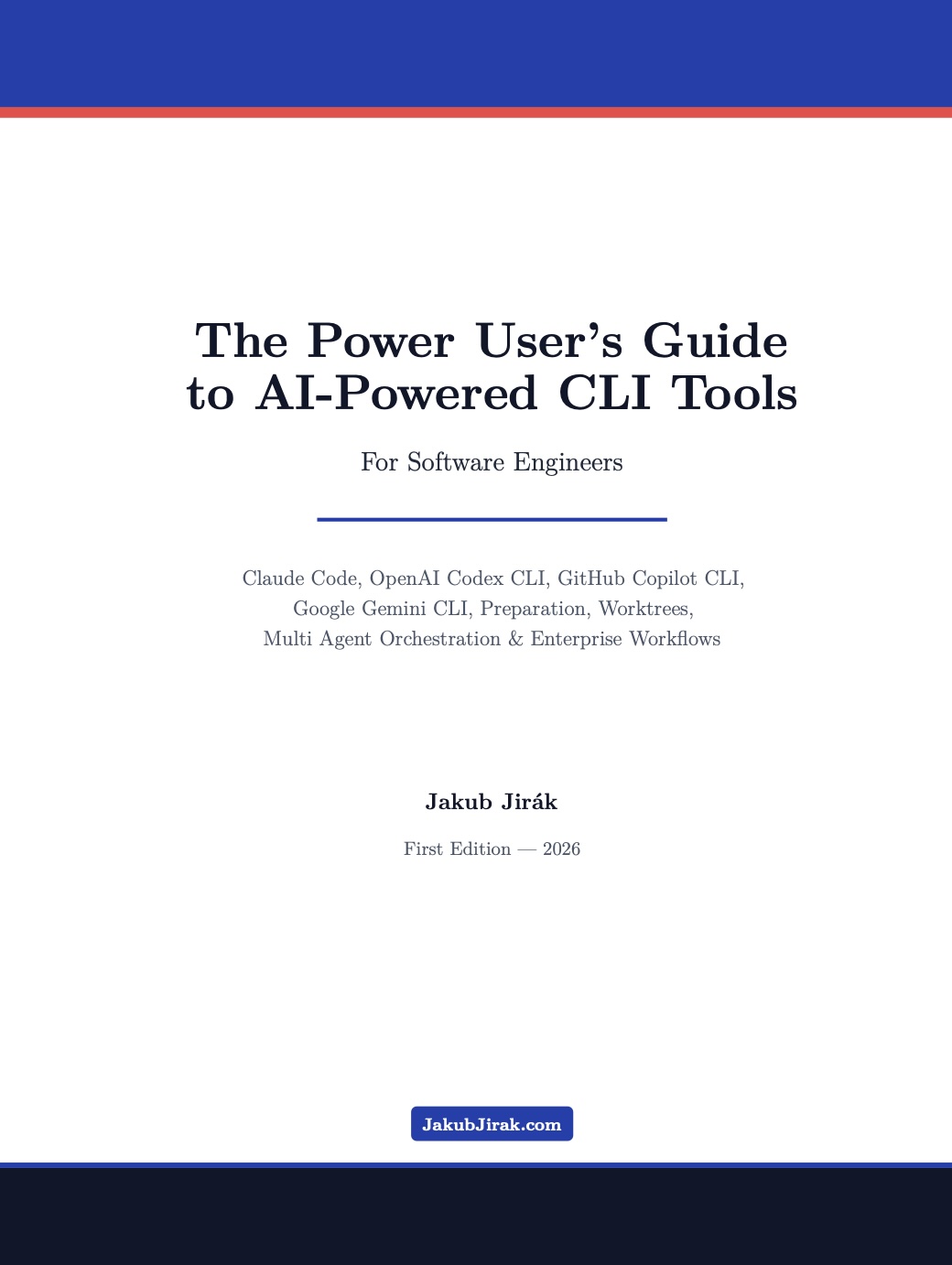
The Power User’s Guide to AI-Powered CLI Tools — actual author-owned cover Author catalogue source.
The reader I have in mind
The published scope names Claude Code, Codex CLI, Copilot CLI and Gemini CLI, with preparation, execution and orchestration as the central conversation. I would recommend considering it to a software engineer who is already comfortable with a terminal and wants a more deliberate AI working arrangement there.
I would read with an existing repository and one bounded task in mind. That gives the discussion a practical setting without requiring a large migration or a new project. The task should be small enough to review and meaningful enough that finishing it would improve something the reader actually maintains.
I would choose a more introductory guide for someone who still needs to learn basic command-line work or version control. Those skills are useful context, rather than obstacles to be hidden by an agent. The tool can help explain a command while the engineer remains responsible for the environment in which it runs.
Prepare the project before the run
The author catalogue includes instruction files such as AGENTS.md, CLAUDE.md and copilot instructions. I like those topics because a repository often contains local knowledge that people silently rely on. An assistant cannot consistently respect a convention it has no useful way to discover.
I would begin with accurate build and validation commands, the important directory boundaries and the definition of a finished change. The instructions should match the actual project. A short reliable file is more valuable than a long inherited collection of commands nobody has tried recently.
I would also keep sensitive information out of reusable guidance. The assistant needs context about the project, not a copied collection of credentials. Useful preparation makes the task easier to understand while preserving the boundaries that already belong to the development environment.
Give the task a reviewable result
My preferred task description says what should change and how another engineer can recognise it. It should include relevant constraints without trying to dictate every implementation detail prematurely. The objective is to reduce avoidable guessing while leaving room for the investigation a real codebase may require.
I would keep evidence separate from expectation. A plan to run a check is not a passed check, and a local edit is not a deployed change. The final report should make those states easy to distinguish. That is useful to the person operating the tool as well as anyone reviewing the work later.
For a larger assignment, I would identify natural checkpoints. A useful checkpoint has a concrete result: an understood failure, a proposed interface or a validated implementation. It should not be a ceremonial status message. The point is to keep progress visible while there is still time to correct a mistaken direction.
Autonomy needs a clear boundary
The published scope discusses preparation for autonomous mode and custom agents. I would treat autonomy as authority for a defined task, not an invitation to perform every available action. The engineer should know which operations the assistant can carry out and which decisions need a separate human judgement.
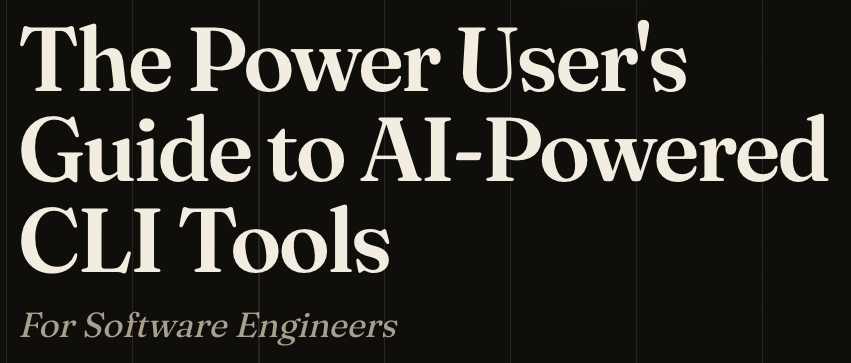
Title and description presentation from my author catalogue; this is not an interior page. Author catalogue source.
I would be particularly explicit about actions that affect shared or production systems. A tool can prepare a concrete change and its evidence without automatically receiving permission to perform every external step. The useful arrangement follows the project’s actual authorisation, not a broad assumption that finishing quickly makes every route acceptable.
I would also decide how the workflow should react when necessary information is missing. Sometimes independent investigation can continue. Sometimes the correct next step is a focused question. A system that invents an answer to avoid appearing blocked is less useful than one that identifies the exact unresolved dependency.
Worktrees make separation visible
Git worktrees and parallel development are part of the stated scope. I find this attractive when separate tasks can genuinely progress independently. A distinct working directory can give each task a clear place, while the branches and final integration still need deliberate ownership.
Before starting several agents, I would divide the work according to the code’s actual dependencies. Independent investigation and well-bounded modules can suit parallel work. Several people or agents editing the same tightly connected design can need a shared decision first. The problem should lead the division.
I would keep the output of each task concrete. Which files changed, what was checked and what assumptions remain? The next participant should not have to reconstruct the assignment from a long conversation. A useful handoff preserves the important evidence without copying every intermediate thought.
Orchestration is not the final result
The catalogue describes multi-agent orchestration and overwatch patterns. I would evaluate those ideas by asking what they improve in the actual project. A larger agent arrangement can provide useful independent checks or reduce a real wait, but it also creates communication and integration work.
I would make one owner responsible for the combined outcome. Several individually plausible changes can still conflict when brought together. The final owner needs to inspect the integrated behaviour and run the checks that apply to the combined tree, not only collect the agents’ separate success messages.
I would keep a simple workflow available for tasks that do not benefit from orchestration. A small bug fix may need one careful investigation and a narrow validation. Choosing less machinery can be a deliberate engineering decision, rather than a failure to use every feature described in a tool’s marketing.
Shell work should remain understandable
Shell automation and CI/CD integration appear in the public scope. I would apply the same standards to commands proposed by an assistant as to commands written by a person. The working directory, inputs and expected effect should be clear, especially when a command changes files or shared state.
I would prefer an inspectable script for a repeated complex task over an increasingly difficult one-line command. That makes review, quoting and later maintenance more manageable. The useful goal is a dependable operation, not a demonstration of how much shell syntax can fit into one line.
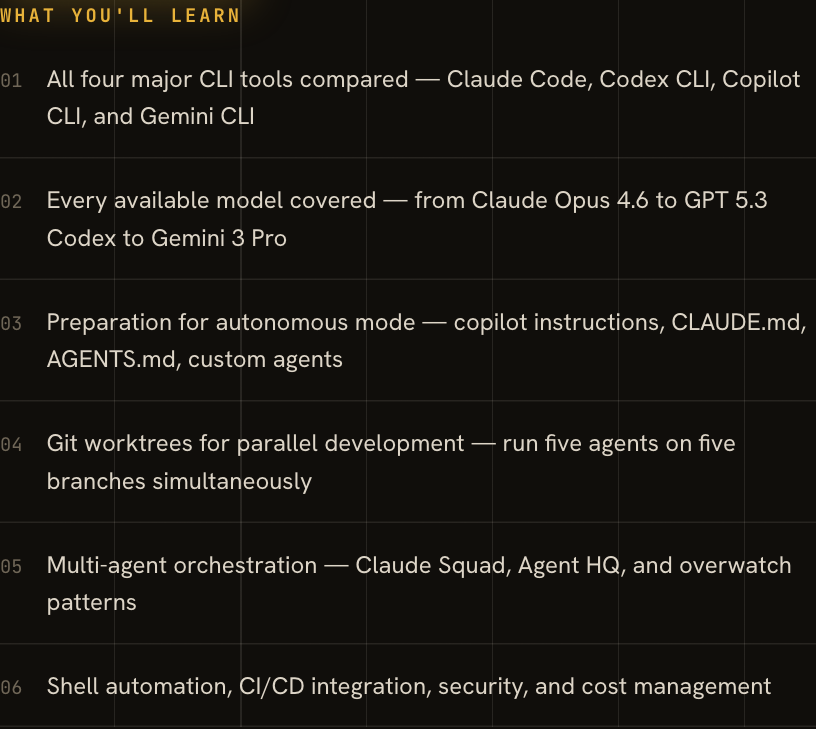
Published scope from my author catalogue; this is not an interior page. Author catalogue source.
I would also preserve ordinary recovery options. Version control, scoped changes and clear output help the engineer understand what happened. If an automation task fails halfway through, the next step should be based on the observed state rather than repeating the whole command blindly.
Cost belongs beside completion
Security and cost management are part of the catalogue’s stated subject. I would connect cost to a useful outcome, including the time spent reviewing and correcting the result. A fast initial response is only part of the work if the final change still needs substantial repair.
I would choose a bounded task and record enough information to compare approaches sensibly. The relevant model, context and acceptance standard matter. A single favourable run does not prove that a different tool will improve every future task, and an expensive run should have a clear reason for using that amount of work.
For a team, I would keep the evaluation visible to the people responsible for the process. The question is whether the arrangement helps deliver maintainable changes under the team’s constraints. A dramatic demonstration and a sustainable working practice can be different results.
Editions matter in this subject
The public description names specific tools and model generations. Those names establish the book’s scope at its edition, not a promise that every current interface or plan is unchanged. I would check the available sample and current official documentation when a specific feature is the reason for buying.
The book is not a replacement for a tool’s current command reference. I would buy it for the engineering approach around preparation, authority, parallel work and verification. I would use the current reference for exact flags, installation requirements and supported integrations.
The companion I would choose
The Complete AI Model & Mode Selection Guide is the more focused starting point when choosing the assistant and interaction style is the main problem. Build AI Agents That Actually Work has a system-building perspective. I would choose this CLI book when the daily terminal workflow in a real repository is the immediate goal.
My author recommendation
I recommend considering this guide for a software engineer who wants terminal AI work to be clear, bounded and reviewable. I like the connection between project preparation and actual completion. I would buy for that practical workflow, keep current tool documentation beside it and let the project’s real needs decide how much autonomy or parallel orchestration is useful.
What worked
The published scope connects project instructions, CLI execution, parallel work and verification.
What bothered me
Named tool interfaces and model generations change, and orchestration adds integration work rather than guaranteeing a better result.
Who should not buy it
I would choose an introductory resource for basic terminal skills or ordinary non-technical chat use.
Alternatives I would consider
The Complete AI Model & Mode Selection Guide. I would choose it when model and interaction-mode selection is the main recurring decision. Read my The Complete AI Model & Mode Selection Guide author overview.
Build AI Agents That Actually Work. I would choose it when designing the agent system itself is the immediate task. Read my Build AI Agents That Actually Work author overview.
Evidence and sources
The stated scope comes from my published author catalogue. The images show the actual cover and author-catalogue presentation, not interior pages or independent customer evidence.
This is the author's account of the book's scope and intended reader. Check the selected Amazon edition for its current format, sample and availability.
Conclusion
Worth considering for the workflow around the tools; current official references remain the source for exact commands.
The Power User's Guide to AI-Powered CLI Tools
Amazon US · US
Check price and availability: The Power User's Guide to AI-Powered CLI Tools at Amazon USAffiliate link. As an Amazon Associate I earn from qualifying purchases.