Tag: product-design
-

Why AI Should Be Boring (And Why That's Good)
The most valuable AI isn't the one that impresses you—it's the one you forget exists. Why boring, reliable AI that quietly solves problems will outlast.
-
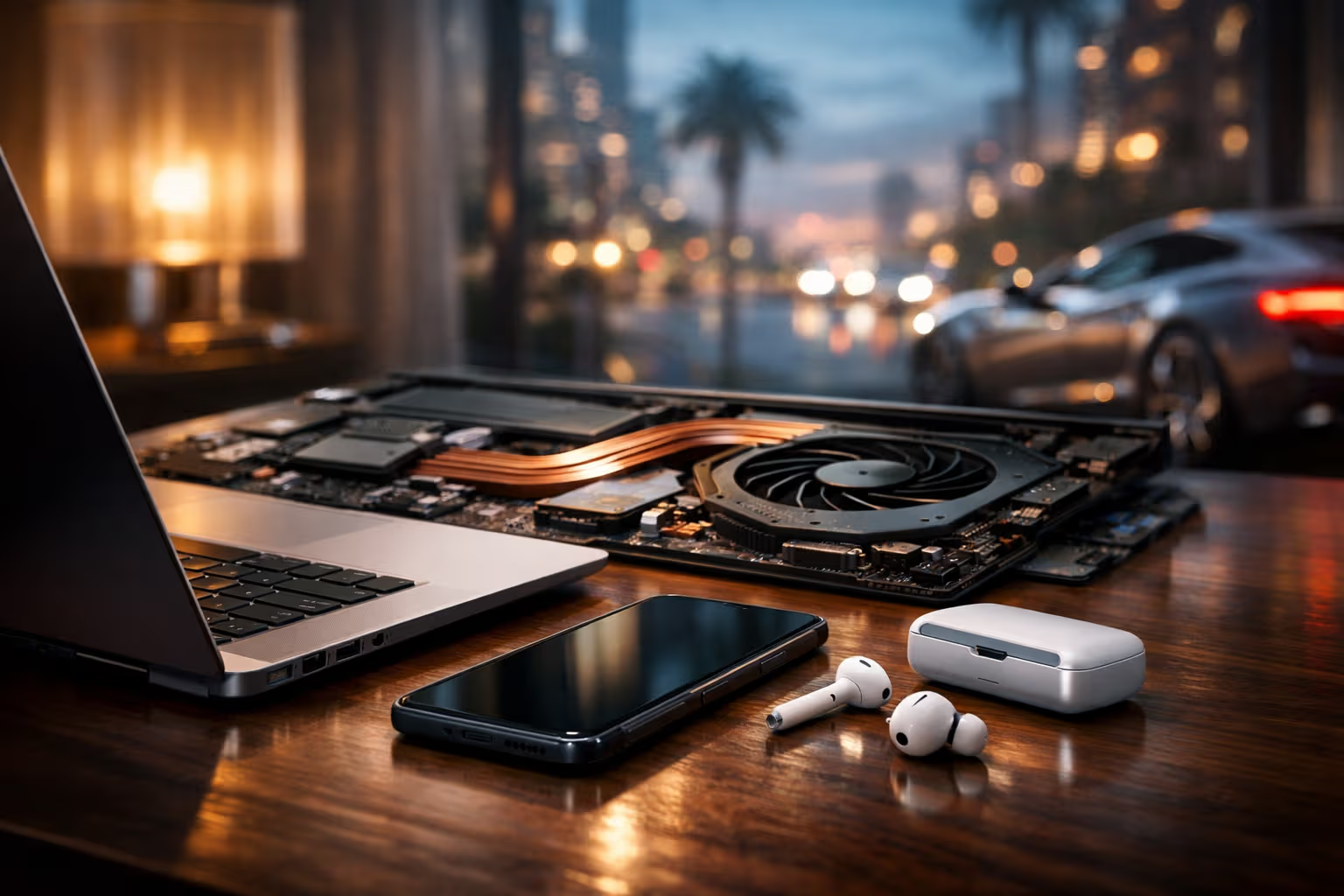
Why Quiet Devices Feel More Expensive
Explore why silent operation makes devices feel premium. Learn how thermal management, acoustic design, and noise reduction create perception of quality.
-

How Apple Designs for the Worst Day, Not the Best
While competitors design for perfect conditions, Apple designs for emergencies, failures, and the moments when technology matters most. This worst-day.
-

Technology Is Growing Up. Users Are Not.
Technology has matured into sophisticated, thoughtful products. But users remain stuck in old habits—chasing specs, demanding features, and resisting the.
-

The New Definition of Premium in 2026
Premium no longer means expensive or powerful. In 2026, premium means thoughtful—products designed with restraint, built to last, and engineered to.
-

The Quiet Shift From Speed to Flow
The technology industry spent decades optimizing for speed. Now the smartest companies are optimizing for flow—the seamless, uninterrupted experience.
-

The End of Feature Inflation
Explore why the era of endless feature accumulation is ending. Learn how product teams are discovering that restraint creates value and why consumers are.
-

Why Most Tech Feels Overdesigned
Discover why modern technology often feels overdesigned and how excessive design choices interfere with actual use. Learn to recognize when design helps.
-
Why the Best Products Don't Explain Themselves
Explore why exceptional products need no explanation. Learn the principles of self-explanatory design and why the best interfaces communicate through.
-
Why AI Should Be Boring (And Why That's Good)
Discover why the most valuable AI tools are predictable and unremarkable. Learn how boring, stable AI outperforms flashy demos in real-world applications.
-

How Apple Designs for the Worst Day, Not the Best
Discover how Apple designs products for emergencies and edge cases most users never encounter. Learn why worst-day thinking produces better everyday.
-

The Physics of Heat, Noise, and Perceived Quality
Silence correlates with price so reliably you could price a laptop by ear alone. That correlation isn't psychology dressed up as engineering. It's real thermal physics, and understanding it explains why cheap devices are loud and why the loud ones are usually hiding something else too.
More posts tagged product-design
- Why Most AI Products Feel Like Features, Not Tools
- Why Apple Products Are Easier to Trust
- Why Most 'Pro' Products Are Designed for Nobody
- The Hidden Cost of Power User Features Nobody Uses
- Technology We Buy for Feeling, Not Features
- The Science of Ergonomics: Why Some Products Don't Tire You Even After Hours of Use
- Why Apple Usually Doesn't Win on Paper, But Wins in Practice
- Why Power Users Are the Most Dangerous Target Audience for a Product
- How Product Design Changed After Apple Silicon Arrived
- Invisible Details That Separate Premium Products From Average
- The Science of Attention: Why You Use Some Products Every Day and Others Not
- Apple vs. Unnecessary Complexity: Why Fewer Features Often Means a Better Product
- The Silent Revolution: Why You Can't Recognize a Top Product at First Glance Anymore
- Why Simplicity Is the Greatest Innovation of the 21st Century
- Minimalism in Software: Fewer Features Equals a Better Product