A familiar stage microphone can have a useful desk role, but I would choose it for its actual working method rather than its reputation alone. The Shure SM58 is a dynamic vocal microphone designed around a person speaking or singing toward its grille. I like the clarity of that role. It encourages thinking about position and the signal path before adding another layer of recording software.
Quick verdict
I would shortlist it for the focused role described here.
Best for: Close speech or singing with a planned microphone-input and monitoring route.
Main benefit: A defined close-vocal role and simple wired construction support an understandable microphone technique.
Biggest drawback: It needs a suitable XLR interface, cable and support; the microphone alone does not create a complete quiet recording system.
Shure SM58-LC dynamic XLR vocal microphone
Amazon US · US
Check price and availability: Shure SM58-LC dynamic XLR vocal microphone at Amazon USAffiliate link. As an Amazon Associate I earn from qualifying purchases.
Reviewed version: Shure SM58-LC dynamic XLR vocal microphone
Compatibility: A suitable XLR microphone input and gain arrangement, correct cable and a practical stand. SM58-LC does not inherit the cable bundle or switch of other SM58 variants.
Review context: I assess close vocal placement, gain planning, directivity and the complete connection from voice to saved recording.
I would consider it for close speech with a suitable XLR interface and a practical stand. I would not buy it as a one-cable USB microphone or expect the microphone alone to remove every sound from a room. The useful purchase is the whole arrangement: voice, position, cable, input and monitoring. A strong microphone can still be the wrong first item when those parts have not been planned.
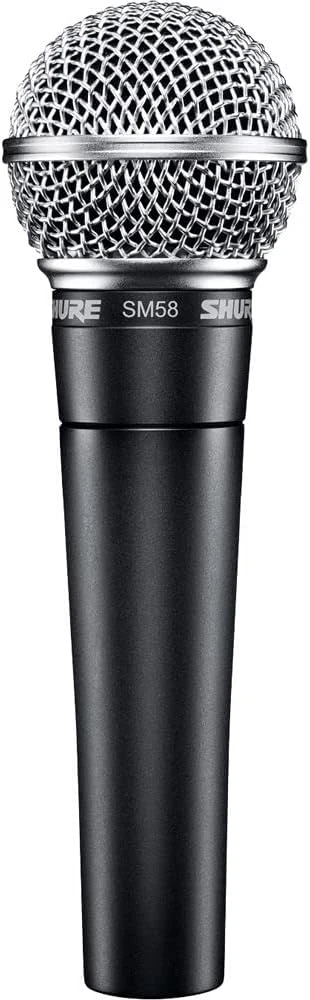
The LC package is a specific choice
Product images: the verified retailer gallery and any original manufacturer illustration credited in the sources. These are not personal test photographs.
Related reading

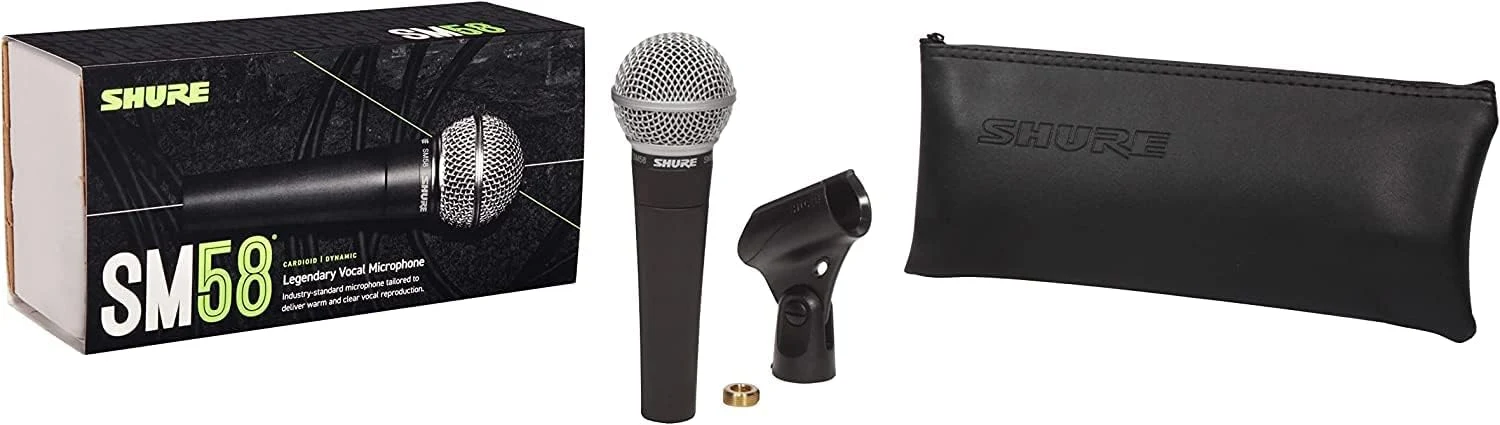
Shure’s SM58 specification sheet distinguishes the available packages. The selected SM58-LC supplies the microphone with its documented stand adapter and pouch, rather than the cable arrangement of another package. I would check the exact current contents before assuming the photograph includes everything required for a computer recording.
The SM58S is also a different variant with an on/off switch. I would not borrow that control for the LC in this review. Choosing a model without a physical switch can be perfectly reasonable, provided mute and recording control have clear places elsewhere in the route.
For a desk purchase, I would budget the correct XLR cable and a support that puts the grille where the speaker can use it comfortably. The microphone should not require leaning over the keyboard for every sentence. A sensible arm or stand can contribute more to the daily result than an unnecessary processing accessory.
Close speech is a technique, not a defect
Shure’s user guide explains the directional pattern and the way distance affects bass. I would use that guidance to find a repeatable speaking position. The goal is an understandable voice with enough freedom for normal movement, not keeping the microphone at an arbitrary distance because it looks tidy on camera.
The cardioid pattern also gives unwanted sound a direction to consider. I would place the microphone with the room and loudspeakers in mind rather than expect it to reject every noise from every angle. A keyboard directly beside the useful voice path is still part of the recording arrangement.
I would rehearse ordinary speech, including a louder sentence and a small movement. That reveals whether the setup gives enough margin before the important recording. A microphone can be forgiving in one respect while still benefiting from consistent technique. I would rather learn that simple relationship than try to repair large distance changes afterward.
An interface supplies the computer connection
The SM58 is not a USB device. It needs an appropriate microphone input, which normally means an audio interface for a computer desk. I would check the complete connection and gain requirements before buying, instead of assume a cable with the right-looking ends supplies the missing electronics.
Related reading
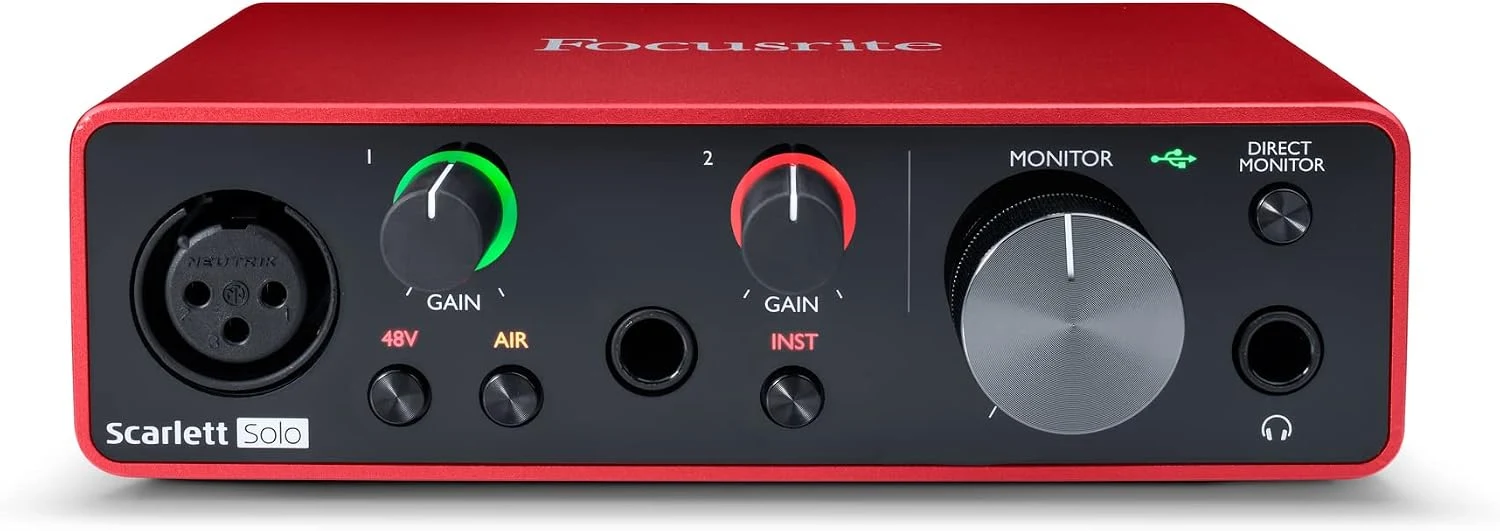
A dynamic microphone’s useful level depends on the voice, distance and preamp. I would set the route up sensibly before adding another gain device out of habit. The meaningful question is whether the recording reaches a suitable level with acceptable noise in that actual arrangement, not whether a popular microphone is always said to need an extra box.
For one microphone, the Scarlett Solo is an example of the interface role. For two microphone sources, I would compare the 2i2 or another suitable two-input design. The microphone count should choose the interface rather than the other way around.
A built-in filter does not settle every sound
Shure documents a built-in spherical wind and pop filter. I like that integrated approach for a vocal microphone that may move between a stand and a hand. I would still listen for breath effects in the chosen position, particularly when recording quiet speech at close range.
An external pop filter can be useful when it improves the actual route, but I would not buy one merely to complete a standard-looking photograph of a studio. A small change in angle or distance may already give the voice a better result. The right accessory is the one that solves an audible problem.
Simple hardware still needs ordinary care
The appeal of a passive wired microphone includes a clear maintenance story. I would protect the grille, keep the cable strain sensible and follow Shure’s care instructions. A product known for stage use does not need to be treated roughly to justify owning it.
The seller matters as well. I would choose a clear supply route and verify the delivered model and accessories. A familiar appearance is not enough to establish the identity of a microphone offered through an unclear listing. The return and support arrangement belong in the real price comparison.
Related reading

When I would choose differently
For one simple computer voice input, I would compare a suitable USB microphone. It can remove the separate interface and cable decision. For a different studio capture style, an appropriate condenser such as the AT2020 asks a different set of room and interface questions.

My verdict is positive for a deliberate close-vocal setup. I like the SM58’s defined purpose, simple wired design and understandable technique. I would buy the correct package, put it on a useful support and confirm the interface route. That is where a familiar microphone becomes a sensible working tool rather than a famous object expected to create a recording system on its own.
What worked
A defined close-vocal role and simple wired construction support an understandable microphone technique.
What bothered me
It needs a suitable XLR interface, cable and support; the microphone alone does not create a complete quiet recording system.
Who should not buy it
It needs a suitable XLR interface, cable and support; the microphone alone does not create a complete quiet recording system.
Alternatives I would consider
Rode NT-USB. I would choose an appropriate USB microphone when one computer voice input is the entire job. Read my Rode NT-USB review.
Audio-Technica AT2020 XLR. I would compare a different studio capture style with its own room and interface requirements. Read my Audio-Technica AT2020 XLR review.
Evidence and sources
Specifications are attributed to the linked documentation. Images: Amazon product gallery. These are not personal test photographs or measurements.
Features, compatibility and rated figures from the maker are manufacturer information. My opinions are identified in the review.
Conclusion
Worth considering when the complete XLR arrangement fits; a USB microphone can be the smaller one-voice purchase.
Shure SM58-LC dynamic XLR vocal microphone
Amazon US · US
Check price and availability: Shure SM58-LC dynamic XLR vocal microphone at Amazon USAffiliate link. As an Amazon Associate I earn from qualifying purchases.
One email a week with practical Mac workflows, useful comparisons and honest tech recommendations.