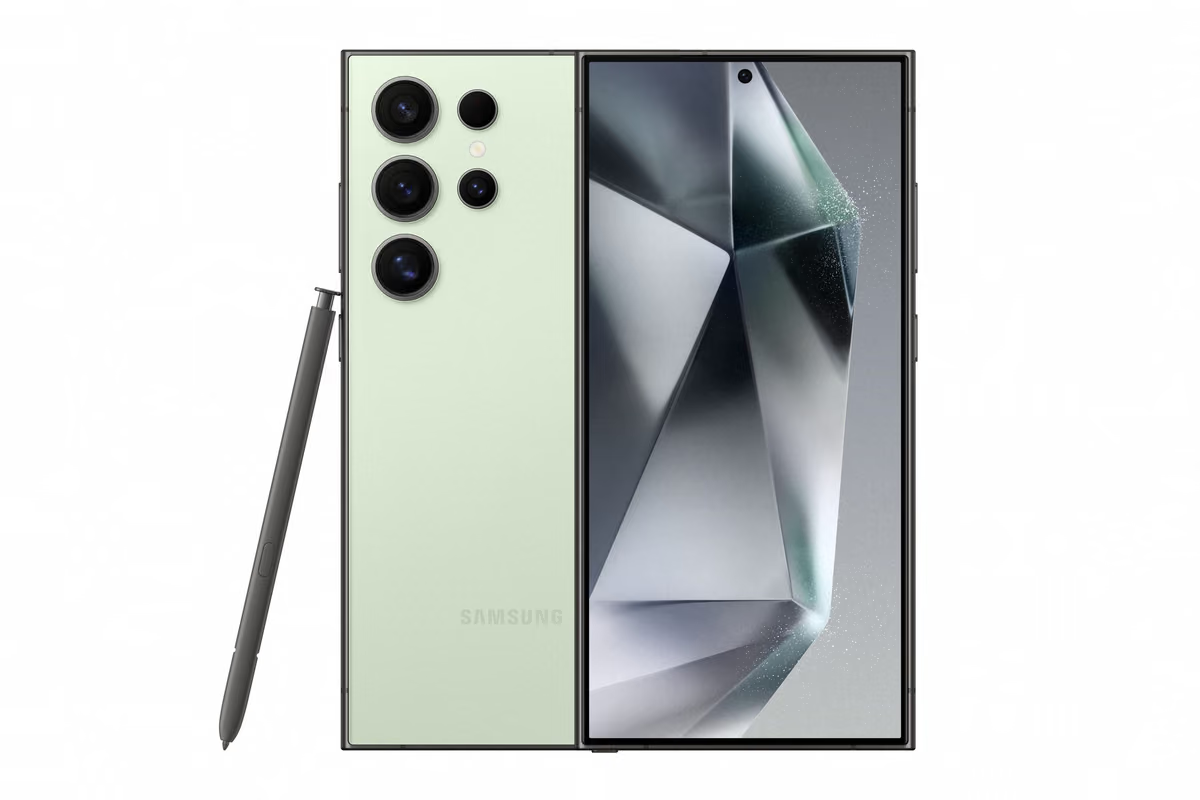
The Galaxy S24 Ultra put a flatter screen and a different long camera to work
The Samsung Galaxy S24 Ultra reached stores on January 31, 2024. The flat front and less reflective cover glass gave a different kind of improvement from the change to a 5x dedicated Telephoto. The first helped when the phone was already in front of you. The second changed which distant topics were easy to photograph. The S Pen still belonged in the body, and Samsung’s new Galaxy AI features added things to try where language, region, account and software supported them. Samsung’s US Galaxy S24 release information
Quick verdict
Retail release in the United States · Archive date
I would have chosen it if reading and writing on the flatter display often mattered and the changed long camera suited my normal shooting distance.
Best for: A buyer who often checked reading or maps in reflected light and had useful work for both an integrated pen and a flexible rear camera.
Main benefit: The flat, less reflective front and 5x option made tangible changes you could try within the first week even without using new software.
Biggest drawback: It was a large purchase and the change from the preceding native 10x lens gives a long-distance photographer a reason to compare before switching.
Reviewed version: The US S24 Ultra sold from January 31, 2024 with a 6.8-inch display, an integrated pen and a 50MP 5x Telephoto.
Compatibility: Its 3x and 5x views use separate optics. The tighter advertised 10x setting uses the 5x sensor. Galaxy AI features had individual account, language and region requirements.
Review context: I evaluate the documented retail hardware and the software available in its release window. Regional variants and software changes are identified where they affect the verdict.
This retrospective uses the launch specifications for the United States model. The Ultra opened at $1,299.99 with 256 GB and used a 6.8-inch display. Its behaviour in particular photo and AI tasks depends on both the phone and the conditions. The most sensible way to justify the size and price was to identify what the screen and camera needed to do all week before deciding how much other advertised software would matter.
The flat screen had a visible effect before you used anything new
The flat panel gave a more straightforward surface for writing or holding a close-up preview. A display with less glare can give you another option about where to hold it when you want to see text. I would have looked at a message or a route in a place where the previous phone usually reflected something important. The change can help at a reasonable angle. It does not remake the display in every condition, and a separate layer of screen protection can change the result you see.
Related reading
For someone using the S Pen, displaying a line or picture close to the edge is a simple way to judge the flat shape. Try making a small mark near the edge and see whether it ends up where the recipient can read it. The pen still had a slot in the body. This lets the user carry the precision tool throughout a normal trip without thinking about storing it separately. It is useful when a screenshot needs an arrow or small handwritten explanation in the middle of another task.
The device stayed broad enough to matter in a pocket and while holding it with a coffee, bag or clipboard. I would have opened one useful app and reached its important controls while standing. Long reading and use propped on a desk had a different cost in reach. Because the display is one of the main reasons to buy the Ultra, it is worth seeing when the large size helps and when the smaller S24 was easier just to use.
The new 5x camera asked a different question of a distant scene
The S24 Ultra changed the longer dedicated camera from 10x to a 50MP sensor behind a 5x lens, and kept a 3x optical option. Samsung also advertised a 10x optical-quality setting based on the 5x sensor. Comparing those settings by hardware helps a buyer choose useful positions. A 5x view can fit more of a distant composition than the older dedicated 10x from the same spot. The tighter mode gives you another option when a smaller portion matters. Use a steady subject and representative light while deciding whether the changed view fits the distance that occurs in your work.
I would have tried getting both an image that explains the area and one that gives a detail other people want. At a venue, walking closer may be impossible. The decision can be which field of view you need most often and how much context to leave. An owner who used the S23 Ultra’s 10x regularly had a good reason to compare the actual result at that distance before switching. Somebody who wanted a clear view between the established 3x and the older 10x had a new tool for a frequently occurring frame.
Treat useful software as individual tasks with their own requirements
Samsung highlighted live translation on compatible calls, note and text features and a way to search visible information through Circle to Search. These did not all do the same sort of work. I would have tried a short supported call in the languages I actually needed, then used a harmless image to see whether a visible detail could be searched usefully. Accuracy, language and account or network requirements deserve attention depending on what you want to get done. A workflow that has to be correct needs someone to check the resulting wording and context before relying on it.
Related reading

The touchscreen and pen can make an information workflow more convenient even if you use none of the new software. Look at what is still needed after a summary or search result. Keeping an accessible source and adding one mark of your own might be more helpful than an automated output with no context. The large display gives you room to check the work either way. I would have assigned value to the new functions by finding out what had to happen before and afterward.
The design and purchase were broader than two headline features
A normal case changes how the titanium-frame phone feels and reaches from a pocket. Its large body makes more sense if long episodes away from a desk or display are common. I would also have decided how much of the test footage and material I would want to keep inside the starting capacity. A large screen helps see a job at once, but the files still need a reliable path to another place. That can be a more important part of the purchase than the sheer presence of a new camera mode.
A wider frame on the long camera can be a change in what you photograph
I would have tried a subject somewhere between the usual 3x view and a truly distant one. Take a frame on the 5x, then see how much of the surrounding features are actually worth keeping. A closer result might exclude a person or a location detail you need in later use. Compare that outcome beside the cropped 10x mode to understand what changes with the new hardware. The older S23 Ultra’s separate 10x mattered most when you regularly shot at the distance that suited it. The newer model gives you a fair reason to choose another working distance for most of your pictures.
My verdict on the S24 Ultra
I would have chosen the S24 Ultra if the less reflective flat screen and updated longest lens fit jobs I already did. The Galaxy S22 Ultra offered a stowed pen and two distinct telephotos in a preceding layout, and the S23 Ultra kept a dedicated 10x camera. The Galaxy review timeline shows how these devices changed both the material you could capture and the surface where you used it.
What worked
The flat, less reflective front and 5x option made tangible changes you could try within the first week even without using new software.
The large screen and built-in S Pen still made a direct job possible when a screenshot or short note needed to be marked in place.
What bothered me
It was a large purchase and the change from the preceding native 10x lens gives a long-distance photographer a reason to compare before switching.
New assistance features worked unevenly by task and had requirements. Try the actual route from asking something through to using the result.
Who should not buy it
Anyone who often used a native 10x S23 Ultra and has little use for the revised screen or software.
Alternatives I would consider
Galaxy S23 Ultra. It has a separate 10x lens, a stowed pen and a differently shaped front. This is a relevant alternative if high optical reach is the priority. Read my Galaxy S23 Ultra review.
Evidence and sources
The release date refers to general availability in the named market. The archive filing is ten days later. Feature assessments are editorial judgments based on the documented retail model.
Features, compatibility and rated figures from the maker are manufacturer information. My opinions are identified in the review.
Conclusion
Assess the screen with the actual protection you expect to use and take a few comparable pictures at your most frequent telephoto distance.
One email a week with practical Mac workflows, useful comparisons and honest tech recommendations.