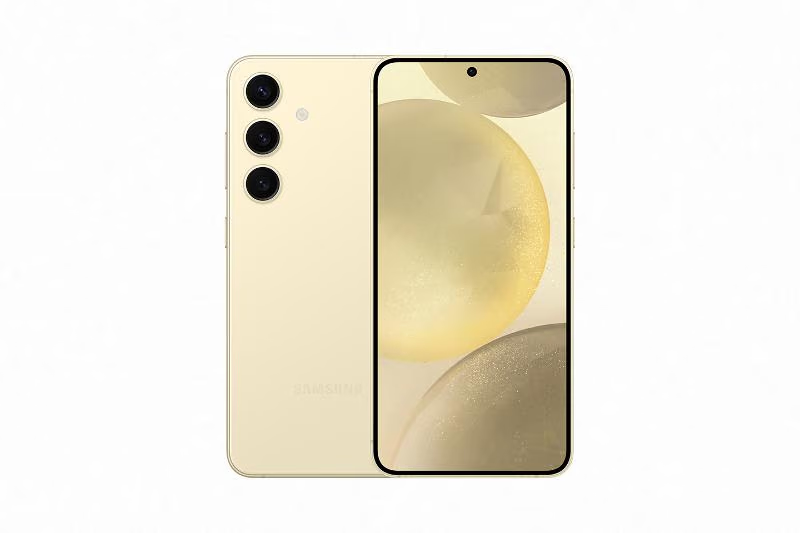
The Galaxy S24 made the small model a longer commitment
The Galaxy S24 went on sale in the United States on January 31, 2024. Samsung started the regular model at $799.99, with a 6.2-inch display and a slightly narrower body than the 6.1-inch S23. Galaxy AI took most of the attention at launch. I would have put the seven generations of operating system upgrades and seven years of security updates beside it. Those were unusually concrete considerations for someone buying the least expensive model to use for several years. Samsung’s US Galaxy S24 launch notice
Quick verdict
Retail release in the United States · Archive date
I would have bought the S24 for the compact body and long support commitment, with visual search judged by a real use.
Best for: Someone who wants a short dedicated telephoto and a compact phone that can receive updates for years.
Main benefit: The seven-generation OS upgrade and seven-year security promise make sense for a person keeping the phone beyond a short upgrade cycle.
Biggest drawback: The camera propositions and body already looked familiar to an S23 owner. Some additions need an account and network.
Reviewed version: The US regular Galaxy S24 Snapdragon configuration was available January 31, 2024. Regional models can use other processors.
Compatibility: Feature availability depends on language, account and connectivity. Uses fixed storage. Separate charging equipment may be needed.
Review context: I evaluate the documented retail hardware and the software available in its release window. Regional variants and software changes are identified where they affect the verdict.
The display grew without making the whole phone appreciably wider. The difference becomes more useful if I can still type a quick reply with one hand or reach the other side of the display. I would have changed the text to my usual size and then tested the same email and map. The smaller bezels are welcome in a design that stays physically near the same size. The S24+ still made more sense for someone who wanted both a larger panel and its higher QHD+ resolution.
The AI changes that would have been easy to keep using
Circle to Search gives you a way to select something on a screen and get Google results without having to describe it. I would start with an item in an ordinary photograph, where the visual similarity in a result is easy to judge. An ambiguous logo or several people beside each other can also tell you how much you need to refine the selection. Looking up an object this way makes an obvious small change to the steps you take. I would place more weight on that everyday example than a broad promise about what AI would become.
Related reading
Samsung also offered tools for call translation and text assistance. The relevant test is a conversation in a language you use, with a speaker whose speed and pronunciation match what you encounter. Try handling a person’s name, a place and a number. Those details can change the meaning of a reasonable-sounding sentence. I would have kept a straightforward fallback for an important call and credited the feature for helping with a simple change of plan or greeting when it worked. Supported languages and account or connectivity requirements affect that choice.
Editing features dealt with parts of a picture rather than the hardware that captured it. I would try an uncomplicated crop in an already good picture, then compare a generated change with the original. Some people need the original to remain clear and available. Samsung documented that its generative editing could require an internet connection and a Samsung account, with a marker on edited results. Its advanced intelligence settings could limit server processing and affect which features worked. That gave a buyer a sensible place to look before relying on an advertised workflow. Samsung’s S24 hardware and software feature details
The smaller body kept three real viewpoints
The regular model had a 50-megapixel wide sensor, an ultrawide and a separate 10-megapixel 3x telephoto. The familiarity of those numbers with the S23 gives an owner a good way to compare. Point both phones at a person in uneven light and take a quick shot without changing settings. Then use the optical telephoto position to frame one part of the same scene. A different final color or a more useful exposure can matter. Similar pictures can also make the reasoning for an upgrade depend less on the camera.
The Ultra has a different display cover, its own lens system and an integrated pen. I would have tried the regular 3x view and the phone’s ordinary screen first, since a smaller device solves a different set of problems. Shrinking a purchase to what you take outside every day can turn the same camera setup into an advantage. If the longest picture you want to take establishes a genuine reason for the Ultra, see what the wider body feels like in that same place.
What the long support promise can mean
Software support is useful when the phone is still physically good enough to keep. I would have bought the 256 GB option if the way I used the camera and downloaded offline content made 128 GB tight. I would then view support alongside battery service and storage needs over the years I expect to own it. A small capacity difference at purchase can leave a difficult choice if the rest of the phone still has plenty of scheduled support. A sensible fitted case is part of the same purchase if a person routinely sets their phone on hard surfaces.
Related reading

The promise was a stronger reason to start here for someone moving from a much older model than for somebody with an S23. The 2023 owner should identify which upgrade window, operating system feature or physical improvement is going to matter before replacing their phone. I would have separated those reasons from AI releases and updates to other phones. Buying with a longer horizon starts with the things both models can already do.
The S24 is still a regional question
Samsung’s US specification uses the Snapdragon 8 Gen 3 generation. Some international Galaxy S24 variants use Exynos hardware. The specific phone, carrier and service matter more than a performance comparison that omits the market. Samsung lists a typical 4,000 mAh battery for the US regular model and a larger battery in the Plus. I would have checked my own signal, ordinary brightness and time away from chargers for the uses that could decide between them. A credible opinion on those factors begins with knowing which product you can actually buy.
The brighter screen belongs in an outdoor comparison
Peak brightness is a specification about particular conditions. I would have opened a route in direct light, turned to face another direction and checked whether I could find the next street at the brightness I would actually leave on. On a regular S24 you still see some of the reflections the Ultra’s special front glass is designed to reduce. The smaller handset’s panel gave me reason to compare places and text rather than only the peak rating. Try the same thing while wearing the glasses you usually take outside. A clear enough result is valuable whether or not the new AI features enter the day.
My verdict on the Galaxy S24
I would have selected the S24 for a smaller flagship with a compelling support commitment and a real short telephoto. Of the new software, I would have tested the one visual search or translation action I actually expected to repeat. The Galaxy S23 review shows how similar the predecessor’s basic camera and physical proposition already were. The S24 Ultra review describes the expensive choice for longer optical reach and a pen, features that are easy to judge independently of the software.
What worked
The seven-generation OS upgrade and seven-year security promise make sense for a person keeping the phone beyond a short upgrade cycle.
The smaller flagship retained a real optical 3x rear lens and gave its display more room.
What bothered me
The camera propositions and body already looked familiar to an S23 owner. Some additions need an account and network.
Important translations need verification. Cloud-dependent features are conditional on their launch availability and settings.
Who should not buy it
Someone whose S23 already serves the same photographic and physical role and who expects little from the new software.
Alternatives I would consider
Galaxy S23. The predecessor keeps a similar small shape and rear camera selection, without the same launch support promise. Read my Galaxy S23 review.
Evidence and sources
The release date refers to general availability in the named market. The archive filing is ten days later. Feature assessments are editorial judgments based on the documented retail model.
Features, compatibility and rated figures from the maker are manufacturer information. My opinions are identified in the review.
Conclusion
Buy adequate local storage first. Compare Circle to Search or translation independently from the value of an upgrade from your own phone.
One email a week with practical Mac workflows, useful comparisons and honest tech recommendations.