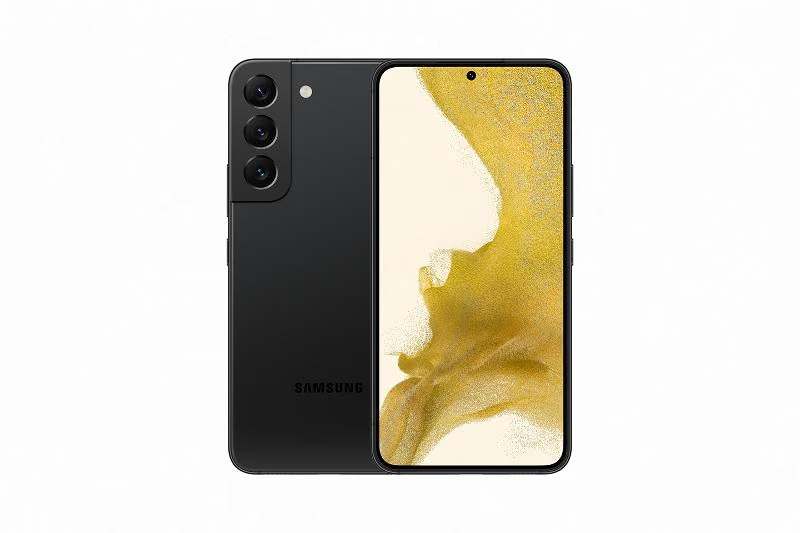
The Galaxy S22 put a more useful zoom into a smaller body
The regular Galaxy S22 went on sale in the United States on February 25, 2022, starting at $799.99. Its 6.1-inch screen was a little smaller than the 6.2-inch panel in the S21. Samsung added a 50-megapixel wide camera and a dedicated 3x optical telephoto, while the Ultra took on the job of carrying the pen. The smaller phone was the one I would have compared first if the point of staying with Galaxy was easy handling and an everyday set of rear cameras. Samsung’s US Galaxy S22 and S22+ specifications and release
Quick verdict
Retail release in the United States · Archive date
I would have bought the S22 for the dedicated telephoto in a genuinely small body if my usual day fit its battery.
Best for: Someone who takes portraits and short zoom pictures while prioritizing an easy grip over the longest time away from power.
Main benefit: A separate 3x lens and familiar ultrawide made the smaller phone more useful for ordinary framing decisions.
Biggest drawback: The 3,700 mAh typical battery and lower charging limit made the Plus worth an honest endurance comparison.
Reviewed version: Regular US Snapdragon Galaxy S22 at its February 2022 launch. There were different chipset configurations in other markets.
Compatibility: Uses fixed internal storage and compatible USB-C power up to 25 W. The Ultra is the S22 with a stowed S Pen.
Review context: I evaluate the documented retail hardware and the software available in its release window. Regional variants and software changes are identified where they affect the verdict.
Take one picture a little farther away than you usually stand. The smaller S22 was interesting because you could keep the body pocketable and still choose a genuinely different optical frame. Taking a step forward works in some rooms. In a public place or on a trip, the 3x lens gives you a place to start from where you can already stand. My first comparison would have been with the older S21 and a still face, a sign, or something you would want to include only a little of. That puts the specification into a picture I can judge.
A small device benefits from a specific zoom target
The S22’s zoom sits between its usual wide and the ranges promoted on the Ultra. The difference is useful for portraits, a detail in a building or objects across a table. An ultrawide uses the opposite decision. It is how you keep enough in the shot when there is nowhere to move back. I would take a series at the three intended positions during the day before trying a longer digital zoom. If I’ve never opened a gallery to admire or share a picture at the higher number, the distance statistic plays a smaller part in the purchase.
Related reading
Look at color and brightness when you move among the lenses, especially when a shadow crosses the subject. Samsung used the name Nightography for an assortment of camera improvements. For a shot made after sunset, judge what you need to show. A still table and a person talking beside it put different demands on exposure and processing. Once you have those two pictures, check their results at the size you share them. The dedicated telephoto earns its space for a lot of daytime jobs even if I prefer the main sensor in trickier conditions.
The display and sides are easier to choose than the spec suggests
There was a 6.1-inch FHD+ display with up to 120 Hz refresh. The screen is flat and the body uses glass front and back. If you tend to buy a compact phone for reach, try dismissing a notification and then reaching across the keyboard with one hand. Cases can change the apparent width in ways that a diagonal cannot explain. I would have compared it with a Plus using the case design I tend to buy. The smaller model can feel more purposeful if most of the time you spend with a phone is while it’s being held in one hand.
There is also a cost to going smaller. A little more space makes long notes and map labels easier to use, especially with a larger text setting. Use the larger model at your text size before deciding how much it solves. The power of the S22 decision is that you can buy a small chassis and keep the camera range. It makes sense to tie that to physical comfort rather than assuming you never want more room just because the smaller screen looks familiar.
When I would give battery capacity more weight
Samsung rated the regular S22 at 3,700 mAh typical. The S22+ had 4,500 mAh typical, and Samsung lists 25 W wired charging for the regular phone and up to 45 W for the Plus with compatible equipment. That difference makes the regular phone hard to choose blindly after a short demonstration. A person who takes a train home and can recharge at the desk will experience a different trade from somebody taking video and using maps from morning to night. I would compare the day I usually ask my phone to finish, including the hours when charging is not available.
The US release used Qualcomm hardware, while some other markets sold Exynos configurations. I would avoid transferring battery or performance claims from a test of a different retail model without checking which it was. The capacity and display size still make a sensible reason to compare the two physical sizes. Give the highest-usage app you expect to rely on an honest trial. Look for the time between uses of a charger that matters to you, instead of assuming the new generation extends it.
Related reading

What support adds to the purchase
Samsung described a promise of up to four generations of Android OS upgrades and five years of security updates for the eligible family. A buyer who keeps the phone long enough to care about the full duration can consider support alongside battery and physical condition. It is also worth asking which needs have a deadline outside Samsung’s promise. A work requirement or another device may decide how long this phone remains the one you use for a particular task. I like to give the extra support credit without treating it as extra battery life.
The two fixed internal storage options also came into that decision. Check the space you use rather than paying for the extra tier out of habit. A regular camera workload can make the upper version a better use of money than the Plus if you already know the body size and expected battery are enough. Conversely, I would not make the small one my travel camera purely to save on the larger phone if I typically needed its extra reserve.
Video is a different reason to choose the larger version
If the S22 is the phone I will hold to record a presentation, I would use both sizes for a clip long enough to judge hand comfort. The extra screen might make it easier to see what goes into the frame. It can also make the device more tiring to angle for several minutes. Check the microphone under the ordinary conditions of the room, since the presentation is often worth keeping only if it is intelligible. For people mainly making short portraits, I would give the optical range more weight and choose the larger model only for battery or display.
My verdict on the S22
I would have chosen it to get a dedicated telephoto in a phone that was easy to reach across. If I was choosing for travel and lengthy stretches away from power, I would put the S22+ next to it before paying. The S21 review looks at the prior lower-priced design, while the S22 Ultra review looks at the larger alternative with a pen you can stow and longer optical reach. The regular S22 has a clear job in the group: it can take a deliberate picture without becoming the largest thing you carry.
What worked
A separate 3x lens and familiar ultrawide made the smaller phone more useful for ordinary framing decisions.
The rear lens selection stayed useful even where the Ultra's additional reach rarely mattered.
What bothered me
The 3,700 mAh typical battery and lower charging limit made the Plus worth an honest endurance comparison.
Battery experience varies with the chipset, apps and signal. The same model name could describe different regional hardware.
Who should not buy it
Someone who wants a stowed pen, the Plus battery or its faster wired charging.
Alternatives I would consider
Galaxy S22 Ultra. The larger model includes a built-in S Pen and more optical zoom options. Read my Galaxy S22 Ultra review.
Evidence and sources
The release date refers to general availability in the named market. The archive filing is ten days later. Feature assessments are editorial judgments based on the documented retail model.
Features, compatibility and rated figures from the maker are manufacturer information. My opinions are identified in the review.
Conclusion
Pick the size and storage around normal grip and hours between charges. Then compare the lenses under your own indoor light.
One email a week with practical Mac workflows, useful comparisons and honest tech recommendations.