A travel router is useful to me when it reduces repeated setup rather than merely adds another box to a bag. The GL.iNet Opal, model GL-SFT1200, offers a small local network that can stay familiar while the connection outside it changes. I like that idea for several devices travelling together with modest networking needs.
Quick verdict
I would choose it for a small repeatable travel network with modest bandwidth demands.
Best for: I would choose it for a small repeatable travel network with modest bandwidth demands.
Main benefit: It can keep local device setup familiar while the travel connection outside it changes.
Biggest drawback: It still depends on hotel access rules and upstream quality, while a demanding VPN workload may justify another router.
GL.iNet Opal GL-SFT1200
Amazon US · US
Check price and availability: GL.iNet Opal GL-SFT1200 at Amazon USAffiliate link. As an Amazon Associate I earn from qualifying purchases.
Reviewed version: GL.iNet GL-SFT1200 Opal Travel Router, AC1200 Dual-Band Wi-Fi
Compatibility: Opal GL-SFT1200 AC1200 travel router, not Beryl AX. Requires an upstream network and suitable power. Confirm regional supply and current firmware support.
Review context: I assess a modest travel setup, wired clients, hotel access, VPN requirements and recovery when an upstream connection changes.
I would consider Opal for that focused role, with realistic expectations about the upstream service and VPN workload. I would not buy it as a cellular modem or expect it to make hotel Wi-Fi faster by itself. The practical value is organising the connection I have, not creating a connection that the room does not provide.
A travel network still needs permission and access
GL.iNet’s Opal information describes the travel-router role and connection options. I would begin with the destination’s available network. An Ethernet socket, public Wi-Fi with a browser portal and a phone connection are different paths with different requirements.
Related reading

I would follow the network provider’s rules and complete any required sign-in. A private network on my side does not remove hotel authentication or account restrictions. Some access sessions also expire. I would keep an understandable way to reconnect rather than assume the setup becomes permanent after the first successful evening.
For an important work call, I would retain a direct fallback on the laptop or phone. A travel accessory should not remove the simplest way to get online if a portal behaves unexpectedly. I prefer a small network kit with a clear recovery path over a more elaborate arrangement that leaves me unable to explain which part stopped working.
Wired ports can be the practical advantage
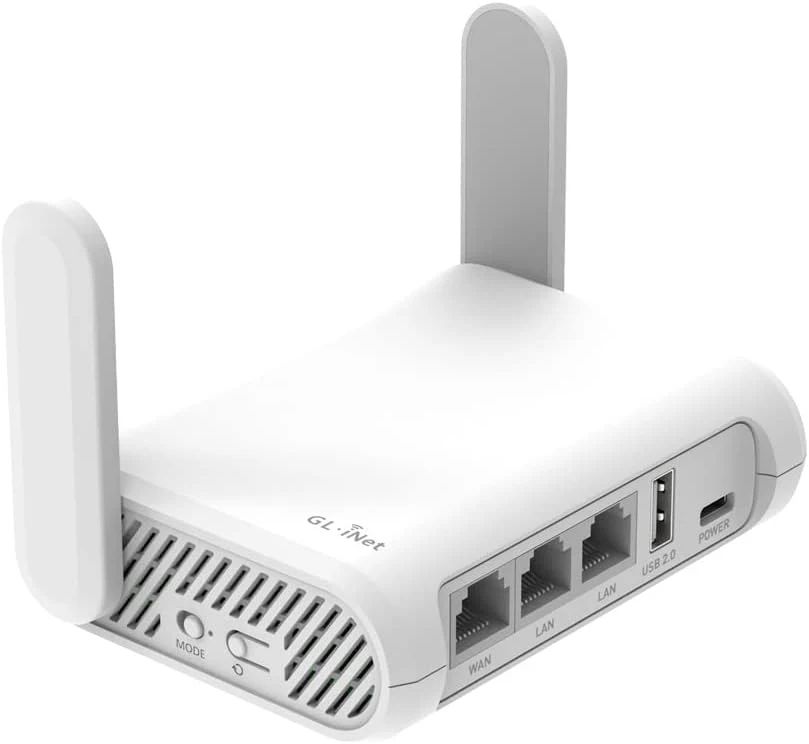
The selected Opal listing describes a WAN connection and two LAN ports. I would count the devices that actually need those local wired connections. A compact router can be useful beside a temporary desk, particularly when a laptop or another device benefits from a cable rather than another wireless link.
The port labels still describe different parts of the path. An internet connection arriving through a busy wireless network will not become a faster service merely because a local cable is gigabit-capable. I would judge the complete route, including the source network and the device’s own connection, rather than compare isolated numbers.
I would also allow space for the cables and power supply in the travel bag. The router’s small body is only part of the carried kit. A short suitable Ethernet lead and an appropriate regional power arrangement can be worthwhile, but they should be counted honestly when deciding whether the accessory earns its place.
AC1200 is a capability label, not a download promise
Opal’s documented Wi-Fi class describes the radio arrangement. I would not add the band figures together and expect one laptop download to reach that total. The client’s capabilities, distance, nearby networks and upstream service all affect the result. The useful question is whether the intended devices get a workable connection in the actual place.
For a small group of ordinary devices, a modest router can be enough. I would not buy a faster model simply because a larger number exists. Equally, I would compare newer hardware if several demanding streams or a heavy work transfer define the trip. The router should follow the workload rather than set an artificial limit on it.
Related reading

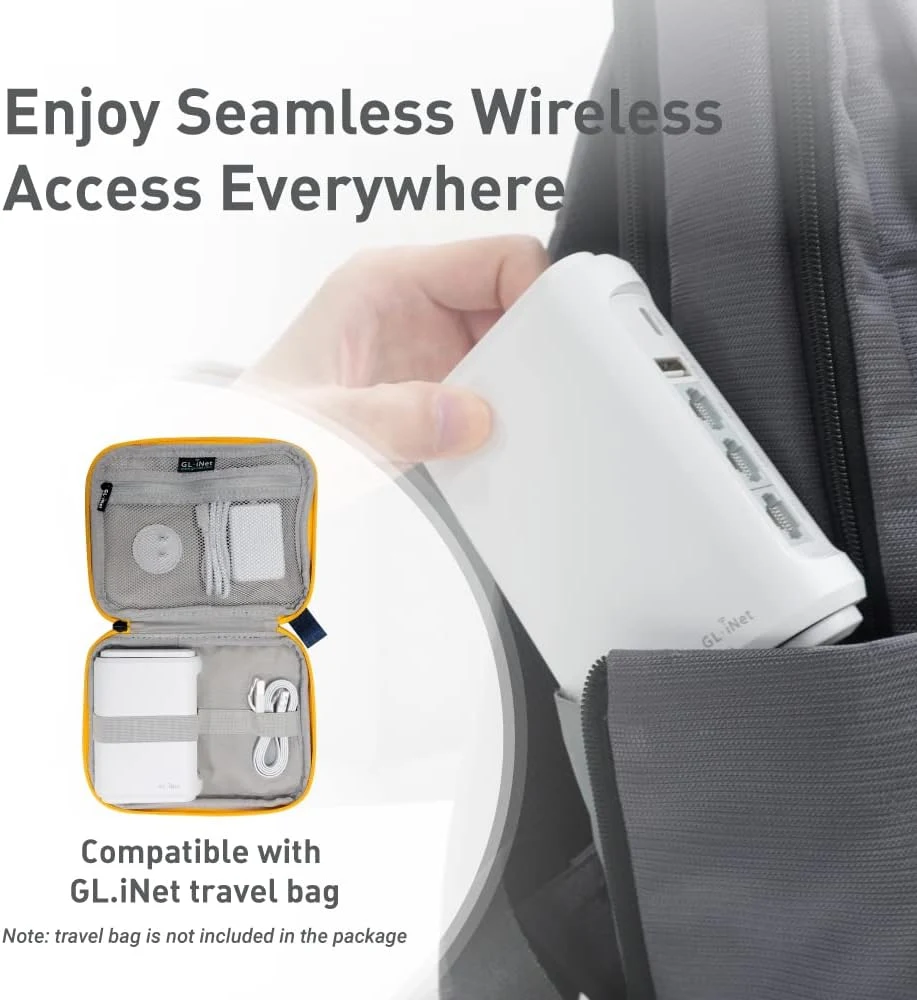
Placement remains important even with a small unit. I would keep the antennas and case in an appropriate position rather than hide the router behind a metal object for tidiness. A travel room changes the available choices, so a little flexibility in cable length can make the final arrangement more useful.
A VPN requirement should be specific
The product supports documented VPN options. I would identify the actual destination, provider and work policy before deciding that support alone is enough. Routing all traffic through a tunnel, using a work VPN on the laptop and accessing a home resource can involve different arrangements.
I would not promise a measured VPN rate from this assessment. Encryption, server location and the upstream network can all affect the experience. If the task requires a particular sustained throughput, I would compare the manufacturer’s current capability information and suitable independent evidence for that exact requirement before buying.

The physical switch also needs a configured purpose. The listing notes that its function must be assigned rather than assumed. I like a clear physical control once its role is understood, but I would document what it changes. A switch that is easy to reach is useful only when I know the network consequence of moving it.
Preparation is part of travelling with it
I would set up and update the router through the supported process before the trip, save its configuration and record the recovery route. An unfamiliar hotel is not the best place to discover that I cannot remember the administrator credentials or restore a known working arrangement. A small amount of preparation makes the portable idea more convincing.
Related reading

I would choose a phone hotspot for a short trip with few devices and enough data. I would compare Beryl AX when the documented newer capabilities fit a heavier requirement. Opal makes sense when a modest repeatable local network is the useful middle ground.
My assessment is positive for that clear travel role. I would check the exact GL-SFT1200, current support and complete kit price together. Its value is making changing connections easier to manage, rather than a promise that a small router can guarantee access, speed and policy compatibility on every network encountered away from home.
The product images come from the selected listing and identified manufacturer materials. My assessment uses the linked product information and the buying decisions explained here. Specifications are manufacturer or retailer claims; the conclusions are my own editorial judgement.
What worked
It can keep local device setup familiar while the travel connection outside it changes.
What bothered me
It still depends on hotel access rules and upstream quality, while a demanding VPN workload may justify another router.
Who should not buy it
Someone needing a cellular modem, guaranteed hotel portal access or high-performance VPN routing without checking requirements.
Alternatives I would consider
GL.iNet Beryl AX. I would compare it when the newer Wi-Fi and documented routing capability better fit the workload. Read my GL.iNet Beryl AX review.
A phone hotspot. I would choose it for a brief trip with few devices and a suitable data allowance.
Evidence and sources
The linked product documentation and exact retailer listing support the product details. Images: Amazon product gallery. These are not personal test photographs or measurements.
Features, compatibility and rated figures from the maker are manufacturer information. My opinions are identified in the review.
Conclusion
Worth considering for the focused travel role; compare the complete kit with a phone hotspot and newer models.
GL.iNet Opal GL-SFT1200
Amazon US · US
Check price and availability: GL.iNet Opal GL-SFT1200 at Amazon USAffiliate link. As an Amazon Associate I earn from qualifying purchases.
One email a week with practical Mac workflows, useful comparisons and honest tech recommendations.