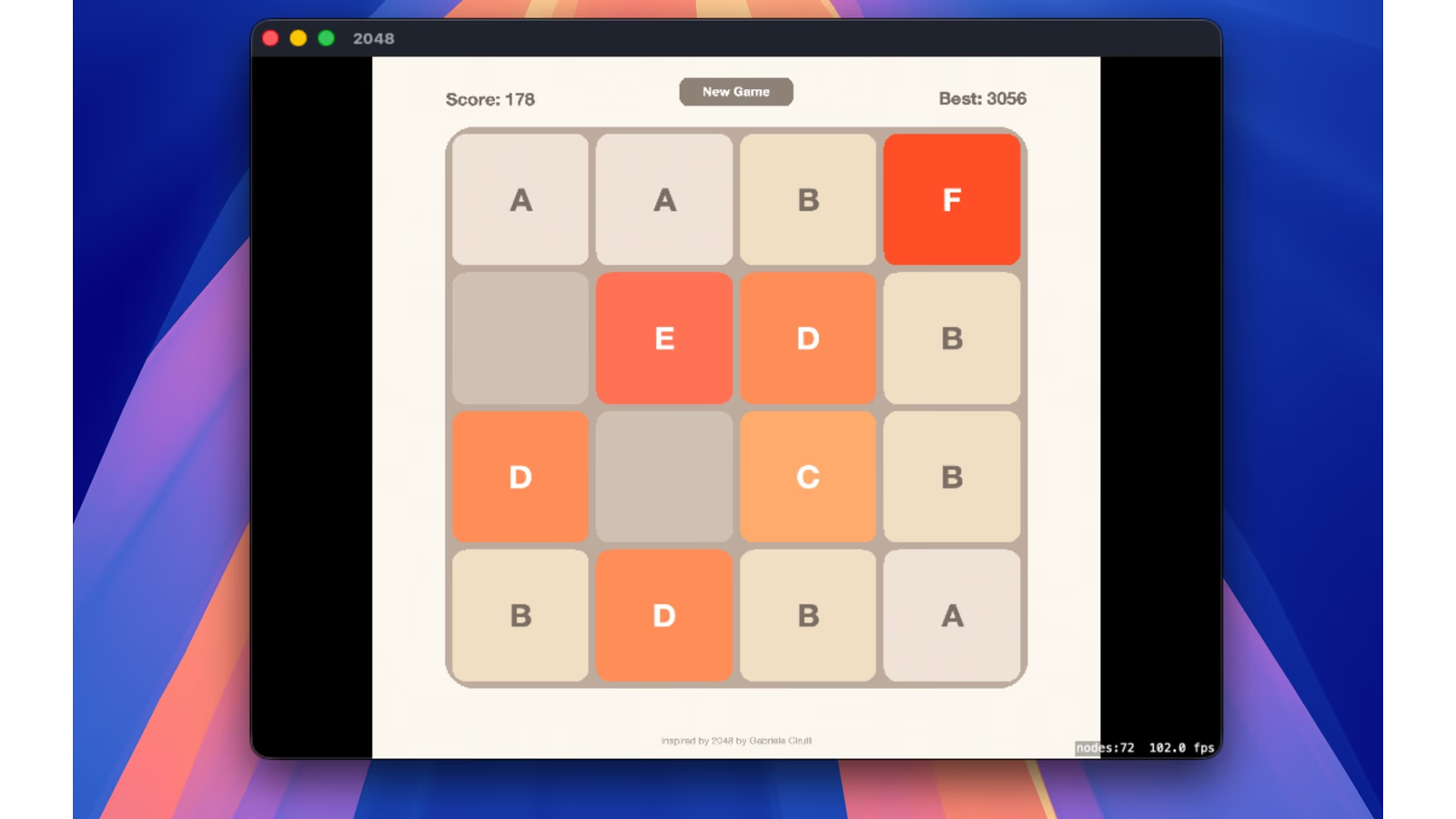
Creator promotion. I created this app. This is an introduction to my own work, not an independent product review.
View Leathers like 2028 on the App Store Hero image: Jakub Jirák · App Store.
Two matching letters look like an easy opportunity. Merge them, make room and continue. Then the board shifts, the useful space changes and the next pair is no longer where you expected. That small chain of consequences is the appeal of a sliding merge puzzle.
Leathers like 2028 is my Mac puzzle built around letters rather than the usual number tiles. This article introduces my own app, using real screenshots from its published App Store listing. The store name is Leathers like 2028; the game itself asks you to work your way through the alphabet.
It is a small idea with a clear invitation: slide, combine matching letters and see how far you can go before the board fills. The interesting decisions begin when a useful merge competes with the space needed for the next move.
The alphabet makes progress easy to read
Instead of following growing numerical values, you watch letters advance. Matching tiles combine into the next letter. That gives progress a familiar shape: A leads to B, B leads to C, and the next target is easy to recognise even when the board is becoming complicated.
The benefit is a rule you can explain quickly to someone nearby. There is no long system to learn before the first useful decision. The challenge comes from the arrangement, not from remembering what a tile means. A simple vocabulary leaves more attention for the board.
Related reading
Do not mistake a simple rule for a solved problem. Knowing that two tiles can merge is different from deciding when they should. A move changes the layout around the pair as well. The space left behind is part of its value.
Look at the whole board before the obvious pair
The nearest match can dominate attention. It is visible, it gives immediate progress and it feels satisfying to take. Before moving, also look at the other tiles and the empty cells. A useful pair may be only one part of the decision.
Ask what the board will look like afterwards. Will another pair remain easy to reach? Does the move separate letters that were beginning to line up? Is there enough open space for the arrangement to change again? These questions are general strategy suggestions, not a promise that one pattern always wins.
You do not need to calculate a long tree of possibilities to enjoy the game. Looking one move beyond the immediate reward can already change the way a board feels. The aim is a more deliberate choice, rather than a perfect mathematical solution.
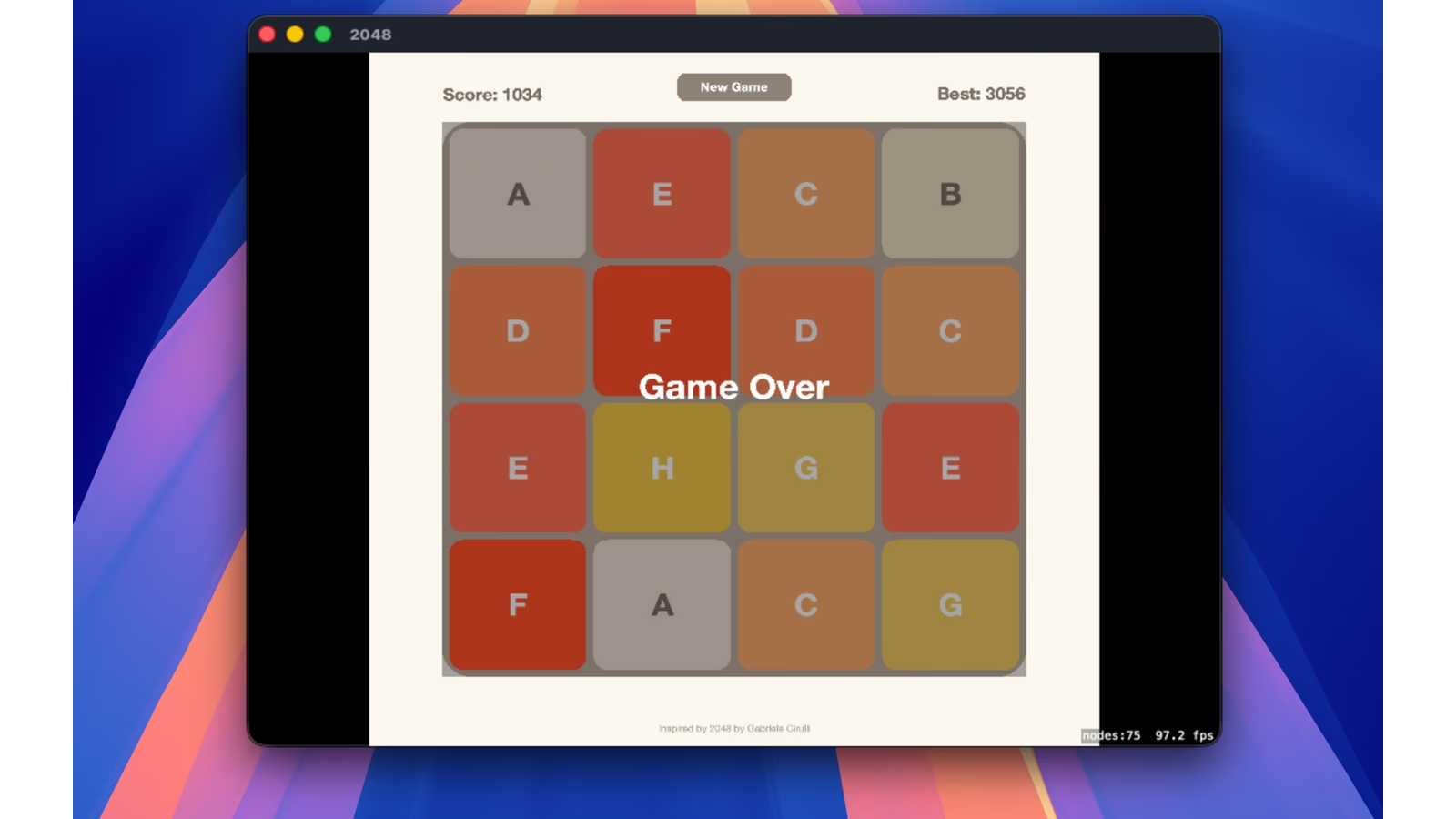
Actual App Store screenshot by Jakub Jirák. Image source.
Empty space is a useful resource
An empty cell gives future moves room to work. As the board fills, the number of comfortable arrangements can shrink. This makes a quiet-looking area valuable even though it does not display an advanced letter or a large score.
Try treating space as something to protect rather than something that happens to remain after a merge. A move that keeps several useful options available may be more interesting than a move that produces one immediate reward and leaves the board awkwardly packed.
This is an approach to the puzzle, not a claim about an exact hidden scoring formula. The visible goal is to continue combining letters before the board fills. Keeping room makes it easier to read and plan the next decision within that goal.
Give the board some order
A little consistency can make a sliding puzzle easier to understand. Try keeping the more advanced letters in a recognisable area and notice how that affects the rest of the board. The point is to reduce the amount of surprise created by your own decisions.
That does not mean forcing every board into the same pattern. Sometimes a useful move asks for a change of plan. A habit is helpful when it supports understanding; it becomes less useful when followed automatically despite what the current layout shows.
For a first session, choose one small habit and see whether it helps. Perhaps you will pause before moving an advanced tile, or check the empty cells before taking a pair. An experiment with one clear idea teaches more than changing the strategy after every disappointing turn.
Related reading
A merge can prepare another merge
Consider the difference between making an isolated new letter and making one where another matching letter can reach it. The immediate result may look similar, but the next opportunity is different. The interesting board is not only the one you see now; it is the one your move helps create.
This is why a chain of small decisions can feel satisfying. A later match can be the result of arranging the earlier tiles with care. The game gives a visible way to recognise that connection without requiring a complicated set of rules around it.
Avoid planning so far ahead that the current layout becomes frustrating to manage. Start with a short horizon. Make a move with a clear purpose, observe what changed and build the next choice from the new board. That keeps the puzzle approachable while still rewarding attention.
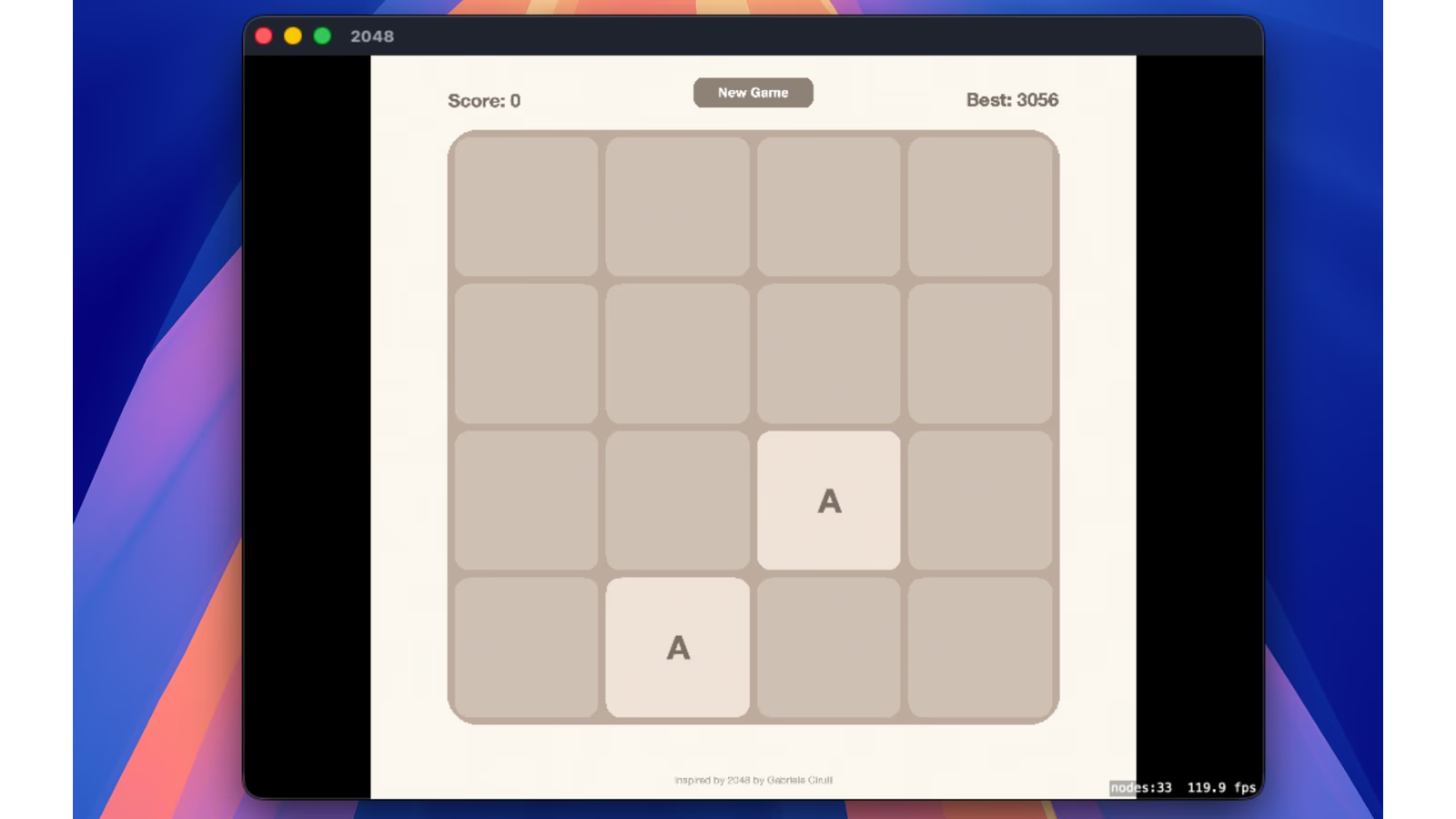
Actual App Store screenshot by Jakub Jirák. Image source.
When the board becomes crowded, change the question
Early in a session, it is easy to focus on reaching the next letter. A crowded board may ask a more immediate question: which move preserves a useful continuation? Recognising that change can make a difficult position easier to approach calmly.
Look for possible matches across the board before choosing the first one noticed. Check what each move leaves behind. A tempting merge may also close a route through the remaining tiles. The useful decision is the complete change in layout, not only the letter that appears.
There will still be boards that end. That is part of a score-based puzzle. The next session can begin with a clearer understanding of the point where the previous arrangement became difficult. A specific lesson is a better souvenir than a general feeling of having been unlucky.
The score gives you a personal reference
The app tracks a best score, so a later attempt has a visible point of comparison. Use that if score chasing is enjoyable. It can turn a familiar rule into a reason to explore a slightly different habit and see what happens.
The number is not the only way to notice improvement. A board that stays readable for longer, a cleaner sequence of merges or a better recovery from a crowded position can all be satisfying. The game can provide a small thinking task without needing to become a competition with anyone else.
This article does not claim an online leaderboard, multiplayer mode or a particular score you should be able to reach. The published invitation is a local puzzle with a best score to challenge. Keeping that scope clear makes it easier to choose the right kind of game for a break.
Make a short session feel complete
Choose a small purpose before starting. You might try keeping more space open or following one area of the board more carefully. That gives the session an idea to explore beyond simply hoping the next attempt will be better.
When the board ends, look back at one decision worth changing. Then decide whether another attempt sounds enjoyable. A small puzzle is most useful when it fits the time you want to give it. There is no requirement to turn every spare moment into a new record attempt.
Related reading
It can also be pleasant to compare ideas with someone beside you. One person may see an arrangement the other missed. This is an informal way to share a single-player puzzle, not a feature claim about a supported multiplayer system.
A Mac game with a narrow, readable idea
The actual screenshots show the letter grid, score and simple presentation. They are the right starting point for judging whether the visual style appeals to you. The current App Store page provides the release details and Mac requirements.
I am not presenting the game as a medical tool, a proven way to improve intelligence or a guaranteed method for concentration. It is a puzzle. Its value is the experience of making a decision, seeing the board change and wanting to understand the next arrangement.
That is enough to give a small app a useful place. A game does not need a large campaign or a complicated progression system to make a few minutes interesting. It needs a rule worth thinking about and feedback that makes the consequences visible.
See how far the letters can go
Leathers like 2028 is for players who enjoy a clear rule, a compact board and the satisfaction of a connection prepared a few moves earlier. The alphabet changes the presentation while keeping the familiar pleasure of a sliding merge puzzle.
Visit its App Store page for the current screenshots and purchase information. Start with the first pair, protect a little room and look one move beyond the obvious reward. The next letter is simple to name; making space for it is the game. View Leathers like 2028 on the App Store
More from this collection
One email a week with practical Mac workflows, useful comparisons and honest tech recommendations.