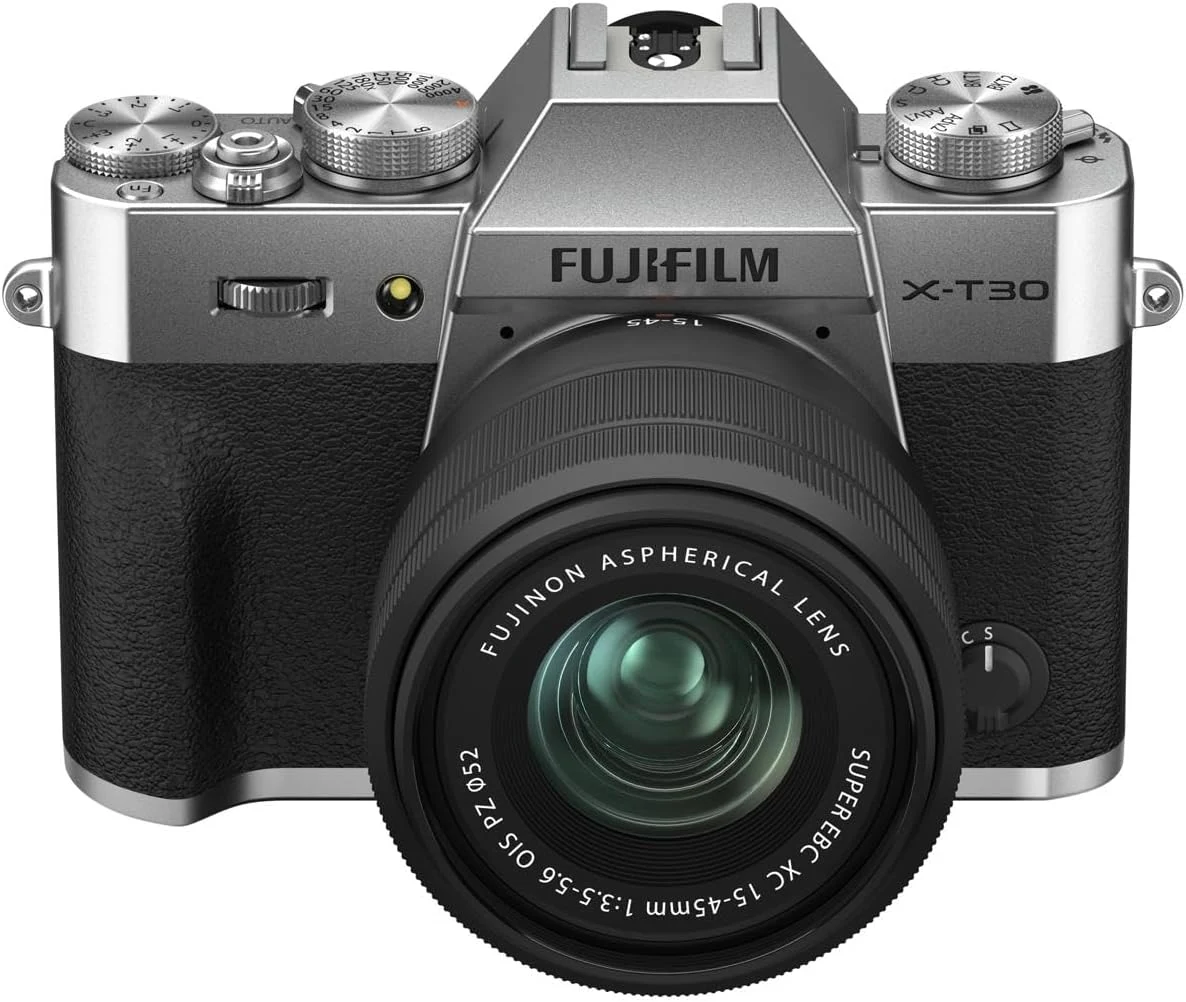
The silver Fujifilm X-T30 II with the XC 15–45 mm lens appeals to the part of me that likes making a photograph deliberately. I like a camera whose controls suggest choices before I open a menu. My interest is in that everyday photographic approach, with an included zoom that gives the body a clear starting role.
Quick verdict
I would choose this silver kit for deliberate everyday photographs when its physical controls and tilting screen suit the way I compose.
Best for: A photographer who enjoys visible exposure controls and wants an included compact everyday zoom.
Main benefit: The X-mount kit combines physical camera controls with Fujifilm’s in-camera image styles and a useful starting lens.
Biggest drawback: There is no in-body stabilization, and the tilting display is less suited to self-facing video than a side-opening screen.
Fujifilm X-T30 II silver with XC 15–45mm lens
Amazon US · US
Check price and availability: Fujifilm X-T30 II silver with XC 15–45mm lens at Amazon USAffiliate link. As an Amazon Associate I earn from qualifying purchases.
Reviewed version: Fujifilm X-T30 II silver with XC 15–45mm lens
Compatibility: Silver Fujifilm X-T30 II with XC 15–45 mm F3.5–5.6 OIS PZ lens, APS-C X mount. This is the X-T30 II, not the original X-T30 or a newer camera generation.
Review context: I assess everyday still photography, physical exposure controls, the included power zoom and a straightforward JPEG/RAW finishing routine.
This is the X-T30 II kit with a power zoom lens. I would keep both the generation and the lens visible in a comparison. A photograph of a similar silver camera with a different prime lens does not describe this package. The selected kit should be judged by the equipment it actually supplies and the way that equipment fits the intended use.
The visible controls are part of the attraction
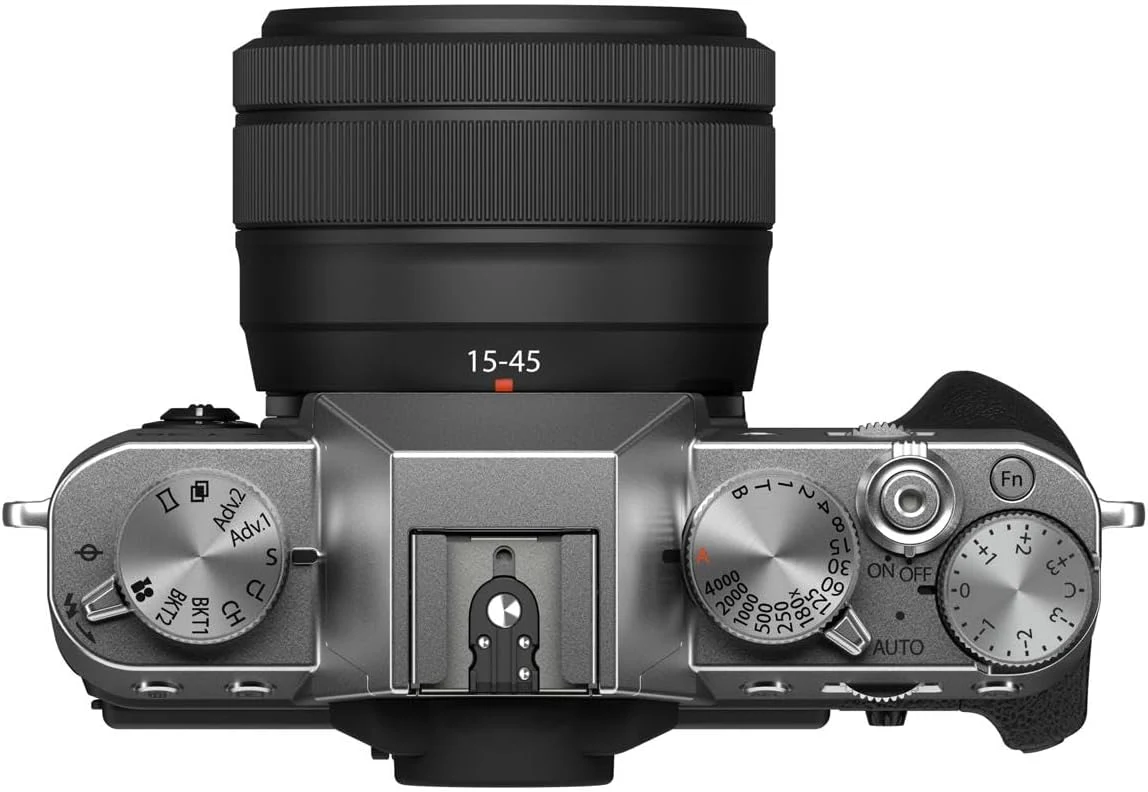
Fujifilm’s X-T30 II information describes its physical-control design and image options. I would enjoy learning a small set of familiar exposure controls rather than immediately customizing every available feature. The attraction is having an understandable starting point for a photograph, not treating an old-fashioned appearance as evidence of better results.
Related reading

A shutter setting and exposure compensation can become useful habits when their purpose is clear. I would still use automatic assistance when it serves the moment. Physical controls do not require turning every photograph into a slow exercise. I would want the camera to encourage attention while leaving room to react when a scene changes.
I would check the grip and control layout against my own hands before committing to a larger lens system. The small body is appealing on paper, but the complete body-and-lens arrangement matters more than the camera dimensions alone. A travel kit becomes useful when it can be carried and operated comfortably, with the necessary controls easy to reach.
The included lens is a power zoom
The selected XC 15–45 mm lens provides a range of views rather than one fixed focal length. It uses an electronic power-zoom arrangement. I would consider that operation part of the buying decision, especially for someone expecting a traditional mechanical zoom ring. Familiarity with another lens is not enough to establish how this one changes framing.
I would begin by using the included range to learn which views I actually prefer. A first kit does not need an immediate collection of extra lenses. Everyday scenes can explain whether I regularly need a wider view, more reach or a larger aperture. Those specific needs are better reasons for another purchase than a general feeling that a kit lens must be replaced.
The lens has optical stabilization, while the camera body has no in-body stabilization. I would keep those features separate and check the exact supported settings. Stabilization can help with camera movement, but it does not stop a subject from moving. Exposure choices still matter when photographing people, pets or other changing scenes.
JPEG styles can make finishing simpler
The X-T30 II offers Fujifilm film-simulation choices. I like the idea of choosing an image style with the finished photograph in mind. That can support a simple route from camera to a shared picture. I would select a look that fits the subject rather than change styles constantly and lose a clear sense of what I want.
Related reading

I would also keep RAW available when I want more freedom to adjust the result later. Fujifilm’s official specifications describe its file options. JPEG convenience and RAW flexibility serve different needs; neither requires dismissing the other. The useful choice is the one that leaves a manageable collection of photographs I can actually finish.
A recognisable colour style does not replace attention to light, exposure and composition. I would learn how the camera’s choices affect my own subjects rather than expect a named simulation to make every scene work automatically. That learning is part of the appeal of this kit, provided it feels enjoyable rather than like another unfinished editing task.
The screen suits a particular way of composing
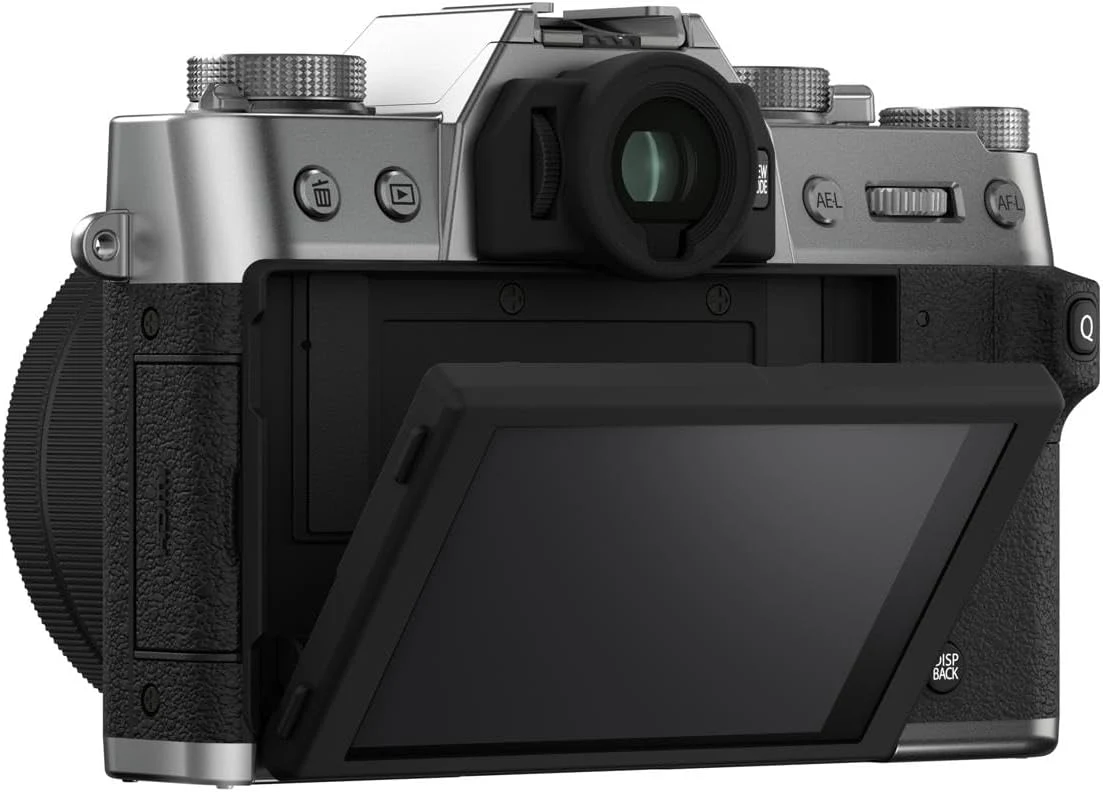
The rear display tilts, which gives it a different role from a fully side-opening screen. I would consider that useful for some low or elevated camera positions, while keeping its self-facing limitations clear. For a creator who regularly presents directly to the lens, this display arrangement could be a stronger reason to choose another camera than the styling is to buy this one.
The camera also has an electronic viewfinder. That makes the overall design more convincing to me for still photography, because the screen is not the only way to compose. I would choose between eye-level and screen-based framing according to the scene, while keeping the chosen exposure and focus settings understandable.
Video remains an available part of the camera’s specification, but I would not buy this kit solely because a resolution appears in a table. I would check the actual recording limits, screen position, audio arrangement and editing support for the intended project. A camera that supports video is not automatically the best fit for every video-first routine.
Related reading

The complete kit should earn its place
I would budget for supported memory, power and a simple way to copy photographs before adding decorative accessories. The camera uses an SD card arrangement specified by Fujifilm, and the actual working session should guide capacity. A clear copying routine matters more to me than carrying the largest possible card without a plan to save its contents.
My view is positive for a photographer who wants this combination of physical controls, image-style choices and a compact included zoom. I would choose a different body for a forward-facing video routine or a particular stabilization need. The X-T30 II earns its place when its photographic approach is the reason to carry the camera and make pictures.
The images show the selected product in retailer or manufacturer materials. They are not my test photographs. I base this assessment on the linked documentation and the exact selected listing; the buying choices and recommendations are my own editorial judgement.
What worked
The X-mount kit combines physical camera controls with Fujifilm’s in-camera image styles and a useful starting lens.
What bothered me
There is no in-body stabilization, and the tilting display is less suited to self-facing video than a side-opening screen.
Who should not buy it
Someone expecting a forward-facing vlog screen, a stabilized sensor or a traditional mechanical zoom ring.
Alternatives I would consider
Nikon Z fc 16–50 mm kit. I would compare it for another visible-control camera with a side-opening display. Read my Nikon Z fc 16–50 mm kit review.
Sony ZV-E10 16–50 mm kit. I would compare it when self-facing video is the main reason for buying a camera. Read my Sony ZV-E10 16–50 mm kit review.
Evidence and sources
The primary documentation supports the stated features and limitations. The exact retailer listing identifies the selected model and bundle; source images illustrate the product.
Fujifilm X-T30 II official sensor, format, screen and power specifications
Fujifilm X-T30 II camera controls and film-simulation information
Features, compatibility and rated figures from the maker are manufacturer information. My opinions are identified in the review.
Conclusion
I would pay for this particular photographic approach when I will use it, and compare the actual complete kit with newer alternatives.
Fujifilm X-T30 II silver with XC 15–45mm lens
Amazon US · US
Check price and availability: Fujifilm X-T30 II silver with XC 15–45mm lens at Amazon USAffiliate link. As an Amazon Associate I earn from qualifying purchases.
One email a week with practical Mac workflows, useful comparisons and honest tech recommendations.