The original Sony ZV-E10 with the 16–50 mm lens appeals to me when a camera has a clear video-first job. I like a small kit that lets the person in front of the lens see the framing and choose a suitable lens later. The useful question is whether that arrangement serves the actual videos, rather than whether it looks like a complete creator studio.
Quick verdict
I would choose this original ZV-E10 kit for a planned video-first routine when the included lens and forward-facing screen fit the job.
Best for: A creator who values a visible self-facing screen and an included starting lens more than eye-level still-photo composition.
Main benefit: The side-opening display and interchangeable E-mount lens system give the kit a straightforward video-first role.
Biggest drawback: There is no electronic viewfinder or sensor stabilization, and this original generation should not be credited with the newer II model’s features.
Sony ZV-E10 original black camera with E PZ 16–50mm OSS lens
Amazon US · US
Check price and availability: Sony ZV-E10 original black camera with E PZ 16–50mm OSS lens at Amazon USAffiliate link. As an Amazon Associate I earn from qualifying purchases.
Reviewed version: Sony ZV-E10 original black camera with E PZ 16–50mm OSS lens
Compatibility: Original black Sony ZV-E10 with E PZ 16–50 mm OSS lens, APS-C E mount. This is not ZV-E10 II; the camera has no electronic viewfinder or in-body sensor stabilization.
Review context: I assess a small self-facing video setup, the included power zoom, audio planning and a realistic route from recording to edited clips.
This is the original black ZV-E10 kit, not the ZV-E10 II. I would keep that generation difference visible throughout the comparison. A newer model’s recording features should not be borrowed to improve the case for this offer. The selected package needs to stand on its own camera, included lens and current complete-kit value.
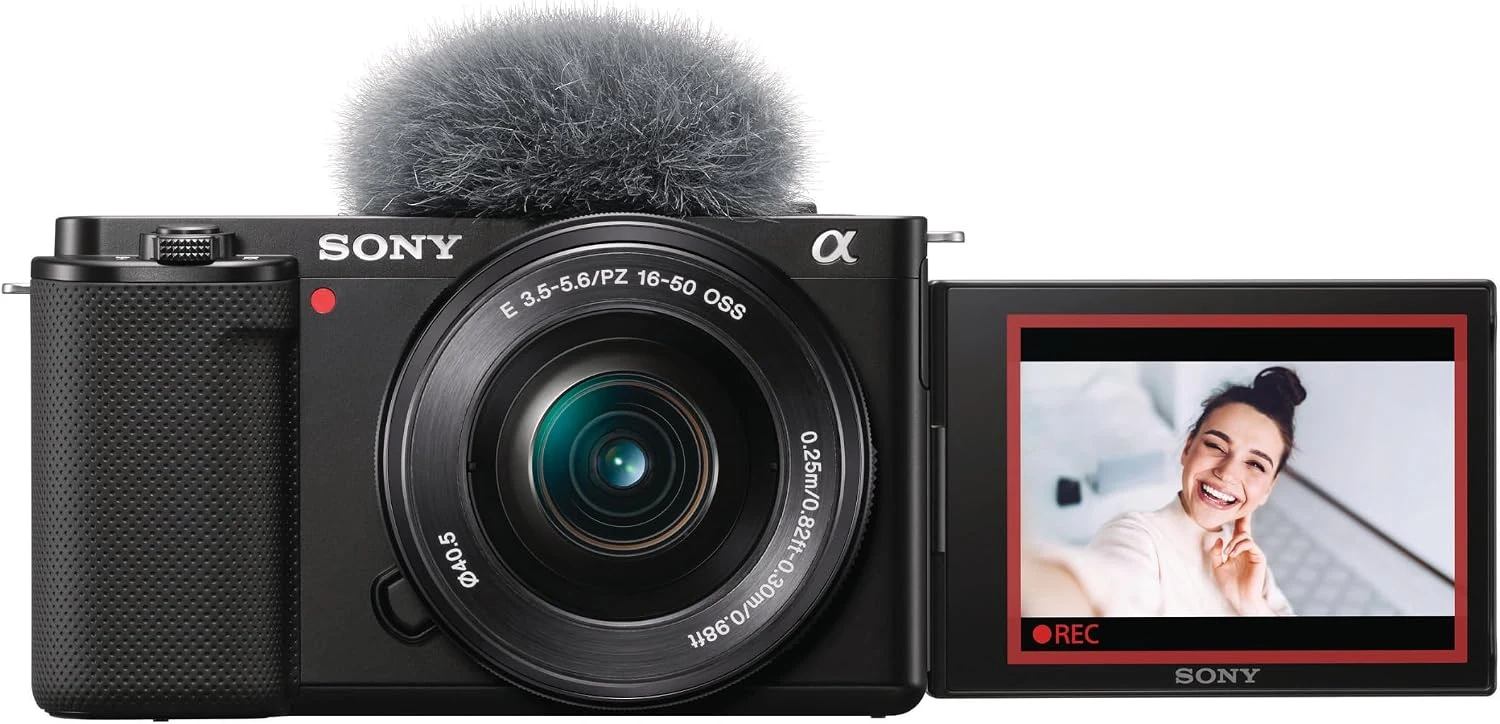
The screen explains the camera’s role
Sony’s original ZV-E10 information describes a design aimed at creators. The side-opening screen is a practical part of that idea. I would use its position to plan a direct-to-camera setup, while checking that the microphone cable and camera support leave room for the display to move and remain visible.
Related reading

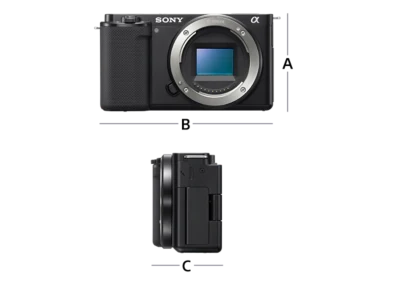
There is no electronic viewfinder. That is a meaningful distinction for someone who wants to compose photographs at eye level, especially when screen-based framing is not their preferred habit. I would choose this body because its video arrangement suits me, rather than assume every interchangeable-lens camera provides the same photographic controls and viewing experience.
A visible screen also does not establish that a recorded clip is ready to use. I would check the actual framing, focus settings and audio path before beginning a longer piece. A short setup check can reveal a poorly positioned camera or a cable in the way without making a feature list responsible for every production decision.
The included lens is a useful starting decision
The selected kit includes the E PZ 16–50 mm OSS lens. Its power-zoom operation and range are part of the package, rather than a promise that one lens serves every future project. I would begin with a clear subject and camera position, then decide whether the included view suits the room or outdoor scene.
For a close self-facing view, I would check the actual field of view in the chosen recording mode. Crop and digital processing settings can change framing. A lens that looks wide enough in a general comparison may not give the same result in every video configuration. The complete camera setting should guide the choice.
Sony’s E-mount system leaves room for another lens, but I would buy one for a specific reason. A wider view, a different working distance or a larger aperture can be meaningful needs. An immediate collection of lenses is less useful than learning exactly what the included kit does and where the intended work asks for something different.
Stabilization should be described precisely
The camera does not have in-body sensor stabilization. The kit lens includes optical stabilization, and Sony also documents digital movie-stabilization options. I would keep those mechanisms distinct. A stabilized lens does not make the body a sensor-stabilized model, and a digital setting should be checked for its actual effect on the view.
Related reading

For a desk video, I would consider a suitable support before building a complex handheld setup. For a walking scene, I would make the camera movement part of the plan rather than expect one setting to make every motion disappear. The appropriate choice depends on the shot, lens and desired result, not a single stabilization word.
I would also separate camera movement from the movement of the subject. Good exposure choices remain important for a person moving through the frame. This camera’s appeal is a flexible small recording arrangement, provided the setup is understood. I would not describe its specification as proof of a particular handheld result I have not measured.
Audio and recording modes need a finishing route
Sony’s official specifications identify the original camera’s recording and connection options. I would choose a format that my editing device can handle comfortably and check the actual mode limits. A newer camera’s high-frame-rate or colour capabilities should not be assumed from the shared ZV-E10 name.
For a person speaking, the microphone position and room matter alongside the camera. I would plan the sound source, supported input and a way to check the result. A more expensive camera body is not a substitute for putting a suitable microphone where it can record the intended voice clearly.
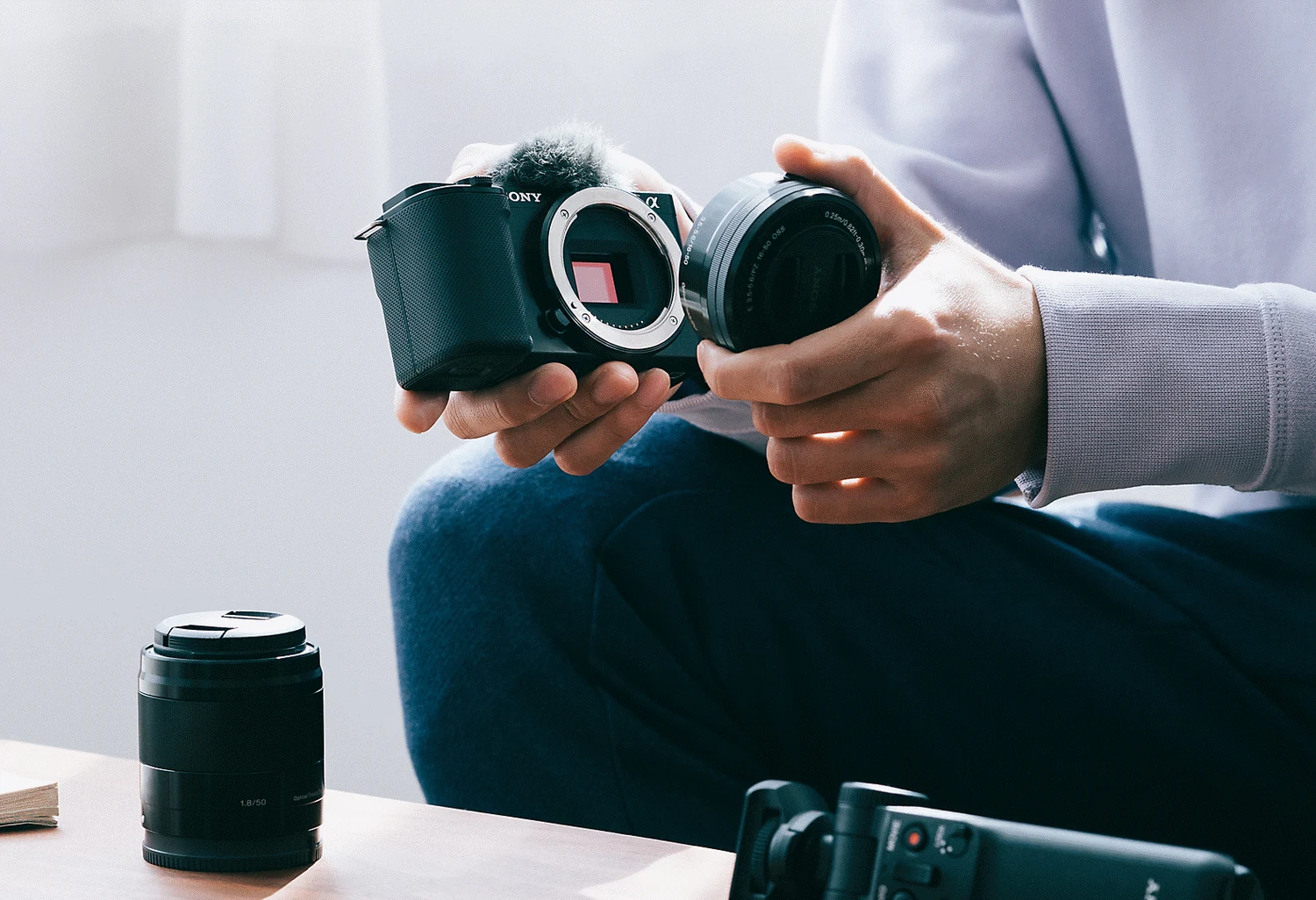
I would include supported media and the required power arrangement in the cost. A gallery can show microphones, grips or additional lenses to demonstrate possibilities. It does not establish that those accessories arrive with this selected kit. The images here include a manufacturer lens-change demonstration, whose extra equipment should be treated as separate options.
Related reading

I would buy the complete routine
The strongest case for this kit is an understood project with a sensible camera position, supported recording format and manageable edit. I would copy the clips, check them and keep a separate backup before clearing the card. A camera becomes more useful when its files have a clear route to a finished piece rather than another folder waiting for attention.
My view is positive for a creator who wants this specific video-first arrangement and accepts the original model’s limits. I would choose an R50 for a different balance involving a viewfinder, or compare an a6700 for a more demanding hybrid system. The ZV-E10 kit earns its place when its actual screen, lens and recording workflow explain the purchase.
The images show the selected product in retailer or manufacturer materials. They are not my test photographs. I base this assessment on the linked documentation and the exact selected listing; the buying choices and recommendations are my own editorial judgement.
What worked
The side-opening display and interchangeable E-mount lens system give the kit a straightforward video-first role.
What bothered me
There is no electronic viewfinder or sensor stabilization, and this original generation should not be credited with the newer II model’s features.
Who should not buy it
Someone needing a viewfinder, expecting 4K high-frame-rate features from a newer generation or assuming every accessory in a demonstration is included.
Alternatives I would consider
Canon EOS R50 body. I would compare it when an electronic viewfinder matters alongside video. Read my Canon EOS R50 body review.
Sony a6700 body. I would compare it for a more demanding hybrid photo/video system with a separately budgeted lens. Read my Sony a6700 body review.
Evidence and sources
The primary documentation supports the stated features and limitations. The exact retailer listing identifies the selected model and bundle; source images illustrate the product.
Features, compatibility and rated figures from the maker are manufacturer information. My opinions are identified in the review.
Conclusion
I would compare the whole lens/audio/support kit with newer offers and pay for the actual recording modes I need.
Sony ZV-E10 original black camera with E PZ 16–50mm OSS lens
Amazon US · US
Check price and availability: Sony ZV-E10 original black camera with E PZ 16–50mm OSS lens at Amazon USAffiliate link. As an Amazon Associate I earn from qualifying purchases.
One email a week with practical Mac workflows, useful comparisons and honest tech recommendations.