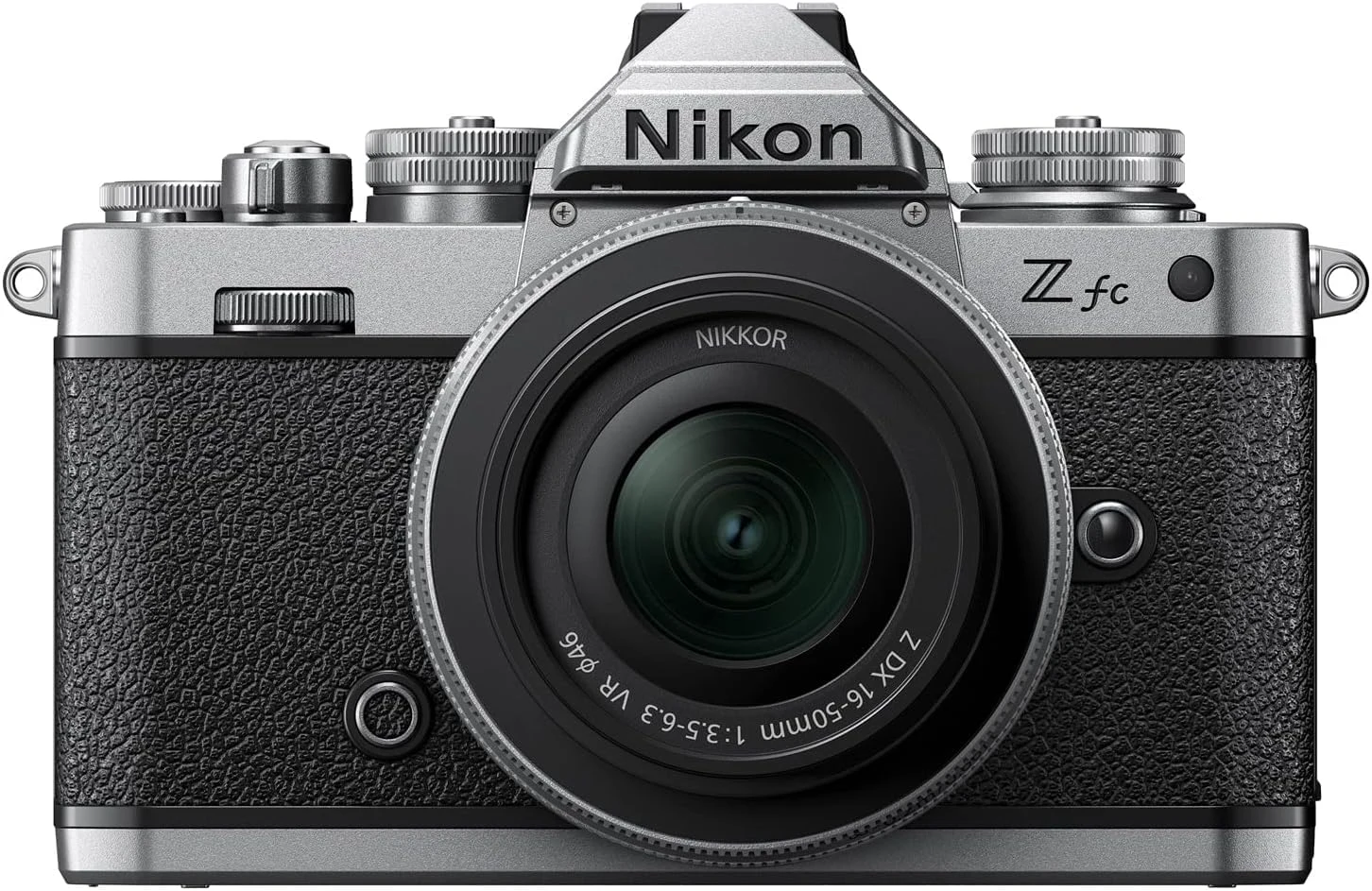
The silver Nikon Z fc with the 16–50 mm VR lens interests me because its visible controls give the camera a clear photographic personality. I like the idea of seeing important exposure choices on the body instead of making every adjustment through a screen. That approach would need to make the camera more enjoyable to use, rather than simply make it look attractive on a shelf.
Quick verdict
I would choose this kit when its physical controls make photography more enjoyable and the included compact zoom covers the everyday view.
Best for: A photographer who wants visible exposure controls, an electronic viewfinder and a complete compact starting kit.
Main benefit: The physical dials, viewfinder and side-opening screen offer a distinctive way to compose with an included everyday lens.
Biggest drawback: The body has no sensor stabilization, and the DX kit should not be confused with the full-frame Zf system.
Nikon Z fc with 16–50mm zoom lens, selected Nikon USA kit
Amazon US · US
Check price and availability: Nikon Z fc with 16–50mm zoom lens, selected Nikon USA kit at Amazon USAffiliate link. As an Amazon Associate I earn from qualifying purchases.
Reviewed version: Nikon Z fc with 16–50mm zoom lens, selected Nikon USA kit
Compatibility: Silver Nikon Z fc DX-format camera with NIKKOR Z DX 16–50 mm f/3.5–6.3 VR lens. This APS-C camera is not the full-frame Nikon Zf; use supported Z lenses or specifically compatible adapted equipment.
Review context: I assess deliberate everyday photography, the included retracting VR zoom, visible exposure controls and occasional self-facing video.
This is the DX-format Z fc kit, not the full-frame Nikon Zf. The selected package includes the compact NIKKOR Z DX 16–50 mm VR zoom. I would keep those names clear when comparing offers, because similar styling does not establish the same sensor, stabilization system or included equipment. The actual kit should explain the purchase.
The dials should support an understandable routine
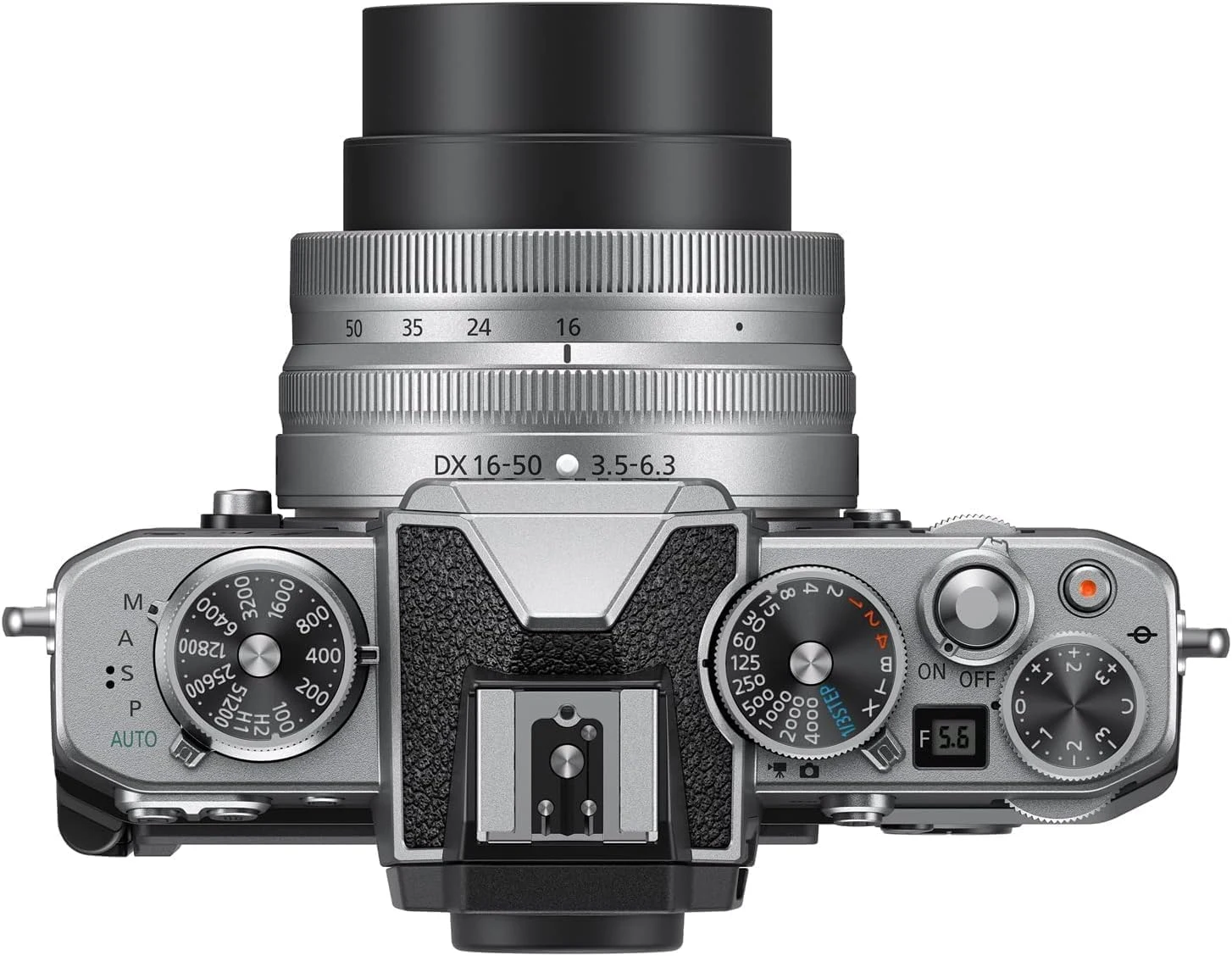
Nikon’s Z fc product information describes the physical-control approach. I would begin with a familiar exposure routine and learn how the dials relate to the selected operating mode. Visible controls are valuable when they make the camera’s choices easier to understand, rather than create uncertainty about which setting is currently in charge.
Related reading

I would still use automatic assistance where it makes the photograph easier. A deliberately styled body does not require every scene to become a manual exercise. The appeal is choosing how much attention to give the exposure and having controls that support that choice. I would want a camera that encourages photographs rather than interrupts them.
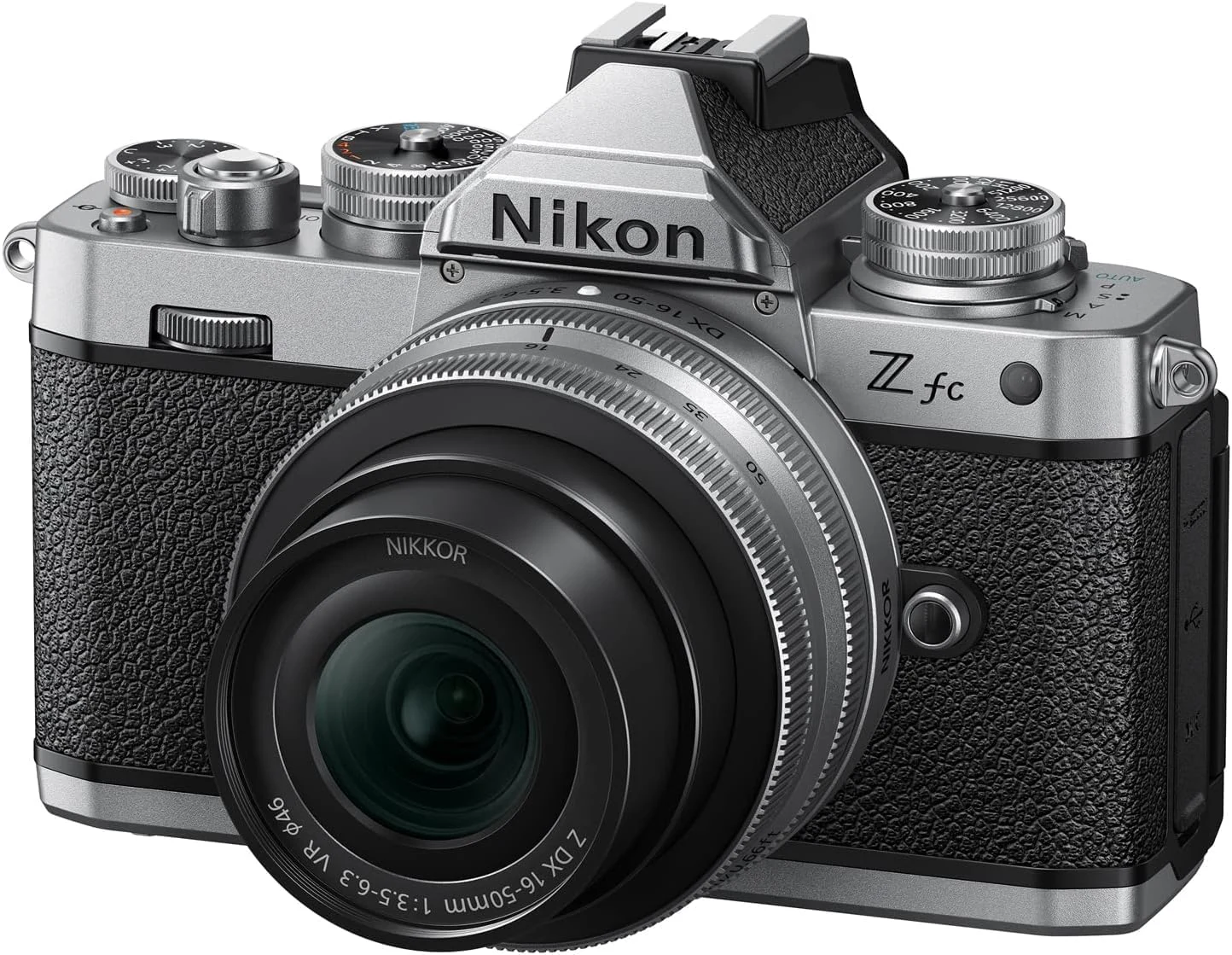
The body shape and grip deserve attention with the actual lens attached. A photograph can show the design, but it cannot prove how it fits a particular hand. I would consider the complete kit and how I plan to carry it. A compact zoom and a much larger lens create different handling decisions even when they share the same body.
DX framing is part of choosing a lens
Nikon’s official specifications identify the DX sensor and Z mount. I would choose a lens for its actual field of view on this camera rather than assume that the same focal length frames a scene identically on a full-frame body. The intended picture should guide that decision before another lens is added to the bag.
The included 16–50 mm range gives the kit an everyday starting role. I would use that range to find which views I regularly prefer. A specific need for more reach, a wider view or a different aperture could justify another lens later. I would not treat replacing the kit zoom as an automatic part of buying an interchangeable-lens camera.
The retracting lens design also belongs in the routine. I would follow the instructions for its ready-to-shoot position rather than assume a compact storage arrangement is the same as the operating position. Small practical details can determine whether a kit feels straightforward during a normal outing, even though they rarely lead the headline specifications.
The VR lens is not a stabilized sensor
The selected lens provides optical vibration reduction, while the Z fc body does not have sensor stabilization. I would keep that distinction clear when comparing another body or considering another lens. Adding a lens without optical VR would create a different stabilization arrangement, even if both lenses fit the same mount.
Related reading

I would also separate support for camera movement from the movement of the subject. A suitable shutter choice remains important when photographing people or pets. Stabilization should help an understood technique, rather than become a promise that every scene will be sharp. For a fixed camera position, an appropriate support can be the clearer answer.
Electronic video stabilization is another documented option with its own conditions. I would check the selected recording mode and the actual framing effect rather than treat every form of stabilization as interchangeable. A lens chosen for an arm’s-length video should be considered together with the recording configuration, not judged only from its printed range.
Viewfinder and screen provide two useful choices
The Z fc includes an electronic viewfinder and a side-opening display. I find that combination appealing because it leaves room for both eye-level photographs and other camera positions. For a speaking-to-camera setup, I would check the space around the screen, the microphone cable and the chosen support before assuming the complete arrangement is convenient.
The screen does not make the kit automatically ideal for every video job. I would check the recording format, supported audio arrangement and the way the files will be edited. A good photographic fit can be reason enough to buy a camera, while more demanding video work may point to a different balance of features.
For photographs, I would choose a manageable JPEG or RAW routine and save the results consistently. The most useful camera is one whose pictures can be found, selected and finished. I would put supported memory and a simple backup process ahead of adding accessories that do not solve a clear problem in the actual kit.
Related reading

The design needs to earn its place
Existing Nikon equipment could affect the decision, but I would check exact compatibility rather than assume every older F-mount lens keeps every feature through an adapter. A supported lens combination is more valuable than an optimistic system diagram. I would compare the real parts needed and the complete current offer before choosing this particular kit.
My recommendation is positive when the Z fc’s controls make the photographic process appealing and the included zoom suits everyday scenes. I would choose another camera for a specific grip, stabilization or video requirement. This kit earns its value when the visible controls, flexible viewing choices and actual lens make me want to carry it and make photographs deliberately.
The images show the selected product in retailer or manufacturer materials. They are not my test photographs. I base this assessment on the linked documentation and the exact selected listing; the buying choices and recommendations are my own editorial judgement.
What worked
The physical dials, viewfinder and side-opening screen offer a distinctive way to compose with an included everyday lens.
What bothered me
The body has no sensor stabilization, and the DX kit should not be confused with the full-frame Zf system.
Who should not buy it
Someone expecting a full-frame Zf, a stabilized sensor or every adapted F-mount lens to retain every function.
Alternatives I would consider
Fujifilm X-T30 II 15–45 mm kit. I would compare it for another physical-control photographic approach with different screen and image-style choices. Read my Fujifilm X-T30 II 15–45 mm kit review.
Nikon Z30 body. I would compare it when a video-first screen arrangement matters more than a viewfinder. Read my Nikon Z30 body review.
Evidence and sources
The primary documentation supports the stated features and limitations. The exact retailer listing identifies the selected model and bundle; source images illustrate the product.
Nikon Z fc official DX sensor, lens, recording and screen specifications
Features, compatibility and rated figures from the maker are manufacturer information. My opinions are identified in the review.
Conclusion
I would pay for a control layout I will actually use and compare the whole kit with other supported lens systems.
Nikon Z fc with 16–50mm zoom lens, selected Nikon USA kit
Amazon US · US
Check price and availability: Nikon Z fc with 16–50mm zoom lens, selected Nikon USA kit at Amazon USAffiliate link. As an Amazon Associate I earn from qualifying purchases.
One email a week with practical Mac workflows, useful comparisons and honest tech recommendations.