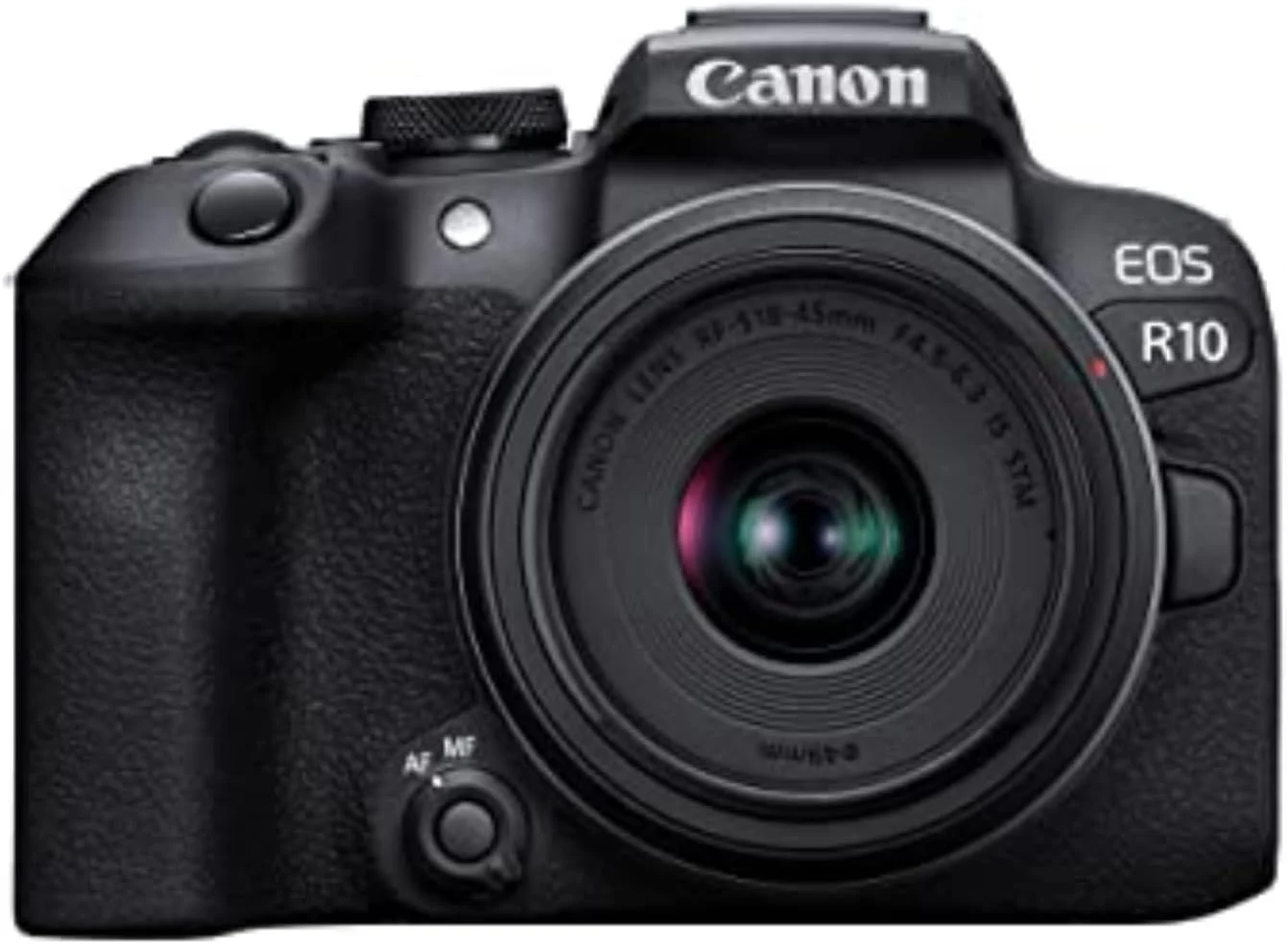
The Canon EOS R10 kit interests me as a clear way to begin using a separate camera. I like the idea of a body with a viewfinder, a useful grip and a small lens that can stay attached for ordinary photographs. That combination makes more sense to me than buying a body first and postponing the lens decision that gives it a purpose.
Quick verdict
I would choose the R10 kit when a compact everyday zoom and a camera with a viewfinder make a clear starting point for learning photographs.
Best for: A photographer starting an RF-system kit and wanting the useful first lens included.
Main benefit: The body and small 18–45mm lens form a manageable complete starting arrangement with physical camera controls.
Biggest drawback: The kit zoom has limited reach and a variable aperture, and the body does not supply the R7’s in-body stabilization.
Canon EOS R10 black with RF-S 18–45mm F4.5–6.3 IS STM lens
Amazon US · US
Check price and availability: Canon EOS R10 black with RF-S 18–45mm F4.5–6.3 IS STM lens at Amazon USAffiliate link. As an Amazon Associate I earn from qualifying purchases.
Reviewed version: Canon EOS R10 black with RF-S 18–45mm F4.5–6.3 IS STM lens
Compatibility: Selected Canon EOS R10 kit includes RF-S 18–45mm F4.5–6.3 IS STM. It uses RF/RF-S lenses; supported EF/EF-S require the appropriate adapter, and EF-M is a different mount.
Review context: I assess a first everyday APS-C camera, retracting kit lens, viewfinder controls and the route into a larger RF lens arrangement.
The selected listing identifies the RF-S18–45mm F4.5–6.3 IS STM lens in the package. I would compare that exact kit with another offer, rather than assume every R10 bundle includes the same zoom. A small everyday lens and a longer-range kit are different purchases, even when the camera body has the same name.
The first zoom should help define the photographs
Canon’s exact kit description makes the 18–45mm starting lens clear. I would use it to explore ordinary surroundings, people and simple details before deciding what another lens should add. Learning where the existing range feels limiting is a better reason to buy another lens than simply filling a camera bag.
Related reading

I would not expect this short zoom to solve distant wildlife or every indoor low-light situation. Its appeal is a compact everyday arrangement, with the variable aperture understood. If a particular subject needs more reach or a wider aperture, that becomes a defined next step rather than a disappointment caused by misunderstanding the first package.
The retracting lens also has an operating step to learn. I would follow the instructions for making it ready and packing it again, rather than force it into position. A small lens can make the camera easier to carry, provided its handling becomes a familiar part of the routine rather than an unexpected interruption when a scene appears.
The viewfinder gives the camera a deliberate role
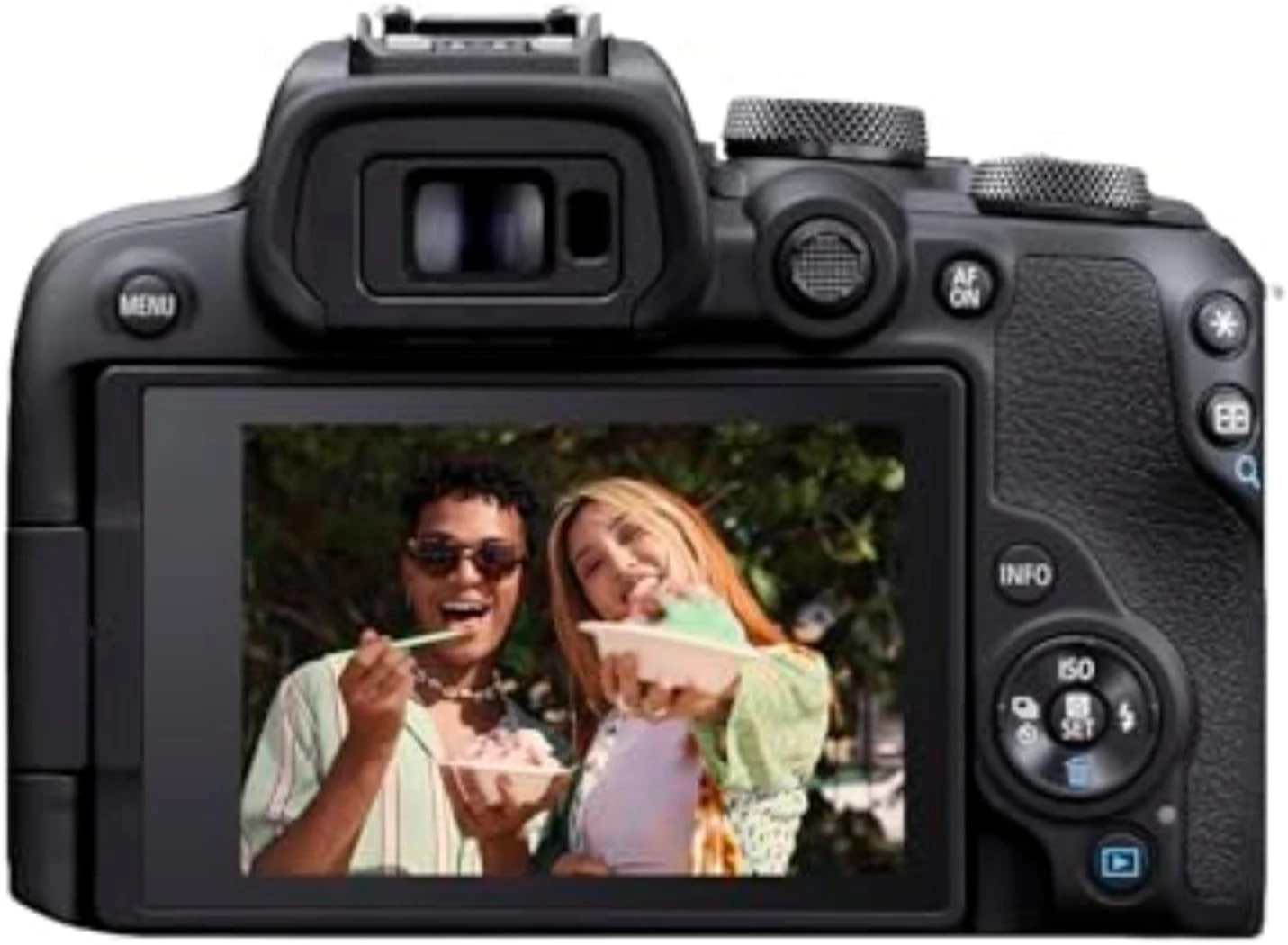
A viewfinder is one reason I would consider this kit alongside an existing phone. I like having a separate moment for framing and a device whose main task is taking the photograph. I would want that distinction to encourage clearer decisions about light, subject and timing, rather than merely create a more complicated way to make the same rushed picture.
I would begin with a small number of controls and learn them through familiar scenes. A useful beginner camera should leave room to grow without making the first week a study of every optional setting. The value for me would be a manageable starting process, with the camera giving more control as a specific photographic question arises.
Autofocus helps when the setup follows the subject
Canon documents subject-detection and focus functions for the R10. I would choose the relevant settings for the scene rather than assume that one automatic configuration is ideal everywhere. A person standing still, a pet moving across the room and a busy background can present different decisions to the camera.
I would learn how to change the relevant area and subject selection without losing the scene. That is a more useful goal than keeping the camera in its fastest mode because the product page mentions action. An understood focus setup can support the photographer, while the composition and shutter-speed choice still need attention.
Related reading

Burst shooting also has an editing cost. I would use it where a short sequence improves the chance of the intended moment, then review the results deliberately. Collecting many similar files does not automatically create a stronger photograph. The camera’s speed is most valuable when it supports timing rather than replacing it.
Stabilization and video need exact expectations
The kit lens provides optical image stabilization, while the R10 does not have the R7’s in-body stabilization arrangement. I would keep those roles separate when comparing bodies or a later lens. A lens with one supported feature does not mean every lens attached to the camera will offer the same benefit.
I would also remember that stabilizing the camera does not stop a moving subject. A suitable shutter speed remains important for people and animals. The useful starting kit is one that makes that relationship easier to learn, rather than encouraging a belief that a stabilization label removes every reason for a blurred photograph.
For video, I would check the exact recording format, framing and intended sound setup. A4K description does not identify every supported frame rate or crop. I would choose a setting that fits the scene and editing device, then compare another body if a different mode is central to the work rather than an occasional interest.
I would keep the next system decision modest
The R10 uses RF and RF-S lenses, with the documented adapter route for appropriate EF equipment. EF-M is a different mount and should not be assumed compatible because it also belongs to Canon. I would check exact lens support before buying used equipment or ordering an adapter from a general camera-accessory search.
Related reading

Before buying, I would compare the actual kit contents, battery, charger and supported memory needs. I would leave room for a simple carrying arrangement and avoid adding equipment without a reason. The first useful zoom should have time to show which later purchase would solve a real limitation.
My overall view is positive for someone wanting a manageable camera-and-lens starting point with a viewfinder and room to learn. I would choose an R7 for a defined need its extra features serve, or a different compact kit when its handling fits better. The R10 makes sense when the complete first setup is the attraction, rather than a body specification considered alone.
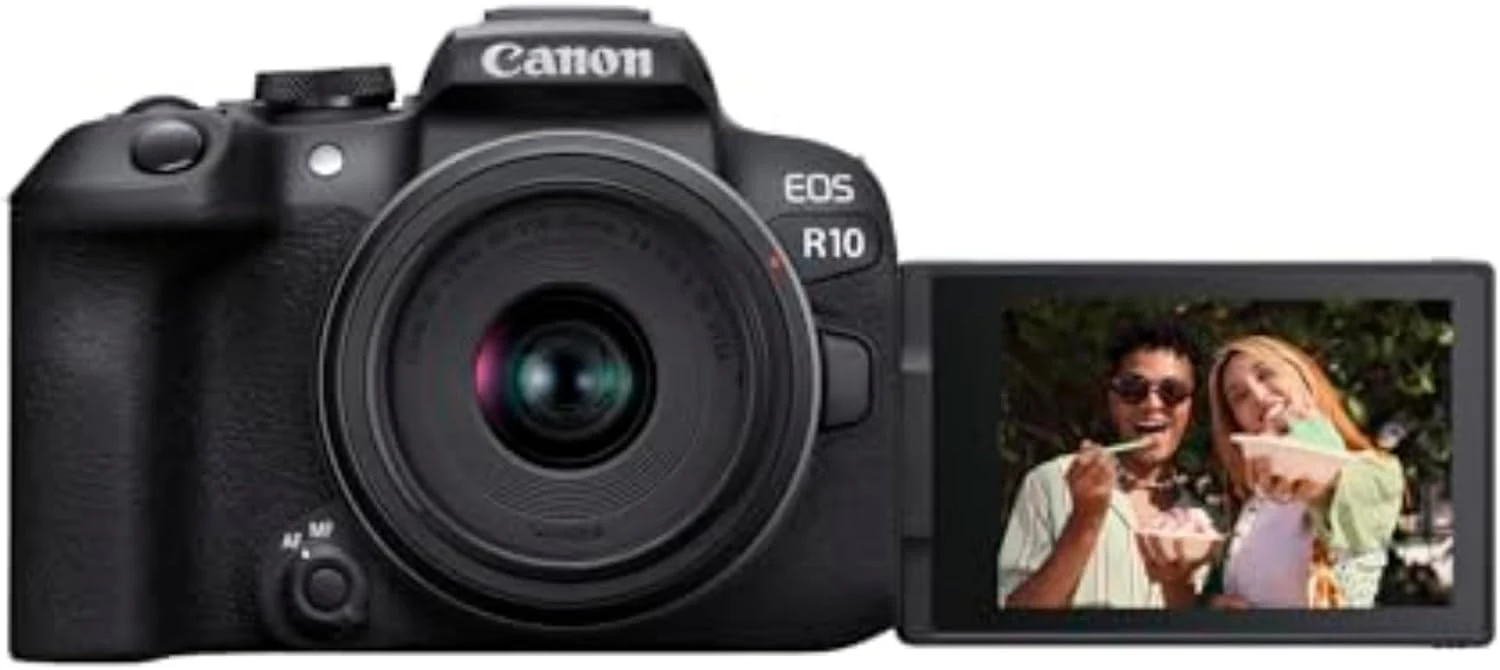
The images show the selected product in retailer or manufacturer materials. They are not my test photographs. I base this assessment on the linked documentation and the exact selected listing; the buying choices and recommendations are my own editorial judgement.
What worked
The body and small 18–45mm lens form a manageable complete starting arrangement with physical camera controls.
What bothered me
The kit zoom has limited reach and a variable aperture, and the body does not supply the R7’s in-body stabilization.
Who should not buy it
Someone expecting a long telephoto lens in this package or in-body stabilization like the differently positioned R7.
Alternatives I would consider
Canon EOS R7. I would choose it when a defined action kit needs the extra body workflow and stabilization features. Read my Canon EOS R7 review.
Canon EOS R50. I would compare it for a smaller body-focused starting point when the exact controls and chosen lens suit the work. Read my Canon EOS R50 review.
Evidence and sources
The primary documentation supports the stated features and limitations. The exact retailer listing identifies the selected model and bundle; source images illustrate the product.
Features, compatibility and rated figures from the maker are manufacturer information. My opinions are identified in the review.
Conclusion
I would judge the complete useful kit and the next lens I might need, rather than spend more on a body before understanding the first zoom.
Canon EOS R10 black with RF-S 18–45mm F4.5–6.3 IS STM lens
Amazon US · US
Check price and availability: Canon EOS R10 black with RF-S 18–45mm F4.5–6.3 IS STM lens at Amazon USAffiliate link. As an Amazon Associate I earn from qualifying purchases.
One email a week with practical Mac workflows, useful comparisons and honest tech recommendations.