I like the idea of making an existing appliance easier to control without replacing it. The Broadlink RM4 Mini has that appeal when the appliance already uses infrared. A small controller can send familiar remote commands from an app or an automation. That is a practical, limited job, and the limits are part of choosing it well.
Quick verdict
I would choose it for a known infrared appliance whose useful commands are supported.
Best for: I would choose it for a known infrared appliance whose useful commands are supported.
Main benefit: It can add app and automation control to suitable existing IR equipment without replacing the appliance.
Biggest drawback: It needs a clear IR path and cannot assume that sending a command proves the appliance changed state.
Broadlink RM4 Mini
Amazon US · US
Check price and availability: Broadlink RM4 Mini at Amazon USAffiliate link. As an Amazon Associate I earn from qualifying purchases.
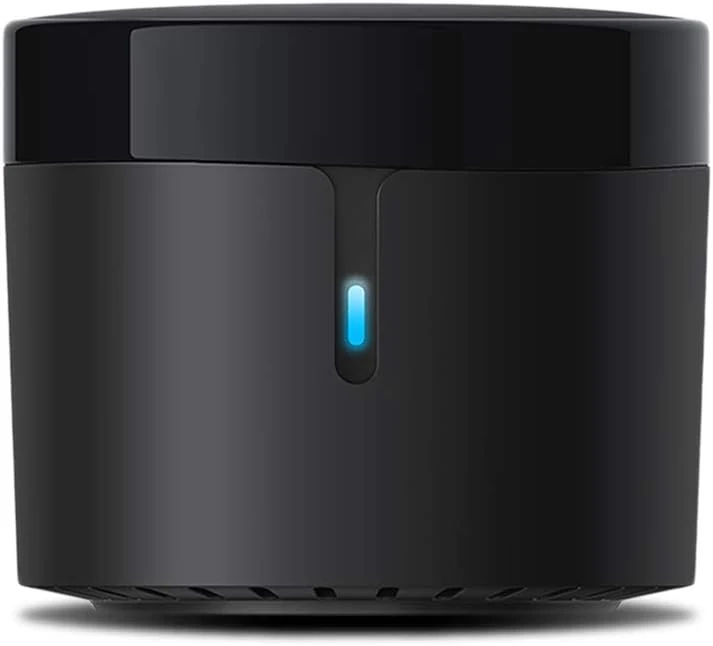
Reviewed version: BroadLink RM4 Mini IR Universal Remote Control (2.4 GHz Wi-Fi Only), Smart Home Automation Wi-Fi Infrared Blaster for TV, AC, STB Audio, Works with Alexa, Google Home, IFTTT
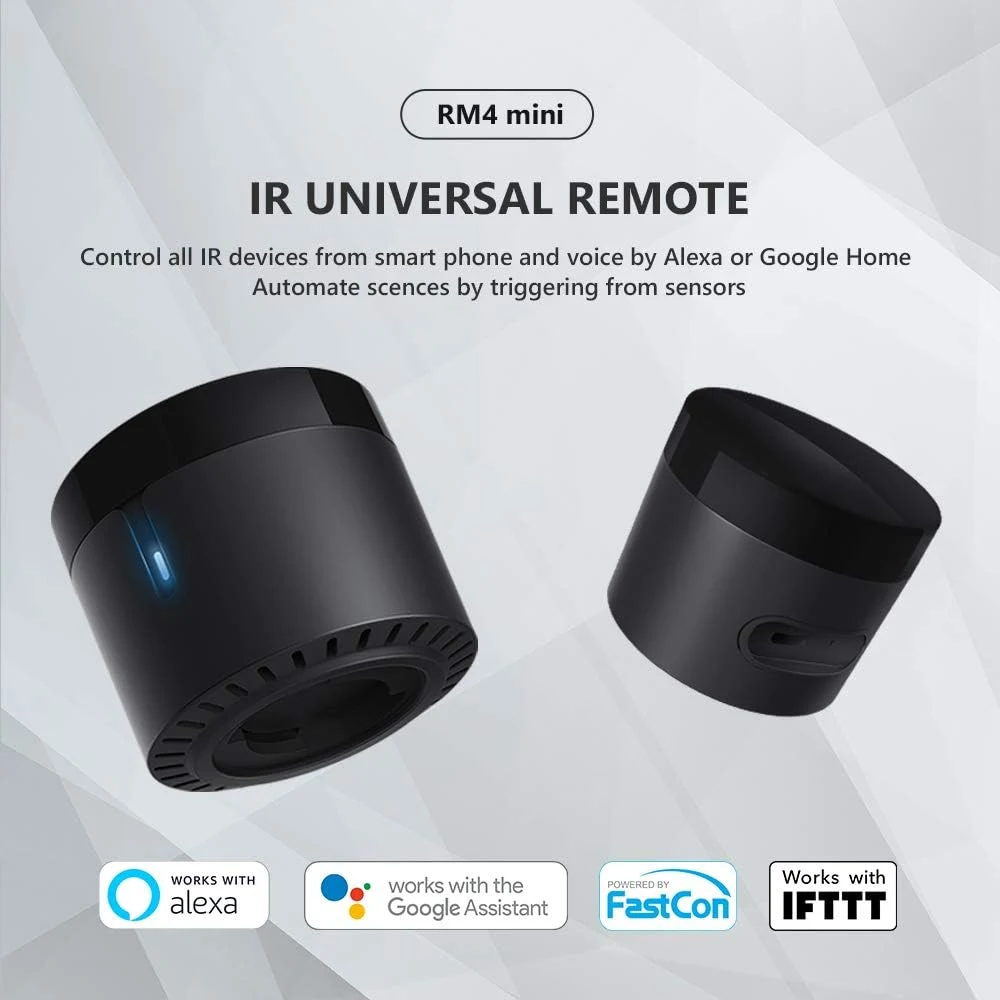
Compatibility: RM4 Mini is infrared-only with compatible 2.4GHz Wi-Fi. It does not replace Bluetooth, RF or Zigbee remotes, and platform features depend on the supported integration.
Review context: I assess teaching IR commands, appliance placement, state assumptions and a usable manual fallback.
I would shortlist it only after identifying the actual remote technology and the commands I need. A television may use infrared for some functions and another connection for others. My positive view is for a known compatible IR role, rather than a promise that one small box turns every old appliance into a fully reported smart device.
Infrared is a specific kind of control
BroadLink’s product information describes the RM4 Mini’s infrared role. The selected listing also makes clear that it is not a Bluetooth or RF controller. I would check the appliance documentation or remote behaviour before buying, rather than choose from the appearance of the handheld remote alone.
Related reading

That distinction matters with fans, blinds and televisions. Two similar-looking remotes can use different signals. A microphone button or pointer function may rely on something other than IR even if ordinary volume keys do not. I would write down the small set of actions that would make the product worthwhile, then confirm those actions through the supported route.
I would also keep the original remote. It is useful for teaching supported commands and as a familiar fallback. Replacing batteries in a remote is a much smaller interruption than losing the only way to operate an appliance when a network account or app becomes unavailable. Automation should add a convenient route rather than erase the ordinary one.
Placement is part of compatibility
Infrared needs an appropriate path to the receiving appliance. I would put the controller where commands can reach the equipment, not simply where the USB power cable is easiest to hide. A shelf, cabinet door or object placed in front of the receiver can change the result.
I would check the intended controls from the final position. A successful setup beside the television is not proof that the controller works after moving behind a bookcase. The room layout and the appliance’s receiver location belong in the assessment. If the control problem is through a wall or inside a closed cabinet, I would look for a properly designed alternative.
Power and Wi-Fi also influence the final location. The controller needs its supported power arrangement and compatible network access. A position that is ideal for IR may be awkward for the cable or wireless connection. I would solve those three needs together before treating the installation as finished.
A remote library is a start, not a guarantee
The product offers a remote library and a learning route for supported commands. I find that attractive because a useful appliance does not need to be new to remain worth automating. I would still confirm the exact device functions rather than assume a matching brand name means every button behaves correctly.
Related reading

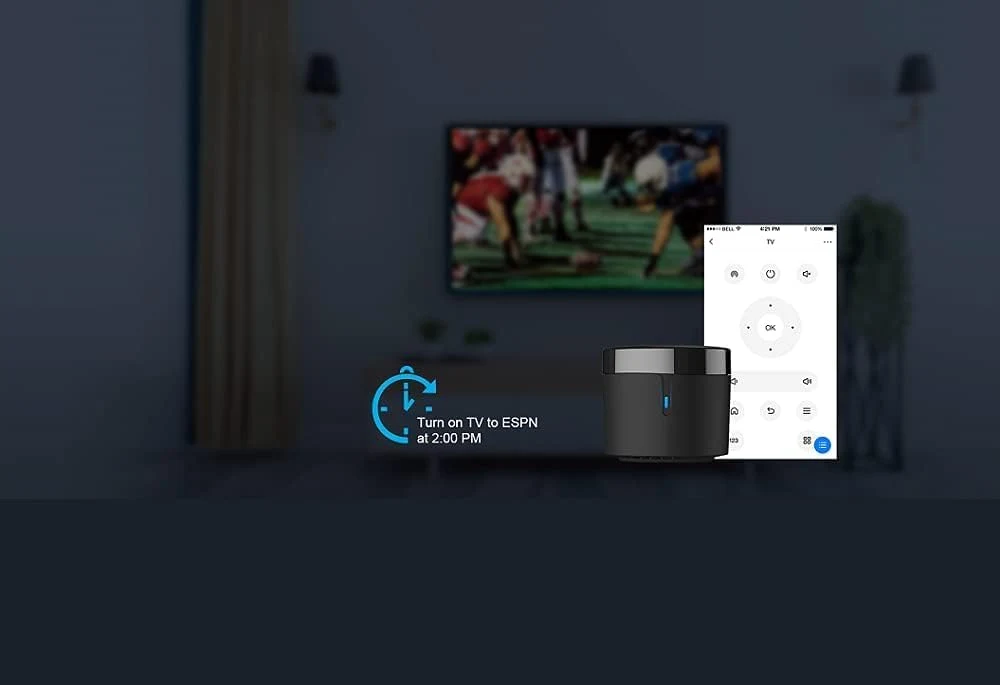
I would begin with simple, reversible controls. Volume changes or an ordinary menu command can reveal whether the selected profile is appropriate. More consequential functions deserve particular care. For an appliance such as an air conditioner, the remote may send a combined state rather than one simple isolated instruction, so the supported profile matters.
If learning is needed, I would follow the documented method and keep the original remote available. I would not label a partially learned set as complete compatibility. The purchase is successful only when the few actions that justified it are reliable enough for the intended routine. A large library count is less useful than the exact commands I will actually send.
Sending a command is not knowing the state
This is the most important practical boundary for me. An IR transmitter can send a power toggle without receiving confirmation that the appliance was on beforehand or changed afterwards. If someone uses the physical remote, an app’s assumed state can drift away from the real room.
I would prefer explicit on and off commands where the appliance and profile support them. A repeated toggle can reverse the desired result. Even with explicit commands, I would understand what the system can observe rather than promise two-way state reporting from equipment that never provides it. That affects how confidently an automation can depend on the outcome.
For a simple convenience routine, the limitation may be acceptable. For a rule where the final state truly matters, I would look at a native smart-control route or another supported way to confirm the state. I would not make an IR-only appliance responsible for a critical unattended task merely because the app makes the button easy to press.
Related reading

When this is the sensible purchase
I would compare the Aqara Hub M2 when an Aqara sensor system and its separate IR capability are both useful. I would choose an appliance with native smart control when dependable state feedback is essential. The RM4 Mini makes sense when the aim is narrower: a suitable existing IR appliance with a clear convenience improvement.
My assessment is positive for that focused job. I would check the exact model, current app requirements and return terms before ordering. The best result is a familiar appliance made easier to operate, with the original remote still available, rather than an increasingly complex set of assumptions about commands the system cannot independently confirm.
The product images come from the selected listing and identified manufacturer materials. My assessment uses the linked product information and the buying decisions explained here. Specifications are manufacturer or retailer claims; the conclusions are my own editorial judgement.
What worked
It can add app and automation control to suitable existing IR equipment without replacing the appliance.
What bothered me
It needs a clear IR path and cannot assume that sending a command proves the appliance changed state.
Who should not buy it
Someone needing Bluetooth or RF control, operation through walls or dependable two-way state reporting from an IR-only appliance.
Alternatives I would consider
Aqara Hub M2. I would compare it when supported Aqara sensors and its separate IR role are both needed. Read my Aqara Hub M2 review.
An appliance with native smart control. I would choose it when reliable reported state and documented platform control are essential.
Evidence and sources
The linked product documentation and exact retailer listing support the product details. Images: Amazon product gallery. These are not personal test photographs or measurements.
Features, compatibility and rated figures from the maker are manufacturer information. My opinions are identified in the review.
Conclusion
Worthwhile when one or more actual remotes solve a clear automation problem; not a universal remote purchase on guesswork.
Broadlink RM4 Mini
Amazon US · US
Check price and availability: Broadlink RM4 Mini at Amazon USAffiliate link. As an Amazon Associate I earn from qualifying purchases.
One email a week with practical Mac workflows, useful comparisons and honest tech recommendations.