The beyerdynamic DT 900 PRO X appeals to me because its role is easy to explain. It is a full-size wired headphone for a desk where listening deserves some attention. I would consider it for music and editing in a quiet room, rather than ask it to replace every portable audio device in my bag. That focused purpose is a strength when it matches the place I actually intend to use it.
Quick verdict
I would shortlist it for a quiet editing or listening desk where an open design is welcome.
Best for: A quiet home or studio desk, with a suitable headphone output and no need to keep the room out.
Main benefit: A straightforward wired system with replaceable pads, headband parts and detachable cables.
Biggest drawback: The open design lets room sound in and programme sound out; it does not solve a noisy workspace.
beyerdynamic DT 900 PRO X, open-back, 48-ohm STELLAR.45 driver
Amazon US · US
Check price and availability: beyerdynamic DT 900 PRO X, open-back, 48-ohm STELLAR.45 driver at Amazon USAffiliate link. As an Amazon Associate I earn from qualifying purchases.
Reviewed version: beyerdynamic DT 900 PRO X, open-back, 48-ohm STELLAR.45 driver
Compatibility: An analogue headphone output, with the supplied 3.5 mm connection or 6.35 mm adapter. The manufacturer describes detachable 3-pin mini XLR cables. This is a wired headphone without a call microphone.
Review context: I assess quiet-room listening and editing, source connections, cable management and maintenance rather than claimed listening measurements.
My first question would be about that place. An open headphone changes how sound moves between the listener and the room. Before looking at driver names or an amplifier, I would make sure the working environment is suitable. A carefully chosen desk system can be more useful than a feature-rich purchase that spends its life fighting the wrong surroundings.
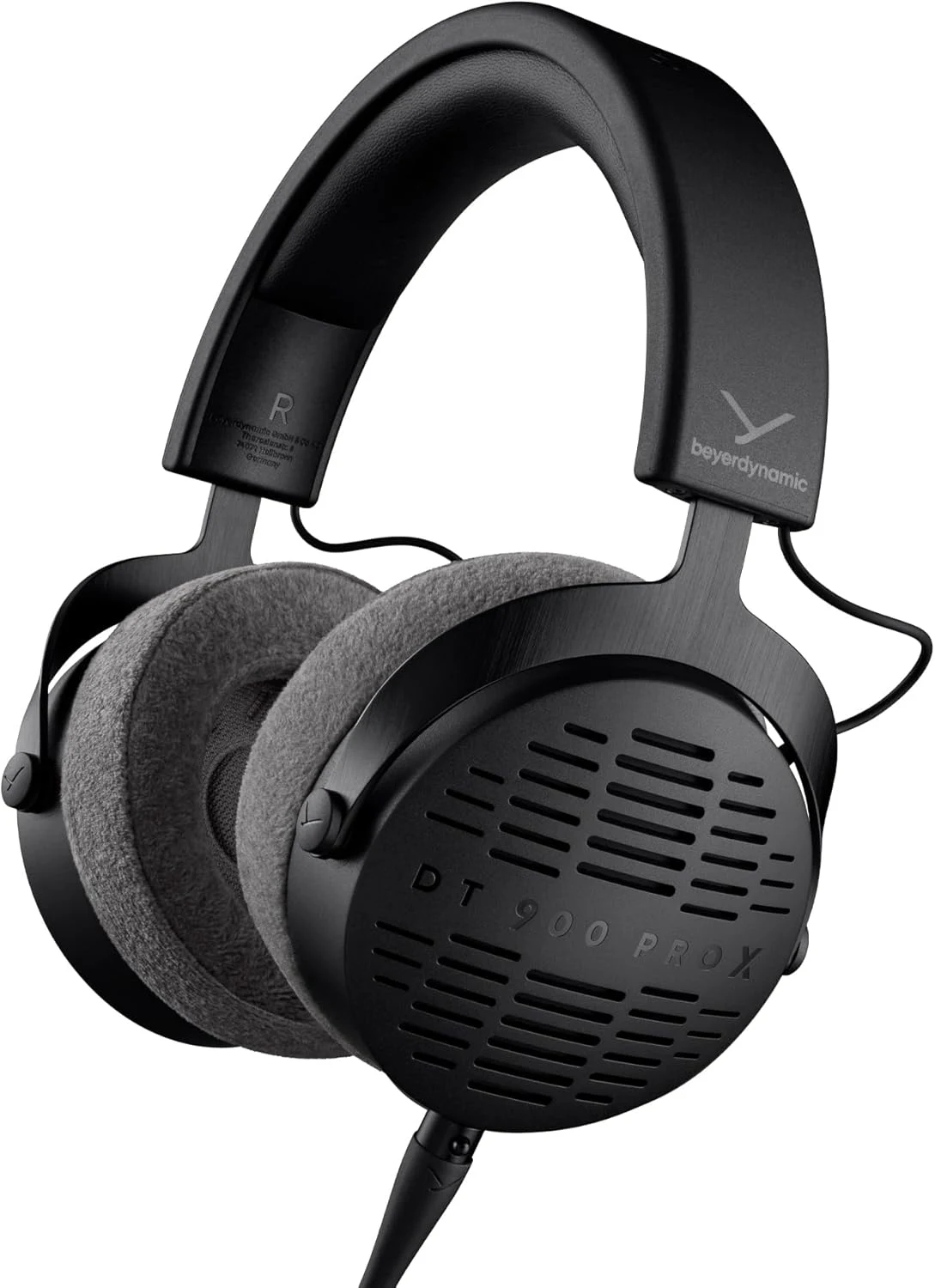
Product images are from the selected retailer gallery. The wearing photograph is supplied product material, not a photograph of my own listening session.
Related reading

The open design is the main decision
Beyerdynamic’s own comparison distinguishes this open model from the closed DT 700 PRO X. I would treat that difference as more important than the shared family name. The DT 900 is not intended to form the same barrier between my ears and the room as a closed shell.
That means a quiet room remains valuable, and the person nearby still matters. I would not choose it to hide a late-night film from someone sharing a bedroom. I would also avoid using extra volume as an answer to background conversation. If the environment is routinely busy, choosing a different headphone design is the more useful starting point.
A studio role without a sound guarantee
The official product page positions the DT 900 PRO X for critical listening, mixing and mastering. That is useful context about its intended job. It is not proof that every person will prefer the tonal balance or make better edits merely by wearing the same equipment.
I would compare it with familiar recordings at a comfortable, matched level and keep one clear question in mind. Perhaps I need to follow speech edits or notice how an instrument sits in an arrangement. A practical question gives the comparison a purpose. The word professional on a product page cannot replace that personal judgement.
The connection should stay simple
Beyerdynamic lists a 48-ohm STELLAR.45 driver and analogue connection. I like the directness of a wired setup: there is no Bluetooth pairing routine or headphone battery to manage. I would still check the output on the device I intend to use and make sure the appropriate plug or adapter is available.
For video calls, I would plan a separate microphone. A headphone designed for listening does not become a complete headset simply because it connects to a computer.
Related reading

The impedance figure alone does not settle every source question. I would want enough clean headroom at an ordinary listening level, rather than buy an amplifier automatically because the headphone has a studio identity. If an interface or adapter is part of the plan, its cost and place on the desk belong in the budget from the beginning.

A detachable lead is a practical benefit
The manufacturer describes detachable cables with a three-pin mini XLR connection at the headphone and familiar stereo connections at the source. I find that maintenance choice attractive. A damaged lead should have a sensible replacement route, and a desk arrangement should not depend on protecting one permanently attached cable forever.
I would still buy a replacement specified for the model. A similar-looking connector does not establish the correct fit or wiring. During ordinary desk use, I would leave slack where the cable meets the earcup, keep it away from chair wheels and give spare length a safe place. Those small arrangements can matter more than an impressive cable description.
Comfort and maintenance belong together
The product information lists velour pads and replaceable components, including pads, headbands and cables. That makes sense to me for equipment expected to stay in regular use. Wearing surfaces age, and the option to renew them gives the purchase a more useful long-term story than treating visible wear as a reason to replace everything.
Fit still needs its own judgement. I would pay attention to ear clearance, pressure and how the headband feels with glasses during a fitting opportunity. A photograph or published weight cannot settle comfort for every person. I would also include replacement-pad availability in the buying check instead of assuming every older accessory will fit this PRO X model.
Related reading

When I would choose its sibling
For a recording position near a microphone or a room that needs more separation, I would choose the DT 700 PRO X first. For another quiet open setup, I would compare the AKG K702 and the complete source, cable and fit arrangement. Those are choices about use, not a contest between model numbers.
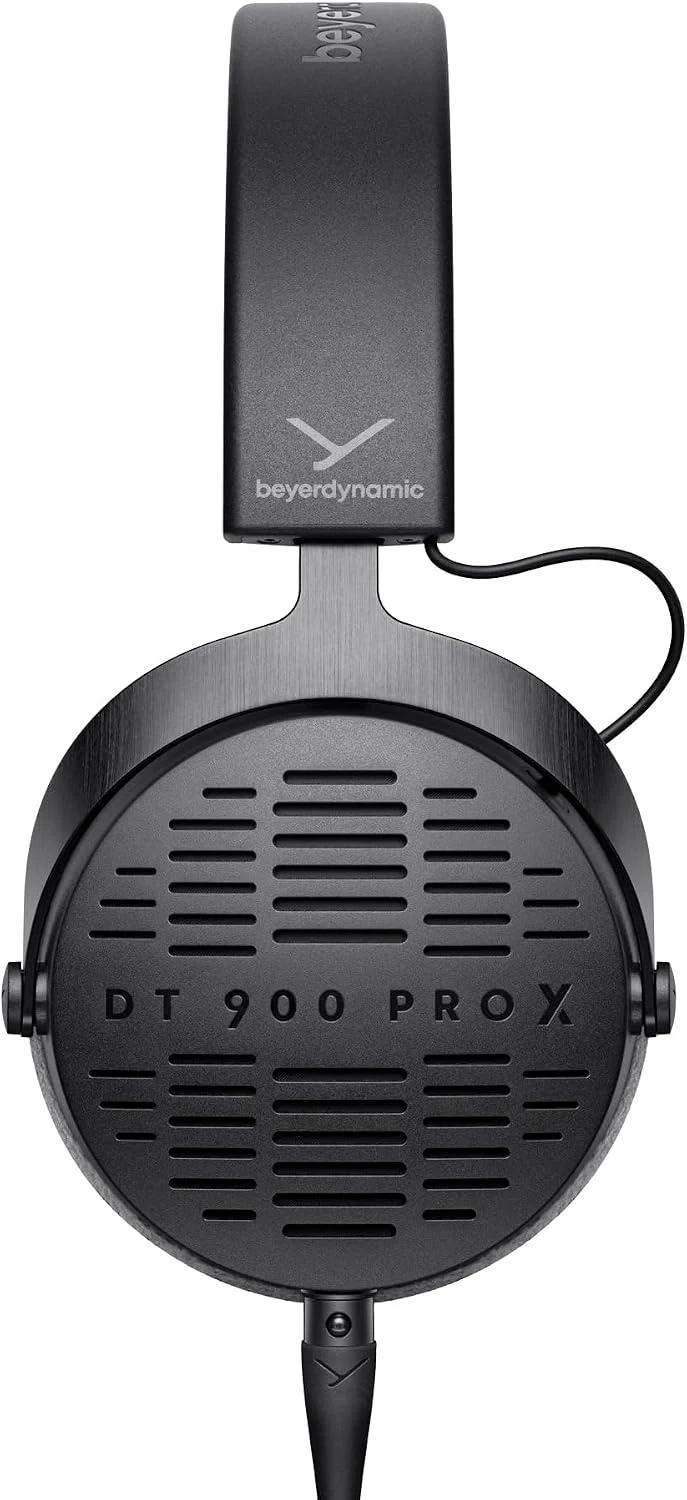
My verdict is positive for that deliberate desk role. I like the DT 900 PRO X’s clear wired purpose and maintainable parts. I would buy it when an open design suits the room and the fit works for me, then concentrate on the recording or music. When isolation, calls or compact travel are the real need, I would give those requirements priority and choose another design.
What worked
A straightforward wired system with replaceable pads, headband parts and detachable cables.
What bothered me
The open design lets room sound in and programme sound out; it does not solve a noisy workspace.
Who should not buy it
I would pass for commuting, a busy shared room or recording beside an open microphone.
Alternatives I would consider
beyerdynamic DT 700 PRO X. I would choose the closed sibling for a recording or isolation-focused role. Read my beyerdynamic DT 700 PRO X review.
AKG K702. I would compare its fit, connection and complete system cost for another quiet open-headphone setup. Read my AKG K702 review.
Evidence and sources
Product details are attributed to the linked documentation. The photographs and credited technical illustrations show the selected product; they are not personal test photographs.
beyerdynamic DT 900 PRO X official product specifications
beyerdynamic explanation of the open and closed PRO X designs
Features, compatibility and rated figures from the maker are manufacturer information. My opinions are identified in the review.
Conclusion
Worth considering as a maintainable desk headphone; I would spend differently when isolation or mobile calls are the main requirement.
beyerdynamic DT 900 PRO X, open-back, 48-ohm STELLAR.45 driver
Amazon US · US
Check price and availability: beyerdynamic DT 900 PRO X, open-back, 48-ohm STELLAR.45 driver at Amazon USAffiliate link. As an Amazon Associate I earn from qualifying purchases.
One email a week with practical Mac workflows, useful comparisons and honest tech recommendations.