For a recording desk, I would begin with the job around the microphone rather than a promise about spectacular sound. The beyerdynamic DT 700 PRO X has a clear reason to enter that conversation: it is a closed wired headphone with a straightforward connection and replaceable parts. I like that practical focus. It gives me something concrete to compare with an open listening headphone or a wireless travel model.
Quick verdict
I would shortlist it when a closed wired headphone fits the recording or desk role.
Best for: Recording, monitoring and ordinary desk listening where an open earcup would be a poor match.
Main benefit: A closed design with detachable cables and replaceable wearing parts gives it a practical long-term role.
Biggest drawback: Passive isolation does not erase the room, and this remains a full-size wired headphone rather than a travel headset.
beyerdynamic DT 700 PRO X, closed-back, 48-ohm STELLAR.45 driver
Amazon US · US
Check price and availability: beyerdynamic DT 700 PRO X, closed-back, 48-ohm STELLAR.45 driver at Amazon USAffiliate link. As an Amazon Associate I earn from qualifying purchases.
Reviewed version: beyerdynamic DT 700 PRO X, closed-back, 48-ohm STELLAR.45 driver
Compatibility: Analogue headphone outputs through a 3.5 mm plug or 6.35 mm adapter. The specified cables use a three-pin mini XLR earcup connection. There is no integrated call microphone or Bluetooth.
Review context: I assess a recording position, a shared listening room, source connections and replaceable wearing parts.
I would consider it when the same desk has to support recording, editing and ordinary listening. That does not make one headphone perfect for every situation. It makes the choice easier to explain: I want the closed design and a maintainable cable arrangement, and I am willing to accept a full-size object that stays connected to its source.
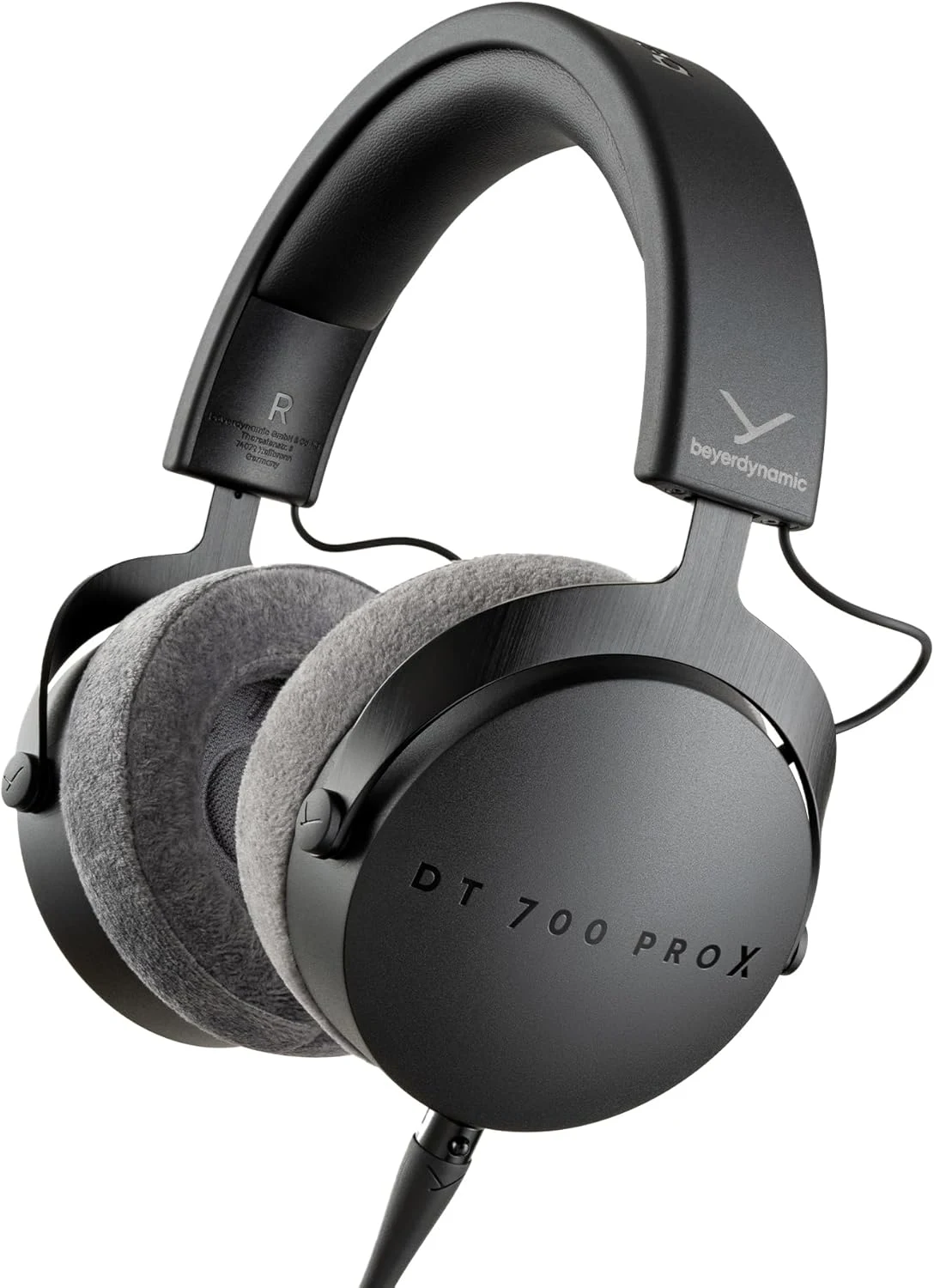
The product photographs come from the selected retailer gallery. They are images of the exact headphone, not photographs from a claimed personal recording session.
Related reading

The closed shell has a purpose
Beyerdynamic’s comparison with the DT 900 PRO X identifies the DT 700 as the closed model. I would choose that design when more separation from the surroundings is useful, or when an open headphone would let too much programme sound escape towards a recording microphone.
I would still keep the recording arrangement sensible. A closed earcup does not make microphone position, playback level or room noise irrelevant. It is one useful part of the setup, rather than a way to turn any room into a studio. That is a more convincing buying reason to me than expecting a headphone to repair every other part of the workflow.
Passive isolation is different from active cancellation
This is a wired studio headphone, not a battery-powered noise-cancelling travel headset. I like the simplicity of that distinction. There is no wireless pairing routine to manage, but I would not expect a switch that removes the sound of a train or an adjustable ambient listening mode for the street.
For a shared room, I would judge whether the physical design provides enough separation for the actual task. I would also keep listening levels comfortable instead of treating extra volume as the answer to every distraction. If the main problem is a noisy commute rather than a recording desk, a different category of headphone deserves attention first.
The source should fit the plan
The official specifications list a 48-ohm STELLAR.45 driver and an analogue stereo connection. I would check the headphone output on the interface, computer or adapter I plan to use. The useful result is enough clean headroom for normal listening, with the correct plug and a connection that stays secure.
I would also plan a separate microphone for calls or spoken recording. A listening headphone does not provide a complete communication setup by itself.
Related reading

I would not buy an amplifier automatically because the headphone is marketed for professional work. Equally, I would not assume every small output behaves identically. If another device is needed, it becomes part of the system cost and desk arrangement. Keeping that decision visible prevents an apparently simple purchase from becoming an unexpected collection of extra boxes.
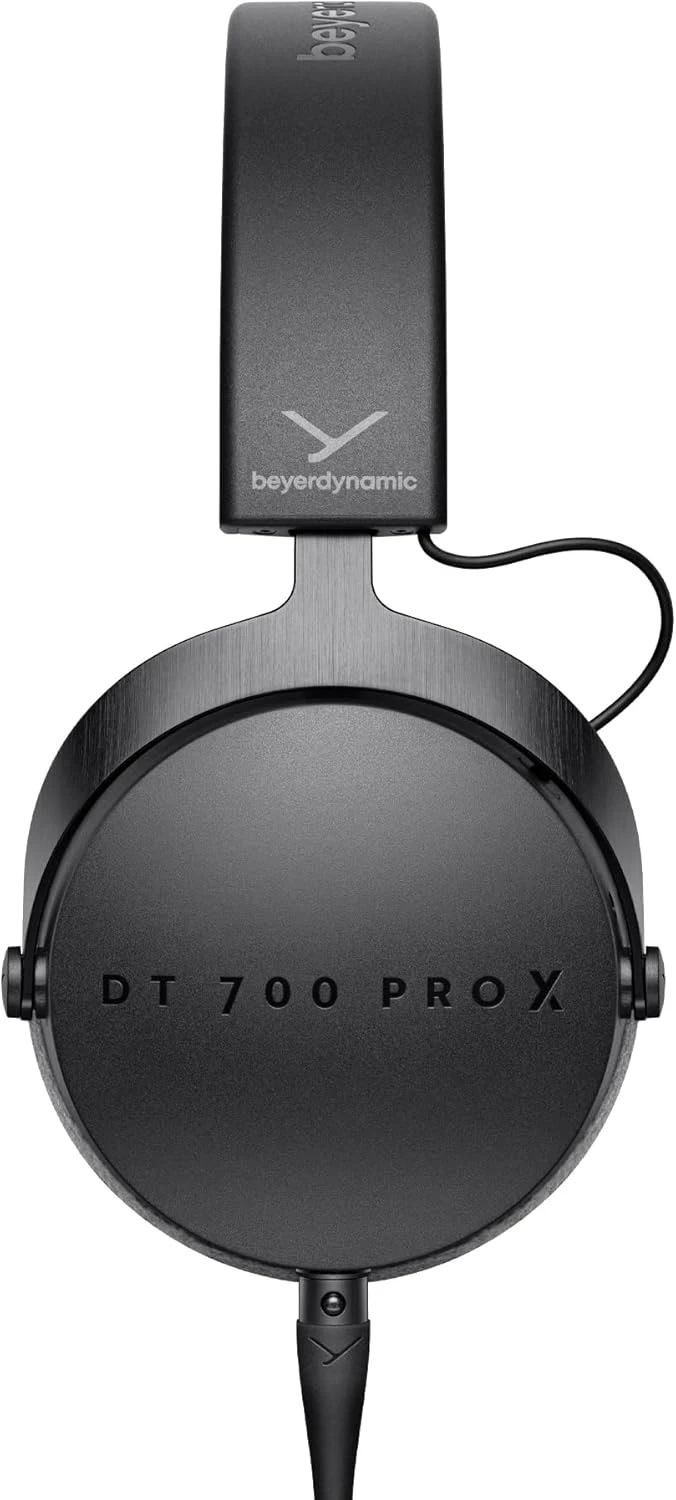
Cable replacement is useful maintenance
Beyerdynamic describes detachable leads with a three-pin mini XLR connection at the earcup and a stereo plug with an adapter at the other end. I like having a defined replacement route for a part that is handled repeatedly. I would choose a suitable cable length for the desk instead of leaving spare loops beside a chair wheel.
The replacement still needs to be correct for this model. A familiar connector shape does not establish the wiring or the mechanical fit of every third-party lead. I would also avoid pulling the headphone around by its cable. A detachable connection makes maintenance easier, but it does not remove the value of ordinary careful handling.
Fit can decide the purchase
The manufacturer lists velour pads and replacement parts for the pads, headband and cable. That matters to me because the surfaces touching the head will age with use. I would check the exact replacement part before buying, and include its availability in the long-term view rather than assume any similar-looking pad will behave the same way.
Comfort remains personal. I would pay attention to pressure, ear clearance and the fit around glasses during a fitting opportunity. A soft-looking pad in a photograph is a reason to investigate, not a guarantee of an easy afternoon. The right purchase is the headphone whose physical fit and working role both make sense for the individual listener.
Related reading

The alternative depends on the room
For a deliberately open quiet-room setup, I would compare the DT 900 PRO X. For wireless listening and calls, I would look at a different design such as Sony ULT WEAR. Those alternatives answer different needs, which is why I would settle the intended location before comparing model names.

My verdict is positive for a practical recording or listening desk. I like the DT 700 PRO X’s closed design, direct connection and maintainable parts. I would buy it when those qualities fit the work and the physical fit is comfortable, then keep the wider recording arrangement sensible. I would choose something else when wireless convenience or an open listening experience is the deciding requirement.
What worked
A closed design with detachable cables and replaceable wearing parts gives it a practical long-term role.
What bothered me
Passive isolation does not erase the room, and this remains a full-size wired headphone rather than a travel headset.
Who should not buy it
I would choose another design for wireless commuting, a built-in call microphone or a deliberately open quiet-room listening setup.
Alternatives I would consider
beyerdynamic DT 900 PRO X. I would choose the open sibling for a quiet listening desk where leakage is acceptable. Read my beyerdynamic DT 900 PRO X review.
Sony ULT WEAR. I would compare it when wireless use, active noise cancellation and calls matter more than a passive studio connection. Read my Sony ULT WEAR review.
Evidence and sources
Product details are attributed to the linked documentation. The photographs and credited technical illustrations show the selected product; they are not personal test photographs.
beyerdynamic DT 700 PRO X official design and connections
Features, compatibility and rated figures from the maker are manufacturer information. My opinions are identified in the review.
Conclusion
Worth considering when its closed design and maintainable construction solve the actual job; I would not buy it solely for a studio label.
beyerdynamic DT 700 PRO X, closed-back, 48-ohm STELLAR.45 driver
Amazon US · US
Check price and availability: beyerdynamic DT 700 PRO X, closed-back, 48-ohm STELLAR.45 driver at Amazon USAffiliate link. As an Amazon Associate I earn from qualifying purchases.
One email a week with practical Mac workflows, useful comparisons and honest tech recommendations.