I am the author of Turn Your Blog into a Business: Medium, Self-Hosted Blogs & the Path From First Post to Full-Time Income. I receive royalties from sales, and the labelled Amazon link can also earn an affiliate commission. This is my own explanation of the book’s purpose and fit, with that relationship visible before the recommendation.
Quick verdict
I recommend considering it for a deliberate connection between useful publishing and a sustainable business.
Best for: A new or existing blogger planning audience value, platform choice and revenue together.
Main benefit: The stated scope brings Medium, self-hosted blogging and monetisation into one publishing discussion.
Biggest drawback: Full-time income is an uncertain objective, not a guaranteed result, and platform terms can change.
Turn Your Blog into a Business
Amazon US · US
Check price and availability: Turn Your Blog into a Business at Amazon USAffiliate link. As an Amazon Associate I earn from qualifying purchases.
Reviewed version: Turn Your Blog into a Business: Medium, Self-Hosted Blogs & the Path From First Post to Full-Time Income
Compatibility: The selected Amazon edition is B0GWTY9CZM. Check sample and reading format; verify current platform policies and commercial programmes separately.
Review context: The recommendation uses the published author description and scope. It does not claim an independently verified reading result or invent chapter contents.
What I like about the subject is the connection between publishing something useful and building a workable business around it. Those are related tasks, but they are not identical. An article can help a reader without immediately producing revenue. A revenue idea can sound attractive while giving the reader no good reason to return. I want the conversation to keep both sides in view.
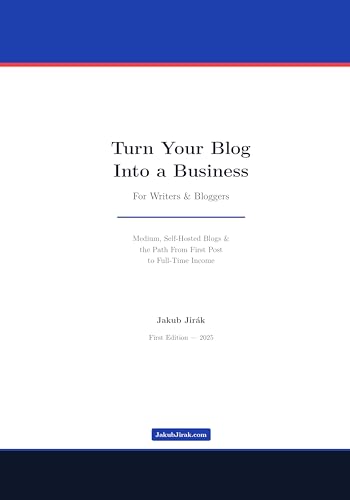
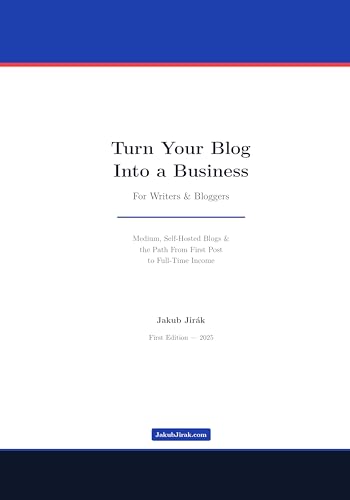
Turn Your Blog into a Business — actual author-owned cover Author catalogue source.
The reader I have in mind
The published scope covers Medium, self-hosted blogging and monetisation, with a path from the first post towards a more sustainable publishing business. I would recommend considering it to someone who wants to make deliberate decisions about those parts together. The reader should be willing to think about a useful audience, a repeatable publishing routine and the work behind income.
I would also consider it for an existing blogger who has several disconnected activities and wants a clearer purpose for them. More posts, more accounts and more purchase links do not automatically form a business. It can be useful to ask which part helps the reader, which part earns revenue and which part simply consumes time.
I would not recommend buying because the subtitle sounds like a timetable for leaving a job. Full-time income is a possible business objective, not a result the book can guarantee. The actual outcome depends on the subject, audience, offer, execution and many conditions outside a book’s control. I prefer to make that limit clear rather than hide it beneath encouragement.
Start with a reader’s real problem
My preferred starting point is a reader who needs a useful answer. A blog becomes easier to explain when its subject is connected to something people are trying to understand or accomplish. That gives the publishing plan a stronger basis than choosing topics only because they appear easy to monetise.
I would begin with a small set of questions the writer can answer responsibly. Each article should have a recognisable purpose and enough evidence to support its important claims. A clear useful piece can establish more trust than a broad article that repeats familiar phrases without helping the reader make a decision.
I would also decide what experience or research the writer can honestly bring. A review, tutorial and opinion essay carry different expectations. Making the basis visible helps the reader understand the value of the piece. A business built around content still needs the ordinary editorial discipline that makes the content worth reading.
Medium and an independent site have different roles
The public description places Medium beside self-hosted blogging. I like comparing them through the writer’s actual needs rather than treating one route as automatically correct. A hosted publishing environment and a site the writer operates come with different responsibilities and ways of reaching people.
I would ask where the intended audience already reads and what the writer needs to control. The decision includes the reading experience, publishing process and the ability to maintain the chosen arrangement. A technically flexible site is less useful when the owner spends all available writing time adjusting it.
I would also avoid making the first platform decision feel irreversible. A clear article archive, sensible records and an understandable publishing process give the writer more options later. The useful purchase is a way to think about the decision, not a promise that one platform will always offer the same terms or opportunities.
A publishing routine should be sustainable
Title and description presentation from my author catalogue; this is not an interior page. Author catalogue source.
I would choose a schedule that can survive an ordinary busy week. An ambitious launch can create an impressive first month without producing a workable second one. The better question is how much research, writing and maintenance the author can repeat while keeping the quality of the work clear.
For a practical reading exercise, I would plan one article from question to publication. Where does the evidence come from? What image rights are needed? What needs checking before it goes live? Looking at the complete process makes the effort more realistic than counting only the minutes spent typing the draft.
I would keep time for existing content too. A useful older article can lose accuracy when a product changes or an important link stops working. Maintaining it is part of serving the reader and operating the business. Publishing volume alone does not describe the condition of the whole site.
Revenue should match the relationship
Monetisation is part of the stated scope, and I would approach it through fit. An offer should make sense beside the subject and the reader’s reason for visiting. A purchase link is more useful when it answers the next natural question than when it appears because a commission is available somewhere.
I would make commercial relationships visible. Readers should be able to distinguish an affiliate link, a sponsored placement and an independent editorial conclusion. Disclosure does not remove the need for a useful recommendation, but it gives the reader information that belongs in the buying decision.
I would also keep a negative or conditional recommendation possible. If every item becomes perfect when a purchase button is added, the site loses an important part of its usefulness. The writer’s business interests and the reader’s interests need a practical arrangement that leaves room for honest limitations and better alternatives.
A business needs a view of the costs
Revenue is easier to celebrate than the work and cost behind it. I would include the publishing tools, hosting, research time and any other recurring commitments when thinking about the business. A gross income figure without that context can give a misleading picture of what the operation actually supports.
I would distinguish a useful experiment from a permanent expense. A new tool may save time on a defined task, while several overlapping subscriptions may simply add management work. The sensible question is which part of the publishing process becomes better and whether that improvement is worth maintaining.
The same applies to partnerships. An offer can create work before and after an article is published. I would be clear about deliverables, editorial independence and the time involved before treating the arrangement as attractive income. A small business benefits from understanding what it has promised as well as what it may earn.
Measure what helps the next decision
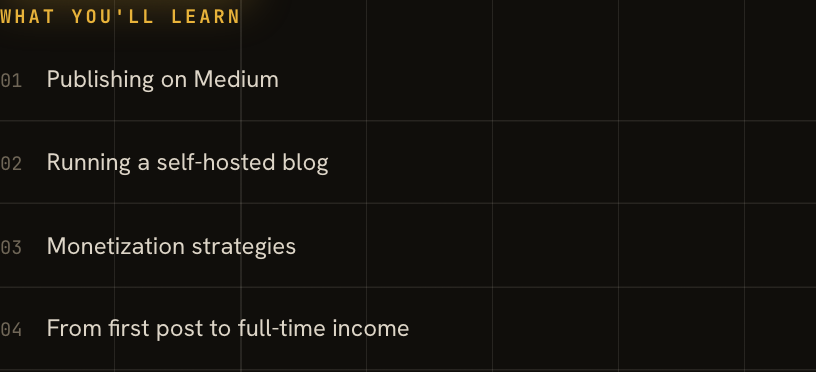
Published scope from my author catalogue; this is not an interior page. Author catalogue source.
I would connect measurement to a concrete question. Are readers finding the relevant article? Are they reaching the information they need? Does a commercial link lead to the correct product? Those questions are more useful than collecting every available number without knowing what action might follow.
I would keep traffic, purchase clicks and actual earnings distinct. A visit does not prove buying intent, and a click does not establish an approved commission. The useful business record is the one that lets the owner see how the parts relate without turning each early positive signal into a larger claim.
For a small blog, a modest repeatable review of the evidence can be enough to begin. I would choose one improvement and observe what happens under known conditions. A publishing business can learn from small decisions without pretending that every change proves a universal marketing rule.
What I would check before buying
The public catalogue establishes the book’s broad subject, not every platform policy or chapter detail. I would inspect the available sample and exact edition if the reader needs a particular implementation guide. Platform interfaces, eligibility requirements and commercial programmes can change after publication, so current official information still has a role.
I would also be honest about the work the reader is prepared to do. A book can help organise a publishing business, but it cannot supply an audience’s trust automatically. The advice becomes useful through research, publication, maintenance and a suitable offer. Buying the book is a small decision inside that much larger practice.
The companion I would choose
Think Different is a different kind of technical book, but I would consider its quality-and-feedback subject relevant to a developer building a publishing platform. It is not a blogging substitute. The choice should follow whether the immediate problem is editorial business planning or the software process supporting it.
AI for Non-Technical People can be a more direct starting point for practical AI assistance with ordinary work. I would use any assistance with clear editorial responsibility. A tool can help prepare material while the publisher remains responsible for whether the final article is accurate and useful.
My author recommendation
I recommend considering Turn Your Blog into a Business when you want to connect publishing, platform choice and revenue with a sustainable way of working. I like the subject because it rewards clear reader value and deliberate business choices. I would buy for that planning perspective, while treating income as an uncertain outcome to build towards rather than a promise supplied with the book.
What worked
The stated scope brings Medium, self-hosted blogging and monetisation into one publishing discussion.
What bothered me
Full-time income is an uncertain objective, not a guaranteed result, and platform terms can change.
Who should not buy it
I would choose current platform documentation for one exact setting, or another resource when the goal is guaranteed quick income.
Alternatives I would consider
AI for Non-Technical People. I would choose it for plain practical AI assistance with ordinary work rather than the publishing business itself. Read my AI for Non-Technical People author overview.
Current documentation for the chosen publishing platform. I would use it first for an immediate interface, eligibility or policy question.
Evidence and sources
The stated scope comes from my published author catalogue. The images show the actual cover and author-catalogue presentation, not interior pages or independent customer evidence.
This is the author's account of the book's scope and intended reader. Check the selected Amazon edition for its current format, sample and availability.
Conclusion
Worth considering for the planning perspective when the reader will do the research, publishing and maintenance work.
Turn Your Blog into a Business
Amazon US · US
Check price and availability: Turn Your Blog into a Business at Amazon USAffiliate link. As an Amazon Associate I earn from qualifying purchases.