I am the author of Think Different: How Test Automation Is Changing the World of Software Development. This is my own explanation of the book’s purpose and the reader I think it suits. I earn royalties from sales, and the labelled Amazon link can also earn an affiliate commission. I want that relationship to be clear before making a recommendation.
Quick verdict
I recommend considering it for the connection between test automation, quality decisions and team workflow.
Best for: Developers, quality engineers and technical leads improving how test feedback supports delivery.
Main benefit: It puts automation principles beside the people and decisions that use the results.
Biggest drawback: The broad published scope does not establish coverage of every framework or current tool version.
Think Different
Amazon US · US
Check price and availability: Think Different at Amazon USAffiliate link. As an Amazon Associate I earn from qualifying purchases.
Reviewed version: Think Different: How test automation is changing the world of software development
Compatibility: Check the format and edition attached to the selected catalogue ASIN B0DJ2RLXWD. Other author pages link different identifiers whose edition relationships are not established here.
Review context: The recommendation uses the published author description and scope. It does not claim an independently verified reading result or invent chapter contents.
The idea I care about is simple: automation changes more than the moment a test runs. It changes the feedback people receive, the way a team discusses quality and the confidence behind a release. That is why I find the subject interesting enough for a book, rather than treating it as a catalogue of frameworks or a contest to produce the largest test count.
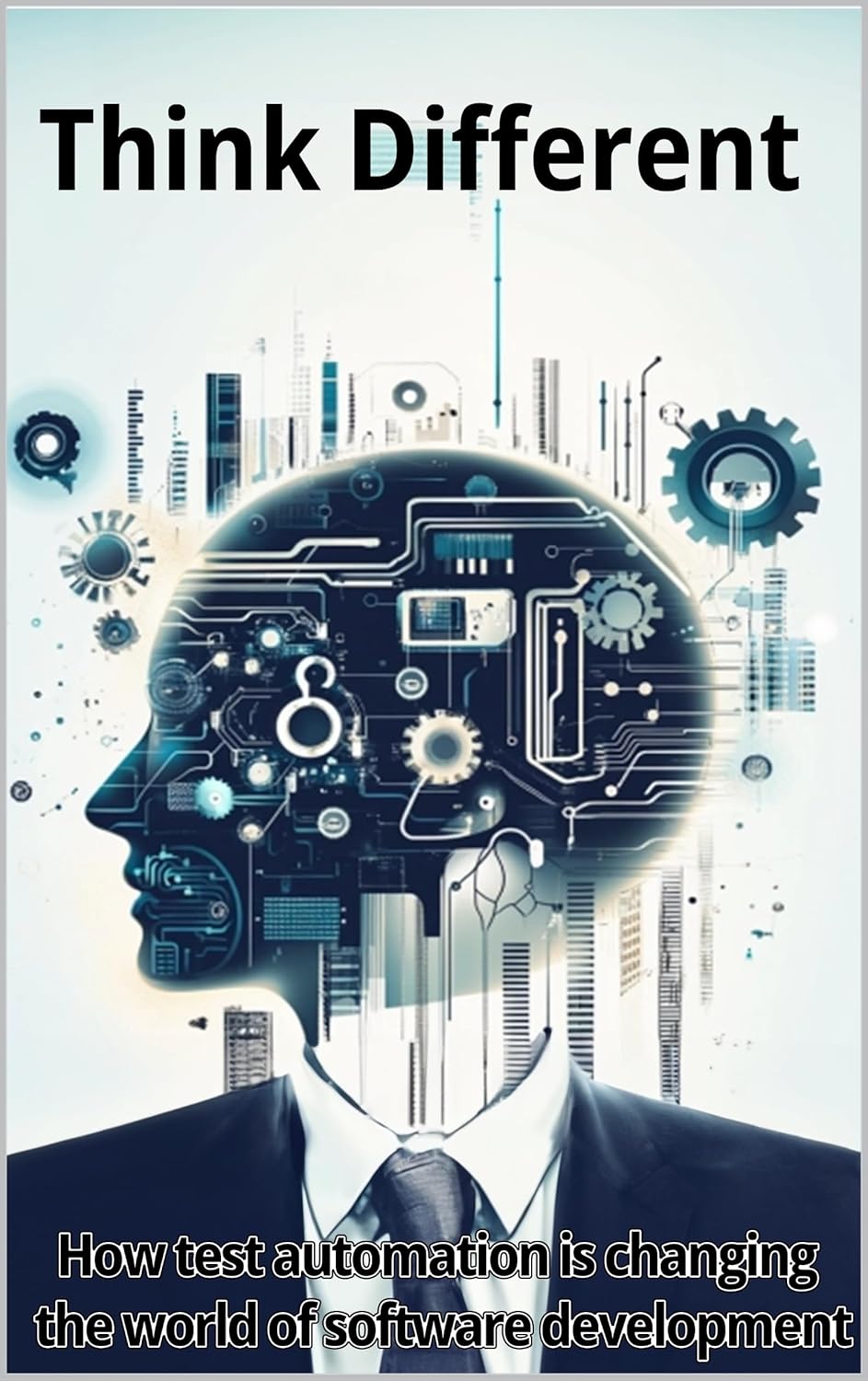
Think Different — actual author-owned cover Author catalogue source.
The reader I have in mind
I would put this book in front of a developer, quality engineer or technical lead who wants a broader way to think about automated testing. The published scope covers modern automation principles, software quality and everyday engineering workflows. The most useful starting question is what those ideas should change in the reader’s own project.
A team can have plenty of automated checks and still struggle to answer whether a change is ready. Some failures may be hard to understand. Others may arrive too late to help the person making the change. I would read the book with one real example of that kind of friction in mind, rather than with a vague instruction to automate more.
I also see value for someone moving from writing individual checks to helping shape a team’s approach. That is a different responsibility. The discussion needs to include who uses the result, how quickly it arrives and how it affects the decision to ship. I would want a reader to connect those questions to the work already happening around them.
Automation should help a decision
My preferred way to assess a test is to ask what decision its result supports. A check can be fast and technically clever while telling a developer very little about a meaningful risk. Conversely, a modest check can be valuable because it catches a mistake at the point where fixing it is still straightforward.
I would use that question while reading about the book’s quality perspective. Pick a change that recently went through the team and describe what confidence was needed. Then compare that with the evidence the workflow actually produced. The difference gives a more concrete discussion than deciding whether an abstract coverage percentage looks impressive.
This is also where I would keep business language and technical detail connected. A release decision can involve reliability, time and the experience of the people using the software. Automation earns its place when it helps the team understand those concerns with useful evidence. The machine’s activity is only part of the result.
The team workflow matters
The book’s published description places team workflows beside software quality, and that combination matters to me. A useful test result needs someone who can act on it. If a failure appears in a place nobody watches, or the responsibility is unclear, adding more checks can simply create more unattended information.
I would read with the path of one failure in mind. Who first sees it? What context do they have? Can they reproduce the problem? How do they know whether the failure is part of their change? Those are practical reading questions, not a claim that every project must use one prescribed process.
For a team discussion, I would choose one small improvement at a time. It might concern when a check runs or how a result is presented. A bounded change is easier to evaluate than a full replacement of the quality process. The point is to learn whether the workflow helps people, then decide what deserves a wider rollout.
Title and description presentation from my author catalogue; this is not an interior page. Author catalogue source.
Reliability includes the test system
I would be cautious about a testing arrangement that makes people routinely ignore failures. A result loses decision value when nobody can tell whether it describes the product or an unreliable check. That is a reason to discuss the test system as maintained software, with understandable ownership and behaviour.
The useful reading exercise is to separate a real product defect from a problem in the environment or the check itself. I would choose an example that caused confusion recently and trace what evidence was missing. That keeps a conversation about reliability grounded in something the team can recognise and improve.
I do not see automation as a way to remove engineering judgement. People still decide which risks matter, whether an observation is convincing and when a different kind of investigation is needed. I would recommend the book to someone willing to make those decisions more explicit, rather than someone looking for a number that can approve every release automatically.
How I would read it alongside real work
I would begin by writing a short description of the current development path, from a small change to production. The description does not need a complex diagram. It needs enough detail to show when feedback arrives and which decisions rely on it. That provides a useful place to attach ideas while reading.
Next, I would choose a recurring problem with a clear boundary. Perhaps the team spends too long finding the cause of a failure, or a risky behaviour receives attention only near release. The reading becomes more useful when it helps frame a specific improvement instead of generating a long wish list with no owner.
I would keep notes about what evidence would show that the improvement helped. The question is not simply whether more automation was added. Did someone receive a useful answer earlier? Was a decision easier to explain? Did the new arrangement remain understandable after the original author moved to another task?
For an individual reader, a small personal project can serve the same purpose. I would avoid building an elaborate pipeline merely to demonstrate that it can be built. A modest application with a few meaningful behaviours can provide a clearer setting for thinking about feedback, maintenance and the reason each check exists.
What this purchase should not promise
The public description gives the book’s subject and intended practical perspective. It does not establish every framework, programming language or tool version a buyer might need. I would check the current product sample and edition information if a particular technology is the deciding factor. A general automation book and a current command reference serve different roles.
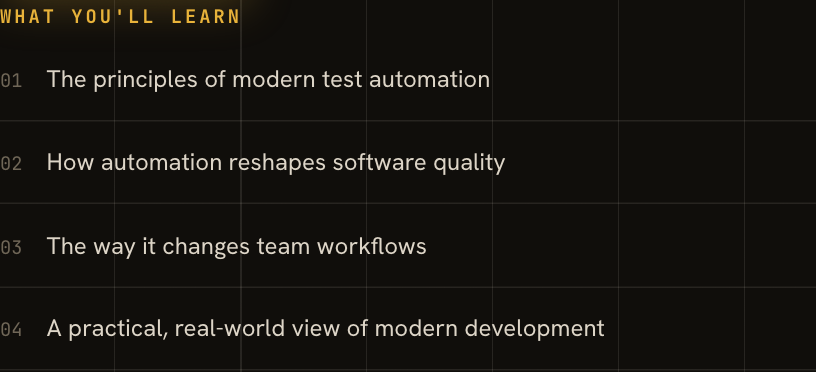
Published scope from my author catalogue; this is not an interior page. Author catalogue source.
I would not recommend buying it as a shortcut to a guaranteed delivery speed or a defect-free product. Those outcomes depend on the system, people and constraints around the work. I prefer a more useful promise: a subject worth thinking about carefully and a basis for discussing how automation supports quality in everyday development.
I would also keep room for exploratory work and human observation. Some questions need a person to investigate an unfamiliar behaviour or assess whether an interaction makes sense. An automation strategy is stronger when its limits are understood. It should help decide where to spend attention, rather than pretend every important question already has an executable answer.
The books I would read beside it
For a reader focused on AI-driven implementation, Build AI Agents That Actually Work addresses a different part of the engineering conversation. I would use that subject to examine the agent workflow, while keeping the question of evidence and release confidence visible. Generating a change and establishing that it is useful are connected tasks.
For a team building common development paths, Platform Engineering from Scratch is a more relevant companion. I would choose that direction when the main problem is the shared developer platform rather than the testing approach alone. The books have different entry points, even where the reader’s project makes them overlap.
If the immediate need is implementing one assertion or configuring a specific runner, the tool’s current official documentation may be the faster first stop. I would not buy a broader book to replace a page that answers today’s exact syntax question. I would buy it when the wider principles and workflow discussion are the missing piece.
Edition and buying choice
This page keeps the blog catalogue’s existing Amazon destination for the book. Other author pages have linked different ASINs, so I would check the format and edition shown at checkout rather than assume those identifiers represent interchangeable copies. The purchase should match the reading format and edition the buyer actually wants.
I avoid a static price here because the current store offer is the relevant one. I would compare the listed format, delivery or reading access, and the available sample together. A book is better value when its purpose fits the reader than when a small temporary discount persuades someone to buy the wrong reference.
My author recommendation
I recommend considering Think Different when you want to connect test automation with meaningful quality decisions and team workflows. I like that conversation because it stays close to the reason software is built and released. I would choose a narrower reference for an immediate tool problem, and this book for the broader thinking I want a team to carry into its next change.
What worked
It puts automation principles beside the people and decisions that use the results.
What bothered me
The broad published scope does not establish coverage of every framework or current tool version.
Who should not buy it
I would choose a narrower current reference when one runner, API or implementation recipe is the whole need.
Alternatives I would consider
Build AI Agents That Actually Work. I would choose it when designing an agent workflow is the immediate problem. Read my Build AI Agents That Actually Work author overview.
Platform Engineering from Scratch. I would choose it when a shared developer platform is the main improvement target. Read my Platform Engineering from Scratch author overview.
Evidence and sources
The stated scope comes from my published author catalogue. The images show the actual cover and author-catalogue presentation, not interior pages or independent customer evidence.
This is the author's account of the book's scope and intended reader. Check the selected Amazon edition for its current format, sample and availability.
Conclusion
Worth considering for the wider approach; official documentation is faster for an immediate syntax question.
Think Different
Amazon US · US
Check price and availability: Think Different at Amazon USAffiliate link. As an Amazon Associate I earn from qualifying purchases.