I am the author of Platform Engineering from Scratch: Internal Developer Platforms, Backstage, Golden Paths & Developer Experience. I receive royalties from sales, and the labelled Amazon link can also earn an affiliate commission. This is my own explanation of the book’s intended role, with that relationship clear before the recommendation.
Quick verdict
I recommend considering it for a team connecting shared tooling with an observable developer need.
Best for: Engineers and technical leaders shaping supported internal development paths.
Main benefit: The published scope connects internal platforms, Backstage, golden paths and developer experience.
Biggest drawback: A portal is not a complete platform, and supported paths create ongoing information and operating responsibilities.
Platform Engineering from Scratch
Amazon US · US
Check price and availability: Platform Engineering from Scratch at Amazon USAffiliate link. As an Amazon Associate I earn from qualifying purchases.
Reviewed version: Platform Engineering from Scratch: Internal Developer Platforms, Backstage, Golden Paths & Developer Experience
Compatibility: The selected edition is B0GWV15ML9. Confirm sample and format; specific plugins, providers and configurations need current documentation.
Review context: The recommendation uses the published author description and scope. It does not claim an independently verified reading result or invent chapter contents.
What interests me about platform engineering is the everyday work a team should not have to rediscover repeatedly. A developer wants to build, check and deliver a useful change. The organisation needs an understandable way to support that work. I like considering the shared platform as a product that helps those people, rather than a collection of infrastructure components waiting for someone to use them.
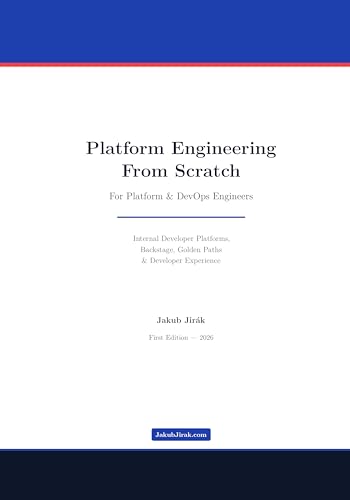
Platform Engineering from Scratch — actual author-owned cover Author catalogue source.
The reader I have in mind
The published scope covers internal developer platforms, Backstage, golden paths and developer experience. I would recommend considering it to an engineer or technical leader who wants to connect those subjects around a real team’s needs. The starting point should be an observable source of friction, not simply a request to create a portal because other organisations have one.
I would also consider it for a team that already operates shared tooling but struggles to explain its purpose. Several pipelines, templates and dashboards can exist without forming a coherent developer experience. It can be useful to ask what the platform promises and which part of the developer’s task it actually completes.
I would choose a narrower reference when today’s problem is configuring one Backstage plugin or fixing a specific deployment command. Those questions need current implementation information. The book’s wider value is in thinking about the platform as an arrangement of responsibilities and useful paths through work.
Start with the developer’s task
My preferred first question is what a developer is trying to accomplish. Creating a service, understanding an existing one and releasing a change can each reveal different needs. A platform becomes easier to design when it follows a real task from beginning to useful result.
I would observe one of those tasks before proposing the solution. Where does the person wait, repeat information or search for an owner? Which steps require genuine judgement, and which repeat a stable procedure? Those observations give a clearer starting point than a list of tools the platform team would like to operate.
I would keep the result small enough to evaluate. Improving one common path can provide useful evidence before building a broad catalogue of services. The question is whether the developer can complete the job more clearly and reliably, not whether a new interface has accumulated enough features to look like a platform.
Internal does not remove the product question
The users may work inside the same organisation, but they still need a reason to adopt the shared arrangement. I would describe what the platform makes easier and what responsibility remains with the application team. An attractive interface does not repair an unclear ownership boundary.
I would also plan support as part of the offering. If the normal path fails, the developer needs to know what happened and where to go next. A platform that hides complexity only until the first error can leave a team with less understanding at the moment it needs more.
I would keep a practical way to receive feedback from users. The people operating the platform and the people delivering application changes can see different parts of the same workflow. A useful improvement process connects those observations rather than assuming the platform team’s intention describes the whole experience.
Golden paths should explain their value
Golden paths are part of the book’s stated scope. I like thinking about them as supported ways to accomplish common work, with a clear reason for the chosen defaults. The path should reduce unnecessary decisions while leaving the team able to understand what has been created.
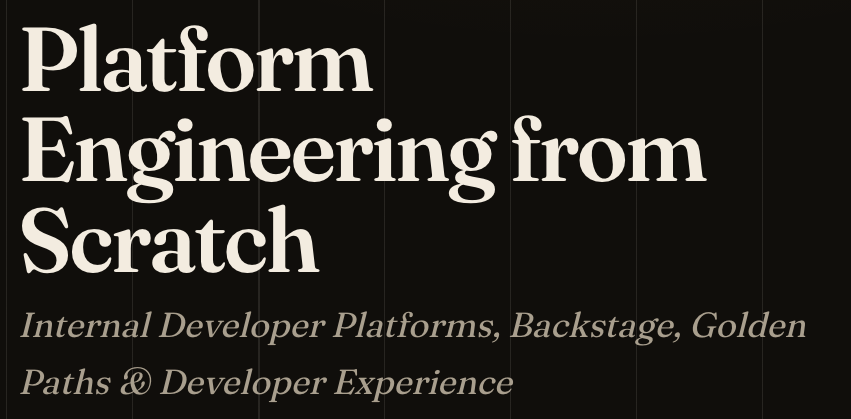
Title and description presentation from my author catalogue; this is not an interior page. Author catalogue source.
I would choose a path that corresponds to a repeated need. Its inputs, output and operating expectations should be understandable. A template can create files quickly while still leaving the user unsure how to maintain them. The useful path includes enough context for the next change, not only the initial creation.
I would also consider the exceptions. Some projects will have different requirements, and the organisation needs an intentional way to handle that difference. A standard is more useful when people know what it supports and how to discuss a justified variation, rather than quietly building an unsupported parallel route.
Backstage is part of a larger arrangement
Backstage appears explicitly in the public description. I would approach it through the information and actions the developer needs, rather than decide that installing a portal completes the platform. The quality of the underlying service information and workflows still matters to what the user can accomplish.
I would begin with an understandable catalogue and a clear reason for each visible action. If a page lists a service but cannot explain its owner or useful next step, the interface may simply reproduce existing confusion. The portal should make important relationships easier to see.
I would also think about maintenance. A useful initial catalogue can become misleading if ownership and documentation drift. The team needs an arrangement that keeps the information connected to the work, rather than a separate copy that depends on someone remembering to update it after every change.
Self-service still needs a boundary
A developer should know what a self-service action will do and what result to expect. I would make the important inputs, limits and effects clear before the action runs. Removing a ticket can be useful, but it does not remove the need to understand authority and responsibility.
I would also decide which operations can safely be repeated. A failed action may leave some work complete and some incomplete. The next step should follow the actual state, not require the user to guess whether clicking again will create another resource or repair the first attempt.
For a shared platform, I would keep the evidence of completion visible. A submitted request and a working service are different milestones. The developer should not have to infer success from an interface that stopped showing progress. Clear outcomes help the application team and the platform operators investigate problems together.
Developer experience needs useful evidence
Developer experience is part of the published scope, and I would assess it through real tasks. A positive first impression matters, but the platform should also help the person complete ordinary work after the demonstration. The team needs to understand both the experience and the result.
I would choose a few questions before collecting numbers. Does a new service reach a supported working state? Can the developer find the right owner? Is a failed deployment easier to understand? Those questions can produce useful evidence without turning the platform into an exercise in reporting every possible metric.
I would also ask whether the improvement shifts work somewhere else. A simpler application-team action may create a new operating burden for the platform team. That trade-off can still be worthwhile, but it should be visible. A sustainable platform needs to account for the complete service it provides.
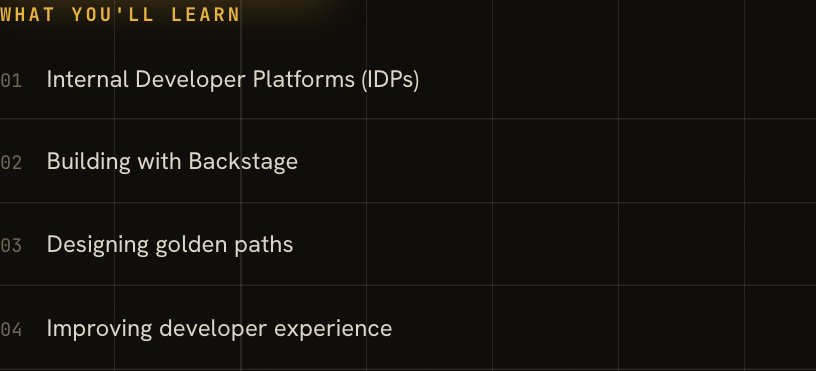
Published scope from my author catalogue; this is not an interior page. Author catalogue source.
Adoption should be deliberate
I would start with a team willing to use a bounded path and provide concrete feedback. That gives the platform team a manageable place to learn. A broad compulsory rollout can create a large support demand before the original assumptions have been tested in everyday work.
I would keep the earlier route understood while the new path is evaluated. A migration needs a plan for existing services, not only a polished experience for the next new one. The platform’s usefulness depends partly on how it joins the organisation that already exists.
I would also make the value easy to explain. Developers should know why a supported path is worth using beyond compliance with an instruction. Faster access to useful feedback, clearer ownership or a maintainable default can be concrete benefits. A platform brand or new dashboard alone is a weaker reason.
What I would check before buying
The author catalogue establishes the book’s subject areas, not every plugin, infrastructure provider or current interface. I would inspect the available sample and selected edition when a particular implementation decides the purchase. Current official documentation remains necessary for exact tool behaviour and configuration.
I would not buy expecting one architecture to fit every organisation. Team size, existing systems and operating constraints change what a useful platform should provide. The reading is most valuable when the buyer brings those conditions into the discussion rather than treating from scratch as a requirement to discard everything already working.
The companion I would choose
Kubernetes Without the Complexity is a more focused direction when the immediate need concerns Kubernetes concepts and deployment workflows. A developer platform can involve those subjects without being identical to them. I would choose according to whether the task is the infrastructure itself or the supported developer journey around it.
Think Different provides a different discussion of quality and useful feedback. I see that as potentially complementary when a golden path includes checks and delivery decisions. It does not replace the platform product question of who needs the path and what outcome it should support.
My author recommendation
I recommend considering Platform Engineering from Scratch when a team wants to connect shared tooling with a clear developer experience. I like the focus on supported paths, useful information and operating responsibility. I would buy with one real task ready to examine, while using current references for exact implementation and letting observed developer needs decide how large the platform should become.
What worked
The published scope connects internal platforms, Backstage, golden paths and developer experience.
What bothered me
A portal is not a complete platform, and supported paths create ongoing information and operating responsibilities.
Who should not buy it
I would choose a focused implementation guide when one exact tool command is the entire problem, or avoid a new platform without an observed need.
Alternatives I would consider
Kubernetes Without the Complexity. I would choose it when Kubernetes application concepts and deployment workflows are the immediate subject. Read my Kubernetes Without the Complexity author overview.
Think Different. I would choose its wider automation and quality-feedback subject when testing decisions are the main need. Read my Think Different author overview.
Evidence and sources
The stated scope comes from my published author catalogue. The images show the actual cover and author-catalogue presentation, not interior pages or independent customer evidence.
This is the author's account of the book's scope and intended reader. Check the selected Amazon edition for its current format, sample and availability.
Conclusion
Worth considering for the wider product and workflow decisions; a current narrow reference is faster for one plugin setting.
Platform Engineering from Scratch
Amazon US · US
Check price and availability: Platform Engineering from Scratch at Amazon USAffiliate link. As an Amazon Associate I earn from qualifying purchases.