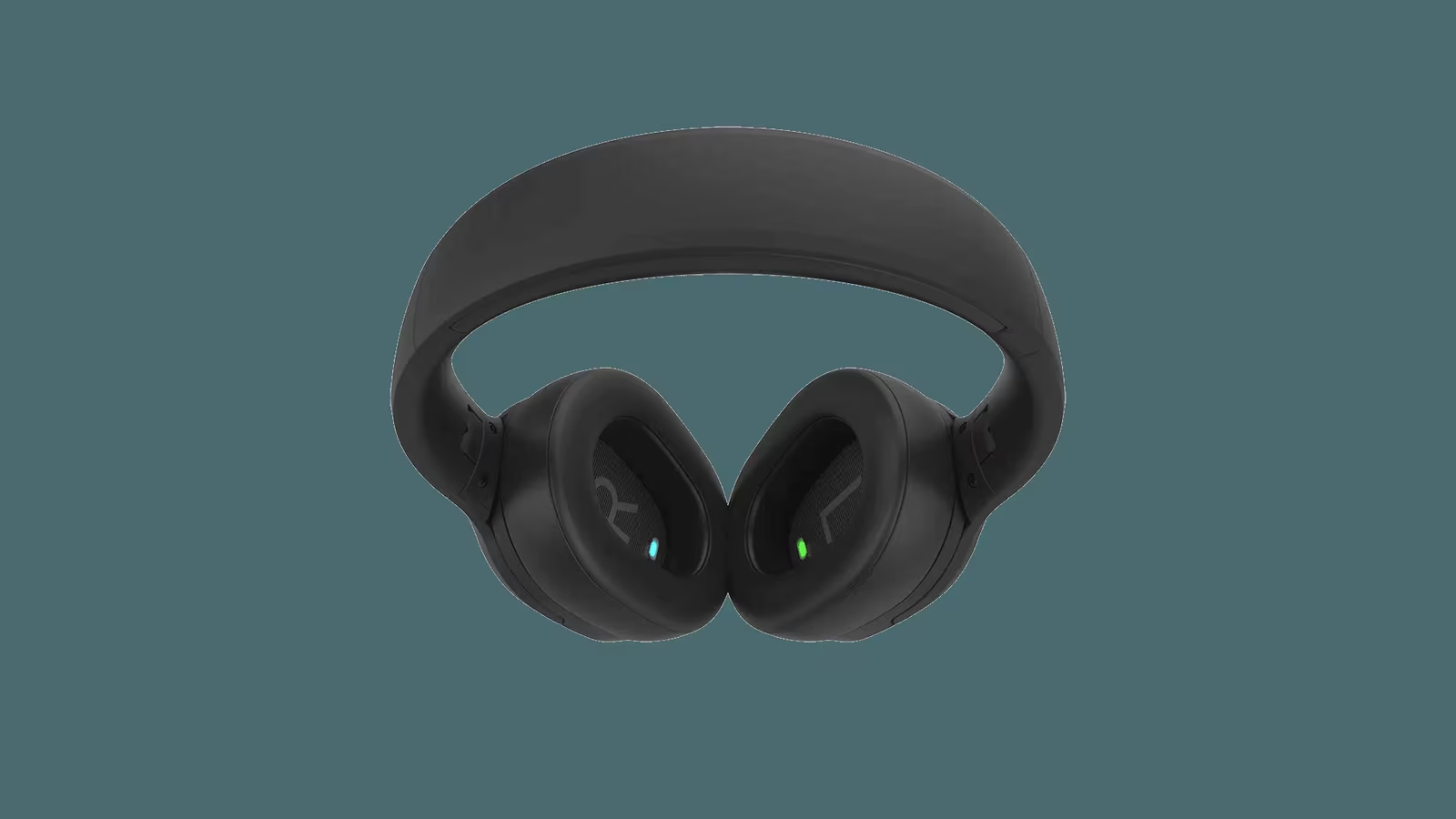
The Valco VMK25.2 has no touchpad, no spatial audio theatre and, at the time of writing, no finished app asking for an account. That list of absences is the product strategy.
Valco has concentrated on over ear headphones with physical buttons, hybrid active noise cancellation, a 55 hour battery claim and both Bluetooth and 3.5 mm input. The Finnish company’s writing is much louder than the industrial design, but underneath the jokes is a sensible question: how many premium headphone features remain useful after the first week?
The VMK25.2 answer is sound, comfort, quiet, reliable controls and long runtime. It costs €199, which puts it below flagship models from the largest brands but well above anonymous budget ANC headphones. Its success therefore depends on execution, not novelty.
There is one place where the personality on the website makes it into the hardware. Every button press is confirmed by a spoken voice prompt, and the voice sounds like it belongs to the company rather than to a chip vendor’s sample library. It is the detail I did not expect to care about and the one I now mention first when someone asks about these headphones.
The specification is refreshingly specific
The official VMK25.2 page lists 45 mm drivers, 32 ohm impedance and a weight of about 300 grams. A 1,050 mAh battery is quoted for up to 55 hours with ANC and up to 95 hours of hands free calling. Charging takes two to three hours through USB-C.
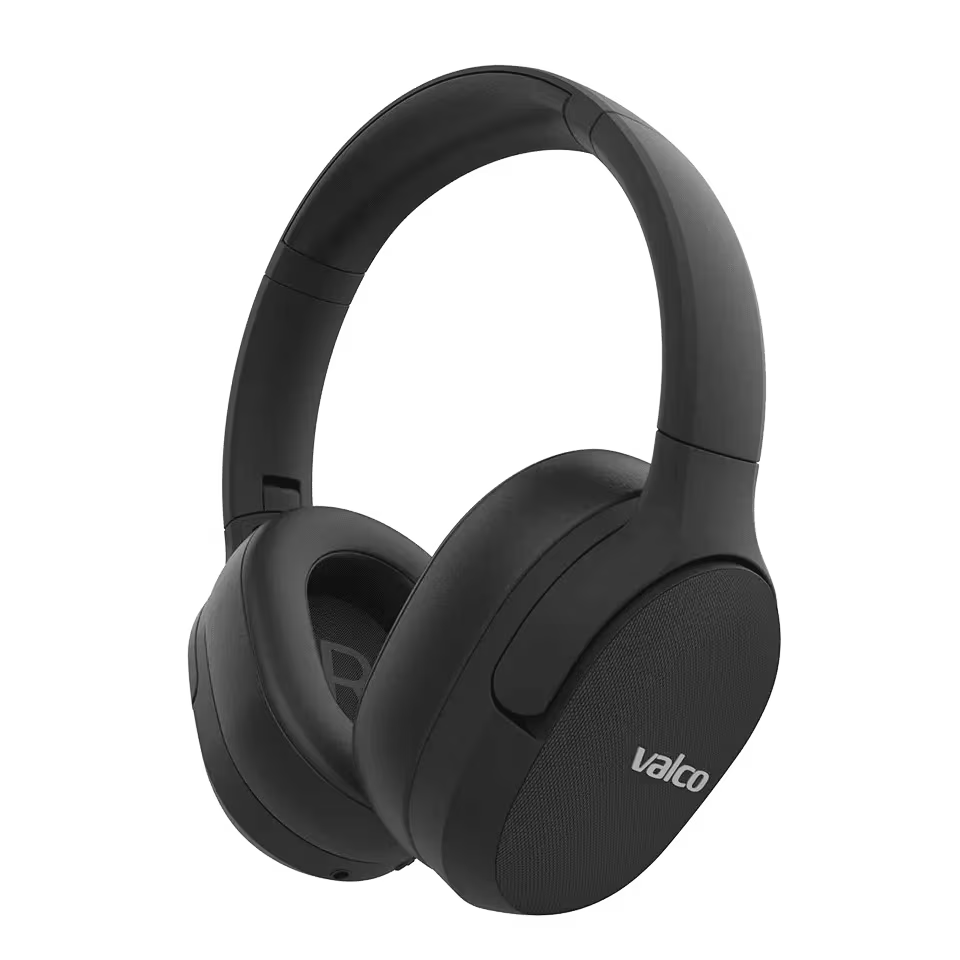
Wireless duties are handled by a Qualcomm Snapdragon S3 platform with Bluetooth 5.4. Valco lists SBC, AAC, aptX Adaptive, aptX Lite and LC3, while aptX Lossless is described as forthcoming. Treat forthcoming codec support as unavailable until the exact production firmware and source device confirm it.
The headphones include hybrid ANC, a transparency mode and CVC8 microphone processing. A 3.5 mm cable, travel case and the required basic accessories are included. Magnetic outer covers can be replaced with optional colours.
This is a practical list. There is no claim that USB-C carries digital audio, so buyers should assume the port is for charging unless Valco documents otherwise. Wired listening uses the 3.5 mm input. There is also no reason to buy VMK25.2 for an app feature that has not shipped.
Sound should be judged in the mode you will use
Wireless ANC headphones can have several sonic identities. Bluetooth playback may pass through digital signal processing. Enabling ANC can alter low frequency response. A passive analogue cable can bypass part of the electronic tuning.
Compare three states with level matched familiar music: Bluetooth with ANC, Bluetooth without ANC and wired playback. Human hearing tends to prefer the slightly louder sample, so even a small mismatch can make one mode seem clearer or fuller.
Related reading

Use recordings that expose different problems. A natural voice reveals midrange colour. Acoustic bass shows whether low frequencies are controlled or swollen. Dense rock reveals congestion. Quiet classical passages make hiss easier to hear. Hard panned percussion helps check channel balance.
Valco says the VMK25.2 was tuned for an extremely even response from 20 Hz to 20 kHz and low distortion. Those are broad claims without a published tolerance in the store specification. A frequency range alone does not describe tonal balance. Independent measurements or a calibrated fixture are required for an absolute graph.
For a buyer, the return period is more useful than chasing one reviewer’s preferred curve. Listen at moderate level for an hour. If voices sound natural, bass does not mask detail and treble remains comfortable, the tuning is doing its job for that listener.
Codec support depends on both ends
A codec listed by the headphones does nothing unless the source also negotiates it. Apple devices normally use AAC or SBC over Bluetooth. Many Android phones and Windows computers can offer aptX variants, but support differs by hardware, operating system and driver.
This matters because the codec badge is often treated as a universal quality setting. It is really a negotiation between source and receiver. Check the active codec in the source’s developer or Bluetooth information where available.
aptX Adaptive can vary bitrate to balance reliability and quality. LC3 is associated with Bluetooth LE Audio, which also requires compatible source support and profiles. aptX Lossless should not be counted until Valco has delivered it and the source reports an active lossless path.
None of these remove the lossy or processed stages elsewhere in streaming. The audible result still depends on the headphone tuning, fit and recording. A stable AAC connection can be preferable to an advanced codec that breaks up in a busy radio environment.
On a Mac or iPhone, I would evaluate VMK25.2 as an AAC headphone and ignore the codec shopping list. On a compatible Android device, aptX Adaptive becomes a worthwhile option, not the sole reason to buy.
ANC is for steady noise, not silence
Hybrid active noise cancellation combines microphones inside and outside the cups to estimate unwanted sound and produce an opposing signal. It works best on continuous low frequency noise such as aircraft engines, trains and ventilation.
Speech, keyboard clicks and irregular high frequency sounds are harder. Passive isolation from the ear pads handles part of that range. This is why fit is inseparable from ANC performance.
Test the headphones in the actual environment. At home, use a fan or ventilation system and compare ANC on, off and transparency without music. On transport, listen for low frequency pressure reduction and whether announcements remain understandable when transparency is selected.
An ANC system can create a pressure sensation for some people even though it does not physically pressurize the ear. If discomfort or nausea appears, use a lower exposure or disable ANC. Stronger attenuation is not universally more comfortable.
Wind is another revealing case. External microphones can turn turbulent air into low rumble. Walk outside and move the head before deciding that an indoor demonstration represents commuting.
VMK25.2 does not need to beat every flagship to justify itself. It needs to remove enough steady noise that music remains clear at a lower listening level. That is the practical benefit of ANC.
Three hundred grams makes fit personal
At about 300 grams, VMK25.2 is not exceptionally light. Weight distribution, clamp and pad contact decide whether that number disappears or becomes a hot spot.
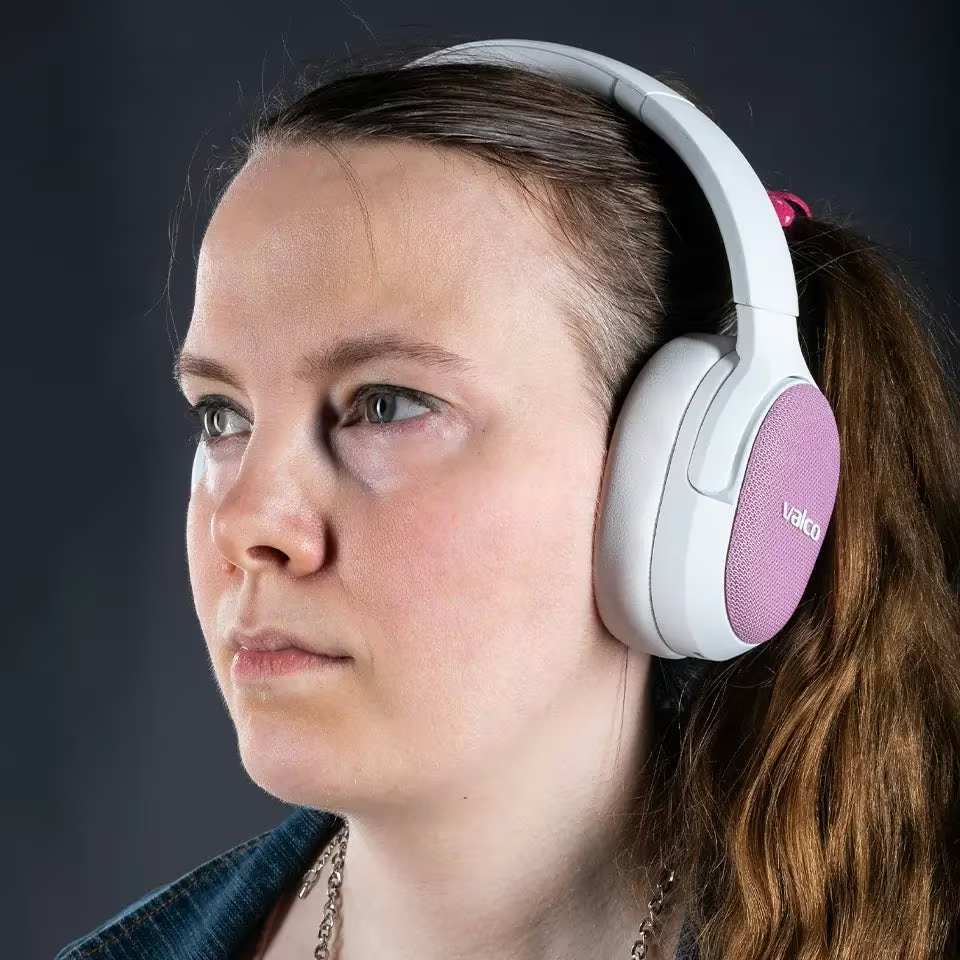
Adjust both sides equally and place the headband slightly forward or backward until pressure is spread across the top. The thicker memory foam pads should surround the ears without folding them. Glasses can break the seal and concentrate pressure at the temples.
Keep the headphones on for a full meeting or album before removing tags and packaging. Heat builds slowly in synthetic pads. A fit that feels soft for ten minutes can become sweaty after an hour, especially in summer.
Check jaw movement and head rotation. The cups should maintain a seal without pulling. Then wear them while walking. Excessively loose headphones may be comfortable at a desk but unstable on a train platform.
Replaceable pads are important for both hygiene and longevity. Valco emphasizes service and repair after warranty, so confirm current spare part availability in the buyer’s region. A repair promise is most valuable when pads, battery service and hinges have a clear route.
Physical buttons and a voice overlay with character
Touch controls look clean and often behave badly with gloves, rain, accidental brushes or a pillow. Physical buttons provide location and travel that can be learned by feel. VMK25.2 has them, and they are the better half of the control story.
Related reading
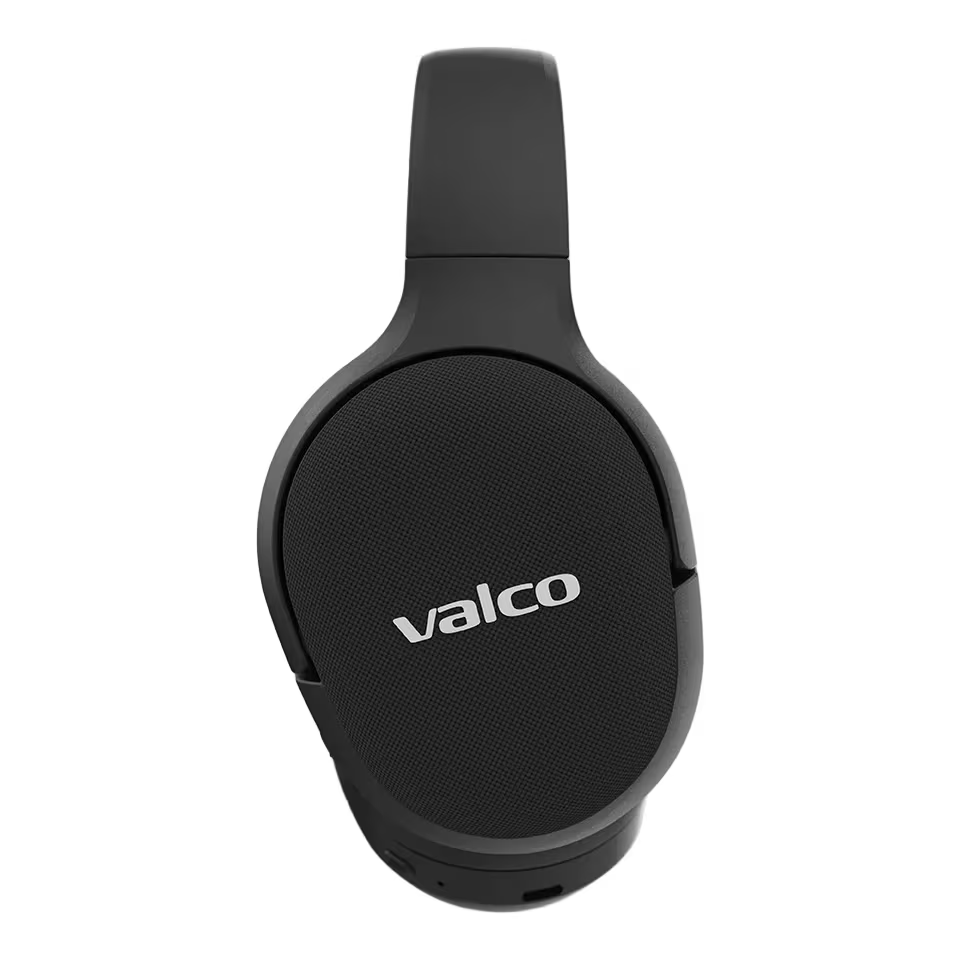
The other half is the voice overlay, and it is the best I have used on a headphone at any price. Every control action gets a spoken confirmation. Power on and off, pairing state, ANC on, transparency, ANC off, low battery and the connection to a device are all announced in clear words instead of a beep that means three different things. The volume and playback buttons act immediately without narration, which is the right split: state changes are spoken, repeated actions are not.
The voice itself is the point. It is dry, unhurried and unmistakably Valco, with the same deadpan tone as the company’s writing. That sounds like a gimmick until you have lived with the generic synthetic prompts on most headphones, which are either too loud, too cheerful or mixed so low that they disappear under music. Here the prompt sits at a sensible level over the current playback, so it is audible at low volume and not startling at high volume. After a week I stopped looking at LEDs entirely, because the headphones tell me what they did.
That matters most for ANC. On many headphones the ANC button cycles through modes with identical clicks, and the only way to know the current state is to listen for the noise floor changing. On VMK25.2 the mode is named the moment the button is pressed. Cycling through the three states is unambiguous even in a noisy train, which is exactly where the mode matters.
Layout is good rather than perfect. Power, ANC, volume and playback are distinguishable by position and shape without counting identical bumps, and the long press actions are far enough from the short ones that I did not trigger a power off by accident. The status LED sits on the inside of the cup, which reduces distraction while worn and helps with troubleshooting once removed.
There is value in a product that works without software. Pair it in the operating system, learn the buttons, listen to the voice and get on with the day. No app also means no custom equalizer, no detailed battery tools, no location feature and no automatic device management. The absence is positive only for people who did not need those controls. For the control layer itself, the voice overlay does more for daily usability than any app I have installed for a competitor.
Multipoint and daily Mac behaviour matter more than a spec sheet
For work, connection recovery decides whether headphones feel dependable. Pair the Mac and phone, if the current firmware supports the desired multi-device arrangement, then reproduce a normal day: music on the computer, an incoming phone call, return to the computer and a video meeting.
Confirm which microphone and output macOS selects. Bluetooth call profiles reduce playback quality while the microphone is active because they allocate bandwidth differently. That change is normal, not evidence that the music codec has failed.
For the best meeting quality, a separate desk microphone can let the headphones remain in a higher quality output profile. Valco also sells an optional wired boom microphone for gaming and calls. The right setup depends on whether wireless movement or voice quality has priority.
Latency deserves similar realism. Bluetooth can produce visible lip sync or game delay depending on codec and application compensation. Wired mode is the simple answer for music production and games where timing matters. Do not infer low latency from a recent Bluetooth version alone.
The Mac should reconnect after sleep without deleting the pairing. Test volume keys, system switching and whether ANC remembers its last state. These small behaviours shape ownership more than a laboratory distortion figure.
Wired mode is a fallback and a second product
The included 3.5 mm cable keeps the headphones useful when the battery is empty and provides a direct path for latency sensitive work. It also connects to aircraft entertainment and older audio equipment.
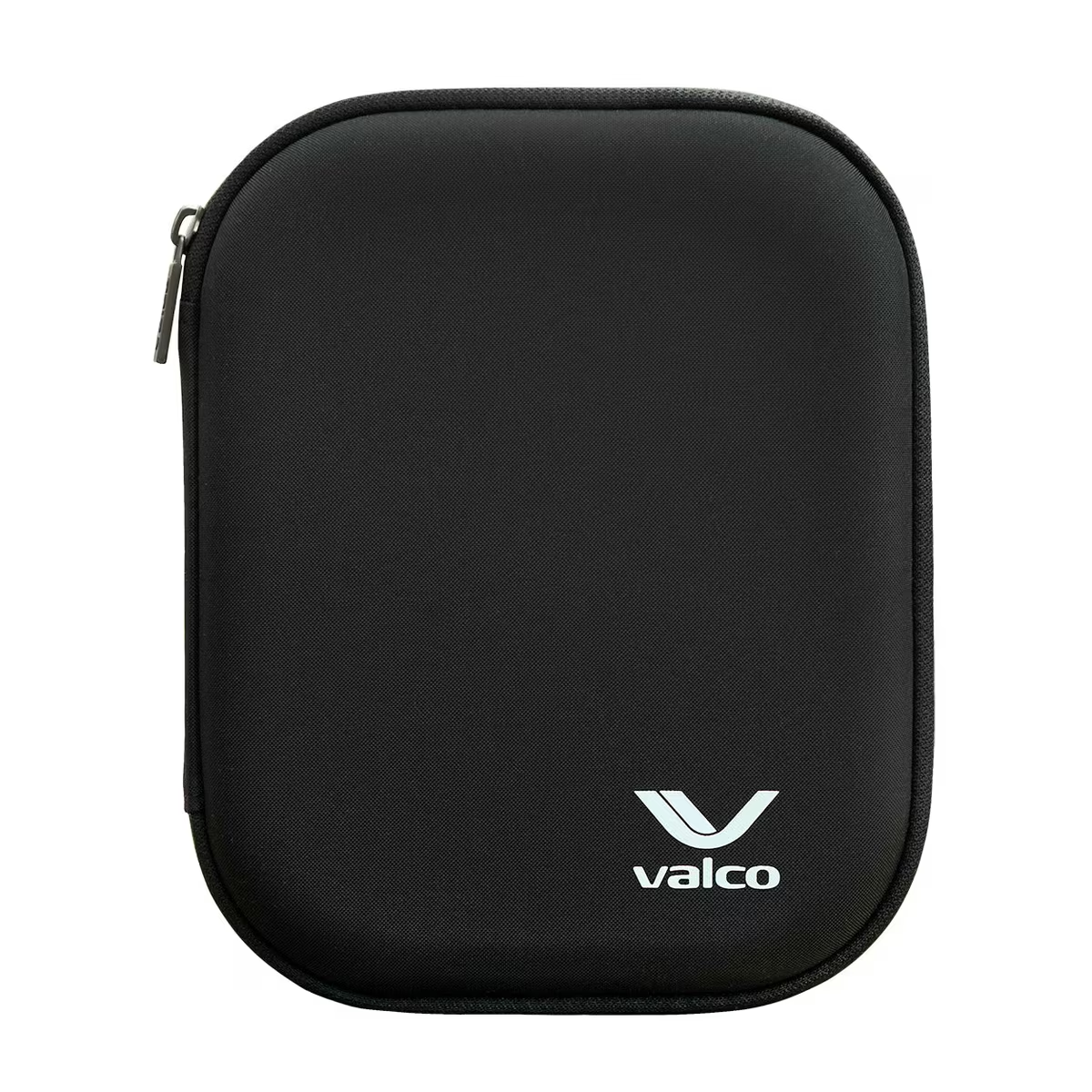
Find out whether ANC and active electronics remain available while wired, and what happens when the battery is flat. Some headphones offer passive playback with different tuning. Others require power for their intended response. The manual and a simple power off test answer this for the current unit.
Begin wired listening at low source volume. A laptop output, audio interface and aircraft seat can have very different gain. At 32 ohms, VMK25.2 should be an ordinary portable load, but impedance alone does not describe sensitivity.
Inspect the cable plug and cup socket for strain. A replaceable standard cable is easier to live with than a proprietary one. If a boom microphone is added, check its connector compatibility and channel wiring rather than assuming every four pole cable follows the same convention.
Battery life should be logged with ANC on
Valco’s headline is up to 55 hours with ANC. That is strong enough that most owners will charge by routine rather than daily necessity.
To build a useful expectation, fully charge the headphones, keep ANC and codec use consistent, then note listening hours until the low battery warning. Include standby time because a headphone left powered in a bag can lose charge without playing. Repeat after several charge cycles.
Battery percentage shown by macOS or a phone may move in coarse steps. The final part can fall faster than the first. Charge before a trip instead of trying to extract the quoted maximum.
USB-C makes cable sharing easy, but two to three hours is not an instant refill. Confirm whether playback while charging is supported and comfortable. A cable attached to a worn headset can load the connector sideways.
Long term value depends on battery service. Valco advertises repairability after warranty, which is a meaningful differentiator if the process, price and shipping remain reasonable. Check those details when buying from another country.
Related reading
Calls expose microphone priorities
CVC8 is a Qualcomm voice processing feature, not a guarantee that a distant microphone will sound like a boom mic. The VMK25.2 microphones must capture speech from the ear cup while rejecting wind, office noise and room echo.
Record samples in a quiet room, beside a keyboard and outdoors. Listen through another device rather than judging the live sidetone. Speech should remain intelligible without pumping, clipped first syllables or aggressive removal of consonants.
For occasional calls, convenience may outweigh perfection. For daily Teams work in a shared room, compare the optional boom microphone or a separate USB mic. The best headphone sound cannot repair unclear outgoing speech.
Transparency mode is useful when speaking in person because sealed headphones change how one’s own voice sounds. It should not be relied on for road safety. Remove the headphones where full environmental awareness is necessary.
Price, support and the obvious rivals
At €199, VMK25.2 competes with discounted Sony, Bose and Sennheiser models as well as newer midrange headphones. Those larger ecosystems may offer stronger adaptive ANC, polished apps and broader retail support. Valco offers simpler controls, a long battery claim, a travel case, two year warranty and stated post-warranty repairability.
The cheaper VMK15 is lighter and costs €139, but uses 40 mm drivers and a different design. The older VMK25 remains close in appearance, so confirm the 25.2 model on any second hand or discounted listing.
The magnetic covers are fun but do not improve function. Buy them only if personalization matters. The included case and cable have more practical value.
Verdict
The Valco VMK25.2 is appealing because it declines to become a platform. It offers the parts that make wireless headphones useful every day, and at €199 that focused package is credible. It is also a headphone with character, and the character lives in the voice that confirms every control.
Why I recommend it
- 55 hours with ANC. Valco quotes up to 55 hours with ANC from a 1,050 mAh battery, enough that most owners will charge by routine rather than daily necessity.
- A voice that names every state. Power, pairing, ANC, transparency, low battery and the connection to a device are announced in clear words, while volume and playback act without narration. It is the best voice overlay I have used on a headphone at any price.
- Buttons you can find by feel. These are physical buttons rather than a touchpad, and power, ANC, volume and playback are distinguishable by position and shape.
- A wired fallback. The included 3.5 mm cable keeps the headphones useful with a flat battery and gives a direct path for latency sensitive work.
- Support after the warranty. A two year warranty plus stated post-warranty repairability is a meaningful differentiator, if the process and shipping stay reasonable.
Why it may not be for you
- Weight and warmth. About 300 grams is not exceptionally light, and heat builds slowly in the synthetic pads.
- No finished app. That means no custom equalizer, no detailed battery tools, no location feature and no automatic device management.
- Apple users gain little from the codec list. A Mac or iPhone normally uses AAC or SBC, and aptX Lossless is only described as forthcoming.
- Rivals may cancel more. At this price it competes with discounted Sony, Bose and Sennheiser models, which may offer stronger adaptive ANC and broader retail support.
- USB-C is for charging. Valco makes no claim of digital audio over the port, and a charge takes two to three hours.
Before committing, wear the VMK25.2 for at least an hour, compare ANC, passive and wired sound, test calls on your own Mac or phone and confirm the repair route for your country. Choose it if uncomplicated ownership matters more than a screen full of modes, and if a headphone that talks to you in plain words sounds like a feature rather than a quirk. Choose a lighter or more adaptive rival if comfort, maximum ANC or app control comes first. Valco’s own VMK15 is lighter at €139, with 40 mm drivers and a different design.
Product images: Valco.
One email a month: new articles, reviews and the upcoming live webinar + free recording. No spam, unsubscribe anytime.