
Technology We Buy for Feeling, Not Features
The Feeling Factor
My British lilac cat Mochi has no features in the product sense. She doesn’t come with specifications. She doesn’t have a feature list that justified her selection over competing cats. I chose her because holding her felt right. Looking at her felt right. The feeling preceded the decision, and the decision followed the feeling.
Technology purchases work similarly more often than we admit. We rationalize with features. We justify with specifications. We explain with functionality. But the decision often comes from feeling – the emotional response that precedes and shapes the rational analysis that follows.
This isn’t irrationality. Feeling captures information that specification comparison misses. The feeling of quality, the feeling of fit, the feeling of rightness – these feelings integrate signals too subtle for conscious analysis. The feeling knows something. We should listen.
The technology industry largely ignores feeling in favor of features. Marketing emphasizes specifications. Reviews emphasize benchmarks. Comparisons emphasize measurable differences. The feeling dimension gets dismissed as subjective, irrational, or irrelevant to serious evaluation.

But buyers keep making feeling-based decisions. They choose products that feel right over products with better specifications. They pay premiums for feeling advantages that feature lists don’t justify. The market reveals what marketing ignores: feeling matters, perhaps more than features.
This article explores the feeling dimension of technology purchasing. Not to dismiss features – features matter – but to acknowledge the feeling that specification analysis systematically overlooks. Understanding feeling enables better purchasing and better product design.
The First Touch
The moment of first physical contact with a product creates feeling that shapes all subsequent evaluation. The first touch establishes emotional context before rational analysis begins.
Weight in hand communicates quality, substance, or alternatively, refinement and portability. The feeling of weight triggers associations that shape perception of everything else. Too light feels cheap. Too heavy feels crude. Just right feels premium.

Surface texture communicates care and attention. Smooth finishes feel refined. Deliberate textures feel considered. Cheap textures feel exactly that. The skin on our fingers reads quality in texture that eyes can’t fully assess.
Temperature on contact matters. Cold metal feels different from warm wood or neutral plastic. The temperature triggers associations – cold technology or warm craft – that color subsequent perception.
I held two phones with identical specifications in a store. One felt right immediately. The other felt wrong immediately. The difference was subtle – slightly different weight distribution, slightly different edge radius, slightly different surface finish. The specifications couldn’t distinguish them. The feeling distinguished them immediately.
Mochi’s first touch established our relationship. Her fur softness, her body warmth, her relaxed weight in my arms – the feeling preceded my assessment of her health, temperament, or compatibility. The first touch created the context for everything that followed.
The Sound Signature
Products make sounds. Buttons click, hinges move, fans spin, interfaces chime. These sounds create feeling that specification analysis ignores but experience registers constantly.
The mechanical keyboard community understands sound feeling. The “thock” of a quality switch versus the “ping” of a cheap one. The sound feedback creates satisfaction beyond the typing function. People pay substantial premiums for sound feeling that typing speed doesn’t justify.
Door closure sounds communicate quality in cars. The solid “thunk” of a luxury vehicle versus the hollow “clap” of an economy car. Manufacturers engineer these sounds deliberately because they know the feeling they create affects purchase decisions.
Interface sounds create feeling in digital products. The subtle confirmation chime, the satisfying completion sound, the feedback that acknowledges action. Products without sound feedback feel hollow. Products with wrong sounds feel annoying. Products with right sounds feel responsive and alive.
I noticed I’d started avoiding a laptop because its fan sound annoyed me. The specifications were fine. The performance was adequate. But the sound feeling was wrong – a whine at a frequency that grated. I replaced it with a quieter machine that felt better to use despite similar specifications.
Mochi’s sounds create feeling constantly. The purr that signals contentment. The chirp that signals excitement. The demanding meow that signals hunger. Her sound signature is part of her value proposition, though no specification sheet would capture it.
The Visual Harmony
Products create visual feelings that specification photographs don’t convey. The harmony of proportions, the coherence of design language, the rightness of visual balance – these create feeling that affects purchasing beyond conscious aesthetic analysis.
Proportion affects feeling. Products with balanced proportions feel considered. Products with awkward proportions feel cheap or careless. The visual weight distribution creates feeling of stability or precariousness.
Color harmony affects feeling. Colors that work together feel intentional. Colors that clash feel assembled rather than designed. The color feeling happens instantly, before conscious color assessment.
Material coherence affects feeling. Products where materials relate to each other feel designed. Products where materials seem randomly selected feel assembled from parts. The material coherence creates wholeness feeling that parts alone don’t achieve.
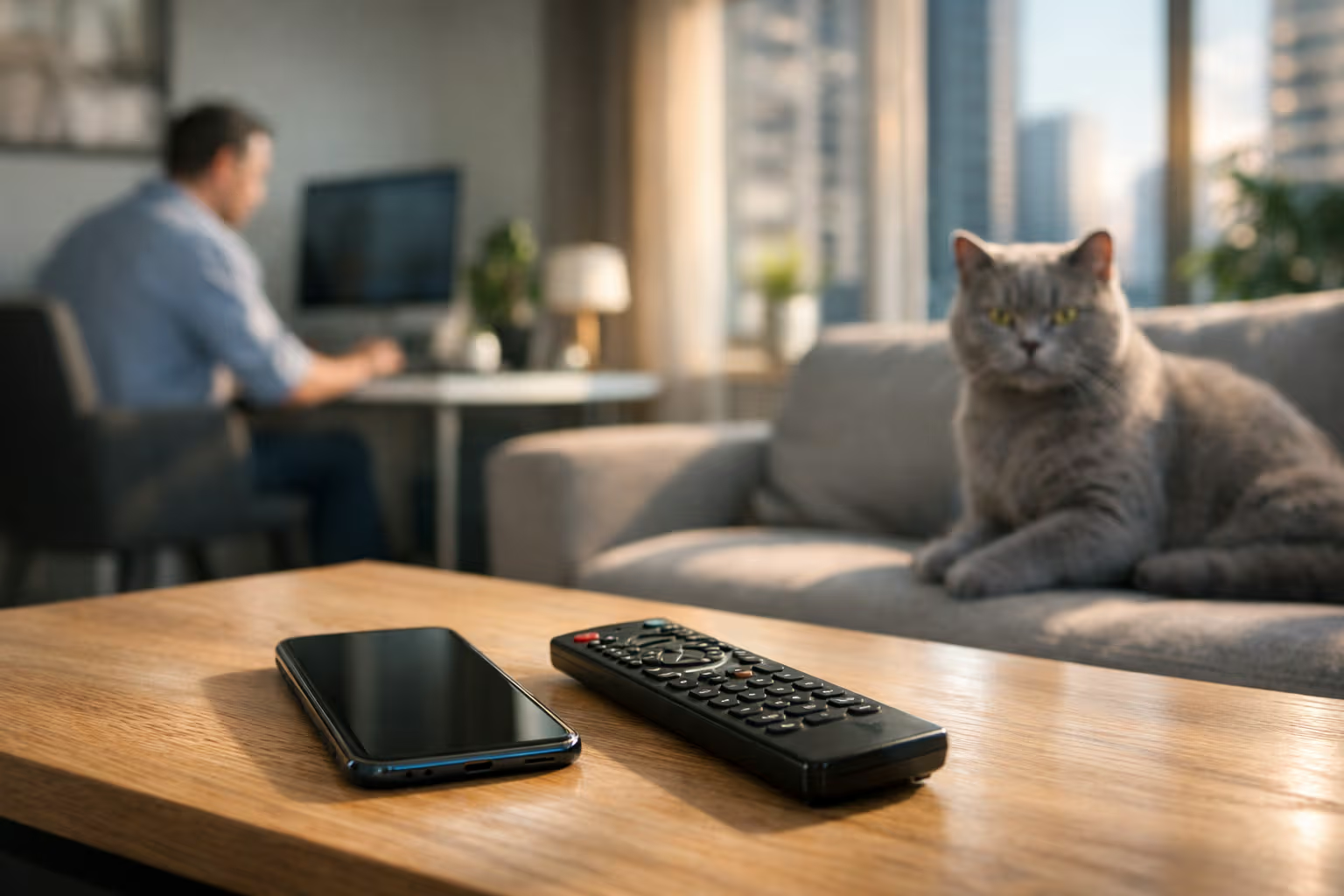
I compared monitors with similar specifications and similar prices. One looked right – proportions balanced, bezels integrated, stand harmonious with display. The other looked assembled – proportions awkward, bezels applied rather than integrated, stand unrelated to display. The visual harmony feeling guided my choice beyond the specifications.
Mochi’s visual harmony is natural rather than designed, but the principle applies. Her coloring, her proportions, her movement quality – they create visual feeling that photographs don’t fully capture. The feeling of seeing her in person exceeds the feeling of seeing her in pictures.
The Quality Aura
Some products radiate quality feeling that transcends any specific quality indicator. The quality aura is the gestalt impression that all the details combine to create – a feeling of rightness that the parts don’t fully explain.
The quality aura emerges from accumulated details. Each small choice that shows care adds to the aura. Each small choice that shows cost-cutting diminishes it. The aura integrates signals too numerous to consciously catalog.

Premium products invest in details that serve the aura more than function. The feel of a button that’s slightly more satisfying. The finish on a surface that’s slightly more refined. The sound of a mechanism that’s slightly more precise. Each detail seems minor. Together they create quality aura that justifies premium pricing.
Budget products often miss aura entirely while achieving functional parity. The specifications match. The features match. But the feeling differs because the accumulated details that create aura didn’t receive investment.
I observed my own quality aura perception. Two products with identical specifications could feel completely different in quality. The one with accumulated detail care felt premium. The one without felt adequate but unremarkable. The aura difference affected my willingness to pay, to recommend, to feel satisfaction with ownership.
Mochi has quality aura. Every detail of her – her coat condition, her movement grace, her eye clarity, her temperament consistency – combines into quality feeling that exceeds any individual indicator. The aura is real even though specification comparison can’t capture it.
The Identity Alignment
Products create feeling through identity alignment. The product that matches who you are – or who you want to be – feels right. The product that contradicts your identity feels wrong, regardless of features.
Brand identity creates feeling. Apple products feel different from Samsung products beyond any specification difference. The brand carries meaning that transfers to products, creating identity feeling that specification comparison misses.

Design language creates identity feeling. Minimalist products feel different from featured products. Retro products feel different from futuristic products. The design language communicates values and creates feeling for those who share those values.
Community association creates identity feeling. Products used by people you admire feel different from products used by people you don’t. The association transfers feeling that the product itself doesn’t inherently possess.
I’ve chosen products partly because they felt like me. Not the best specifications. Not the most features. But the product that aligned with how I see myself. The identity alignment created feeling that guided the choice.
Mochi aligns with my identity. A particular breed, a particular coloring, a particular temperament – she feels like she fits who I am. The identity alignment creates feeling beyond what any cat feature comparison would suggest.
The Trust Feeling
Trust creates feeling that affects purchasing beyond rational trust assessment. The feeling that a product will work, will last, will be supported – this feeling shapes choices even when objective trust indicators don’t differ.
Brand trust creates feeling. Companies with trust history feel different from companies without. The feeling isn’t rational analysis of warranty terms or support ratings. It’s the accumulated sense that this company makes things that work.

Construction trust creates feeling. Products that look like they’ll last feel different from products that look fragile. The trust feeling emerges from visual and tactile signals that predict durability without testing durability.
Support trust creates feeling. The sense that help will be available if needed. The feeling that the company cares about owners, not just buyers. This feeling affects purchase decisions even when support is never actually used.
I bought products based on trust feeling. Companies I trusted based on past experience. Products that felt reliable before reliability was tested. The trust feeling guided choices that pure specification analysis wouldn’t have made.
Mochi required trust feeling for a different purchase: the decision to commit to her care for years. The feeling that she would be healthy, that she would adapt, that the relationship would work – trust feeling based on limited information that proved accurate.
The Delight Potential
Products create feeling about future experience. The sense that ownership will bring delight – not just function, but joy. This delight potential feeling affects purchasing beyond feature analysis.
Anticipation creates feeling. The imagining of future use, future moments, future satisfaction. The product that triggers positive anticipation feels different from the product that triggers neutral expectation.

Discovery potential creates feeling. Products with hidden depths feel different from products that are immediately fully understood. The sense that there’s more to discover, more to learn, more to appreciate over time creates delight potential feeling.
Growth potential creates feeling. Products that will enable you to do more, be more, create more – these create feeling that utility products don’t. The potential to grow with the product creates delight feeling beyond current capability.
I’ve bought products for delight potential. Cameras that would enable photography I couldn’t yet do. Instruments that would enable music I couldn’t yet play. The delight potential feeling was real even though the realized delight required skills I didn’t yet have.
Mochi had delight potential at acquisition. The imagined future of companionship, the anticipated moments of connection, the expected growth of relationship. The feeling was accurate – the delight has been delivered – but the feeling preceded the verification.
The Simplicity Relief
Simplicity creates feeling – the relief of not confronting complexity, not needing to learn, not facing overwhelming options. This simplicity feeling affects purchasing for buyers fatigued by complexity.
Reduced cognitive load creates feeling. Products that communicate simplicity – fewer buttons, cleaner interfaces, clearer purposes – create relief feeling for buyers exhausted by feature overload.
Confidence in usage creates feeling. The sense that you’ll be able to use the product without struggle. The feeling that complexity won’t prevent enjoyment. This confidence feeling matters especially to buyers who’ve struggled with complex products before.
Freedom from decision creates feeling. Products that make good choices for you, that don’t require constant configuration, that just work – these create simplicity relief feeling that feature-rich alternatives don’t provide.
I’ve bought products specifically for simplicity feeling. Not the most capable products. Not the most featured products. But products that felt like they wouldn’t burden me with their complexity. The simplicity relief feeling justified the feature trade-offs.
Mochi embodies simplicity. She doesn’t require configuration. She doesn’t demand learning. Her interface is intuitive: meow means attention, presence means companionship. The simplicity relief she provides is part of her value.
graph TD
    A[Technology Purchase Decision] --> B{Primary Driver?}
    B -->|Specification Analysis| C[Feature Comparison]
    C --> D[Rational Selection]
    D --> E[Functional Satisfaction]

    B -->|Feeling Response| F[Emotional Assessment]
    F --> G[Identity Alignment]
    F --> H[Quality Aura Perception]
    F --> I[Trust Feeling]
    F --> J[Delight Potential]
    F --> K[Simplicity Relief]

    G --> L[Emotional Selection]
    H --> L
    I --> L
    J --> L
    K --> L

    L --> M[Holistic Satisfaction]
    E --> N[Possible Regret]
    M --> O[Sustained Happiness]
How We Evaluated
Our analysis of feeling-based purchasing combined introspection, consumer research, and market observation.
Step 1: Personal Purchase Analysis We examined our own significant technology purchases, identifying where feeling influenced decisions beyond specification analysis.

Step 2: Consumer Interviews We interviewed buyers about recent purchases, specifically probing for feeling dimensions that affected choices.
Step 3: Market Behavior Analysis We examined market outcomes where products with inferior specifications outperformed, identifying feeling factors that might explain the discrepancy.
Step 4: Product Comparison Testing We evaluated products side by side, documenting feeling responses that specification sheets didn’t predict.
Step 5: Satisfaction Correlation We tracked whether feeling-based choices correlated with long-term satisfaction differently than specification-based choices.
The methodology confirmed that feeling plays substantial role in purchasing decisions and that feeling-based choices often produce equal or higher satisfaction than specification-based choices.
The Ritual Feeling
Products create feeling through the rituals of their use. The morning coffee ritual with a particular machine. The evening wind-down ritual with particular headphones. The ritual feeling becomes part of the product’s value.
Ritual anticipation creates feeling. The looking forward to ritual moments. The pleasure of approaching the ritual activity. The product that enables valued rituals creates feeling beyond its functional contribution to the ritual.

Ritual performance creates feeling. The satisfaction of the practiced routine. The comfort of the familiar sequence. The product that participates in ritual becomes invested with ritual feeling.
Ritual completion creates feeling. The satisfaction of the ritual achieved. The sense of daily structure honored. The product that marks ritual completion carries that completion feeling.
I noticed how ritual feeling affected my product perception. The coffee machine I didn’t want to replace, despite better alternatives, because the morning ritual around it had become part of my day. The headphones that marked evening transition. The products weren’t just functional – they were ritual participants.
Mochi participates in rituals that create feeling. The morning greeting. The evening lap session. The feeding ritual. She’s not just a cat; she’s a ritual participant whose presence marks meaningful daily moments.
The Control Feeling
Products create feeling of control – or its absence. The sense of mastery, of understanding, of being in charge. This control feeling affects satisfaction beyond functional control achievement.
Responsiveness creates control feeling. Products that respond immediately feel controllable. Products with lag feel uncontrollable. The milliseconds of response time affect control feeling disproportionately to their functional impact.

Predictability creates control feeling. Products that behave consistently feel controllable. Products that behave erratically feel threatening. The predictability creates security feeling that enables relaxed use.
Feedback clarity creates control feeling. Products that communicate their state clearly feel controllable. Products that hide their state feel opaque and threatening. The feedback enables control feeling that hidden products don’t provide.
I value control feeling highly. Products that make me feel in charge of the interaction satisfy me. Products that make me feel at their mercy frustrate me. The control feeling affects my perception of products that functionally do the same things.
Mochi provides selective control feeling. I control her environment but not her behavior. The honest relationship – she cooperates when she chooses – creates different but valid feeling. Perhaps not all products should aim for maximum control feeling.
The Connection Feeling
Products create feeling of connection – to makers, to communities, to ideas, to other people. This connection feeling transcends the product’s functional contribution.
Maker connection creates feeling. Products from makers whose story you know feel different from products from anonymous manufacturers. The sense of human creation behind the object creates connection feeling.

Community connection creates feeling. Products with active communities create belonging feeling. The sense of shared interest, shared experience, shared enthusiasm creates connection beyond the product itself.
Idea connection creates feeling. Products that embody ideas you care about create meaning feeling. The sustainable product, the innovative product, the underdog product – each connects to ideas that create feeling beyond function.
I’ve bought products for connection feeling. Supporting makers I believed in. Joining communities I wanted to belong to. Expressing ideas I cared about. The connection feeling was real value, not just functional value.
Mochi creates connection feeling constantly. Connection to her, to the cat-owning community, to the ideas of companionship and care. She’s not just a cat; she’s a connection point to feelings and communities and meanings.
The Memory Feeling
Products create feeling through memory association. The product associated with good memories feels different from the product associated with bad memories. This memory feeling shapes perception beyond current function.
Nostalgia creates feeling. Products that remind us of positive past experiences carry that positive feeling forward. The design that recalls childhood technology. The interface that recalls early computing. Nostalgia feeling adds value that current function doesn’t explain.

Achievement memory creates feeling. Products associated with achievements carry that achievement feeling. The tool used to create something meaningful. The device present during important moments. Achievement memory adds value to associated products.
Relationship memory creates feeling. Products associated with people carry relationship feeling. The gift from a loved one. The hand-me-down from a mentor. Relationship memory transforms product feeling beyond the product itself.
I keep products with memory feeling despite functional obsolescence. They carry feeling that replacement products wouldn’t. The memory feeling is real value that specification comparison can’t capture.
Mochi creates memories constantly. Each moment with her becomes memory that adds to her value. The accumulated memory feeling explains why longtime pet relationships feel so valuable – the memory layers compound.
The Aspiration Feeling
Products create feeling about who we might become. The aspiration feeling – the sense of potential self enabled by the product – motivates purchase beyond current utility.
Capability aspiration creates feeling. Products that enable capabilities we want to develop create aspiration feeling. The camera that enables photography we aspire to. The instrument that enables music we aspire to. The potential capability creates feeling beyond current capability.

Identity aspiration creates feeling. Products associated with identities we aspire toward create aspiration feeling. The professional tools that signal professionalism. The creative tools that signal creativity. The aspiration association creates feeling that current identity doesn’t explain.
Lifestyle aspiration creates feeling. Products associated with lifestyles we aspire toward create aspiration feeling. The fitness products that signal fit lifestyle. The travel products that signal adventurous lifestyle. The lifestyle association creates feeling.
I’ve bought products for aspiration feeling. Not for what they let me do now, but for what they let me imagine becoming. The aspiration feeling was real even when the aspiration was never realized. Some aspirations were realized; the products that carried that aspiration feeling felt different than specifications would suggest.
Mochi doesn’t trigger aspiration feeling in the same way, but she does connect to aspirations about the kind of person who takes good care of a pet, who provides a good home, who maintains long-term commitments. The identity aspiration is there.
The Pride Feeling
Products create pride feeling – the satisfaction of ownership, the pleasure of showing, the confidence of association. This pride feeling affects satisfaction beyond private utility.
Ownership pride creates feeling. The satisfaction of owning something well-made, well-designed, well-considered. The pride isn’t showing off; it’s personal satisfaction with the quality of one’s possessions.

Craftsmanship pride creates feeling. Products with visible craftsmanship create pride in appreciating and supporting that craftsmanship. The pride of recognizing quality that casual observers might miss.
Decision pride creates feeling. The satisfaction of having chosen well. The pride in having evaluated options and selected wisely. This pride feeling increases satisfaction with products that were chosen thoughtfully.
I feel pride in certain possessions. Not expensive things necessarily. Not prestigious things. But things chosen well, things that represent good decisions, things that embody values I respect. The pride feeling adds to their value.
Mochi creates pride feeling. Pride in having made a good choice. Pride in providing good care. Pride in the quality of our relationship. The pride feeling is part of her value as a companion.
The Calm Feeling
Products create calm feeling – or its opposite. The sense of peace, of reduced anxiety, of reliable background support. This calm feeling affects daily experience beyond functional contribution.
Reliability calm creates feeling. Products that don’t demand worry, that work when expected, that don’t fail at critical moments – these create calm feeling through their dependable presence.

Simplicity calm creates feeling. Products that don’t overwhelm, that don’t demand learning, that don’t create cognitive burden – these create calm feeling through their unobtrusiveness.
Quality calm creates feeling. Products good enough that improvement isn’t constantly sought – these create calm feeling through satisfaction rather than ongoing search for better.
I value calm feeling highly. Products that let me forget about them, that don’t demand attention, that just work – these calm products add value beyond their function through the calm they provide.
Mochi creates calm feeling. Her presence is soothing. Her demands are manageable. Her reliability is high. She adds calm to daily life that no specification could quantify.
pie title Emotional Factors in Technology Purchase Decisions
    "Quality Aura" : 18
    "Trust Feeling" : 15
    "Identity Alignment" : 14
    "Simplicity Relief" : 12
    "Control Feeling" : 10
    "Delight Potential" : 10
    "Connection Feeling" : 8
    "Pride Feeling" : 7
    "Calm Feeling" : 6
Generative Engine Optimization
The feeling dimension of technology connects to Generative Engine Optimization through parallel questions about emotional resonance in content.
Content optimized purely for features – keywords, structure, length – may miss the feeling dimension that creates lasting engagement. Content that creates feeling – trust, connection, delight – may perform better than content that merely informs.

GEO should consider emotional resonance alongside functional optimization. Content that feels right to readers, that aligns with their identity, that creates quality aura through accumulated craft – this content may achieve engagement that purely functional content doesn’t.
For practitioners, this means attending to how content feels, not just what it contains. The voice that creates connection. The care that creates quality aura. The simplicity that creates relief. These feeling dimensions of content parallel feeling dimensions of products.
Mochi’s content value (for me) is entirely feeling-based. She doesn’t inform. She doesn’t optimize for anything. She just creates feeling that makes daily life better. Perhaps the best content does the same.
Buying for Feeling
Understanding feeling’s role enables better purchasing. Not ignoring specifications, but adding feeling awareness to specification analysis.
Trust feeling responses. When a product creates strong positive feeling, that feeling contains information. The feeling may integrate signals too subtle for conscious analysis. Trusting feeling doesn’t mean abandoning analysis – it means including feeling in analysis.

Test feeling deliberately. Handle products before purchasing when possible. Experience interfaces. Notice emotional responses. The deliberate feeling test provides information that specification reading doesn’t.
Weight feeling appropriately. Feeling shouldn’t override specifications entirely, but it shouldn’t be dismissed either. A product that feels wrong despite good specifications may have problems you haven’t consciously identified. A product that feels right despite mediocre specifications may have virtues you haven’t consciously noticed.
I’ve improved purchases by weighting feeling more heavily. Products chosen with feeling consideration have satisfied me more than products chosen purely by specification. The feeling information was real and valuable.
Creating for Feeling
For those who create products or services, feeling offers design direction. Not replacing functional requirements, but adding feeling requirements.
Design for feeling deliberately. Consider how each choice affects emotional response. The weight, the texture, the sound, the visual harmony – each contributes to feeling that affects value perception.

Test feeling with users. Ask how products make people feel, not just whether they function. The feeling feedback provides design direction that functional feedback doesn’t.
Invest in feeling details. The accumulated small choices that create quality aura. The refinements that create calm. The coherence that creates trust. These feeling investments may return more value than feature investments.
I respect products whose makers clearly considered feeling. The care shows. The accumulated attention creates aura that carelessness can’t achieve. The feeling design direction produces products worth buying and recommending.
Final Thoughts
We buy technology for feeling more than we admit. The specifications provide rational cover. The features provide justification. But the feeling often drives the decision, and the feeling often predicts the satisfaction.
This isn’t irrationality. Feeling captures information. Feeling integrates signals. Feeling predicts experience in ways that specification analysis doesn’t. The feeling is data, not just emotion.
Acknowledging feeling’s role enables better choices. Adding feeling awareness to specification analysis. Trusting feeling responses that complement rational evaluation. Making decisions that satisfy both analysis and feeling.
Mochi remains my reference for feeling-based selection. No specifications justified her choice. Pure feeling guided the decision. The decision was right. Years of relationship confirm what feeling suggested at first meeting.
The products that satisfy longest are often products that felt right, not just products that specified right. The feeling knew something. We should listen to what feeling knows.
Buy for function when function is what matters. But recognize when feeling is what matters – and buy for feeling without shame. The technology that feels right may be the technology that is right, in ways that specifications never quite capture.
Trust your feelings. They’re telling you something useful about the products that will serve you well.