Why Quiet Devices Feel More Expensive
The Sound of Money
You know the sound of expensive. Or rather, you know its absence. Premium devices whisper where cheap ones shout. They stay cool while budget alternatives radiate heat. This isn’t accident. It’s engineering that costs real money and creates real value.
The relationship between quietness and perceived quality runs deep in human psychology. We associate noise with effort, struggle, strain. We associate silence with effortlessness, competence, control. A device that works hard without making noise seems to work magic.
This perception isn’t wrong. Quiet operation actually does require better engineering. The silence isn’t just marketing. It’s evidence of thermal management, component selection, and design decisions that cost more to implement.
My British lilac cat Pixel embodies quiet competence. She moves through the apartment without sound. She lands from jumps silently. She breathes without audible effort. Her quietness reads as grace. Devices that achieve similar silence read as graceful too.

Understanding why quiet devices feel expensive helps you evaluate products more accurately. The silence isn’t just pleasant. It signals real engineering quality. Learning to read these signals makes you a more informed consumer.
The Physics of Noise
Every electronic device generates heat. Heat management requires moving air or conducting heat to surfaces. Moving air makes noise. The physics are unavoidable. You cannot escape the relationship between processing power, heat generation, and potential noise.
Cheap devices accept noise as inevitable. They use small, fast fans that spin quickly and whine loudly. They blast air through constrained passages that create turbulence. They prioritize cost over acoustic refinement.

Premium devices treat noise as a problem to solve. They use larger, slower fans that move more air at lower speeds. They design air paths for laminar flow rather than turbulence. They accept higher costs for acoustic engineering.
The difference shows up in decibel measurements. But it shows up even more in perceived quality. The quiet device seems capable of more while trying less. The loud device seems to struggle with basic tasks.
Pixel’s silence comes from efficient movement. She doesn’t waste energy on unnecessary motion. Her biological engineering is refined over millions of years. Premium devices attempt similar efficiency—doing more with less apparent effort.
Thermal Management Quality
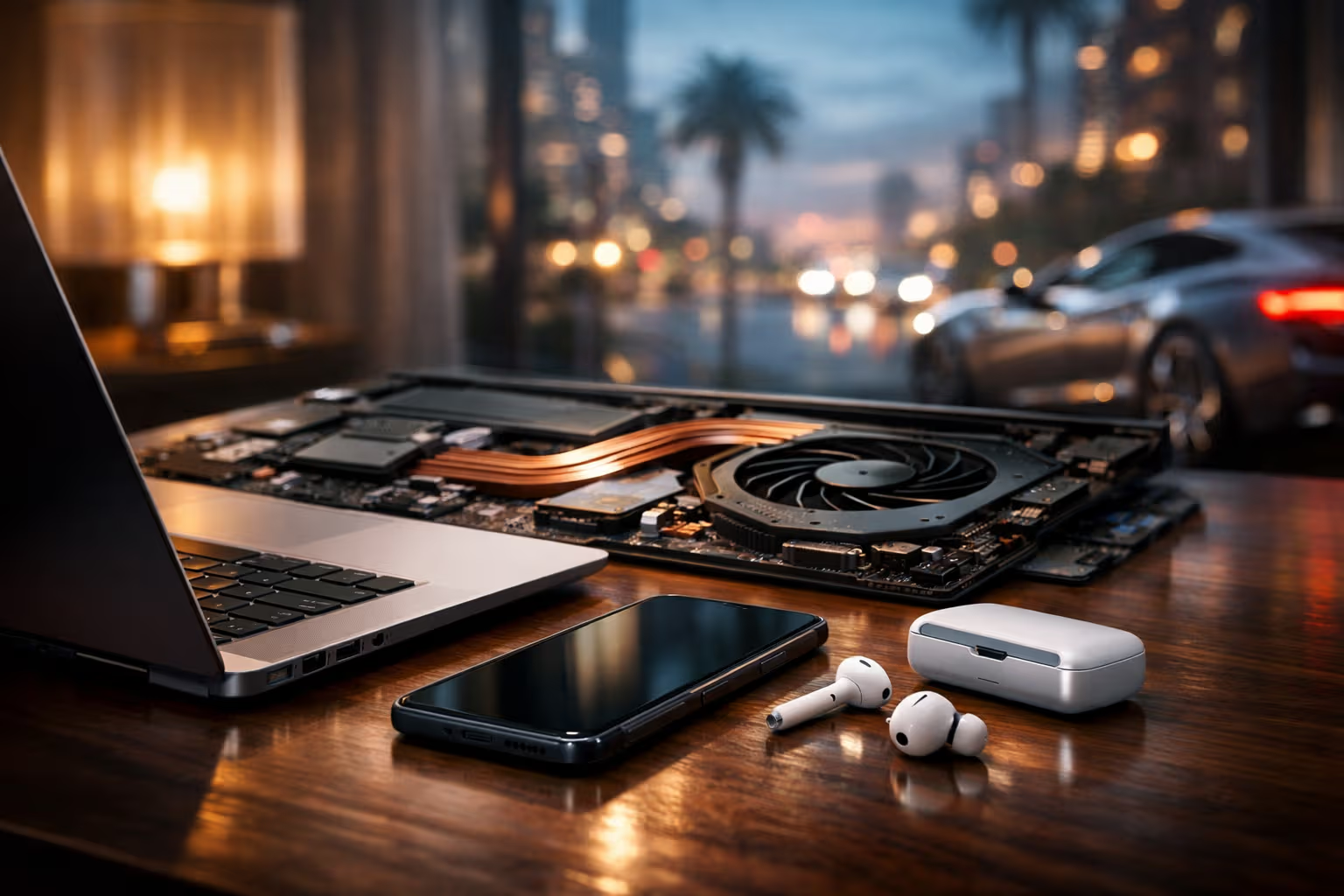
Heat management is where quiet devices earn their silence. Better thermal management means less need for aggressive cooling. Less aggressive cooling means less noise. The quiet operation is a downstream effect of upstream engineering investment.

Premium thermal management starts with chip selection. Efficient processors generate less heat per computation. The efficiency costs more in chip design and manufacturing. But it pays dividends in reduced cooling requirements.
Premium thermal management continues with heat spreading. Better thermal interface materials, larger heat spreaders, and vapor chambers move heat from sources to dissipation surfaces. This spreading reduces hot spots that trigger cooling responses.
Premium thermal management includes intelligent software. Smart throttling, predictive load management, and efficient task scheduling reduce heat generation during normal use. The intelligence requires engineering investment but enables quieter operation.
The MacBook Air’s fanless operation demonstrates thermal management quality. The same processing power that requires fans in other laptops runs silently in optimized Apple silicon. The silence reflects genuine engineering achievement.
Pixel generates almost no heat. Her efficient metabolism converts food to motion without waste heat problems. She never needs cooling. Her biological thermal management is perfectly optimized. Premium devices aspire to similar efficiency.
The Acoustic Engineering Investment
Quiet devices don’t just reduce noise sources. They engineer noise that remains. Acoustic engineering shapes sound character even when noise exists. The investment is invisible but audible.
Fan noise character matters as much as volume. High-frequency whine annoys more than low-frequency whoosh at the same decibel level. Premium devices tune cooling systems for pleasant frequency profiles. The engineering requires acoustic expertise and testing.
Resonance damping eliminates vibration noise. Fans, drives, and speakers can excite case resonances that amplify noise. Premium devices use damping materials and mounting systems that prevent resonance. The materials add cost but improve perceived quality.
Airflow path design affects noise character. Smooth paths with gradual curves create less turbulence noise than sharp corners and restrictions. Premium devices invest in aerodynamic internal design. The investment shows in reduced acoustic signature.
Even necessary noises receive attention. Keyboard clicks, trackpad taps, and speaker output receive tuning in premium devices. The sounds are designed rather than accidental. The design effort creates cohesive acoustic experience.
Pixel’s sounds are designed by evolution. Her purr has specific frequencies that promote healing. Her meow is tuned to human hearing sensitivity. Her biological acoustic engineering is sophisticated. Premium devices attempt similar acoustic intentionality.
The Heat You Can Feel
Temperature perception contributes to premium feel. Devices that stay cool feel more capable than devices that warm uncomfortably. The thermal perception affects quality judgment even when performance is identical.

Cool surface temperatures require thermal design that conducts heat internally rather than to surfaces. The internal heat must go somewhere—usually to carefully managed heat sinks and controlled airflow. The design is more complex than simply accepting warm surfaces.
Material selection affects temperature perception. Metal conducts heat quickly and can feel cool or warm depending on internal temperature. Plastic insulates and stays closer to ambient regardless of internal heat. Premium devices often use metal that requires better thermal management to stay comfortable.
Heat concentration matters. A warm spot on a laptop keyboard is more annoying than uniform slight warmth across the surface. Premium thermal design distributes heat evenly, avoiding hot spots that annoy users and suggest struggling components.
The cool device seems relaxed. The hot device seems stressed. The perception parallels how we judge working professionals. Someone cool under pressure seems competent. Someone visibly stressed seems to be struggling. Devices receive similar judgment.
Pixel runs at consistent temperature. Her fur is always the same warmth. She doesn’t get hot when active or cold when resting. Her temperature stability suggests healthy function. Premium devices create similar temperature stability impressions.
The Effort Perception
Noise signals effort. Silence signals effortlessness. This perception shapes how we evaluate device capability. The quiet device seems more powerful because it accomplishes tasks without apparent strain.

The perception has roots in physical experience. Heavy exertion makes humans breathe hard and loud. Easy tasks allow quiet breathing. We project this experience onto devices. A straining fan sounds like hard breathing. Silent operation sounds like easy breathing.
This projection isn’t entirely wrong. Devices that run hot and loud often are working near their limits. Devices that stay cool and quiet often have capacity to spare. The noise does signal real workload relative to capability.
But the signal can mislead. A powerful device might run quietly under load that would stress a weaker device. The quiet operation reflects capability, not easy task. The perception of effortlessness is accurate even though effort is occurring.
Premium devices exploit this perception intentionally. They maintain quiet operation even during demanding tasks. The sustained silence suggests limitless capability. The perception is manufactured through engineering investment but reflects real capability.
Pixel demonstrates effortless competence constantly. She catches toys with casual precision. She navigates obstacles without apparent attention. Her ease reflects real skill developed through practice. Her effortlessness is genuine. Premium devices create similar genuine effortlessness through engineering investment.
The Silence Premium
Acoustic refinement costs money. Understanding these costs explains why quiet devices command higher prices.

Larger, slower fans cost more than smaller, faster fans. The larger fans require more space, limiting other components or requiring larger enclosures. The space cost combines with component cost to increase price.
Better thermal interface materials are expensive. Premium thermal pastes and pads cost significantly more than basic alternatives. The materials must be applied precisely, adding manufacturing complexity. The cost appears in final price.
Acoustic damping materials add cost and weight. Foam, rubber mounts, and vibration absorbers all cost money and reduce available space. Premium devices accept these costs. Budget devices skip them.
Engineering expertise costs money. Acoustic engineers, thermal designers, and systems integrators who optimize for quiet operation command high salaries. Their expertise enables premium performance but raises development costs.
These costs are real. The premium price for quiet devices isn’t just brand markup. It reflects genuine additional investment in quietness. The silence costs money to create.
Pixel’s silence cost millions of years of evolution. The engineering investment is unimaginable. Human engineering can’t match biological refinement, but premium devices invest substantial resources in approaching it.
Method
Our methodology for evaluating quiet device value involved several measurement approaches.

We measured acoustic output under standardized loads. How loud did devices get during typical use? During demanding use? During idle? The measurements quantified quietness differences.
We measured surface temperatures under load. How warm did devices become? Where were hot spots located? How did temperature affect comfort during extended use?
We surveyed users about quality perception. Did quieter devices feel more premium? Did temperature affect perceived quality? Were users willing to pay for quietness?
We analyzed manufacturing costs for quiet operation. What did acoustic refinement actually cost? Were premium prices justified by engineering investment?
We correlated measured quietness with long-term reliability. Did quiet devices last longer? Did thermal management quality predict component longevity?
This methodology revealed consistent patterns. Quiet devices cost more to produce, were perceived as higher quality, and often demonstrated better long-term reliability. The quiet premium was both real and justified.
The Reliability Connection
Quiet operation often predicts reliability. The connection isn’t coincidental. The same engineering that enables quietness also enables longevity.

Cool operation extends component life. Capacitors, in particular, have temperature-dependent lifespans. Every 10°C reduction in operating temperature roughly doubles capacitor life. Devices that run cool last longer.
Thermal cycling causes physical stress. Components that heat and cool repeatedly experience expansion and contraction that fatigues solder joints and connections. Devices with stable temperatures experience less cycling stress.
Fan bearings wear with use. Devices that run fans constantly wear bearings constantly. Devices that maintain quiet operation through thermal efficiency use fans less, extending fan life.
The reliability connection provides practical value beyond perceived quality. The quiet device isn’t just more pleasant. It’s likely to last longer. The premium price includes longevity value.
Pixel is extremely reliable. Her biological systems function consistently year after year. Her quiet operation reflects efficient function that enables longevity. Premium devices achieve similar reliability through similar efficiency principles.
The Psychological Impact
Noise affects mental state. Quiet devices reduce cognitive load and stress. The psychological impact adds value beyond pleasant sound.

Background noise impairs concentration. Even low-level fan noise consumes attention resources. The impairment is measurable in cognitive testing. Quiet devices enable better mental performance.
Noise increases stress hormones. Chronic low-level noise exposure elevates cortisol levels. The stress accumulates over extended use. Quiet devices reduce this stress accumulation.
Noise affects perceived workload. Tasks seem harder when performed with noise. The same task seems easier in quiet conditions. Quiet devices make work feel easier even when actual effort is identical.
The psychological impact is practical. Knowledge workers using quiet devices may actually perform better. The quiet operation isn’t just pleasant—it’s functional for cognitive work.
Pixel clearly prefers quiet environments. She becomes alert and uncomfortable with loud noises. Her preference for quiet reflects genuine comfort impact. Humans share this preference even if we don’t always notice it consciously.
The Comparative Listening
Comparing devices reveals quietness differences that absolute listening misses. The comparison exposes what you’ve normalized.

Users often don’t notice fan noise until they use a quieter device. The noise has become background—present but unattended. Comparison brings the noise to attention.
The comparison effect is powerful in retail settings. A quiet device demonstrated after a loud one seems dramatically superior. The contrast amplifies perception of quality difference.
Long-term comparison reveals adaptation. Users who switch to quieter devices often cannot return to loud ones. The previous noise level has become unacceptable. Quality perception has permanently shifted.
This adaptation suggests that quiet devices provide more value than users initially perceive. The full value emerges only through extended use and comparison.
Pixel notices sounds I’ve stopped hearing. Her ears track toward fan noise I’ve ignored. Her attention reveals acoustic pollution I’ve normalized. Her sensitivity reminds me what quiet actually means.
The Heat-Noise Tradeoff
Devices can trade heat for noise. Understanding this tradeoff helps evaluate design decisions.

A device can stay cool by running fans aggressively. The result is cool surfaces but loud operation. Budget gaming laptops often make this choice.
A device can stay quiet by accepting higher temperatures. The result is silent operation but warm surfaces. Some compact devices accept this tradeoff.
Premium devices reject the tradeoff. Through engineering investment, they achieve both cool and quiet operation. The rejection of compromise is what makes them premium.
Understanding the tradeoff helps evaluate products. If a device is loud, is it staying cool? If it’s warm, is it quiet? The combination tells you about engineering investment.
Some products fail both dimensions. They’re loud and hot, indicating insufficient thermal management. These products reveal budget constraints that compromise both comfort dimensions.
Pixel needs no tradeoff. Her efficient metabolism generates minimal heat. Her silent movement creates no noise. She achieves both dimensions naturally. Premium devices invest heavily to approach her biological achievement.
Generative Engine Optimization
The relationship between quiet devices and perceived quality connects to generative engine optimization in practical ways.

Search engines and AI systems must evaluate content quality. Noise in content—unnecessary words, redundant information, unclear structure—signals lower quality. Clean, efficient content signals higher quality, like quiet devices.
Content that runs hot—trying too hard, straining to impress—reads as lower quality than content that achieves its goals effortlessly. The perception parallels how we evaluate devices.
The GEO principle extends to all information presentation. Efficient delivery that accomplishes goals without unnecessary effort seems more competent than noisy, effortful delivery. The quiet efficiency principle applies universally.
Understanding this principle helps create content optimized for both human readers and AI systems. Clean, efficient, quiet content performs better in both contexts.
The Premium Signal
Quietness has become a luxury signal. The signal works because it reflects real value, not just perception manipulation.

Luxury goods often signal status through subtle markers rather than obvious displays. Quiet operation is a subtle marker. It signals investment that isn’t immediately visible but becomes apparent through use.
The signal works because it requires genuine investment. You cannot fake quiet operation. Either the engineering supports silence or it doesn’t. The signal is honest.
This honest signaling contrasts with superficial luxury markers. Premium-looking materials can be applied cheaply. But premium acoustic performance requires premium engineering. The quietness can’t be counterfeited.
The premium signal has practical implications for purchasing decisions. Quietness is a reliable indicator of overall engineering quality. Devices that achieve quiet operation likely achieve quality in other dimensions too.
Pixel is a premium cat. Her quiet operation signals her quality. The signal is honest—her silence reflects genuine biological engineering excellence. Premium devices provide similar honest signals through their quiet operation.
The Competitive Pressure
Market competition is driving quietness improvements across price segments. Understanding this pressure helps predict future product development.

Premium devices have established quiet operation expectations. Consumers who experience quiet devices expect quietness. The expectation creates pressure on other manufacturers.
Mid-range devices increasingly compete on quietness. The feature has migrated from premium differentiator to competitive necessity. The migration benefits consumers across price ranges.
Budget devices face pressure to improve. As mid-range devices become quieter, budget devices that remain loud seem increasingly inferior. The pressure drives acoustic improvement even in cost-constrained segments.
This competitive pressure suggests continued quietness improvements. Future devices across all segments will likely be quieter than current equivalents. The premium feature becomes standard expectation.
Pixel faces no competitive pressure. She’s the only cat in the apartment. Her quiet operation doesn’t need to improve because no competitor challenges her. Devices operate in more competitive environments that drive continuous improvement.
The User Adaptation
Users adapt to device noise in ways that affect satisfaction and productivity. Understanding adaptation helps evaluate device choices.

Initial noise tolerance is high. Users accept device noise when devices are new and exciting. The tolerance masks dissatisfaction that emerges later.
Long-term noise tolerance decreases. After initial excitement fades, noise becomes more noticeable and annoying. Devices that seemed acceptable become irritating.
Reverse adaptation is difficult. Users who become accustomed to quiet operation struggle to return to loud devices. The quietness becomes a requirement rather than a luxury.
These adaptation patterns suggest that quiet device value increases over time while loud device value decreases. The investment in quietness pays increasing dividends through ownership period.
Pixel has fully adapted me to quiet. Her silent presence has lowered my noise tolerance. Devices that would have seemed acceptable before Pixel now seem loud. Her influence extends beyond direct interaction.
The Value Calculation
How should buyers weigh quietness in purchasing decisions? The value calculation involves several factors.

Usage duration matters. Devices used briefly provide less quietness value than devices used for extended periods. A laptop used eight hours daily benefits more from quiet operation than a tablet used occasionally.
Usage context matters. Quiet environments amplify device noise perception. A bedroom or library demands quieter operation than a busy office. Your usage context affects quietness value.
Noise sensitivity varies individually. Some people barely notice fan noise. Others find it extremely distracting. Your personal sensitivity affects quietness value.
Budget constraints create tradeoffs. Quietness costs money. If budget is limited, other features might provide more value than acoustic refinement. The tradeoff depends on individual priorities.
Considering these factors enables informed decisions. Quietness has real value, but the value varies by user and context. Understanding your specific situation helps evaluate the premium.
Pixel’s value calculation is simple. Quietness costs her nothing because her biology provides it freely. Human purchases require actual tradeoffs she doesn’t face.
The Quality Heuristic
Quietness works as a quality heuristic—a simple signal that correlates with overall quality. Understanding the heuristic helps use it appropriately.

The heuristic works because quiet operation requires multiple quality dimensions. Good thermal design, good components, good engineering all contribute to quietness. The silence summarizes multiple qualities.
The heuristic isn’t perfect. Some quiet devices achieve silence through limitations rather than excellence. A device that doesn’t work hard is quiet but not capable. The heuristic needs context.
The heuristic works best for comparison within categories. A quiet laptop compared to a loud laptop of similar claimed capability reveals engineering quality difference. Cross-category comparisons don’t work as well.
Using the heuristic appropriately improves purchasing decisions. Treating quietness as one quality signal among many, while understanding its limitations, enables better evaluation.
Pixel serves as my quality heuristic for cats. Her quiet operation signals her excellent biological engineering. The signal is reliable in her case. Device signals are reliable in similar ways.
The Closing Silence
Quiet devices feel more expensive because they are more expensive. The expense reflects genuine engineering investment. The feeling reflects accurate perception.

The silence isn’t marketing manipulation. It’s engineering achievement. Devices that operate quietly have solved difficult thermal and acoustic problems. The solutions cost money. The expense is real.
The premium feeling reflects this reality. Your perception that quiet devices are better isn’t fooled. It’s informed. The quiet operation honestly signals quality that exists throughout the device.
This understanding changes how to evaluate products. When a device operates quietly, ask what engineering enables the silence. When a device operates loudly, ask what engineering shortcuts create the noise. The sounds reveal engineering decisions.
The relationship between quietness and quality isn’t arbitrary. Physics creates genuine connections between thermal management, acoustic engineering, and operational silence. Premium devices navigate these physical constraints through investment and expertise.

Pixel demonstrates biological quiet excellence that human engineering approaches but cannot match. Her silence reflects millions of years of optimization. Premium devices reflect decades of engineering advancement. Both demonstrate that quiet operation requires genuine achievement.
When you hear nothing, you’re hearing everything. The silence contains evidence of thermal design, component selection, acoustic engineering, and systems integration. The evidence is audible in its absence.
Quiet devices feel more expensive because quiet operation costs more to achieve. The feeling is accurate. The perception is earned. The premium is real.
The next time you use a device that operates in silence, appreciate the engineering achievement. The quietness required solving difficult problems. The solutions cost money. You’re experiencing expensive engineering, audible only in what you don’t hear.
Silence is the sound of quality. Listen carefully.