I like the idea behind the SONOFF Zigbee USB Dongle Plus because its role is easy to explain. It supplies the Zigbee radio for a local automation system. The interesting part is what that allows me to keep under my control: device pairing, automation rules and the host that runs them. The stick itself is not the entire smart home.
Quick verdict
I would choose it for a supported local Zigbee setup whose owner is willing to maintain the coordinator.
Best for: I would choose it for a supported local Zigbee setup whose owner is willing to maintain the coordinator.
Main benefit: It gives a self-managed home automation system a direct Zigbee radio instead of another vendor account.
Biggest drawback: It is one part of a system, so host availability, firmware and network recovery remain my responsibility.
SONOFF Zigbee USB Dongle Plus
Amazon US · US
Check price and availability: SONOFF Zigbee USB Dongle Plus at Amazon USAffiliate link. As an Amazon Associate I earn from qualifying purchases.
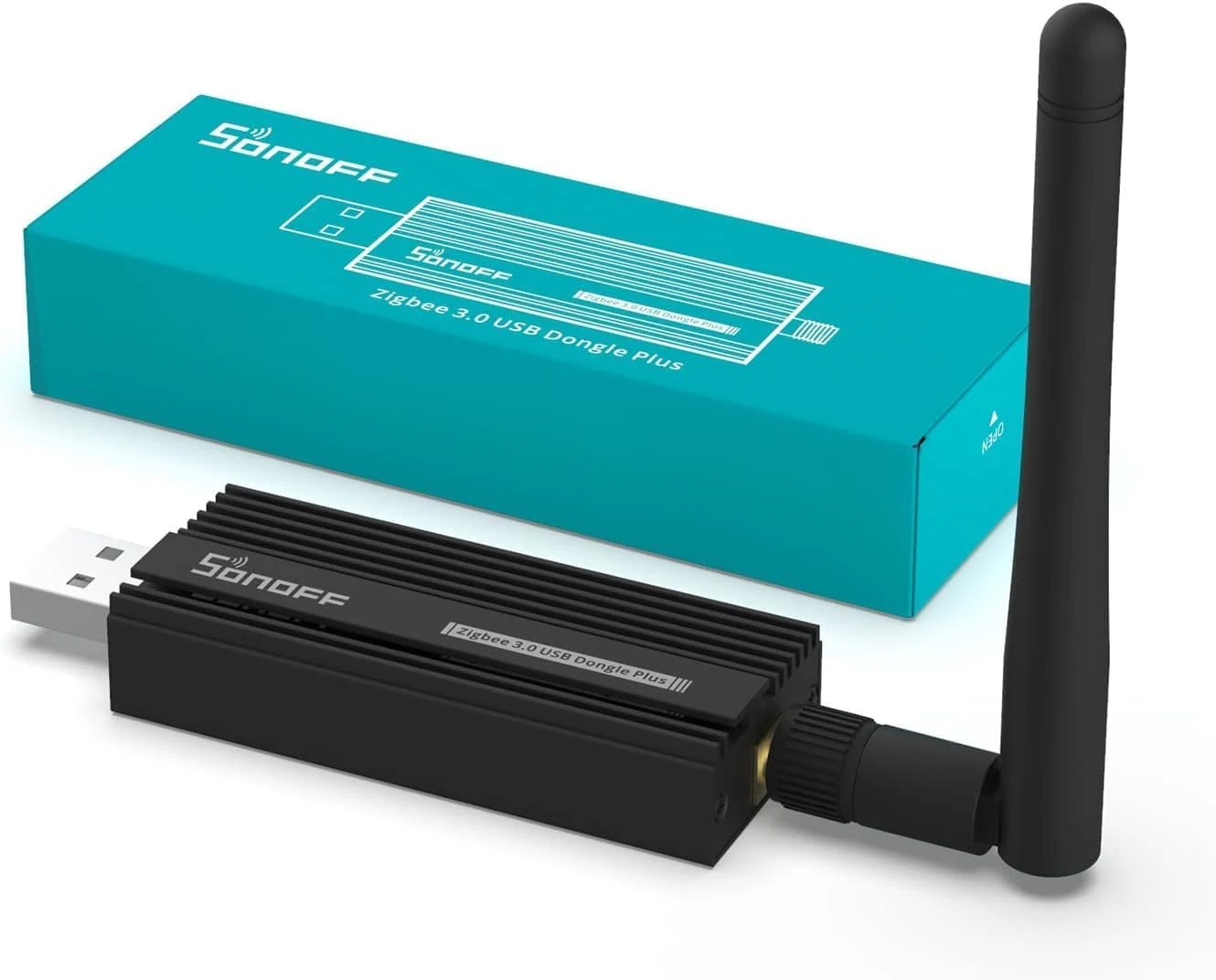
Reviewed version: SONOFF Zigbee 3.0 USB Dongle Plus Gateway, Universal Zigbee USB Gateway with Antenna for Home Assistant, IoBroker, Wireless Zigbee 3.0 USB Adapter(1 Pack)
Compatibility: This listing is ZBDongle-P with TI CC2652P, not ZBDongle-E. It needs a supported host and coordinator software such as ZHA or Zigbee2MQTT.
Review context: I assess coordinator identity, Home Assistant setup, radio placement and recovery planning.
The exact model matters from the start. This listing identifies the ZBDongle-P. I would not select firmware or follow a guide for the similarly named ZBDongle-E just because the cases look related. My positive view is conditional on treating the radio as a small piece of infrastructure, with an owner and a recovery plan, rather than a plug-in shortcut that needs no attention.
Start with the letter on the model
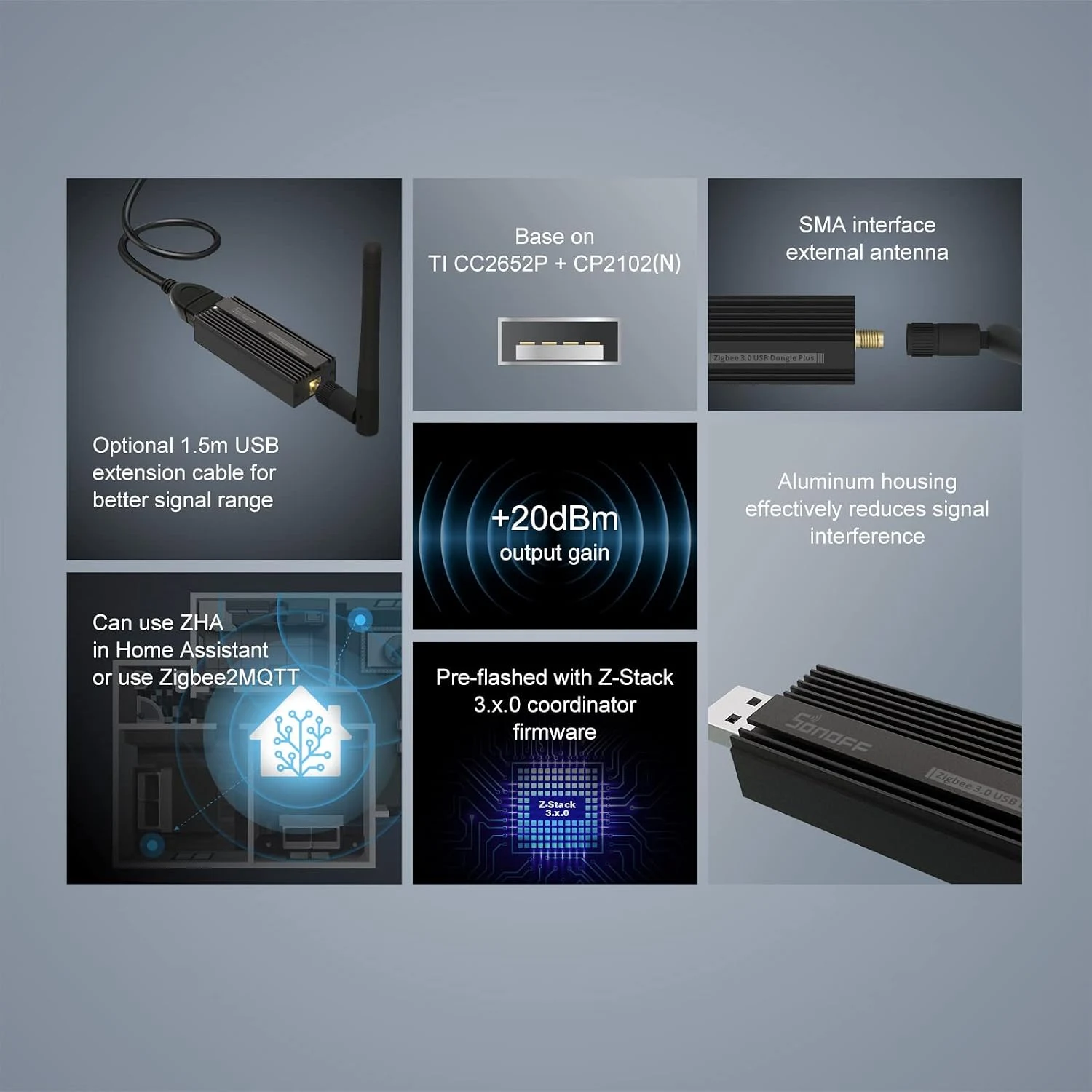
SONOFF’s documentation identifies the P model as a Zigbee USB coordinator for systems including Home Assistant and Zigbee2MQTT. The selected listing specifies the TI CC2652P platform. Those details determine which software settings and firmware instructions apply. I would check the label before changing anything, especially if the dongle comes from older stock.
Related reading
Coordinator and router are different jobs. A coordinator starts and manages the Zigbee network; a router extends an existing network. SONOFF documents firmware options, but flashing a different role is a deliberate change. I would decide the job first and use the instructions for that hardware, rather than assume every firmware file under the product family name is interchangeable.
This is where I would be careful with a second-hand purchase. A used adapter may already have different firmware or an unknown network history. I would establish a known supported configuration before adding household devices. Saving a small amount on a dongle is less attractive if I cannot confidently describe the state of the system that will depend on it.
Local control still needs a running host
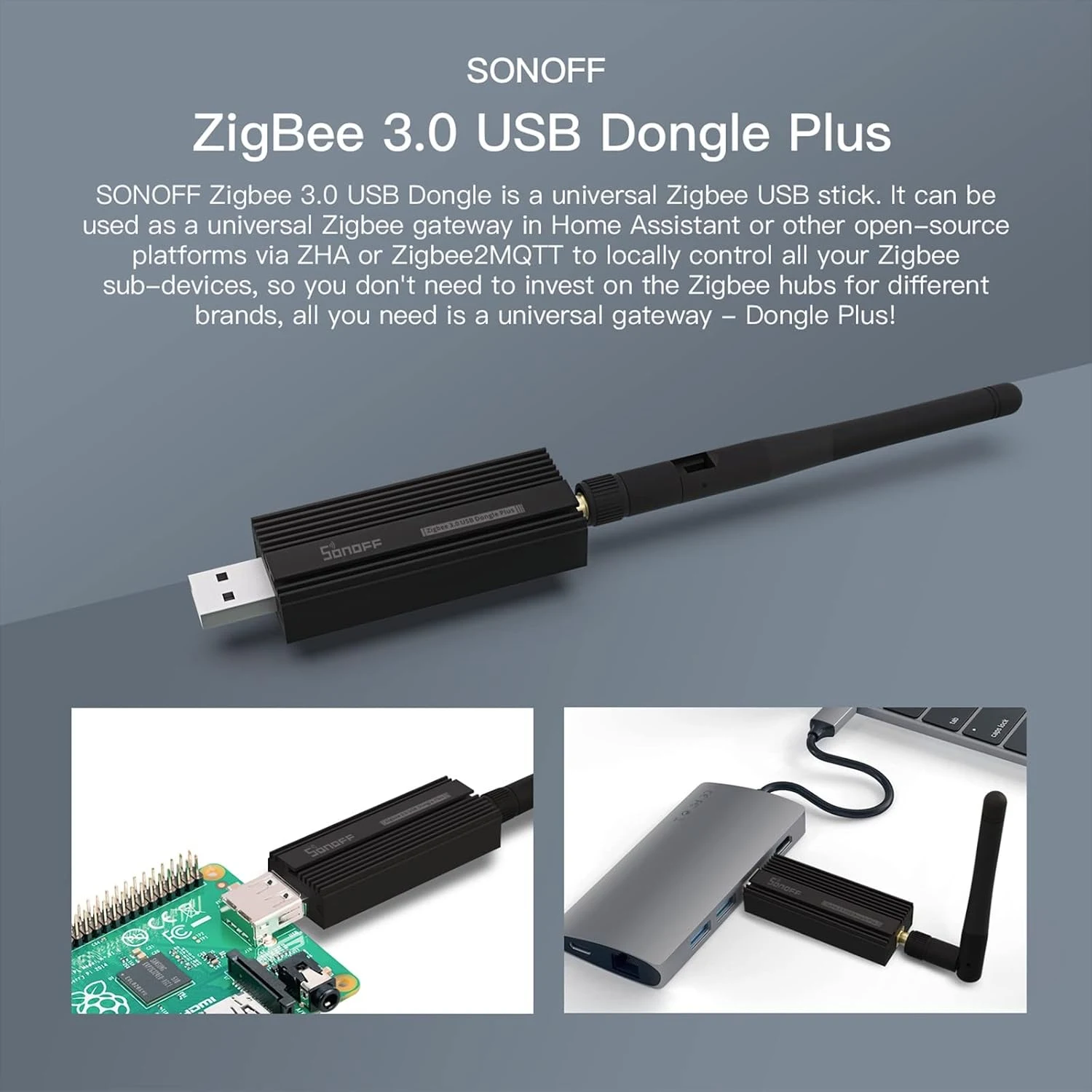
The appeal is connecting Zigbee devices to software I manage. The USB adapter needs a computer or supported small server, plus the chosen integration. Unplugging the host or stopping its automation service changes what the home can do. I would give that machine a stable power arrangement and a clear place in the household setup.
I would choose between ZHA and Zigbee2MQTT according to the devices and maintenance style, not by assuming one is automatically better for everyone. Their supported-device information and upgrade instructions are useful buying evidence. A Zigbee logo alone does not establish that every sensor feature is exposed in the exact integration I want to run.
A concrete example is a room sensor with several reported values. I would check that the integration supports the measurements and settings I need, then pair one sensor before buying a houseful. That small compatibility check matters more to me than a broad promise that Zigbee products all work together. The radio connects the network; software still interprets the devices.
Placement can matter more than the metal case
I would give the adapter some physical distance from a busy computer and its cables. A short, suitable USB extension can make positioning easier than putting the antenna directly behind a metal machine. The aim is a sensible radio location, not a claim that one accessory guarantees coverage through every wall.
Related reading

The antenna needs room, but a central coordinator is only part of a Zigbee mesh. Suitable powered devices can act as routers; sleeping battery sensors generally have a different role. I would plan the network around the building and the supported devices. Increasing a transmit setting is not a substitute for understanding where messages must travel.
For a server hidden in a cupboard, I would compare a supported network-connected coordinator. It may place the radio where it belongs without moving the whole server. The USB P model is most attractive when the host is already in a reasonable location, or a modest extension solves the placement problem cleanly.
Backups belong in the purchase decision
The time invested in pairing devices is real. Before growing the network, I would learn how the chosen software stores its configuration and what its coordinator backup process can recover. I would keep that information with the server backup, rather than discover the migration rules after a failed disk or broken adapter.
Updates also need a small routine. I would read the release guidance, save the existing configuration and change one component at a time. Firmware, the automation application and the operating system are separate moving parts. A working setup becomes easier to maintain when I can tell which one changed before a problem appeared.
I would keep ordinary manual control where it matters. A lamp switch or a physical heating control should remain understandable to someone who has never seen my Home Assistant dashboard. That does not reduce the value of local automation. It makes the system more pleasant to live with when a server is being restarted or a configuration is being repaired.
Related reading

Who gets the best result from this approach
An Aqara hub is the alternative I would consider for a supported collection of Aqara sensors and a simpler vendor setup. A network coordinator makes sense when radio location is the obstacle. I would choose the ZBDongle-P when I specifically want a supported USB radio for a local platform and am comfortable owning the configuration around it.
The current price should be judged against that complete plan, including the host and any extension cable. I like this product’s focused role and the availability of model-specific documentation. Its value is giving a maintained local system a useful radio, rather than promising that a whole home becomes reliable the moment a USB stick is inserted.
The product images come from the selected listing and identified manufacturer materials. My assessment uses the linked product information and the buying decisions explained here. Specifications are manufacturer or retailer claims; the conclusions are my own editorial judgement.
What worked
It gives a self-managed home automation system a direct Zigbee radio instead of another vendor account.
What bothered me
It is one part of a system, so host availability, firmware and network recovery remain my responsibility.
Who should not buy it
Someone expecting a USB stick to run automations by itself without a host or configuration.
Alternatives I would consider
An Aqara hub. I would choose it for a supported Aqara device collection and a simpler vendor-managed setup. Read my An Aqara hub review.
A network-connected Zigbee coordinator. I would choose one when the best radio position is far from the server.
Evidence and sources
The linked product documentation and exact retailer listing support the product details. Images: Amazon product gallery. These are not personal test photographs or measurements.
Features, compatibility and rated figures from the maker are manufacturer information. My opinions are identified in the review.
Conclusion
Good value when I already want a maintained local Zigbee controller; less attractive than a ready-made hub for a simple setup.
SONOFF Zigbee USB Dongle Plus
Amazon US · US
Check price and availability: SONOFF Zigbee USB Dongle Plus at Amazon USAffiliate link. As an Amazon Associate I earn from qualifying purchases.
One email a week with practical Mac workflows, useful comparisons and honest tech recommendations.