The HD 600 appeals to me as a deliberate listening tool rather than an all-purpose headset. A wired open-back pair asks for a suitable room and a suitable source, then keeps its role simple. I like that focus. I would rather make a clear choice for a quiet listening space than expect one headphone to handle the office, a train and a careful music session equally well.
Quick verdict
I would shortlist it for deliberate quiet-room listening with a suitable headphone source.
Best for: I would shortlist it for deliberate quiet-room listening with a suitable headphone source.
Main benefit: The focused wired open-back design suits a permanent listening arrangement without wireless maintenance.
Biggest drawback: Sound leakage and source requirements make it an awkward substitute for a travel or everyday call headset.
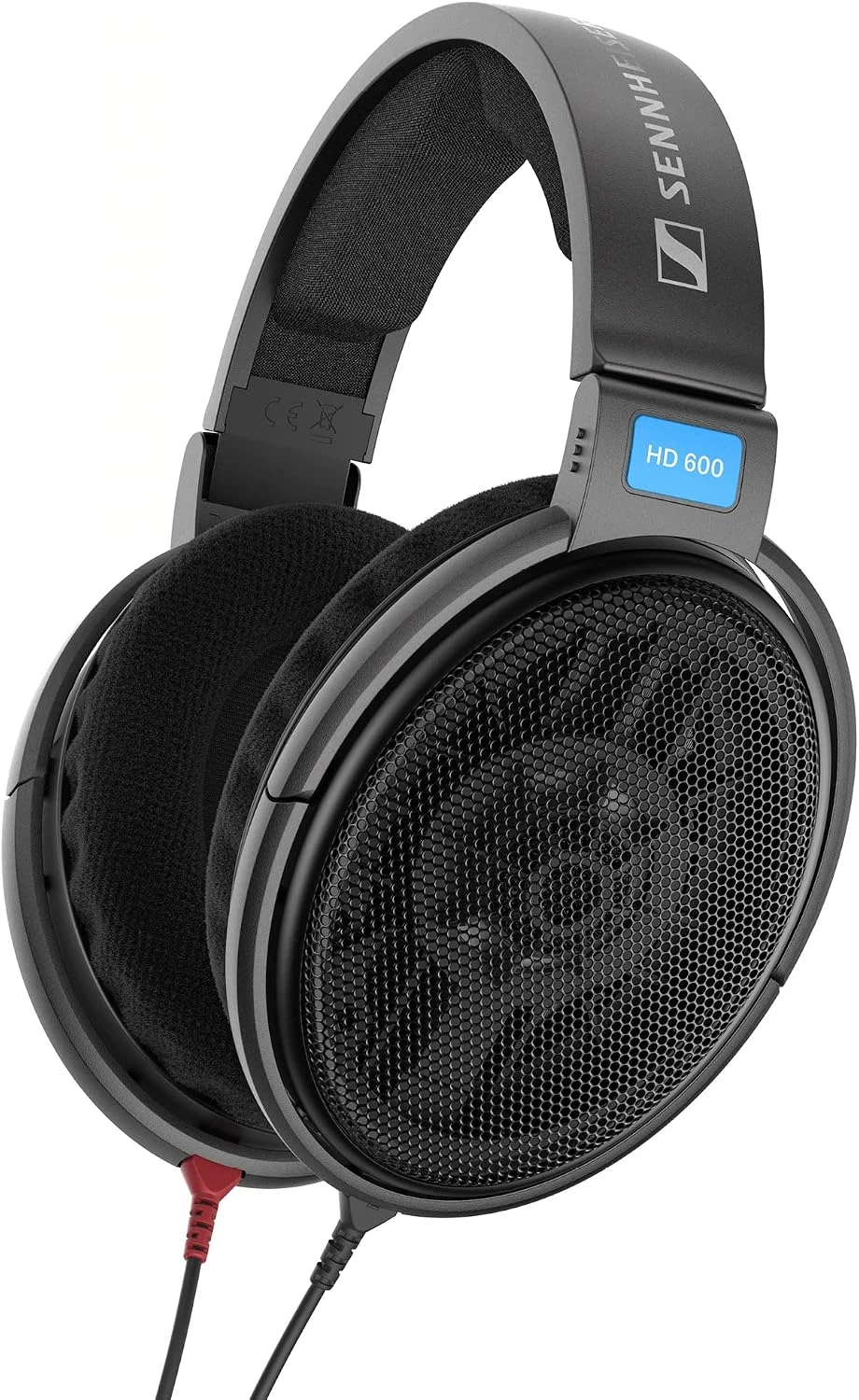
Sennheiser HD 600
Amazon US · US
Check price and availability: Sennheiser HD 600 at Amazon USAffiliate link. As an Amazon Associate I earn from qualifying purchases.
Reviewed version: Sennheiser HD 600 Audiophile Open-Back Dynamic Wired Headphones
Compatibility: Wired open-back HD 600; Sennheiser specifies 300-ohm impedance. Confirm the exact package, cable adapter and suitability of the intended headphone output.
Review context: I assess quiet-room listening, source headroom, cable routing, fit and maintainable wear parts.
I would shortlist the Sennheiser HD 600 when that dedicated role is real. This is a research assessment of the design and purchase decision, not a claimed personal sound comparison. Its reputation is a reason to investigate, while comfort and sound preference still need an audition with familiar recordings. A recognised name cannot make that personal decision for me.
The room decides whether open-back is useful
The Sennheiser instruction manual identifies the HD 600 as an open dynamic headphone. I would choose that design only where sound leakage is acceptable. It lets the listener hear the room and lets the room hear some of the listening.
Related reading

That makes a shared quiet office a poor automatic match. I would also avoid choosing an open pair to overcome a noisy environment by turning the level up. A closed or noise-cancelling design addresses a different problem. The dedicated listening setup works best when the room already provides the quiet that the headphones do not create.
For a recording desk, I would separate listening and microphone work. Escaping headphone sound can become part of a recording if the microphone captures it. A closed pair may be the practical choice while tracking a voice, even if an open pair is preferred later. I see value in giving each tool a clear job rather than forcing one pair into every stage.
The source needs usable headroom
Sennheiser specifies a 300-ohm impedance. I would use that information alongside the source’s output capability, not as a rule that only an expensive amplifier can work. Sensitivity, the desired listening level and the source’s clean output all contribute to the result. The useful question is whether the actual combination is suitable.
I would begin by checking the output I already have. If it provides comfortable levels and appropriate headroom without obvious problems, buying more hardware needs another reason. If it is inadequate, a suitable amplifier can be a practical addition. I would choose that addition to solve a defined limitation rather than build an equipment stack because the headphone looks serious.
A fair comparison keeps playback levels matched. A louder presentation can seem more impressive without proving a better match. I would use familiar music and moderate volume, then pay attention to voices, balance and whether the setup remains comfortable over a normal session. The desired outcome is enjoyable listening, not a specification contest.
A cable changes the desk routine
I like a wired connection at a fixed desk because it removes charging and pairing from the daily task. The trade-off is physical. The cable needs a route that does not catch on the chair or drag equipment when I stand. The source should be close enough to operate without pulling on the headphones.
Related reading


I would check the cable and adapter supplied with the exact retail package. Production revisions and bundles can differ, so a photograph from an old review is not enough to establish the contents of a current box. I would also confirm genuine replacement compatibility if long-term maintenance is part of the buying argument.
This is not a complete work-call headset. A microphone and the necessary routing may remain separate. I would not replace a practical communications setup with listening headphones and then discover that the missing microphone or awkward switching adds friction to every meeting. A dedicated listening tool is valuable precisely because its purpose is clear.
Comfort needs a personal decision
Head shape, glasses, pad condition and headband pressure influence the fit. I would not promise all-day comfort from the listed weight or the appearance of the pads. An audition or a usable return period has real value here, particularly when buying a headphone intended to stay in a collection for years.

For a used pair, I would inspect wear items and the cable rather than judge only the outer finish. Worn pads can change both the fit and the listening arrangement. I would include appropriate replacement parts in the total cost if they are needed. A lower initial price is less attractive when the equipment arrives with unclear condition.
I would also listen across ordinary recordings, not only polished demonstration tracks. Voices, dense mixes and quieter passages reveal different preferences. Lossless files do not make every recording better, and a headphone cannot repair the choices made in the recording itself. I want a pair that suits the music I actually play rather than a carefully selected five-minute demonstration.
Related reading

Where I would spend the money
I would compare the HD 560S as another open quiet-room option, while treating its fit and source needs separately. I would choose a closed pair when room noise or privacy is the main requirement. Those alternatives should be selected by the listening situation rather than placed on one universal quality ladder.
My assessment of the HD 600 is positive for a deliberate, well-matched setup. I would check the exact offer, source capability and return terms, then let familiar listening decide the last part. The worthwhile purchase is a headphone I enjoy using comfortably in the right room, not a famous model that requires me to overlook how and where I normally listen.
The product images come from the selected listing and identified manufacturer materials. My assessment uses the linked product information and the buying decisions explained here. Specifications are manufacturer or retailer claims; the conclusions are my own editorial judgement.
What worked
The focused wired open-back design suits a permanent listening arrangement without wireless maintenance.
What bothered me
Sound leakage and source requirements make it an awkward substitute for a travel or everyday call headset.
Who should not buy it
Someone needing isolation, active noise cancellation, private office listening or a built-in microphone.
Alternatives I would consider
Sennheiser HD 560S. I would compare it as another quiet-room open headphone with its own fit and source requirements. Read my Sennheiser HD 560S review.
Closed-back headphones. I would choose them when leakage or room noise determines the listening experience.
Evidence and sources
The linked product documentation and exact retailer listing support the product details. Images: Amazon product gallery. These are not personal test photographs or measurements.
Features, compatibility and rated figures from the maker are manufacturer information. My opinions are identified in the review.
Conclusion
Worth considering when the room, fit and source suit it; the headphone name alone does not justify extra equipment.
Sennheiser HD 600
Amazon US · US
Check price and availability: Sennheiser HD 600 at Amazon USAffiliate link. As an Amazon Associate I earn from qualifying purchases.
One email a week with practical Mac workflows, useful comparisons and honest tech recommendations.