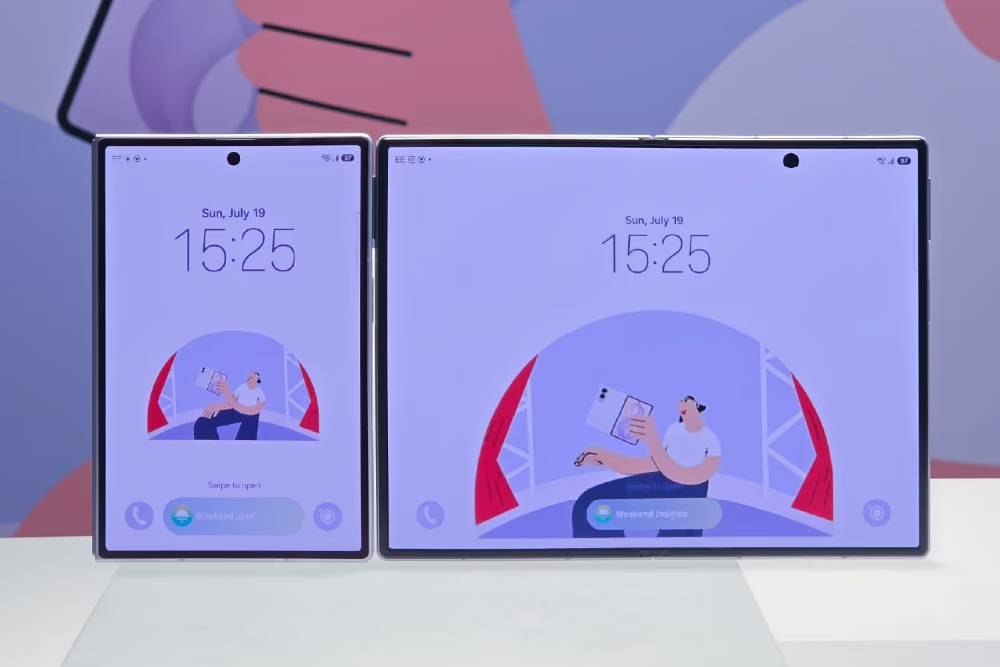
The regular Galaxy Z Fold8 made a shorter folded phone by making it wider
The Galaxy Z Fold8 reached the first retail markets on August 7, 2026. This was a new regular Fold alongside an Ultra with the tall cover format. The base Fold used a much shorter, wider outside panel and opened to a 7.6-inch screen. It weighed 201 grams, which gave a buyer a real reason to try a book-shaped device in a pocket even if the longer Fold7 was already fairly thin. Its two rear cameras gave it useful main and Ultra Wide views, with a separate long lens reserved for the Ultra. Samsung’s US retail and Fold8 device specification
Quick verdict
Retail release in the United States · Archive date
I would have chosen it if the short, light folded phone fit my actual carrying routine and I knew how the wider inner layout improved normal work.
Best for: A buyer who could use the larger screen while travelling and preferred the short folded outline to the tall cover of other book-style devices.
Main benefit: The unusual form made the device light and short when folded while keeping space for detailed reading or more than one app when open.
Biggest drawback: The smaller cover gave fewer lines in some apps and the wider holding point could affect one-handed reach. There was no separate telephoto.
Reviewed version: The US Galaxy Z Fold8 sold from August 7, 2026, with a 7.6-inch main screen, approximately 5.5-inch cover and 256 GB at entry.
Compatibility: It had two 50MP rear cameras, compatible 45W wired charging and a distinct short, wide cover. The larger Fold8 Ultra added a separate telephoto.
Review context: I evaluate the documented retail hardware and the software available in its release window. Regional variants and software changes are identified where they affect the verdict.
This research review uses the first US configuration at its $1,899.99 starting price with 256 GB. Put the regular Fold8 beside both a conventional phone and the Fold8 Ultra to see what the redesign changes. It is better to compare work in the two positions than to put the screen diagonals into a simple ranking. The shape affects the keyboard, the direction of the scroll and the position of the menus you use every day.
The cover changed both height and grip
The cover is about 5.5 inches diagonally as described in Samsung’s overview. The wider-than-usual format gives a short line some room but leaves distinctly less vertical space. A one-line reply, a quick list or part of a route can be a sensible test. Use the actual text size you intend to keep and see what the keyboard takes away. The width is an advantage when you prefer the extra space side to side and can still support the phone comfortably. Someone who usually keeps a long conversation or more of a map in view might like the Ultra’s taller outer format better.
Related reading
The closed handset is about 124 mm tall and 82 mm wide before a case. That makes it easy to see why somebody might find it easier to put into a shallow pocket. The wider grip can also get in the way of an action with only one hand. I would have tried lifting it and reaching a corner while holding something else, then used the same movement on the Ultra. More width can be useful for the displayed material and less useful for getting to that material while on the move.
The regular Fold had an open shape designed around a different use
Open a picture, a short document and the piece of information you are most likely to check beside another app. The shape can give a useful preview without making the device as physically tall as the other Fold when it is closed. Some apps use the extra width well and others favour a more conventional screen orientation. A clear reason to buy is an ordinary pair of tasks that gains something visible from staying together. That can be enough even if it only happens a few times a day.
I would have compared reading with working on a larger piece of material. A screen may be comfortable for explaining a photograph to one person but less suitable for editing it while trying to hold the phone in place. One of the useful things to do in a showroom is to start a task on the short cover, finish it open and try to find the result again through the cover. If the useful material stays within reach, the height trade makes sense as part of a complete routine.
The camera and the lighter body can support the same decision
The regular Fold8 includes two 50MP rear cameras, the Main and a separate Ultra Wide. The Main camera offers a narrower sensor-based frame. Someone getting a closer view from the same place may find that helpful in suitable light. The Ultra offers a separate 3x lens, which gives a good reason to compare at a larger distance. A buyer who usually takes broad pictures may be happy to put more of the cost into shape and less into the other camera configuration.
The typical battery capacity is 4,800 mAh with compatible 45W wired and 20W wireless charging. This gives a useful comparison with the Ultra’s 5,000 mAh. The display state you spend time in and the network and brightness can all affect your own result. I would have thought about the most useful job that had to happen between two charging stops, then compared the shape and battery as separate ways to finish it.
Related reading

A different screen arrangement changes where the two halves of the job fit
I would have placed a picture and a message together and looked for the part of the photo that needs confirmation. The open screen of the Fold8 has different proportions from the Ultra. Holding it one way can make a wider arrangement work. Rotating it or changing the application may get more useful information onto the other side. This is a better comparison than assuming all larger pictures are more readable at the same orientation. If the application leaves important controls close to the part you want to see, being able to fit both together can change what is possible away from a separate screen.
The shorter formed cover also prompts a separate comparison with a landscape task. Try opening a document from the short view and saving it into the place where it needs to go, then close the phone and check whether the same document is still easy to reach. This is a test of daily software handling on this specific body. If its greatest advantage is just reading a bit more while you sit down, decide how often the desk or the lunch table already holds a different larger device. If the Fold changes the timing of a task during a trip, there may be a stronger reason to choose the smaller shape.
I would also have tested the ability to carry the folded handset in a room where you normally take photographs quickly. You can use both cameras without opening it. Check that enough remains on the preview to choose the framing. Moving a broader phone from a pocket into a stable grip can have a bigger role in that quick photo than the optional output choices.
My verdict on the Fold8
I would have bought the regular Fold8 if a short and relatively light folded phone with a wide inner display fit my actual daily movements. The Galaxy Z Fold7 launch review shows the established tall-cover approach. The Galaxy Z Fold8 Ultra review tracks how Samsung kept that approach at the higher price. Both Fold8 shapes fit the August launch in the Galaxy review timeline.
What worked
The unusual form made the device light and short when folded while keeping space for detailed reading or more than one app when open.
Its two 50MP camera views could offer useful wide and main compositions with a readable place to inspect them after opening.
What bothered me
The smaller cover gave fewer lines in some apps and the wider holding point could affect one-handed reach. There was no separate telephoto.
Some apps handle this ratio differently. The shape and battery benefits depend on how much of the day you actually do work on each panel.
Who should not buy it
Somebody who relies on a tall outer screen for long replies or needs an independent optical long lens.
Alternatives I would consider
Galaxy Z Fold8 Ultra. It keeps a taller cover and larger 8-inch screen, with a separate telephoto, higher battery capacity and heavier shape. Read my Galaxy Z Fold8 Ultra review.
Evidence and sources
The release date refers to general availability in the named market. The archive filing is ten days later. Feature assessments are editorial judgments based on the documented retail model.
Features, compatibility and rated figures from the maker are manufacturer information. My opinions are identified in the review.
Conclusion
Compare normal typing and reach before spending on the short hardware. The lower price than the Ultra is useful if the simpler cameras and smaller layout suffice.
One email a week with practical Mac workflows, useful comparisons and honest tech recommendations.