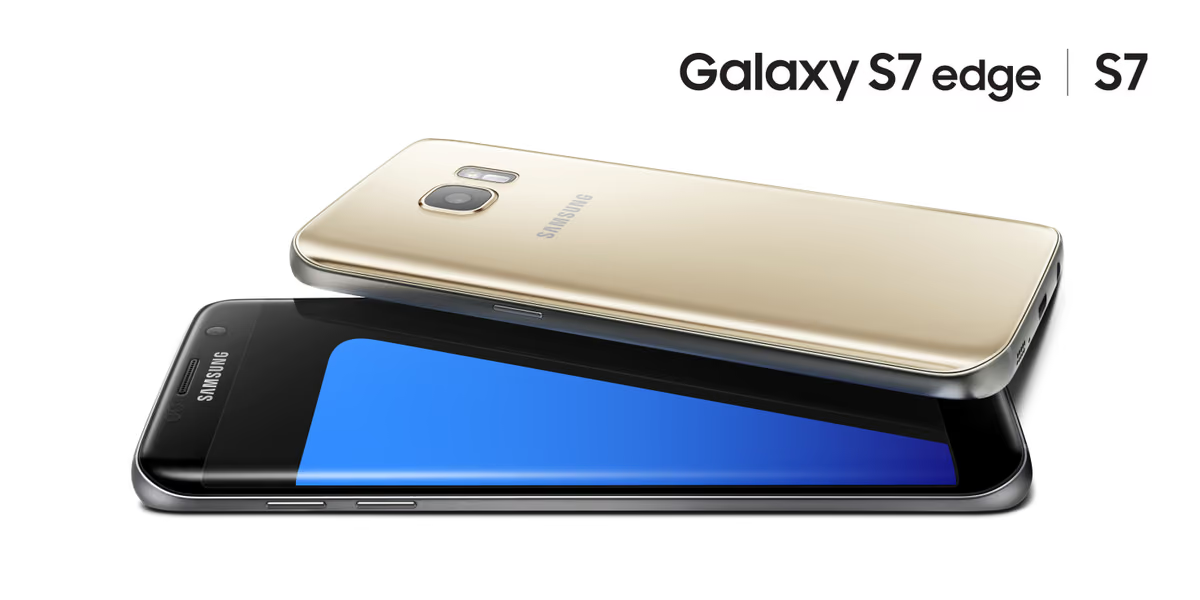
The Galaxy S7 brought practical features back to the flat flagship
Samsung released the Galaxy S7 on March 11, 2016. It kept the glass and metal approach of the S6 while offering microSD again, an IP68-rated body and a new 12MP camera with Dual Pixel autofocus. An S6 owner now had several direct comparisons to make. A person who wanted an easy-to-carry 5.1-inch phone could buy the flat model without choosing the larger S7 edge. The difference between them mattered for usable screen space and battery size, as well as the curvature that gave it its name. Samsung’s March 11 global retail release
Quick verdict
Retail release in the first global rollout · Archive date
I would have picked the S7 if I wanted the flat shape, returned storage and a camera that made more of available light and short opportunities.
Best for: Someone who often photographed on the move, carried some offline media and preferred a compact flat display to the more expansive Edge.
Main benefit: A useful mix of faster focus, rated ingress protection and a microSD slot returned more choices to a device that still handled like a smaller Galaxy.
Biggest drawback: There was no removable battery, and a single rear field could still have difficulty when you needed very different framing from a fixed position.
Reviewed version: The flat 5.1-inch Galaxy S7 first sold March 11, 2016. Its regional chipset and support depended on the specific device.
Compatibility: It used a 12MP Dual Pixel rear camera, compatible wireless charging and microSD. The battery stayed sealed as in the S6.
Review context: I evaluate the documented retail hardware and the software available in its release window. Regional variants and software changes are identified where they affect the verdict.
This review looks at the flat S7 and the launch features Samsung documented. There were regional hardware and network variants and local availability made a difference in what a buyer could actually get. Samsung listed a 3,000 mAh typical battery and compatibility with wireless charging. The main reason to buy was how the camera, storage and resistance changed the jobs you already needed a phone for.
The camera put using the available light ahead of the old number
Samsung went from a 16MP sensor on the preceding regular model to a 12MP rear camera with an f/1.7 lens, larger pixels and Dual Pixel focusing. The ability to focus during a quick opening and take the shot under indoor light mattered more than a raw difference in image resolution. A fair everyday comparison is a familiar room in the evening with an object that will stay in place and somebody about to move. The camera has to choose different ways to make a usable exposure. I would have looked for the part of the picture that needed to be sharp after taking each image.
Related reading
A quick camera shortcut and good autofocus are useful only after your hand has got the phone to the right position. Try raising it to a useful angle and capturing something on the other side of a table. See whether the view is wide enough or whether you have to change the position again. The S7 still offered a single rear field. Distance, movement, exposure and framing all contribute to the result that somebody can use. The camera change had a practical case for a buyer who struggled with focus or light more often than needing fine detail in ideal situations.
The return of microSD mattered most when you have something to move
The S7 accepted a compatible card for more storage. A buyer could retain a useful offline media plan without choosing only by the included capacity. Some files and app data still belonged in internal storage, and the available card slot or dual-SIM configuration could vary by market. I would have looked at what occupied the old phone’s space and how much of it was compatible media. A card is more valuable if you can use it for a category of files you need to keep without making every transfer more complicated.
The battery remained sealed. That kept a trade from the previous generation. Increased capacity, supporting faster charging and being able to use compatible wireless charging were different ways of staying powered. A photographer or someone doing a great deal of navigation might decide based on an inaccessible charger rather than the first hour of use. That is why I would have considered the battery and storage options separately, even when both affect the ability to continue away from a desk.
The flat body and ingress rating made carrying it a different decision
The IP68 protection applied in the announced test conditions. It gave somebody an easier choice about bringing a phone into ordinary places where there might be incidental moisture and dust. It did not make every exposure appropriate for the device. The main body and port condition are part of how protection works. I would have compared that benefit alongside the material and fit of a case that gave some added control over the glass back.
Unlike the regular S6, the S7 could give a buyer the new camera in a shape that was suited to familiar one-handed reach while preserving expandable media and offering the tested enclosure. The Edge added a bigger screen as well as its curved sides. Someone using the device for short applications could consciously choose the simpler shape. I would have tried the devices with the same ordinary text and controls instead of judging the display gap by the outside outline only.
Related reading

The always-on screen also had a narrower and clearer job
The S7 could show selected information on the display while it was otherwise idle. Someone who frequently wanted the time or to see some status from a desk could get a useful answer without fully waking it. I would have compared the view at two positions where I routinely put the phone down. If I could see what I wanted from the angle in which it normally sat, that could cut out a recurring interruption. If the important notification still required fully opening the screen, the feature should be valued for the smaller job it actually did.
There was a more general challenge to the phone’s promise near the end of a day. Its camera, display and network all draw power in a different way, and having an always-on view is independent of using one of the most intensive apps. I would have taken account of what needed to remain open under the same signal and brightness you used ordinarily. The flat model and the S7 edge had different battery capacities. It makes sense to account for the shape of the body and how long you expect to hold it before bringing either battery figure into the comparison.
A removable card helps with travel media only when you keep something useful on it. I would have tried choosing and playing an example file before assuming that the phone used that storage in the same way as a preceding model. That also lets you decide whether enough files can be moved off internal space to make the opening configuration reasonable for the applications that need it.
My verdict on the Galaxy S7
I would have chosen the regular S7 if an ordinary flat phone with the returning card option and an updated camera suited my daily work. A buyer who could already do enough with the Galaxy S6 had a good reason to compare what the card and camera actually saved. The Galaxy review timeline shows where Samsung brought expandable storage back and introduced the next parts of the S design.
What worked
A useful mix of faster focus, rated ingress protection and a microSD slot returned more choices to a device that still handled like a smaller Galaxy.
The always-on view gave the at-rest phone a useful limited job while retaining a familiar way to wake the whole screen.
What bothered me
There was no removable battery, and a single rear field could still have difficulty when you needed very different framing from a fixed position.
The regular S7 and S7 edge had different views and battery figures. A charge rate alone could not replace the battery exchange available on older models.
Who should not buy it
Someone whose priority is the larger Edge display or who buys a phone for battery swapping rather than sealed resistance.
Alternatives I would consider
Galaxy S6. The earlier flat model offered the same basic shape and compatible charging options, with no microSD and an older camera design. Read my Galaxy S6 review.
Evidence and sources
The release date refers to general availability in the named market. The archive filing is ten days later. Feature assessments are editorial judgments based on the documented retail model.
Features, compatibility and rated figures from the maker are manufacturer information. My opinions are identified in the review.
Conclusion
Decide whether the return of the card and the new camera are worth upgrading from an S6 you already use. Choose the size by how you hold it.
One email a week with practical Mac workflows, useful comparisons and honest tech recommendations.