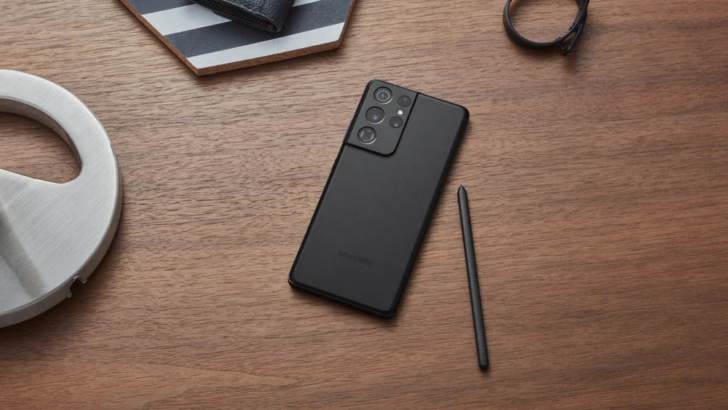
The Galaxy S21 Ultra earned its size by giving you two ways to get closer
The Galaxy S21 Ultra put part of its size to work in two separate telephoto cameras. A portrait a few steps away and a building across a courtyard ask for different fields of view. Samsung offered a dedicated way to frame each. The high-resolution display also became a more complete part of the package because it could use its highest setting and adaptive refresh rate together. Those were worth more to a launch buyer than the biggest digital zoom number in the store. A pen was a real addition if you already had a reason to write on the phone and somewhere to carry it.
Quick verdict
Retail release in the United States · Archive date
The S21 Ultra was most convincing when you expected to use both the telephoto options and the high-resolution display.
Best for: A photographer who made repeated use of moderate and long optical reach and had room to carry a large flagship.
Main benefit: Two dedicated telephoto cameras gave the device a useful choice between tighter framing and a much longer view.
Biggest drawback: The large device lacked an internal pen holder and the tier you picked determined how much internal storage you had.
Reviewed version: The Samsung Galaxy S21 Ultra in the January 2021 US launch range.
Compatibility: S Pen support required a compatible pen purchased separately or already owned. Models and network bands could vary by market.
Review context: I evaluate the documented retail hardware and the software available in its release window. Regional variants and software changes are identified where they affect the verdict.
This is a retrospective based on Samsung’s US launch documentation and specifications for the phone that became widely available January 29, 2021. Hardware varied by market. Samsung made the US launch model available through its own store, retailers and carriers. Samsung’s launch specifications and retail dates
Comparing the two distances shows what changed
A dedicated 3x camera makes sense if you know you want a closer view but also need room to hold more than one person or some surroundings in the frame. A different 10x camera can frame a smaller area from the same position. If you want a detail beyond a place where you can stand, this is a useful feature people can demonstrate without guessing how a high number in a promotional image relates to the actual camera hardware. Put the phone on a stable surface and choose two fixed subjects. The two optical fields are easier to compare on those subjects than they are while chasing something that moves.
Related reading
Samsung also carried forward a large main camera sensor and included an ultrawide camera. The most helpful viewing difference came from choosing a lens that matched the distance. One frame might benefit from including context. Another might be about a sign you could recognise from several metres away. Having hardware to distinguish those jobs gave a buyer a reason to use both sides of the zoom range, with software still deciding how to combine or switch outputs in different conditions.
Longer reach also made the camera more sensitive to small changes in position. A person examining a faraway figure on the screen needs to keep the device stable to find the intended view. Light is another constraint. Comparing two setups outside in daylight only tells a buyer something about outdoor use. If most of their photographs took place inside a room, I would have tested whether the main or the shorter telephoto output looked usable there. The 10x option was a benefit for particular conditions. The extreme end of the digital zoom range required knowing what you wanted a low-detail frame to tell you.
The large panel improved the view as well as the camera controls
Samsung described a 6.8-inch display with a refresh rate that could adapt across a broad range, up to 120 Hz. It allowed that setting at the highest display resolution. A buyer interested in following a long page of text could use the smoother scrolling. A camera user could bring back a few options beside the image and review it at a useful size. A high number in a setting does not keep all content running at that rate. The app, the current action and the way the system adapts can change the actual experience.
A larger screen can help in two different ways. It can hold more at once while keeping elements at the same size. It can also make the same information easier to see by enlarging it. I would have compared an interface I planned to use outdoors and one with a keyboard. Both can demonstrate the value of extra room and any extra reach demanded by the full device. Screen brightness that helps when looking at a scene outside can also increase the work the battery has to do.
A large phone remains physically demanding in some settings. It is easier to hold with two hands for choosing a point in a distant shot than to reach around with one hand while trying to keep the same framing. The size could earn a place when both the camera and the display solved a problem. Somebody who mostly answered short calls could pay for much of the same hardware but spend little time doing either.
Related reading

Pen support and a Galaxy Note were different choices
The S21 Ultra was the first Galaxy S-series phone with S Pen support. It enabled notes, drawing and related direct input using a compatible stylus. The pen was separate and the phone had no internal pen slot. A buyer interested in short messages but curious about writing could add it later. A person who needed to carry a pen every day had to make a case or a pocket part of the decision. A phone with a dedicated bay gives the pen an obvious place to come from and go to. The S21 Ultra left more of that organisation to its owner.
There was a benefit to the choice for people who did not need the pen. They could buy and use the phone without it, making the large display useful through touch controls alone. A buyer running into a task that benefited from fine marks could take it up on their own schedule. I would have assessed whether it was easy to get the pen out in the actual place I intended to use it, such as standing beside a work surface. A good drawing interface matters less if the pen spends that moment in a different bag.
Storage and price mattered if you intended to put the cameras to work
The US price started at $1,199.99 for eligible launch configurations at full suggested retail. Storage choices and promotional offers were separate. A buyer considering a large volume of video had to choose a tier and a way to move files to another place. This generation lacked a microSD slot. That could matter more than switching up a storage tier if somebody already had a collection of cards from other Galaxy phones. Inspecting how work reaches a computer or backup might save as much frustration as deciding which resolution to record.
I would have chosen the S21 Ultra for a buyer who used both its camera reach and the display often enough to justify carrying it. A person after quick handwritten notes had a reason to compare the Galaxy Note20 Ultra’s built-in pen. An owner of a Galaxy S20 Ultra could first see whether the dedicated differences in camera reach and the display settings addressed an existing problem. This launch belongs beside it in the Galaxy review timeline. It shows the point where the Ultra’s size could offer several tools you could name before buying the phone.
What worked
Two dedicated telephoto cameras gave the device a useful choice between tighter framing and a much longer view.
Samsung let users combine full Quad HD+ resolution with an adaptive refresh rate up to 120 Hz.
What bothered me
The large device lacked an internal pen holder and the tier you picked determined how much internal storage you had.
You still had to hold the device steadily, especially with the distant camera. More digital zoom did little to solve practical framing or light problems.
Who should not buy it
Someone who expected the phone to carry the S Pen inside the body or whose everyday photography rarely needed a longer lens.
Alternatives I would consider
Galaxy S20 Ultra 5G. The earlier Ultra established the large display and folded zoom concept many S20 Ultra owners could keep. Read my Galaxy S20 Ultra 5G review.
Evidence and sources
The release date refers to general availability in the named market. The archive filing is ten days later. Feature assessments are editorial judgments based on the documented retail model.
Features, compatibility and rated figures from the maker are manufacturer information. My opinions are identified in the review.
Conclusion
At its US launch price the Ultra gave a buyer concrete tools for a heavier device. Their value was easiest to judge against particular photographs.
One email a week with practical Mac workflows, useful comparisons and honest tech recommendations.