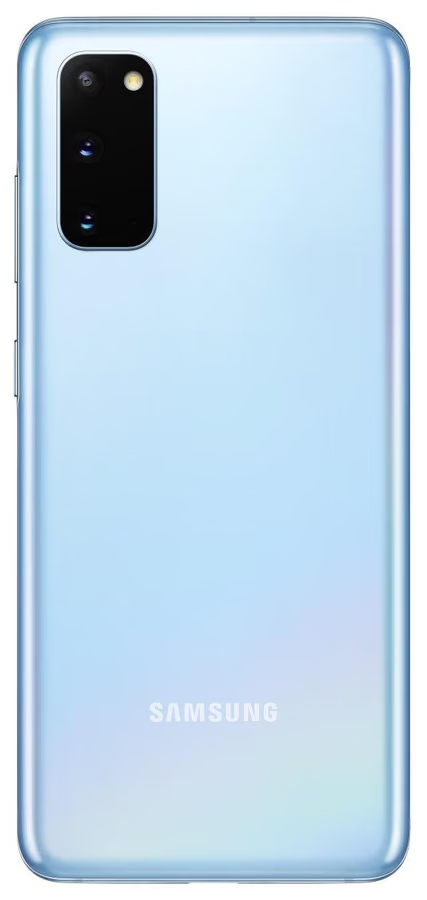
The smallest Galaxy S20 had the feature I would have noticed first
Samsung sold the US Galaxy S20 5G from March 6, 2020. The regular model cost $999.99 at launch, used a 6.2-inch screen and supported up to 120 Hz. Its two siblings were bigger and more expensive. The attraction of the regular S20 was the chance to get the faster screen and the main features of the generation in the smallest body. At purchase I would have let the screen comparison come before a decision about 5G availability. Samsung’s US Galaxy S20 launch and availability
Quick verdict
Retail release in the United States · Archive date
I would have picked the S20 for its size and higher refresh if the initial price was affordable and sub-6 coverage was enough.
Best for: Someone who values smooth scrolling and physical comfort with a flexible camera but has little reason for the Ultra's extra reach.
Main benefit: The high-refresh mode was immediately available on the smaller body, independent of the mobile network.
Biggest drawback: $999.99 was a high launch entry price. You had to select between the top display settings and check the kind of 5G on your carrier.
Reviewed version: Original widely available US Galaxy S20 5G with 128 GB and a 6.2-inch display. Carrier configurations can differ.
Compatibility: 120 Hz was available at FHD+ at launch. The original base US configuration used sub-6 5G. Check exact regional bands.
Review context: I evaluate the documented retail hardware and the software available in its release window. Regional variants and software changes are identified where they affect the verdict.
Scrolling a list is a better way to see the panel’s 120 Hz mode than looking at a still photo. Stop on a long list, make a few short movements and compare the ability to follow the text when it scrolls by. When testing it, I would have checked Samsung’s resolution and refresh settings. At launch the highest refresh was at FHD+ rather than the highest available QHD+ resolution. For an everyday phone I would have chosen the faster motion and spent longer comparing the battery. Someone looking at detailed stills and small typography could have made the other choice and understood exactly what their plan kept.
A compact body at a flagship price
The specification that sets the compact S20 apart in the family is the size of the screen relative to the bigger models. It is still useful to see how far your fingers reach across the width with a case and where the thumb rests when you take a quick photo. This generation had a small, central front camera cutout. In landscape, it can intersect with a part of a game or movie you normally look at. The practical test is opening something you already know, because your eyes already know where to look.
Related reading
Samsung rated the regular S20’s battery at 4,000 mAh typical. That figure gives some context for comparing the sizes. A usual evening can be much more informative than the difference in capacity on the spec sheet. A buyer who lived in a patchy 5G area and scrolled frequently on the higher refresh setting had two reasons to look at endurance during the hours away from an outlet. The 6.2-inch model still offered an attractive trade when it fit a jacket or bag more comfortably than a large phone.
The 64-megapixel zoom camera had a distinct job
The regular phone had a 12-megapixel wide, a 12-megapixel ultrawide and a 64-megapixel camera used for what Samsung marketed as Hybrid Optic Zoom. There was a reason to look closely at the results at intermediate zoom rather than importing expectations from the S20 Ultra’s dedicated folded telephoto. I would have aimed at a legible sign and a face under the same lighting, then decided how far to zoom without losing the character of the picture. Those subjects expose different kinds of processing and detail. A range that looks acceptable for a few lines of print could make a person’s features too hard.
The wide and ultrawide solve a lot of photos as a pair. For a cramped scene the ultrawide gives more room, with the familiar possibility of stretched shapes near the edge. For a casual photo of food, or a person across a table, the normal camera puts less work on software. I would have set up an easy shortcut to the view I reached for most and taken a few shots with moving subjects before paying attention to an upper zoom number.
The meaning of 5G varied by model and carrier
The general US base S20 at the initial launch supported sub-6 GHz 5G. The launch S20+ and S20 Ultra also supported mmWave in the US. Later carrier-specific versions should be identified by the model number. A buyer deciding in March 2020 had reason to check which network their particular phone could join and whether it covered their travel or work. A good demo beside a cell could have little to do with a regular commute of several miles. Local coverage, the phone’s bands and the plan all enter the same decision.
I would have asked which of my everyday uses needed 5G. Reading and basic messages work well on a decent LTE connection. Downloading a large file more quickly before moving outside a coverage area is more likely to change something you do. The immediacy of a smoother display belongs in the comparison because you can see it everywhere without waiting for a carrier deployment. The S20 made sense for that display even somewhere 5G provided only a modest change.
Related reading

Local storage and video favored a decision before the first trip
Samsung offered 8K recording as a new capability in the S20 line. The part to test was what you planned to do with that material afterward. A short, steady clip of something with plenty of detail can show the advantage of a higher resolution. A quick family video is usually intended for someone who wants to open it in a message. I would have recorded and shared both types before deciding which format to leave selected. Play the files on the display you actually use and time the steps needed to move them there.
The USB-C generation had already started by the time this phone arrived. Samsung kept storage expansion through microSD on the regular US model. Transporting a large clip required thinking about what could live on the card and which capture modes wrote to internal storage. A week of video can fill space more easily than a week’s ordinary photos. The highest resolution is attractive when copying and handling those clips is already part of your routine.
What I liked about keeping the alternatives manageable was being able to make a practical S20 comparison in a store. Put the scrolling setting you prefer on both S20 sizes, hold the cheaper one for a few minutes and spend some time on framing. For most people those checks tell more about the actual purchase than a line of camera resolutions or an ideal download test. People with a strong particular reason for a bigger model can then see what they give up in return for it.
My verdict on the Galaxy S20
I would have selected the regular S20 5G when the high refresh screen and size were the best fit. I would have priced the larger S20+ only if battery or specific network support made a clear difference. The S20 Ultra review considers the camera hardware and weight of the bigger model. I would have kept the straightforward choice in mind: the phone you can reliably grip, pay for and finish a day with has a better chance of making the feature useful.
What worked
The high-refresh mode was immediately available on the smaller body, independent of the mobile network.
The camera and local storage expansion supported a wider range of capture habits than its compact body suggests.
What bothered me
$999.99 was a high launch entry price. You had to select between the top display settings and check the kind of 5G on your carrier.
The hybrid camera gives a different long-distance result from the folded lens in the Ultra.
Who should not buy it
Someone who needs the Ultra's additional camera hardware, or who buys primarily for a carrier's particular mmWave coverage.
Alternatives I would consider
Galaxy S20 Ultra 5G. Its folded telephoto and screen offer a separate camera-led reason to carry a bigger phone. Read my Galaxy S20 Ultra 5G review.
Evidence and sources
The release date refers to general availability in the named market. The archive filing is ten days later. Feature assessments are editorial judgments based on the documented retail model.
Features, compatibility and rated figures from the maker are manufacturer information. My opinions are identified in the review.
Conclusion
Try 120 Hz with the resolution you intend to use and decide whether a larger battery or a different 5G variant changes the purchase.
One email a week with practical Mac workflows, useful comparisons and honest tech recommendations.