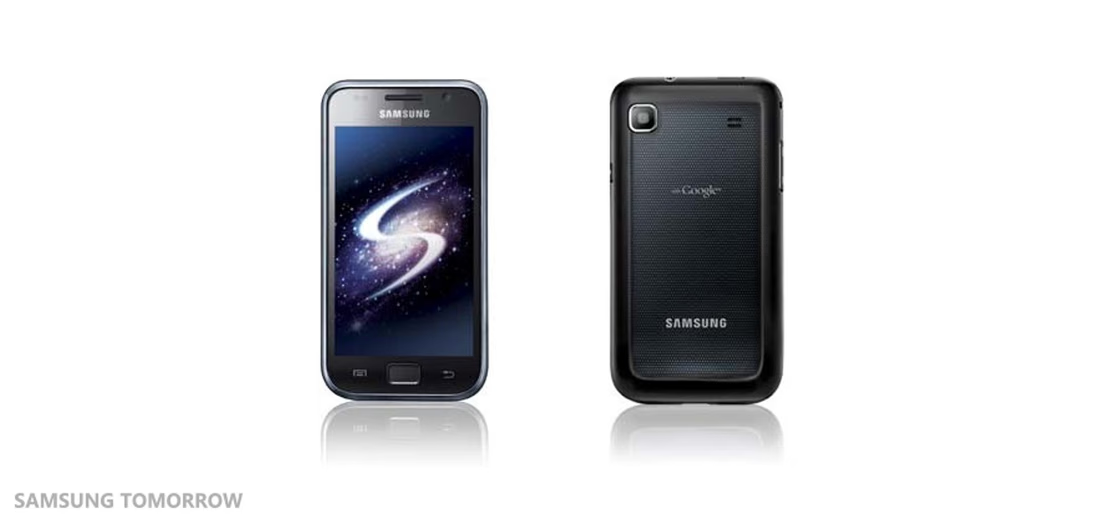
The original Galaxy S gave Samsung a reason to build the front of a phone around the display. A four-inch screen was a strong feature in 2010, and this one was Super AMOLED. The phone was slim enough to remain an ordinary item to carry. Those qualities mattered together. A large screen that made a device much more awkward would have changed the buyers it could appeal to. A thin phone with a forgettable screen would have been much less memorable.
Quick verdict
Retail release in the first global rollout · Archive date
The original Galaxy S made a persuasive case for a thin, screen-first Android phone in 2010.
Best for: A period buyer who valued video, interchangeable storage and choice over the shape of the home screen.
Main benefit: A 4-inch Super AMOLED panel made the display the signature of the phone.
Biggest drawback: Carrier variants and Android update schedules complicated comparisons within the same family.
Reviewed version: The original international 2010 Galaxy S, rather than a separately named carrier model.
Compatibility: Features, radio bands, buttons and software delivery varied across carrier editions. Use the model code when ordering period parts.
Review context: The discussion considers the hardware and software as offered around the documented retail date.
This retrospective covers the original international device from Samsung’s first rollout, which the company dates to 4 June 2010. Carrier-specific phones within the early Galaxy S family could differ. I am interested in the device that became the starting point for the S series, with the features Samsung documents for that model. Samsung’s five-year Galaxy S history
The panel mattered every time the phone woke up
By choosing Super AMOLED, Samsung made the panel a part of the product identity. A lit pixel makes its own light. A black region can therefore stay dark without a backlight shining through the panel behind it. That can be attractive on a photo or a video with a dark scene. A black strip beside a picture can look more like a boundary around the content. In a bright room, ambient reflections still have a say in whether the display looks as dark as the picture suggests.
Related reading
A four-inch diagonal gave the usual phone tasks appreciably more room. A landscape video drew a bigger rectangle. A full webpage had more space for the part you wanted to zoom into. A keyboard could still leave somewhere for the message to appear. More room mattered across a series of small actions each day. Review photos of the display mainly conveyed colour and size. In a store I would have checked a page of plain text as well, because readable type is a better test of a routine than a high-contrast wallpaper.
There was no need to reach for later screen labels to explain the case. This panel had its own resolution and early OLED characteristics. The placement of coloured subpixels and the resolution could affect fine text more than they affected a film. A useful comparison at the time would have been the same article and the same photograph on two devices, keeping brightness and reading distance sensible. That would tell you which differences you would encounter outside a demo.
Thin construction and expandable storage supported different habits
The original Galaxy S put the screen into a body that did not have to be a large object in every other dimension. A thin enclosure can help a phone slide into a pocket and feel less bulky alongside keys or a wallet. Thickness still changes once you add a protective case. One benefit of starting slim is having some room to choose protection without making the whole object seem unexpectedly large.
Part of the reason to shortlist this model was control over local media. A compatible microSD card could hold downloaded music or video away from a data connection. Local storage was valuable for anyone who wanted entertainment in places where streaming was a bad bet. Making the card removable also changed the work of moving a collection. A reader who already understood how to copy folders to another device had a familiar way to prepare the phone before leaving.
I would still separate internal storage from the card when comparing listings. You need enough room for the things that expect to live in the phone itself. A removable card is attractive for a portable music library, but every application and version of Android has its own rules about where it writes data. Claims that combine all storage into one big number can make the purchase seem simpler than the work of managing it.
Related reading

Android gave Samsung more to build than a phone case
The Galaxy S was part of an Android world in which the home screen could carry widgets and shortcuts arranged for the owner. Consider a weather panel you can read at a glance and a music control in a known position beside it. Making choices like those can reduce how often you open several applications for one piece of information. A person who likes a simple home screen can decide to put very little there. The range of setups was part of Android’s appeal.
Samsung also added its own decisions about navigation and the appearance of the interface. That helped distinguish the phone in a shop where several handsets ran Android. It made the exact software experience harder to infer from the Android name alone. A buyer could sensibly compare the supplied keyboard, dialler, access to notifications and carrier additions even if both phones opened the same third-party application successfully.
Variation mattered again when you looked for an update. A carrier edition’s release date or software behaviour could differ from the international model. Samsung’s history is a sound way to understand what it was trying to build. I would use an exact model number and a regional record before relying on a claim about the phone I was going to buy. Today that identity is also how a collector avoids ordering the wrong replacement battery, housing or display.
The camera and performance served the everyday phone
Samsung documented a five-megapixel camera and a 1 GHz processor in the international Galaxy S. The practical appeal was having a device that could capture and show media on a good-sized screen. A bigger view made it easier to judge a composition or see whether a picture was worth keeping. If taking photographs in very different light was the main reason to upgrade, I would have looked at results in those scenes rather than inferring the answer from the display or the pixel count. Samsung’s model-by-model retrospective
Performance makes the same sense in terms of actions. People expected a phone to launch an application, move through a web page and return to their music without making the whole process feel fragile. A single launch-era chip is now mainly of historical interest. At the time the question was whether the display, operating system and processor worked together convincingly. If you were choosing one for a demanding game, testing the exact title on the available model would matter more than the name of the phone.
The carrier name could describe different hardware
Samsung was rolling out a family across many operators. If a friend called their handset a Galaxy S, my next question would have been what it said on the label. A carrier could sell a handset that shared much of the design and software, while bringing a different set of buttons, radio capabilities or even a different physical shape to market. Treating a review of an international phone as a guarantee about all of them creates avoidable mistakes. The distinction becomes sharper once you are shopping for a surviving unit. A photograph can establish the presence of a distinctive button or an extra lens and help narrow the search. Firmware and replacement parts should still be matched against the code. The individual phone belongs in the historical record because variation is part of the way Samsung brought its flagship to market.
Related reading

Would I have chosen it in 2010?
I would have shortlisted the international Galaxy S if I spent time watching video, valued configurable Android software or already managed a collection of local media. The screen earns much of that recommendation because it helped with real work as well as looking good on a shelf. Its thin format helped keep those advantages available on a phone you could still carry like the one it replaced.
The later Galaxy Note made a more explicit bet on width and working with a pen. The first S is interesting for a more general reason. Samsung had made a screen-first Android device approachable before every flagship used the formula. I would buy surviving hardware for that place in the Galaxy review timeline, after checking the exact variant, rather than judging it as a current connected phone. The worthwhile part of handling one now is seeing how different its display and body looked at the moment they were chosen.
What worked
A 4-inch Super AMOLED panel made the display the signature of the phone.
What bothered me
Carrier variants and Android update schedules complicated comparisons within the same family.
Who should not buy it
Buyers looking for current software and warranty support.
Alternatives I would consider
Original Galaxy Note. A bigger display and an included pen changed the kind of work the phone could do. Read my Original Galaxy Note review.
Evidence and sources
Retail timing and specifications are tied to the market stated above. The author’s verdict evaluates the device in its launch context.
Features, compatibility and rated figures from the maker are manufacturer information. My opinions are identified in the review.
Conclusion
The international model makes sense as an exhibit of Samsung’s early Android design. Its software and networks are a separate issue today.
One email a week with practical Mac workflows, useful comparisons and honest tech recommendations.