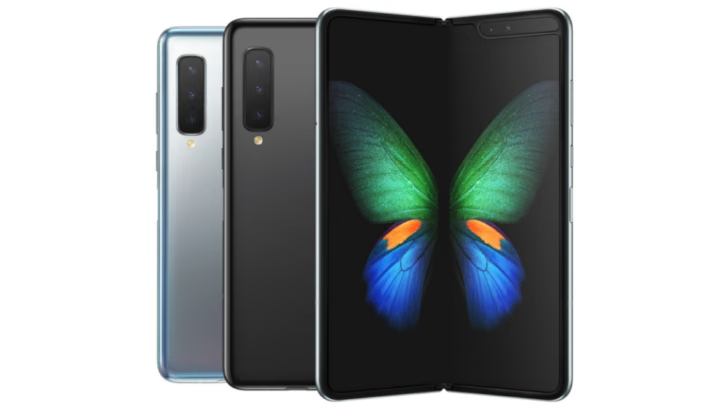
The original Galaxy Fold asked the buyer to spend part of the day on two different screens. Closed, it could do the quick tasks expected of a phone. Open, its 7.3-inch panel gave you a small tablet for a document or several panes of information. That was an unusually concrete reason to accept a hinge. I would have wanted to know how many times in a real week I had a job that deserved the inside screen. A quick demonstration in a store makes almost any big display easy to justify.
Quick verdict
Retail release in South Korea · Archive date
The Fold made sense to early buyers who had frequent work that benefited from a tablet-shaped screen in a smaller bag.
Best for: A reader or multitasker who often needed a small tablet outside the home.
Main benefit: The inside display made documents and adjacent apps useful on a device you could fold closed.
Biggest drawback: A narrow cover screen and first-generation interior construction asked more of the owner.
Reviewed version: The original Galaxy Fold in its revised September 2019 release form. Samsung offered 5G in selected markets.
Compatibility: The internal display, app continuity and cellular options should be understood in their 2019 version and regional context.
Review context: The discussion considers the hardware and software as offered around the documented retail date.
This review concerns the revised retail Fold, which Samsung released in South Korea on 6 September 2019 before rolling it out to other markets. The company had postponed the earlier planned launch. That distinction affects both the hardware under review and its date in a historical comparison. Samsung’s September release · Samsung’s April postponement
The inside screen gave a phone a new job
The Fold opened like a book. Its wider surface made it easier to see material that suffers when it is stacked in a narrow column. A map with its route description beside it makes a good example. You can keep your place on the map while checking the next leg. A message introduced beside an open document can put the question and the thing it refers to within view. The benefit is a reduction in place-finding, small switches and short stretches of memory.
Related reading
That benefit depended on the software. A reader using an application that filled the width intelligently could get considerably more out of the display than somebody opening a view designed to remain a narrow phone screen. Two adjacent applications could also spend much of the area repeating controls or leaving blank space. A buyer should have tried the same two real tasks on the Fold and a normal phone. If one task was quicker only because it could be spread out, the shape already had a reason to exist.
The diagonal figure of 7.3 inches does less to explain this than the job or the shape of the material. Watching a wide video on a near-square surface leaves space around the frame. A map or two columns of text can use a larger proportion of the panel. The best reason to open the phone is a task that genuinely benefits from more room in the second dimension. On the strength of that use case, the Fold had an identity at launch that extended beyond doing the ordinary phone jobs on a spectacular screen.
The small cover screen still handled the interruptions
Most people check a phone frequently for things that take seconds. Samsung’s 4.6-inch cover display gave those checks somewhere to happen with the phone folded. It was narrow by the standards of a conventional big handset. That made a sharp distinction between finding a notification, which could be a perfectly good use, and typing a longer reply, which often made the larger screen more appealing.
A cover screen and an inside screen divide the work differently depending on where the phone is used. At a desk, you can choose the large surface without much thought. Carrying shopping, standing on a train or making a short call gives the smaller screen a better argument. I would want to try stepping from a quick lookup to a detailed result without having to start the operation again. Samsung described continuity for compatible applications. Support for the exact application matters more than the name of the feature.
I see the first Fold as a particularly useful reminder to check an object in its least impressive mode. The open Fold showed the attraction. How satisfactorily it could be used folded determined how many compromises came with carrying the attraction every day. A buyer with frequent quick tasks could reasonably prefer a slab plus a separate tablet even if they loved the open Fold in a shop.
Related reading

The April delay is part of the review
Samsung postponed the first planned release after early review units exposed display problems. The September retail launch followed changes. Samsung described extending the protective layer under the bezel, adding protection at hinge ends and reducing the gap between the hinge and body. Details that make the coverage more robust do not mean a flexible display can be treated like the fixed pane of a conventional phone. The official account gives a reader a basis for distinguishing the revised device from the earlier hardware. Samsung’s description of its retail engineering changes
For the launch buyer, the practical question was whether the device suited the places where it would be opened. A phone carried to work, used on public transport or routinely moved between bags encounters a variety of surfaces and particles. A mechanism introduces additional places to inspect and protect. If a buyer wanted a device they could treat casually, that demand should have been part of the first conversation about the price and warranty.
It is worth keeping the scope of a reliability claim precise. Samsung changed specific components before customers could buy the revised design. That supports a statement about the engineering response. It is a different kind of evidence from long-term failure rates for all retail units. I would inspect condition today and try folding the device slowly only after checking the seller’s guidance. A used unit with damage around that area is an especially different object from the one described in the product announcement.
Compare where each half of the day happens
The first Fold made a different proposition to a tablet even when the inner displays could show the same application. You can leave a tablet open on a desk for a while and glance across at it again. A phone goes back into a pocket or bag when you need your hands for something else. That difference is why a believable assessment needs to include reopening a real task. For reading, I would have opened a long page, gone to something else on the smaller screen and returned to the original page to see where the application left me. For work, I would have tried a conversation attached to a particular document. Finding the same part again is a small exercise that happens often. The device suggests a better workflow only if moving between its shapes preserves enough of the work to make opening worthwhile.
An expensive way to carry less
The Fold made the most sense when it displaced something, or made a bigger view useful in places where it was rarely practical to bring a tablet. I would work that out with a task rather than a wish list. Take a regular document, open a message or map alongside it and ask whether the two could be used in the actual situation where you encounter them. If they mostly get used together at a desk anyway, the space saved in a bag may mean very little.
Related reading

It still had the other costs of a new flagship. A fold contributes weight and thickness in the closed shape. Buying a period model means identifying the regional version, since Samsung sold a 5G option in selected markets. These details can be significant without displacing the original attraction. The concept was most convincing when the quality of information you could see once open mattered more than keeping the most convenient shape for ordinary phone work.
My verdict is favourable as a first product in a genuinely distinct form. The revised Fold offered a tablet-sized opportunity within reach on days you might otherwise leave your tablet behind. I would have chosen it for a purpose I could name and tested that purpose with my own software before paying. If I mainly wanted less phone in a pocket, I would have waited for the Galaxy Z Flip. The Galaxy review timeline keeps the two approaches beside each other because they answer different daily problems.
What worked
The inside display made documents and adjacent apps useful on a device you could fold closed.
What bothered me
A narrow cover screen and first-generation interior construction asked more of the owner.
Who should not buy it
Buyers looking for current software and warranty support.
Alternatives I would consider
Original Galaxy Z Flip. The clamshell uses folding to shorten a regular phone instead of enlarging the open workspace. Read my Original Galaxy Z Flip review.
Evidence and sources
Retail timing and specifications are tied to the market stated above. The author’s verdict evaluates the device in its launch context.
Samsung’s retail rollout record
Samsung hardware and software documentation
Features, compatibility and rated figures from the maker are manufacturer information. My opinions are identified in the review.
Conclusion
The revised retail Fold is the relevant collector piece for understanding Samsung’s first book-style design.
One email a week with practical Mac workflows, useful comparisons and honest tech recommendations.