I like a memory card that fits a familiar camera without asking the owner to pay for capabilities the camera cannot use. The Lexar Professional 633x 64GB interests me in that role: a full-size UHS-I SDXC card for an appropriate, clearly defined recording job. I would approach this older listing with particular attention to the exact label and host instructions.
Quick verdict
I would consider it for a modest compatible recording job only after the exact supplied label meets the host requirements.
Best for: A known full-size SDXC host whose actual recording mode matches the selected card.
Main benefit: The 64GB full-size UHS-I arrangement can meet a defined older-camera role without paying for unused capabilities.
Biggest drawback: The listing warns of label variation, and other capacities or family photographs cannot establish this card's exact recording class.
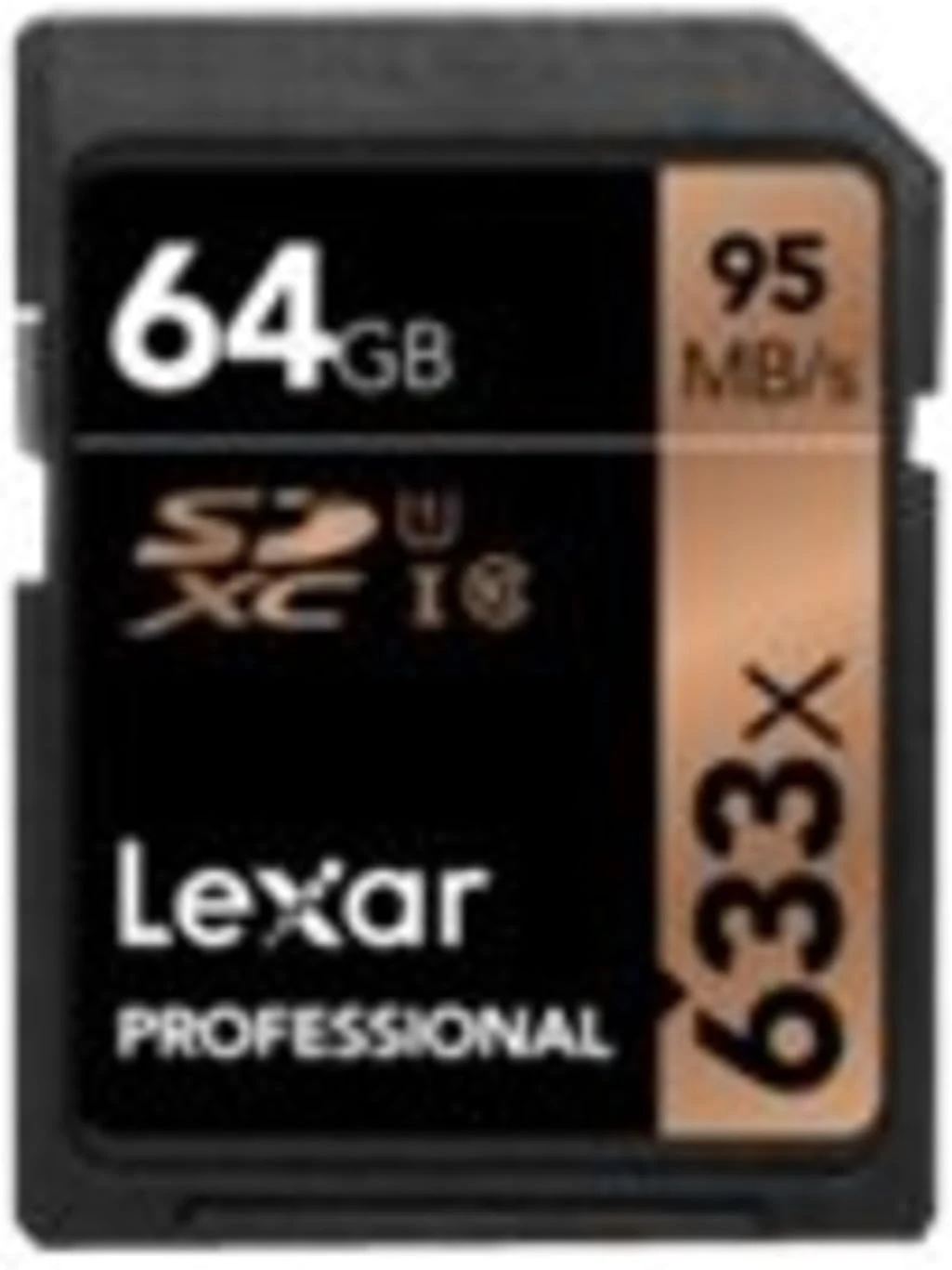
Lexar Professional 633x 64GB SDXC UHS-I, LSD64GCB1NL633, older 95MB/s selected offer
Amazon US · US
Check price and availability: Lexar Professional 633x 64GB SDXC UHS-I, LSD64GCB1NL633, older 95MB/s selected offer at Amazon USAffiliate link. As an Amazon Associate I earn from qualifying purchases.
Reviewed version: Lexar Professional 633x 64GB SDXC UHS-I, LSD64GCB1NL633, older 95MB/s selected offer
Compatibility: Full-size 64GB SDXC support and the exact speed class required by the host. Do not borrow a U3/V30 claim from another capacity or revision.
Review context: I compare the selected listing with Lexar archived family and part-number documents; no recording or transfer benchmark is claimed.
The selected offer identifies LSD64GCB1NL633 and a read claim up to 95MB/s. It also warns that the product label may vary. That makes careful model checking more useful than assuming every card described as 633x has identical class markings, packaging or capabilities.
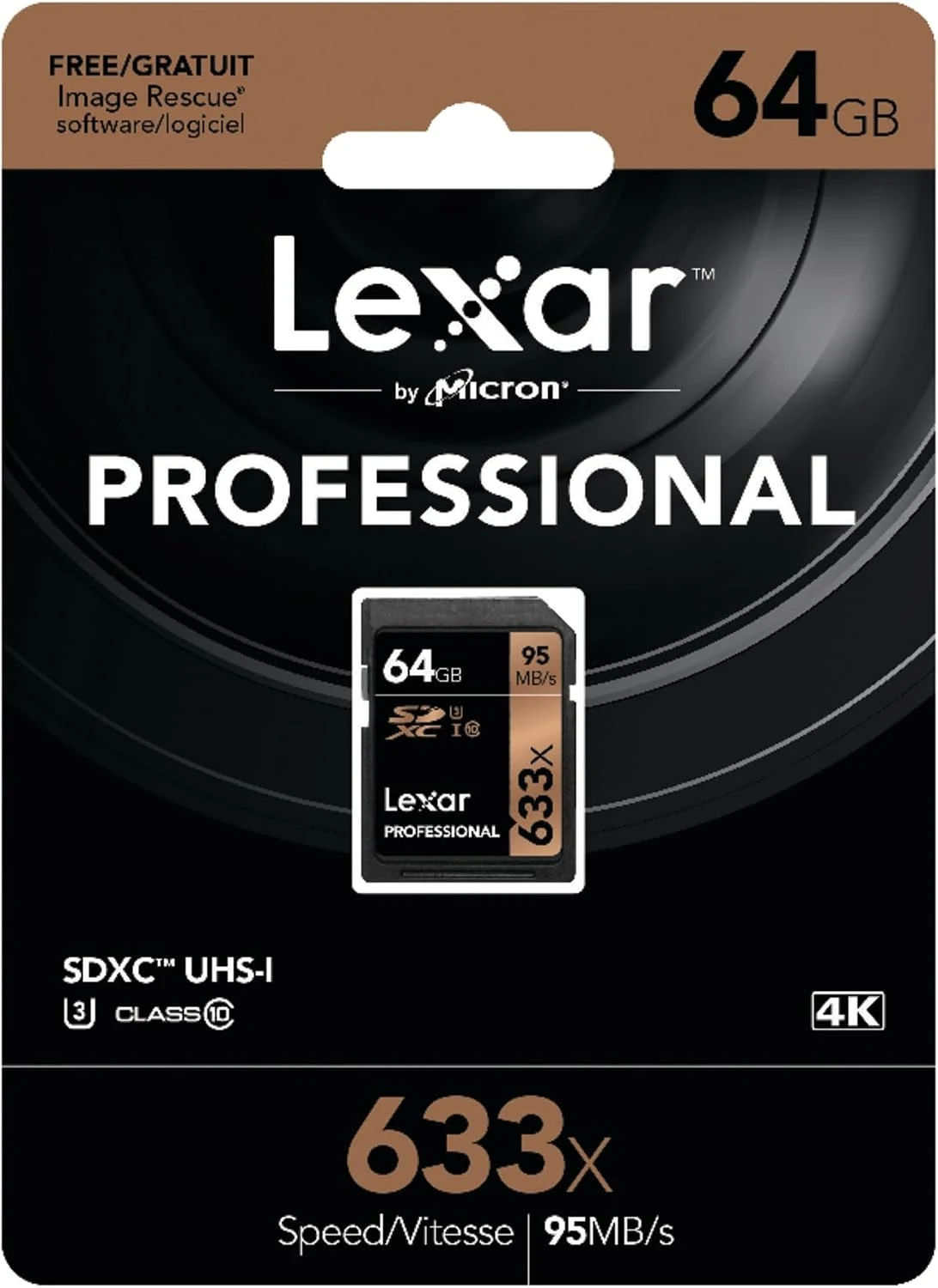
An older family needs an exact identity
Lexar’s archived family product sheet covers several capacities and explains that class markings vary across the family. I would not transfer a badge from a different capacity to the selected 64GB offer simply because the family name matches.
Related reading
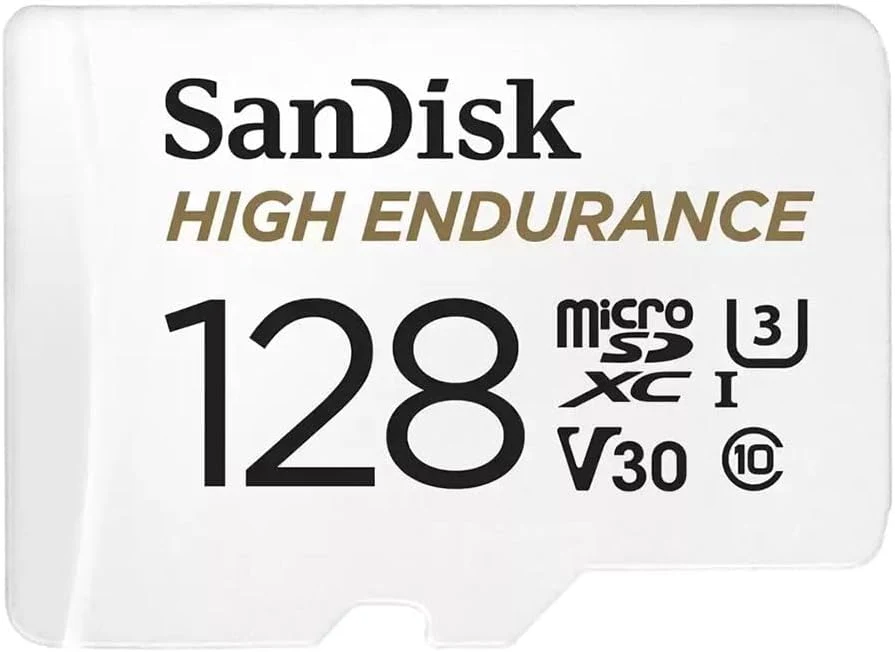
The useful starting point is the exact card received and the documented device requirement. I would choose a seller with clear product information and a return arrangement, then confirm the label before relying on a demanding mode. An older familiar listing is not a reason to stop checking what is actually supplied.
That is especially important when comparing a photograph with a title that has been updated over time. I would keep the requested 64GB capacity separate from larger family images. A product page can show a range without making every illustrated card the item in the selected offer.
Read speed is a copying specification
The 95MB/s figure is a manufacturer maximum for reading under the stated conditions. I would not describe it as a write result or a measurement from this review. It is most relevant to the process of moving saved material to another suitable device.
The reader and computer connection remain part of that process. I would check them before expecting the headline rate, especially when an older reader is already on the desk. A new card cannot make a slower host interface disappear from the workflow.
For me, a useful comparison is the whole copying task. File sizes, source organisation and the destination drive can all matter. I would rather have an understood routine with reliable copies than choose between two cards only because one theoretical transfer number looks larger.
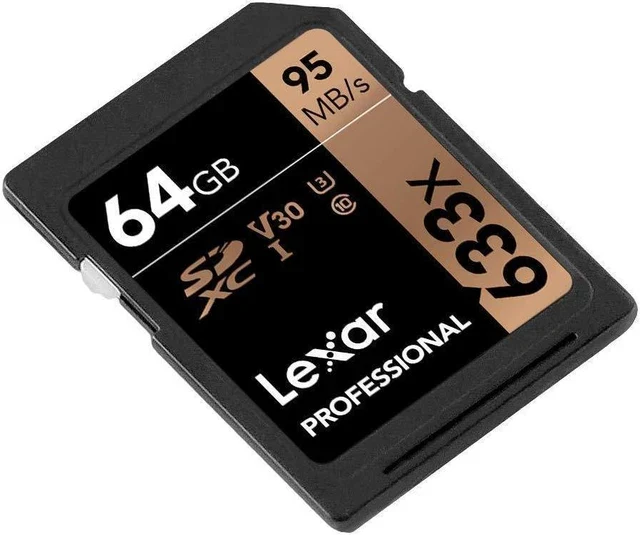
Recording needs the right class
The SD Association’s guidance distinguishes recording classes from peak transfer descriptions. I would use the class required by the exact camera mode and check the selected card’s marking, rather than assume a 4K phrase in family marketing settles the question.
Two camera modes with the same image dimensions can have different storage requirements. I would read the camera manual and any supported-card list before choosing this offer for video. The word Professional on a label does not replace that compatibility check.
Related reading
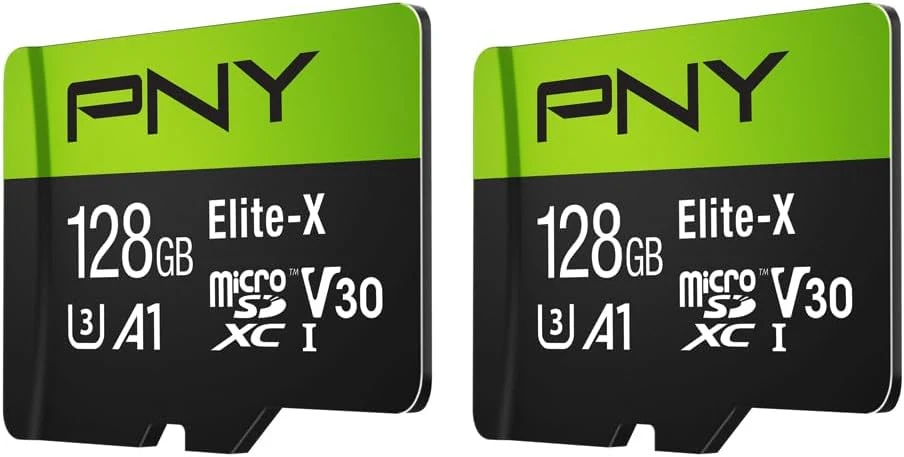
When a device explicitly requires a higher class, I would choose a suitable card carrying it. The Lexar 1667x 128GB is a different direction for a compatible UHS-II/V60 workflow. I would compare the complete requirements rather than treat one product family as an automatic upgrade for every host.
Sixty-four gigabytes can still have a clear role
I would choose capacity according to the planned session and the actual file settings. A smaller card can make sense when material is copied regularly and a camera’s needs are modest. I would not invent a universal number of photographs or recording hours from capacity alone.
Several cards can also support a clear ready-and-used arrangement. I would keep them in an appropriate case and distinguish the card waiting to be copied from the one ready to record. The benefit comes from organisation rather than simply carrying more small pieces of plastic.
For a long session where interruption is undesirable, a larger compatible card may be the better purchase. I would choose that directly rather than assume swapping cards is harmless in every situation. The right capacity serves the intended work, not an abstract preference for either the smallest or largest number.
Compatibility includes the card format
This is a full-size SDXC card, not microSD with an adapter. I like that straightforward physical arrangement for a camera that already uses full-size SD. I would still check SDXC and capacity support, especially with older equipment.
Formatting should follow the host instructions. I would confirm that the camera can record and play back ordinary material before an important session. That is a recommended preparation step, not a personal test result attached to this review.
I would also keep warranty and software claims current. Old packaging may mention a recovery tool or terms from another period. I would read the presently applicable support information rather than assume every historic bonus remains available indefinitely.
Related reading
My buying view
I would consider this 64GB 633x offer for a compatible, modest recording role when the exact supplied label meets the host requirements. I like the possibility of buying appropriate storage without paying for an unused bus or capacity. The label variation is the reason my recommendation remains conditional.
I would choose a clearly specified newer card when the recording class or exact supplied revision is uncertain. The value is in a correct match and a file-copying routine, not in trusting an old family name to answer every question.
Product images: the selected 64GB product material and explicitly credited retailer documentation. They are not personal benchmarks or recordings.
What worked
The 64GB full-size UHS-I arrangement can meet a defined older-camera role without paying for unused capabilities.
What bothered me
The listing warns of label variation, and other capacities or family photographs cannot establish this card's exact recording class.
Who should not buy it
I would choose another card when a demanding recording mode needs a class that this exact offer does not clearly establish.
Alternatives I would consider
Lexar 1667x 128GB. I would compare it for a compatible UHS-II/V60 workflow with clearly documented requirements. Read my Lexar 1667x 128GB review.
A clearly specified current SDXC card. I would choose it when the exact recording class of this older offer remains uncertain.
Evidence and sources
Specifications come from the cited product and archived manufacturer documents. Images show64GB card label variations, including a Newegg exact-SKU alternate label; they do not guarantee which label the current seller supplies or show personal testing.
Selected Lexar64GB633x offer and images
Lexar archived633x family specifications
Lexar archived exact part-number setup sheet
Features, compatibility and rated figures from the maker are manufacturer information. My opinions are identified in the review.
Conclusion
Worth considering when the supplied revision is clear; a clearly specified newer card is preferable when the class is uncertain.
Lexar Professional 633x 64GB SDXC UHS-I, LSD64GCB1NL633, older 95MB/s selected offer
Amazon US · US
Check price and availability: Lexar Professional 633x 64GB SDXC UHS-I, LSD64GCB1NL633, older 95MB/s selected offer at Amazon USAffiliate link. As an Amazon Associate I earn from qualifying purchases.
One email a week with practical Mac workflows, useful comparisons and honest tech recommendations.