I like a storage upgrade with a clear reason behind it. The Lexar Professional 1667x 128GB is interesting when a camera or copying workflow can use its UHS-II design and V60 class. I would choose it because those capabilities match the job, rather than assume a larger speed number automatically improves every camera.
Quick verdict
I would shortlist it when the camera and copying workflow can use its selected UHS-II/V60 role.
Best for: A compatible recording setup with the correct class requirement and a suitable reader.
Main benefit: The specified V60 class and UHS-II interface provide a clear capability to match with the host and copying task.
Biggest drawback: A UHS-I-only reader or host limits the arrangement; the peak read claim is not a continuous writing benchmark.
Lexar Professional 1667x 128GB SDXC UHS-II U3/V60, LSD128CB1667
Amazon US · US
Check price and availability: Lexar Professional 1667x 128GB SDXC UHS-II U3/V60, LSD128CB1667 at Amazon USAffiliate link. As an Amazon Associate I earn from qualifying purchases.
Reviewed version: Lexar Professional 1667x 128GB SDXC UHS-II U3/V60, LSD128CB1667
Compatibility: Full-size 128GB SDXC support, the required UHS-II/V60 recording arrangement and a suitable reader; backward UHS-I operation does not provide the same interface benefit.
Review context: I assess Lexar's selected specifications and SD Association class guidance; no transfer, recording or endurance measurement is claimed.
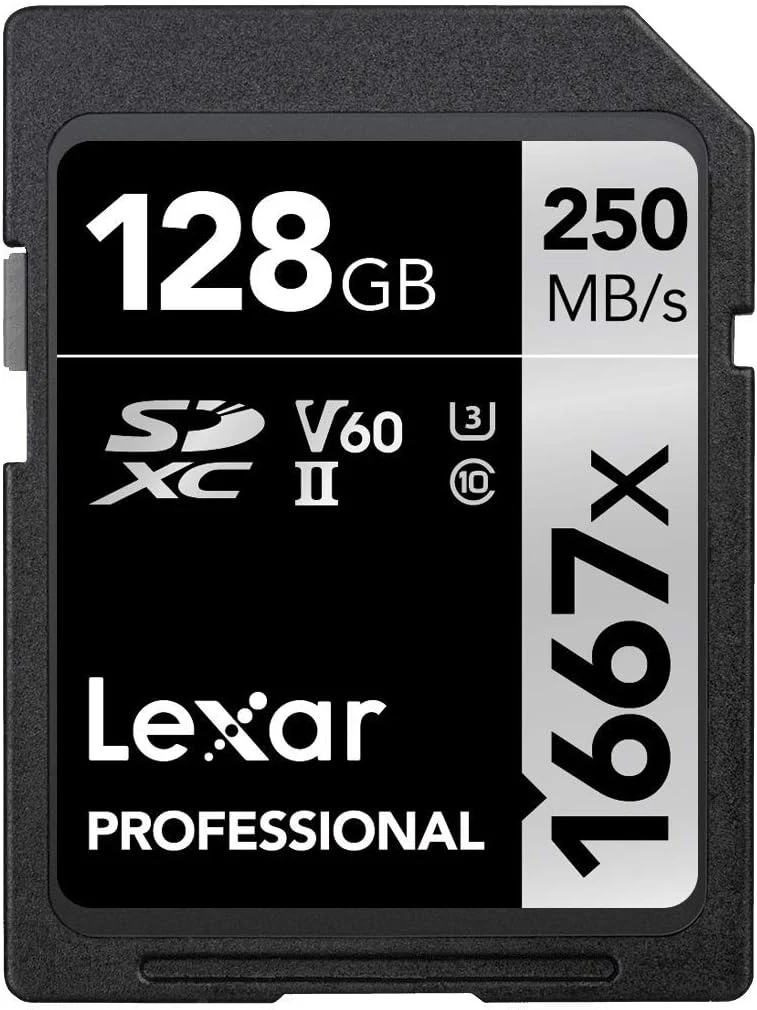
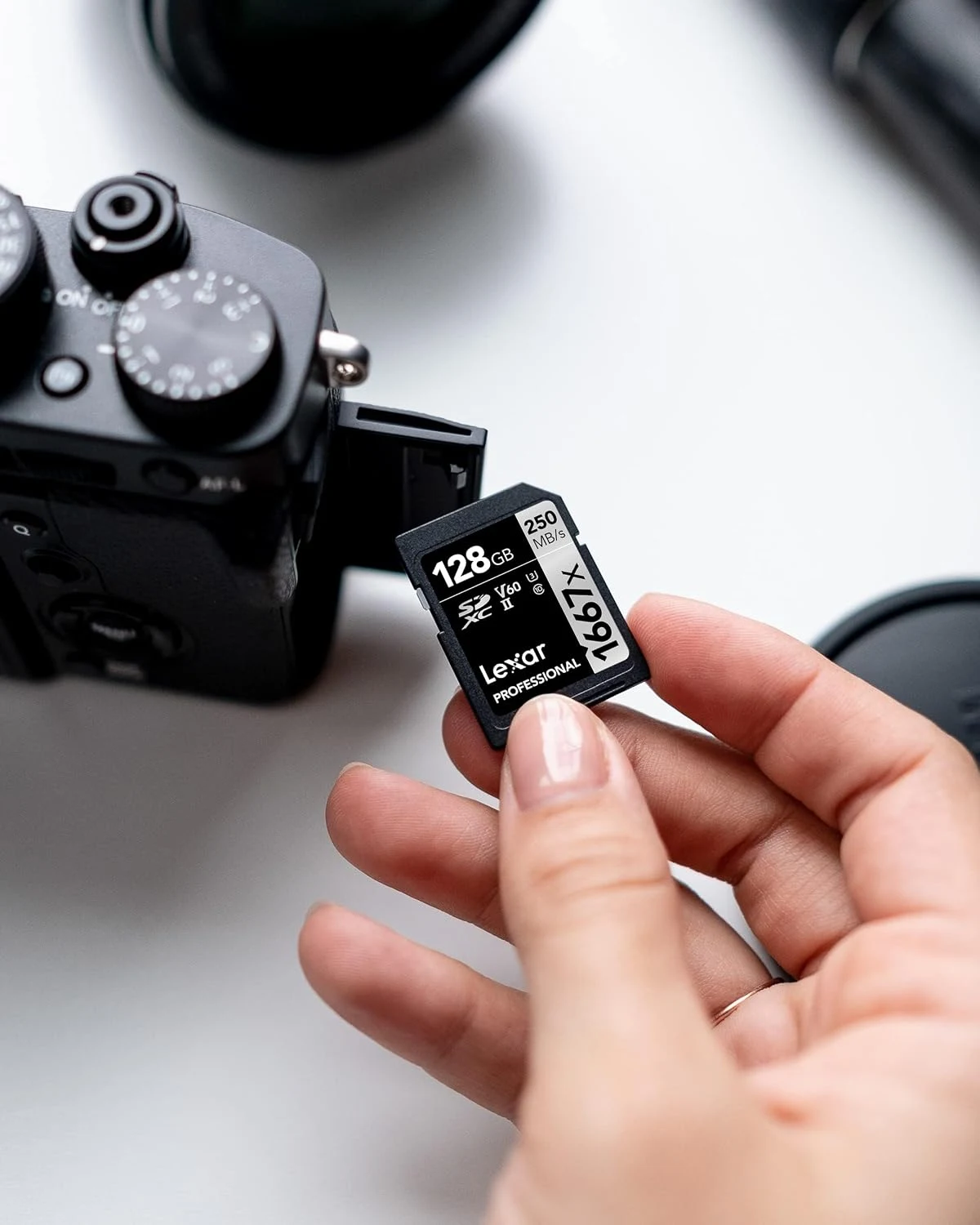
The selected offer is the 128GB SDXC card, model LSD128CB1667, advertised up to 250MB/s reading. It is a full-size SD card, not a microSD card with an adapter. I would keep that exact capacity and interface visible while comparing packages from the wider Lexar family.
Start with the recording requirement
The Lexar product information describes the family’s UHS-II role. I would compare the selected card with the exact camera instructions and recording mode. The useful requirement is the one the host actually names, rather than a broad description such as professional or 4K.
Related reading
The V60 label provides a defined video speed class to check. I would not assume that every mode with the same image dimensions has the same storage needs. Bit rate and the host’s supported-card guidance remain more useful than choosing by resolution wording alone.
If the camera calls for a different class or particular validated media, I would follow that requirement. A good card can still be the wrong card for a demanding mode. The value of reading the instructions before purchase is avoiding an upgrade that does not solve the actual recording problem.
The reader needs to support the useful interface
I like the possibility of a quicker transfer after a session, but the card is only one part of that process. A suitable UHS-II reader and host connection are needed to make use of the relevant interface. I would check the reader already on the desk before expecting a card change to improve copying.
Lexar describes backward compatibility with UHS-I operation. That can be convenient, but the older interface limits the arrangement. I would treat it as compatibility rather than a promise of the UHS-II headline in every slot.
This is where the purchase can become more than the price of one card. I would include a suitable reader if the copying improvement is the main reason to buy. If the existing device cannot benefit and the recording class is already met by another card, a simpler option may be the more sensible use of money.
Read speed and recording class are different things
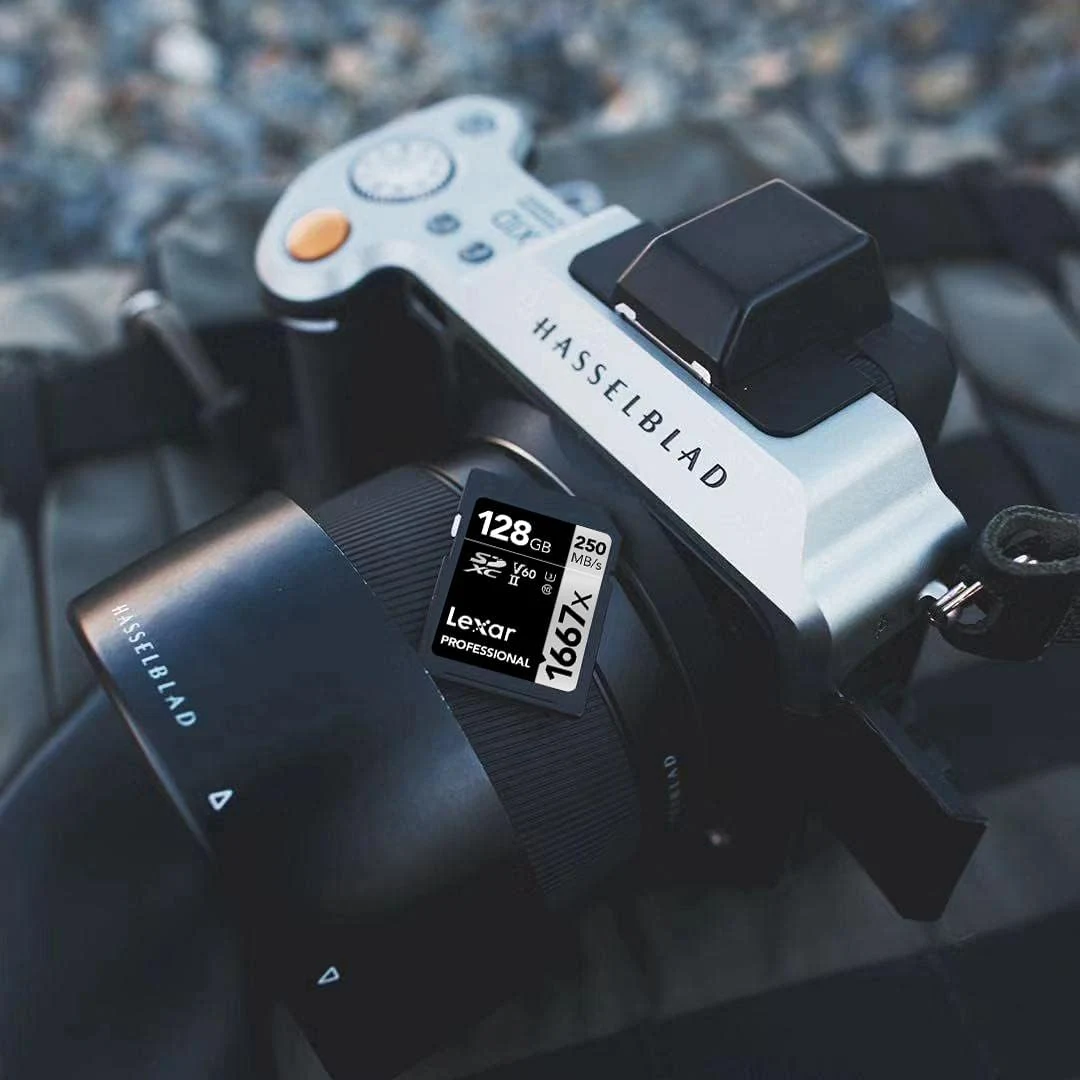
The 250MB/s read figure is a manufacturer maximum under its conditions, not a benchmark from this review. I would not present it as a continuous writing result. Its role is different from the card’s minimum recording class.
The SD Association’s class explanation makes that distinction useful when comparing labels. I would match the required class and interface first, then consider the copying benefit. That order keeps the specification attached to the task it describes.
Related reading
I would also compare the exact capacity rather than transfer figures from another size or revision. A product family can cover different media, labels and claims. The selected offer should be clear enough that the camera owner knows what is being ordered before the card arrives.
Capacity needs a session plan
One 128GB card can be a practical middle ground when the expected session fits and material is copied regularly. I would estimate the requirement from the actual recording settings, not promise a fixed number of hours or photographs for every camera.
A larger card can reduce changes, while several cards can create a useful separation between sessions. Neither arrangement is automatically better. I would choose according to the point at which changing media is convenient and the way the material will be copied afterwards.
I would label the card case positions or keep another clear distinction between ready and used media. Identical cards are easy to confuse. The useful benefit of removable storage comes partly from a routine that prevents an important card being formatted just because it looks like the spare.
A faster card still needs ordinary care
I would format according to the camera instructions and confirm ordinary recording and playback before an important session. That is a recommended preparation step, not a result claimed for this review. The goal is to establish that the intended mode and device arrangement work together.
Afterwards, I would copy important files to another suitable location and check the copy before clearing the card. A fast transfer is helpful, but the existence of a progress bar does not decide whether the material is organised or safely kept. The storage routine should remain understandable when the next session begins.
The manufacturer’s warranty and protection descriptions also have conditions. I would read the terms applicable to the exact region and seller rather than turn them into an unconditional promise. No card should become the only permanent home for meaningful material simply because its label looks professional.
Related reading
My alternatives and buying view
The Lexar 633x 64GB is a different direction for a modest compatible UHS-I task, with its exact label checked. I would choose a suitable V90 card when the camera explicitly requires that class. The useful comparison follows the actual recording mode rather than a general idea of buying the fastest product.
I would shortlist the 1667x 128GB for a compatible UHS-II/V60 workflow with a suitable reader. I like the focused upgrade when both recording and copying can benefit. I would buy the complete arrangement, with capacity and file handling planned, rather than expect the card’s headline speed to solve every storage task.
Product images: Lexar’s selected 128GB product gallery and camera photographs. They are not personal recording, transfer or endurance-test results.
What worked
The specified V60 class and UHS-II interface provide a clear capability to match with the host and copying task.
What bothered me
A UHS-I-only reader or host limits the arrangement; the peak read claim is not a continuous writing benchmark.
Who should not buy it
I would choose another card when the host requires a different validated medium or speed class.
Alternatives I would consider
Lexar 633x 64GB. I would compare it for a modest compatible UHS-I role, with the exact supplied class verified. Read my Lexar 633x 64GB review.
A suitable V90 card. I would choose it when the camera explicitly requires that recording class.
Evidence and sources
Product details come from the cited sources. Images come from the selected product gallery and any explicitly credited manufacturer material. They are not personal test photographs or measurements.
Features, compatibility and rated figures from the maker are manufacturer information. My opinions are identified in the review.
Conclusion
Worth considering for a complete supported workflow, including any reader upgrade needed to benefit.
Lexar Professional 1667x 128GB SDXC UHS-II U3/V60, LSD128CB1667
Amazon US · US
Check price and availability: Lexar Professional 1667x 128GB SDXC UHS-II U3/V60, LSD128CB1667 at Amazon USAffiliate link. As an Amazon Associate I earn from qualifying purchases.
One email a week with practical Mac workflows, useful comparisons and honest tech recommendations.