I like the idea behind the Lexar Professional 2000x: a full-size SD card paired with a workflow that can make use of UHS-II. My buying decision is more careful here, because a familiar family name can hide different generations. This review concerns the selected legacy 64GB offer, rather than automatically applying the specifications of today’s Gold card.
Quick verdict
I would consider it only when the actual revision, required recording class and included contents are confirmed.
Best for: A compatible camera owner who has a clear reason to choose this exact legacy 64GB card and understands the reader arrangement.
Main benefit: The UHS-II card-and-reader direction gives the purchase a focused recording and copying role when the equipment can use it.
Biggest drawback: Different historical package labels appear under the family name; I would not assign a later V90 mark, current Gold writing figure or old software bonus to every unit.
Legacy Lexar Professional 2000x 64GB SDXC UHS-II, LSD64GCBNA2000R / LSD64GCRBNA2000R selected offer
Amazon US · US
Check price and availability: Legacy Lexar Professional 2000x 64GB SDXC UHS-II, LSD64GCBNA2000R / LSD64GCRBNA2000R selected offer at Amazon USAffiliate link. As an Amazon Associate I earn from qualifying purchases.
Reviewed version: Legacy Lexar Professional 2000x 64GB SDXC UHS-II, LSD64GCBNA2000R / LSD64GCRBNA2000R selected offer
Compatibility: Full-size SDXC host with support for the actual card and intended recording mode; a suitable UHS-II reader and connection for that transfer interface.
Review context: I compare the selected legacy identifiers and visible package revisions with historical manufacturer material and SD class guidance; no recording or transfer benchmark is claimed.
The selected listing names LSD64GCBNA2000R, with the closely related LSD64GCRBNA2000R identifier in its model information. I would keep those identifiers beside the order. The useful purchase is an exact card and package that meet the camera’s requirements, rather than a general promise attached to the word professional.
The revision matters before the speed
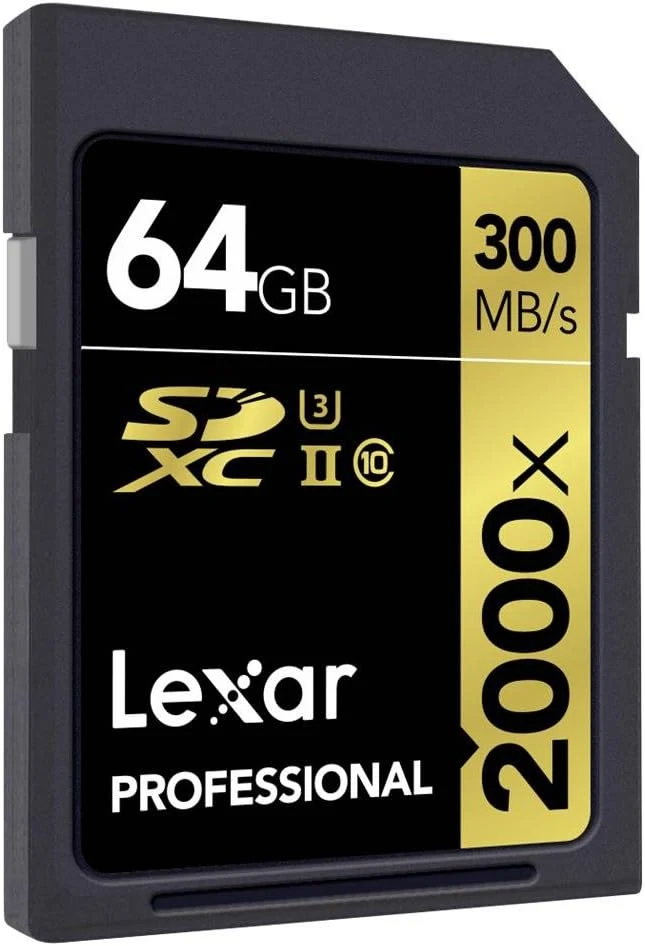
The selected offer describes UHS-II, U3 and a read speed up to 300MB/s. I treat the last figure as a manufacturer’s maximum, not a result from this review. It does not establish the sustained writing performance of an unknown revision arriving from a particular seller.
Related reading

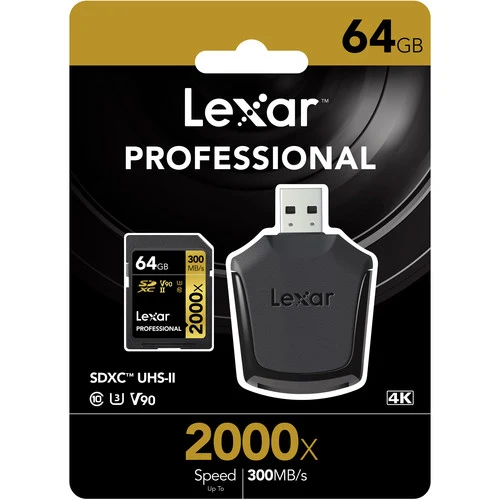
The photographs show why I would read carefully. The older card front has U3 markings, while one later-looking 64GB package also displays V90. Those images are useful evidence of packaging differences. They are not enough to assign that later class to every unit sold under an older listing.
I would ask the seller to confirm the actual label and package when a camera needs a particular video class. If that confirmation is unclear, I would buy an unambiguous current card instead. That is a practical purchasing condition, rather than a judgement that every older 2000x card has the same capabilities.
Why the reader bundle caught my attention
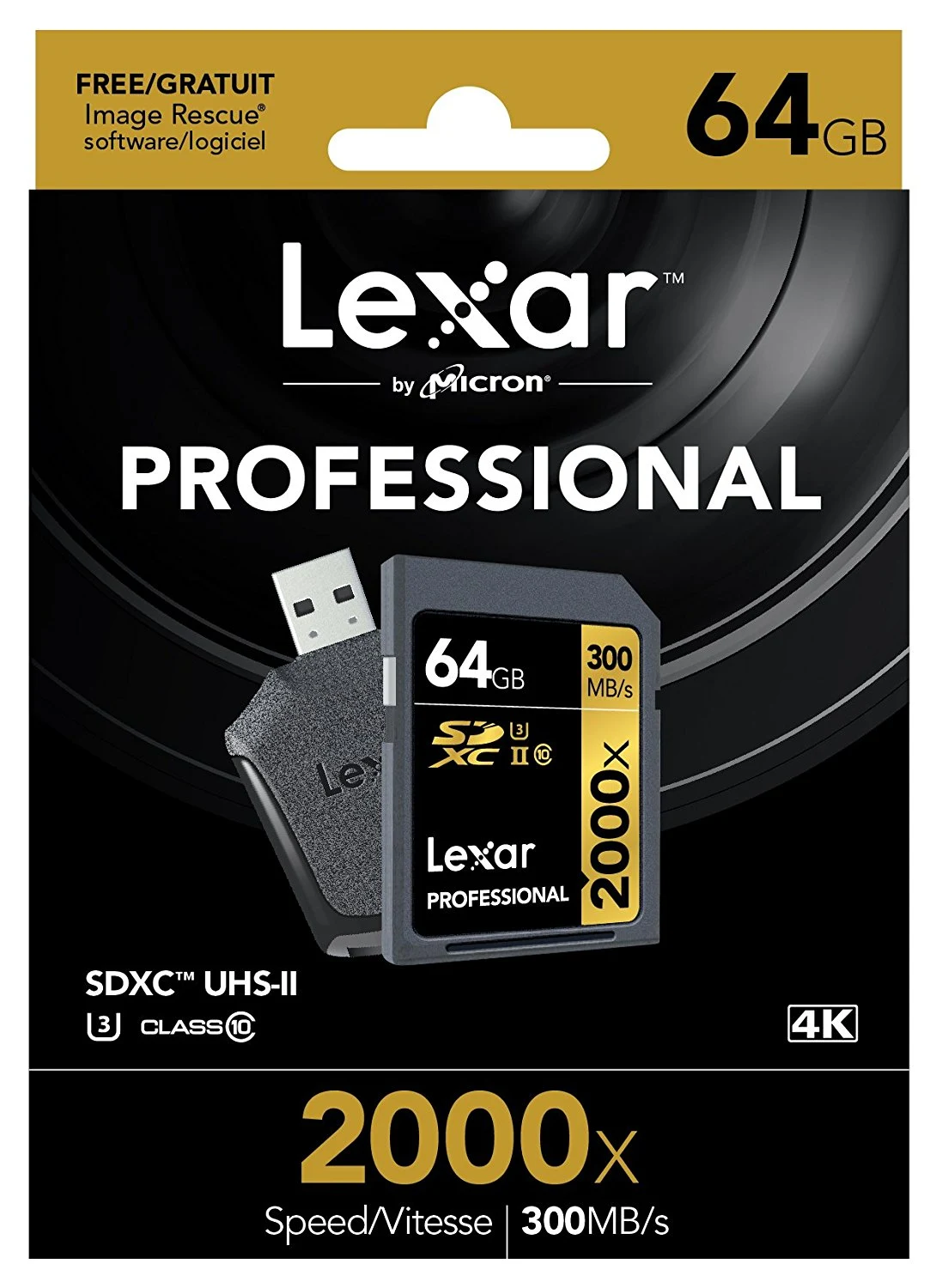
The historical manufacturer announcement documents a UHS-II reader in the earlier 2000x family package. It helps explain the reader visible in these 64GB packaging photographs. I like that complete-workflow idea: faster media makes more sense when the copying connection can support it.
That historical document announces a 128GB addition, so I would not use its writing figure as a specification for this 64GB card. Nor would I assume its old software offer or package contents remain available today. A photograph of a former bundle is a record of that presentation, not a guarantee about a current shipment.
If a reader is part of the reason to choose this offer, I would get the included contents confirmed before paying. Otherwise I would compare the card and a suitable reader as separate purchases. The total arrangement should make sense without depending on an uncertain bonus.
Related reading

Match the camera rather than the headline
The SD Association explains speed classes separately from maximum transfer figures. I would start with the camera’s supported card type and the specific recording mode. A large read-speed number cannot replace a required class, approved-media instruction or different physical format.
For a compatible photography workflow, the appeal is straightforward. The card offers removable storage in the familiar full-size shape, with UHS-II available where the host supports it. I would still compare the exact requirements before deciding that an older premium card is preferable to a clearly identified newer option.
The computer side deserves the same attention. A reader, cable and host connection can limit a copy. I would not expect a faster label to change a connection that cannot use it. Backward compatibility can be convenient, but it should not be confused with achieving the headline transfer rate in every slot.
What 64GB means for the session
I can see a useful role for 64GB when sessions fit comfortably and files are copied regularly. I would estimate capacity from the actual camera settings. A fixed promise of recording hours would be misleading when compression, bit rate and image settings can differ so much.
Several smaller cards can help separate sessions, but they also create more changes and more objects to track. One larger card reduces changes while concentrating more material on one piece of media. I would choose the arrangement that remains manageable during the intended work, rather than declare either approach universally safer.
After copying, I would check important files before clearing the source. I would also keep another suitable copy of material that matters. Those habits apply to an expensive card as much as a basic one. A professional label does not turn removable recording media into a complete backup plan.
Related reading

My alternatives and final buying view
I would compare the Lexar 1667x 128GB for a clearly identified V60 workflow that also benefits from more capacity. When the camera explicitly needs V90, I would compare the exact ProGrade Iridium 256GB and the manufacturer’s supported-media guidance instead of guessing from these mixed package labels.
My recommendation for this legacy 2000x offer is conditional. I like its focused card-and-reader heritage and the potential fit with compatible equipment. I would buy only when the actual revision, required class, package contents and seller terms are clear. An ambiguous older offer loses its appeal if a current, clearly labelled alternative solves the job more simply.
Product images: the selected Amazon card photograph, an Ace Photo retail package photograph and a historical Lexar by Micron package reproduced in the credited image source. These show different presentations, not a promise of today’s package contents or personal transfer measurements.
What worked
The UHS-II card-and-reader direction gives the purchase a focused recording and copying role when the equipment can use it.
What bothered me
Different historical package labels appear under the family name; I would not assign a later V90 mark, current Gold writing figure or old software bonus to every unit.
Who should not buy it
I would choose clearly identified current media when the camera requires V90 or the seller cannot establish the actual revision and contents.
Alternatives I would consider
Lexar Professional 1667x 128GB. I would compare it when a supported V60 workflow and more capacity meet the requirement. Read my Lexar Professional 1667x 128GB review.
ProGrade Digital Iridium 256GB V90. I would compare this clearly identified V90 option when the camera explicitly requires that class and supports the card. Read my ProGrade Digital Iridium 256GB V90 review.
Evidence and sources
The three photographs show distinct 64GB product presentations. The historical package is explicitly identified; later class marks, old software offers and visible reader bundles do not establish current shipment contents.
Selected legacy 64GB offer and card photo
Historical manufacturer 2000x family announcement; its new capacity is 128GB
SD Association explanation of speed classes
Ace Photo exact legacy 64GB package image
Historical 64GB Lexar by Micron package image reproduced in this article
Additional exact-model identity source for the historical 64GB package
Features, compatibility and rated figures from the maker are manufacturer information. My opinions are identified in the review.
Conclusion
Worth comparing only as a confirmed exact package; an unambiguous current card may be the simpler purchase.
Legacy Lexar Professional 2000x 64GB SDXC UHS-II, LSD64GCBNA2000R / LSD64GCRBNA2000R selected offer
Amazon US · US
Check price and availability: Legacy Lexar Professional 2000x 64GB SDXC UHS-II, LSD64GCBNA2000R / LSD64GCRBNA2000R selected offer at Amazon USAffiliate link. As an Amazon Associate I earn from qualifying purchases.
One email a week with practical Mac workflows, useful comparisons and honest tech recommendations.