I like a premium memory card when there is a specific reason to buy it. The ProGrade Digital Iridium 256GB makes sense to me as a clearly labelled UHS-II V90 option for a compatible recording workflow. I would choose it because the camera and mode need its capabilities, rather than assume a professional-looking label improves every photograph.
Quick verdict
I would shortlist it for a supported V90 recording workflow, with a suitable copying arrangement included in the plan.
Best for: A camera owner whose actual recording mode needs V90 and whose supported-card guidance matches this exact SDXC card.
Main benefit: The explicit V90 class and 256GB capacity provide a clear match to a demanding compatible recording requirement.
Biggest drawback: The premium specification may add little to simpler equipment, and a suitable reader is needed to benefit from the relevant transfer interface.
ProGrade Digital Iridium 256GB SDXC UHS-II V90, single card
Amazon US · US
Check price and availability: ProGrade Digital Iridium 256GB SDXC UHS-II V90, single card at Amazon USAffiliate link. As an Amazon Associate I earn from qualifying purchases.
Reviewed version: ProGrade Digital Iridium 256GB SDXC UHS-II V90, single card
Compatibility: Supported full-size SDXC/UHS-II host and intended recording mode, with the camera manual and approved-media guidance checked for the exact card.
Review context: I assess the exact 256GB manufacturer data sheet, selected offer and class guidance; the advertised speeds are manufacturer ratings rather than my measurements.
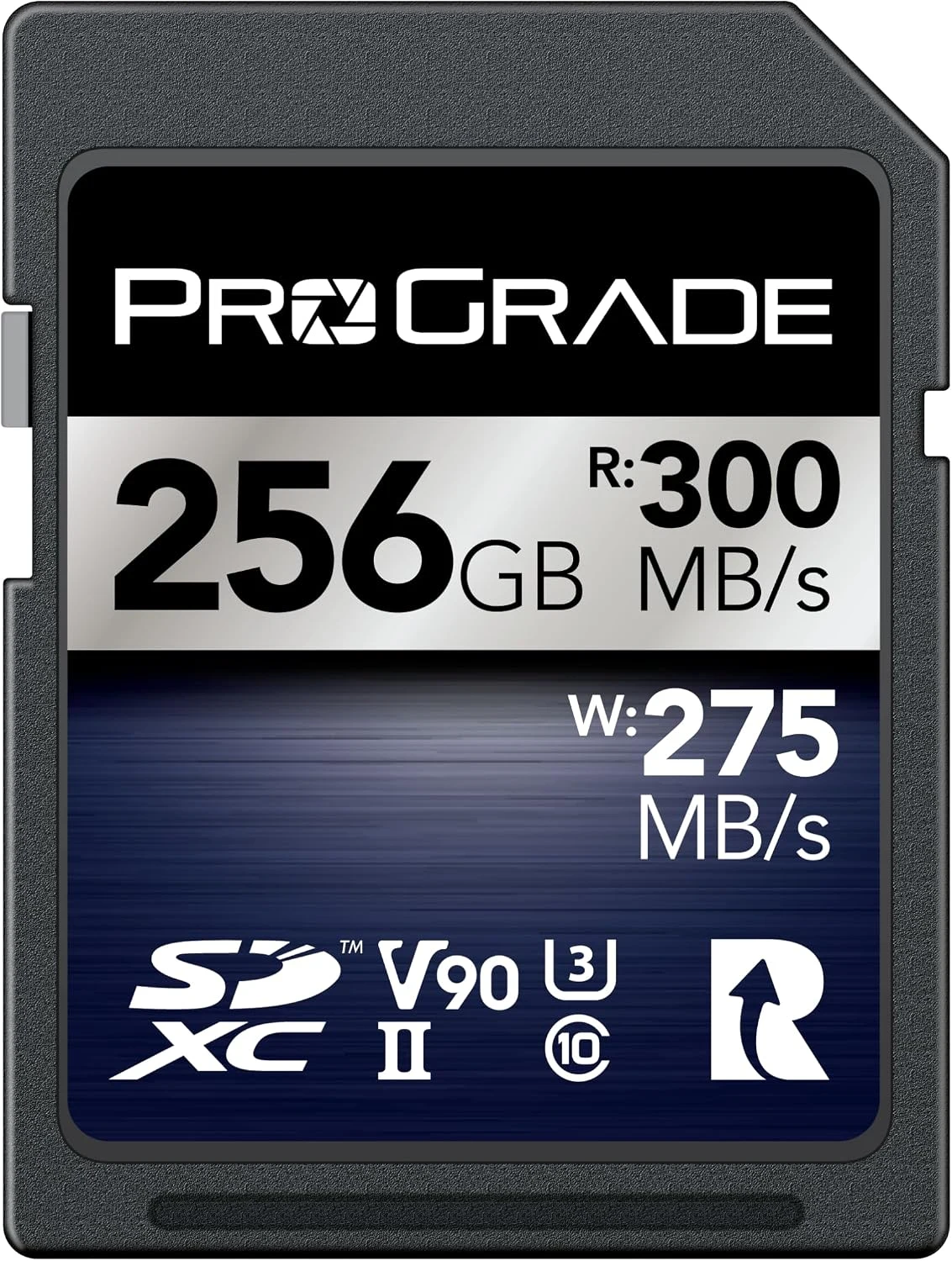
The selected offer is one 256GB SDXC card, not the 128GB version or a two-card bundle. Keeping that distinction visible matters: capacity, package count and advertised writing figures can change across a product family. I would compare the actual card on the order with the one named in the camera’s guidance.
What the V90 label adds
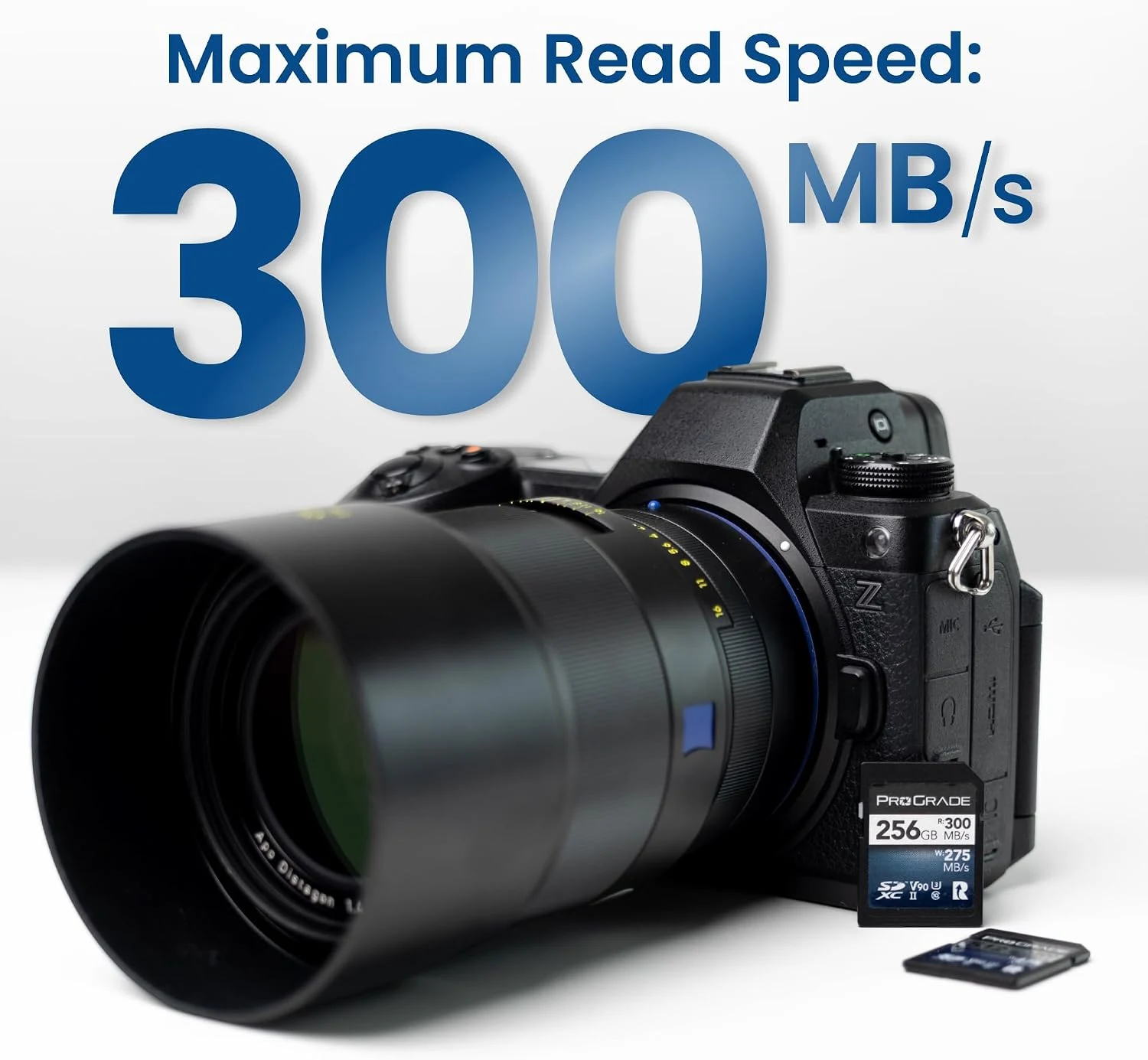
The manufacturer’s Iridium data sheet gives this capacity a maximum read speed of 300MB/s and sequential write speed of 275MB/s. Its V90 classification describes a minimum sustained writing level of 90MB/s under the relevant conditions. These are documented ratings, rather than measurements from this review.
Related reading

I find that distinction more useful than calling the card fast without context. Maximum reading relates to a different task from sustaining a recording stream. I would match the required class first, then consider whether the copying side of the workflow can benefit from the advertised read capability.
The SD Association’s explanation helps connect the class mark with a requirement. I would read it alongside the camera manual. A higher class does not make an unsupported capacity, physical format or recording arrangement compatible by itself.
The recording mode decides the purchase
I would start with the exact mode that matters, including the camera’s storage instructions. Resolution alone is a weak buying guide. Different codecs and settings can produce different data requirements even when the picture has the same dimensions. A broad claim about suitability for high-resolution video cannot replace that check.
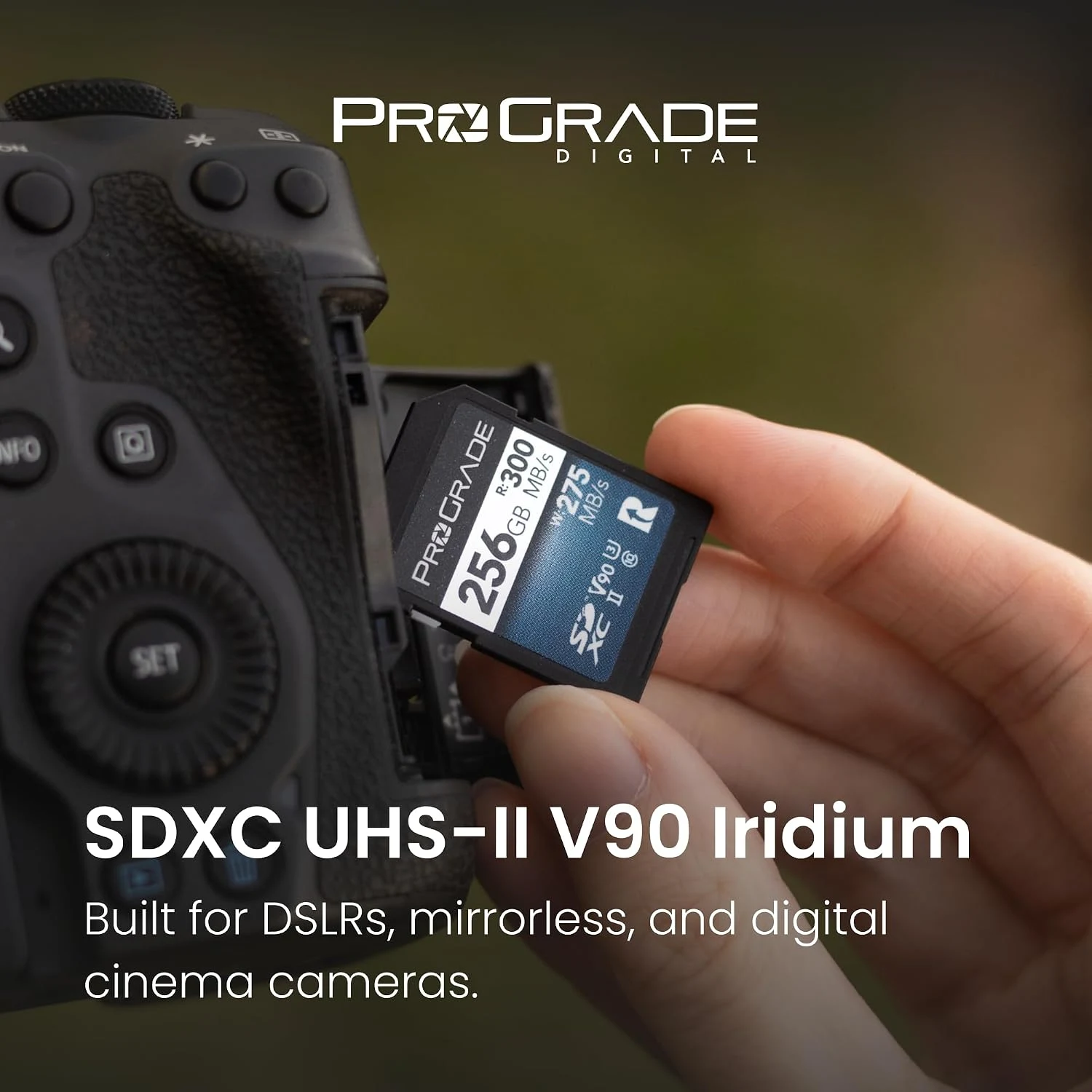
This is where the Iridium’s clear V90 identity appeals to me. When that class is required and the exact card is supported, the purchase has a practical purpose. I would still follow any camera-specific approved-media advice rather than treat the card as universal permission to select every demanding mode.
If the device requires another format for its highest settings, I would buy that format. An SD card does not become CFexpress because it has an impressive label. Equally, if the camera already records the intended mode comfortably on suitable lower-class media, I would compare the extra cost against a real benefit.
Related reading

Think about the complete copying path
I like the prospect of less time moving files after a session, but a card is only one part of that process. A suitable UHS-II reader and host connection are needed to use the relevant interface. I would check what is already on the desk before paying for a copying improvement that the connection cannot deliver.
A camera’s USB connection, a hub or an older reader can become the limiting part. That does not necessarily make the card a poor choice for recording. It simply means the benefit should be described accurately: the purchase may serve a recording requirement without producing the same improvement in every transfer arrangement.
I would include any required reader in the budget and consider where the files go next. A fast ingest into a poorly organised folder is still an awkward workflow. The useful result is material copied, checked and ready for the next step, with the card clearly identified before it returns to the camera.
Why I would choose 256GB deliberately
The middle capacity can be attractive when it fits the expected session without frequent card changes. I would estimate the requirement using the actual recording settings, with room for changes in the plan. I would not attach a universal number of minutes or images to 256GB.
More capacity can reduce interruptions, while more separate cards can help divide sessions. I would choose according to when changes are practical and how the material is handled afterwards. Neither arrangement removes the need to copy important files somewhere else and confirm that the copies are usable.
I would also keep ready media clearly separate from cards awaiting a copy. That simple distinction can matter more than another headline number. The card’s label describes capabilities; it cannot prevent a person selecting the wrong item in a case or clearing material before the intended copy exists.
Related reading

My alternatives and final buying view
I would compare the Lexar 1667x 128GB when a supported V60 card meets the actual requirement and the smaller capacity fits. A suitable UHS-I card is another sensible direction for less demanding compatible equipment. I would keep those choices attached to the job instead of treating V90 as the default for every camera owner.
For a supported V90 workflow, I would shortlist this exact 256GB Iridium. I like the clear class and capacity combination, with a suitable reader considered alongside it. My value judgement depends on using what the card offers. For a simple compatible task, I would put the saved money from suitable lower-specification media towards another useful part of the setup.
Product images: ProGrade Digital’s selected 256GB card and camera illustrations from the product gallery. The printed transfer numbers are manufacturer ratings, not personal benchmarks or evidence that every camera mode is supported.
What worked
The explicit V90 class and 256GB capacity provide a clear match to a demanding compatible recording requirement.
What bothered me
The premium specification may add little to simpler equipment, and a suitable reader is needed to benefit from the relevant transfer interface.
Who should not buy it
I would choose another format when the camera requires it, or suitable lower-class media when V90 offers no practical benefit.
Alternatives I would consider
Lexar Professional 1667x 128GB. I would compare it when a supported V60 card meets the requirement and the smaller capacity fits. Read my Lexar Professional 1667x 128GB review.
Suitable UHS-I media. I would choose it for a compatible less demanding device where a higher bus and V90 class add no useful capability.
Evidence and sources
The actual selected 256GB card is visible in each illustration. Printed transfer figures are manufacturer ratings, not personal benchmark evidence or universal camera-mode approval.
Selected ProGrade Iridium 256GB offer and images
Features, compatibility and rated figures from the maker are manufacturer information. My opinions are identified in the review.
Conclusion
Worth considering when its recording class is useful; I would compare suitable lower-class media for less demanding compatible jobs.
ProGrade Digital Iridium 256GB SDXC UHS-II V90, single card
Amazon US · US
Check price and availability: ProGrade Digital Iridium 256GB SDXC UHS-II V90, single card at Amazon USAffiliate link. As an Amazon Associate I earn from qualifying purchases.
One email a week with practical Mac workflows, useful comparisons and honest tech recommendations.