The Kingston Canvas React Plus 256 GB card appeals to me as a specific answer to a camera requirement, rather than an excuse to buy the fastest-looking label. I like storage choices that can be explained through the actual recording mode and a simple copying routine. This card has a clear identity, and keeping that identity visible is central to the recommendation.
Quick verdict
I would choose this exact V90 card when the camera approves it and the current genuine offer makes sense beside supported alternatives.
Best for: A photographer or video creator whose camera needs an approved V90 SD card and whose sessions fit a 256 GB working set.
Main benefit: The original V90 UHS-II specification gives this particular card a defined role in supported camera workflows.
Biggest drawback: Kingston lists this exact SDR2/256GB model as discontinued, so the seller, precise model and current terms deserve close attention.
Kingston Canvas React Plus 256GB SDXC UHS-II V90, SDR2/256GB
Amazon US · US
Check price and availability: Kingston Canvas React Plus 256GB SDXC UHS-II V90, SDR2/256GB at Amazon USAffiliate link. As an Amazon Associate I earn from qualifying purchases.
Reviewed version: Kingston Canvas React Plus 256GB SDXC UHS-II V90, SDR2/256GB
Compatibility: Kingston Canvas React Plus SDR2/256GB, 256 GB SDXC UHS-II U3 V90. This original SDR2 model is not the newer SDR2V6 V60 family; check the exact approved card and camera mode.
Review context: I assess an approved camera recording mode, the original 256 GB SDR2 card, a compatible UHS-II reader and a checked copy-before-reuse routine.
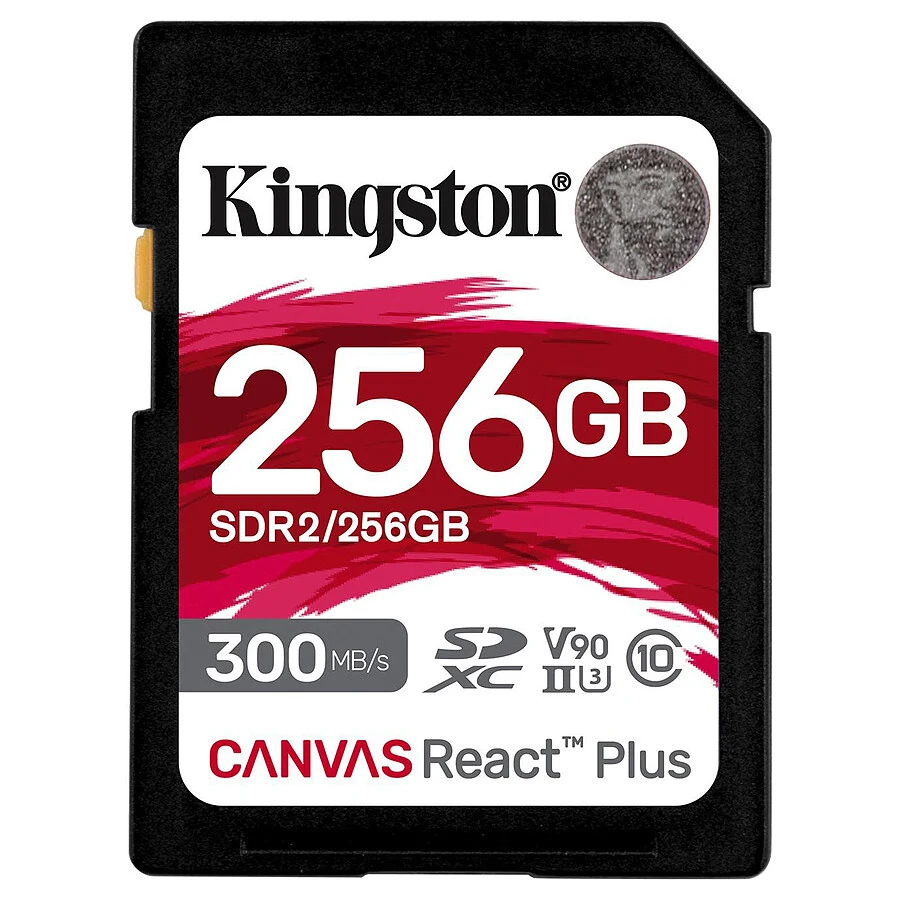
The selected model is SDR2/256GB, the original V90 UHS-II SDXC card. It is not the newer V60 product with a similar Canvas React Plus name. I would compare the exact model code, capacity and speed-class markings before buying. A shared family name is not enough evidence that two cards meet the same camera requirement.
This is the original SDR2 card
Kingston’s exact-model support entry places SDR2/256GB among discontinued models. That does not establish that a particular remaining card is unusable. It does mean I would check the selected seller, genuine model identity and current support terms instead of presenting it as the newest version of the range.
Related reading

The original Kingston datasheet, hosted by distributor Simms, identifies the SDR2 capacities and V90 specification. I would use that document for this model rather than transfer claims from a current page for another generation. The model code is a more reliable guide than a familiar red label alone.
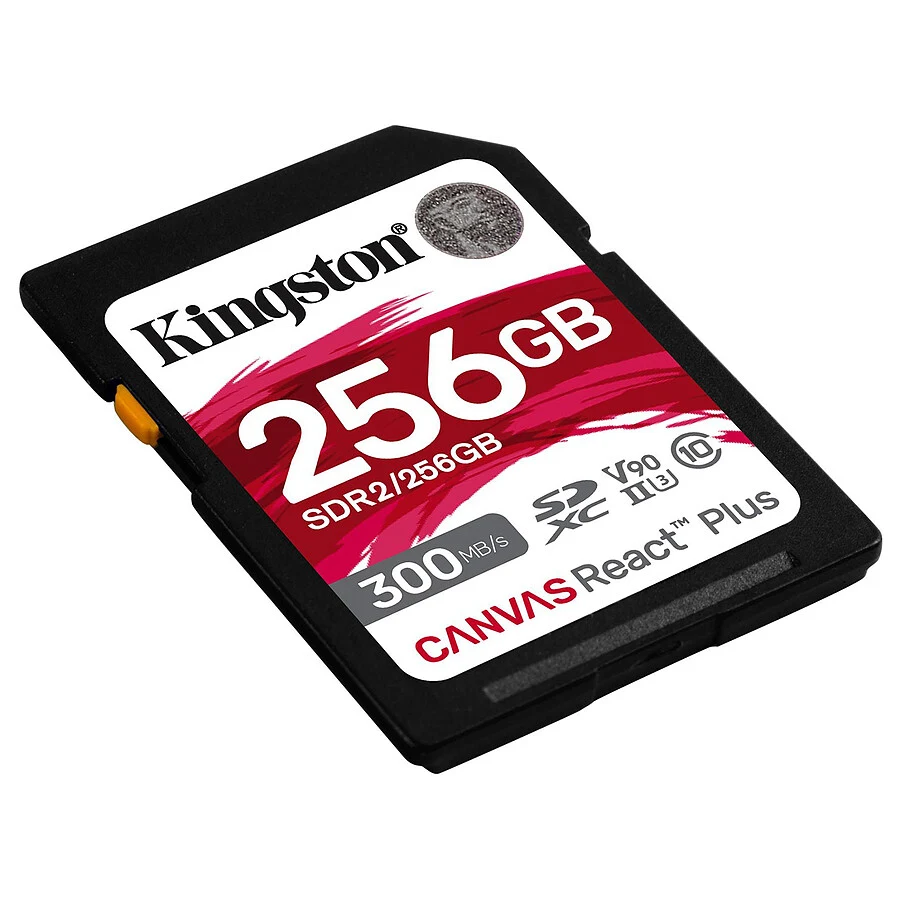
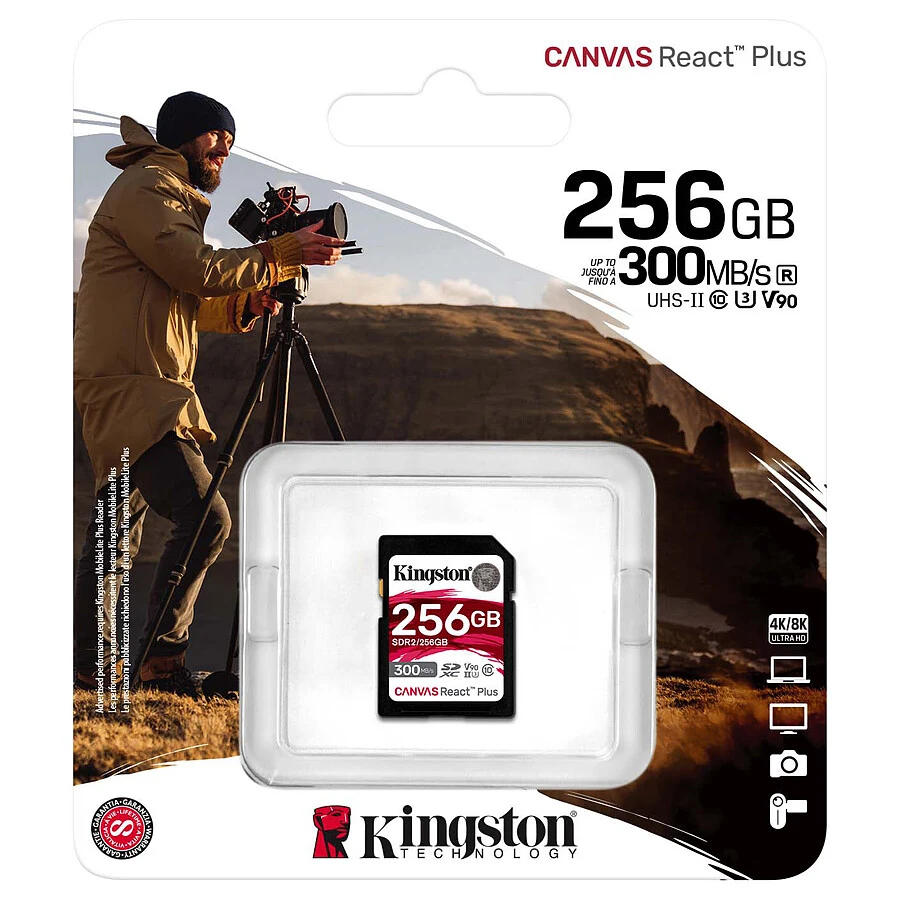
The images here show the selected 256 GB card and its matching packaging. I would still check the actual offer at checkout, because a retailer can group several capacities or product generations together. The useful purchase is a genuine card with the exact required specification, not simply a product image that looks close to a familiar one.
V90 should match the camera’s actual demand
I would start with the camera maker’s approved-card information for the intended mode. Resolution alone does not explain the storage requirement. Different codecs, frame rates and recording options can ask different things from a card, even when the camera describes each as a form of high-resolution video.
The V90 marking describes a particular video speed-class requirement. It should not be confused with the maximum read figure printed prominently on the card. I would keep sustained recording needs separate from best-case copying claims, then make sure the exact card is supported. A larger headline number is not always the number that answers the camera question.
Kingston publishes conditional maximum performance in the original datasheet. Those are manufacturer figures, not my measurements. I would read their host and reader conditions rather than assume the same result in every device. The camera, card and transfer arrangement form a chain, and each part can affect what is possible in a real workflow.
UHS-II needs an appropriate host
The card’s UHS-II interface has a distinct role in a supported camera or reader. The datasheet also describes backwards compatibility with UHS-I equipment, but that does not make an older host gain the faster interface. I would check the device specification instead of assuming that purchasing a different card upgrades the device itself.
Related reading

For copying, I would use a compatible reader and check the computer port and cable together. A familiar USB connector shape does not establish the performance of the entire path. If the destination drive or connection is slower, I would not blame the card automatically for a result produced by another part of the setup.
That also affects value. I would not buy a faster reader just because a large number appears on its box. I would compare the complete supported route from the card to the working drive. A clear, dependable transfer arrangement is more useful than an accessory whose advertised capability the rest of the system cannot use.
256 GB should support a manageable session
I would estimate capacity from the camera’s actual files and the type of session I intend to record. A 256 GB label does not represent one universal number of photographs or minutes. Recording settings and the scene can change the files, so I would avoid an unconditional runtime promise based on capacity alone.
A clear working-card size can make offloading easier. I would want a routine that copies the files, checks the result and keeps a separate backup before the card is cleared. The camera card should not become the only archive simply because there is still unused space on it. Capacity needs a saving routine beside it.
I would also follow the camera maker’s formatting guidance and keep the card’s role identifiable. Similar red cards with different capacities or generations can be easy to mix in a bag. A clearly assigned working card and a supported spare make more sense to me than an unorganized collection chosen from different headline specifications.
Related reading

The current offer should justify choosing an older model
For a camera that specifically approves this original V90 card, it remains a product worth comparing. I would put a current supported alternative beside it and look at the genuine seller, exact compatibility and actual terms. A discontinued model should earn the purchase through a clear fit, rather than be recommended simply because its family name is familiar.
My view is positive for an informed, camera-specific choice. I would buy SDR2/256GB for its documented V90 role and an appropriate working-card routine. I would choose another model when availability, support or the camera’s current guidance makes that decision clearer. The important result is a supported recording setup whose identity is easy to verify.
The images show the selected product in retailer or manufacturer materials. They are not my test photographs. I base this assessment on the linked documentation and the exact selected listing; the buying choices and recommendations are my own editorial judgement.
What worked
The original V90 UHS-II specification gives this particular card a defined role in supported camera workflows.
What bothered me
Kingston lists this exact SDR2/256GB model as discontinued, so the seller, precise model and current terms deserve close attention.
Who should not buy it
Someone expecting the new V60 model, a CFexpress card or universal support for every 8K camera mode.
Alternatives I would consider
A currently supported camera-approved V90 SD card. I would prefer it when availability, support or seller terms make the current option clearer.
Lexar Gold CFexpress Type B 256 GB. I would consider that separate format only for a camera that specifically supports Type B. Read my Lexar Gold CFexpress Type B 256 GB review.
Evidence and sources
The primary documentation supports the stated features and limitations. The exact retailer listing identifies the selected model and bundle; source images illustrate the product.
Kingston exact SDR2/256GB identity and discontinued-model support
Original Kingston SDR2 manufacturer datasheet hosted by distributor Simms
Exact selected product and gallery
Materiel.net exact Kingston 256GB product and package image source
Features, compatibility and rated figures from the maker are manufacturer information. My opinions are identified in the review.
Conclusion
I would pay for the exact approved recording requirement, not assume the Canvas React Plus name makes different generations interchangeable.
Kingston Canvas React Plus 256GB SDXC UHS-II V90, SDR2/256GB
Amazon US · US
Check price and availability: Kingston Canvas React Plus 256GB SDXC UHS-II V90, SDR2/256GB at Amazon USAffiliate link. As an Amazon Associate I earn from qualifying purchases.
One email a week with practical Mac workflows, useful comparisons and honest tech recommendations.