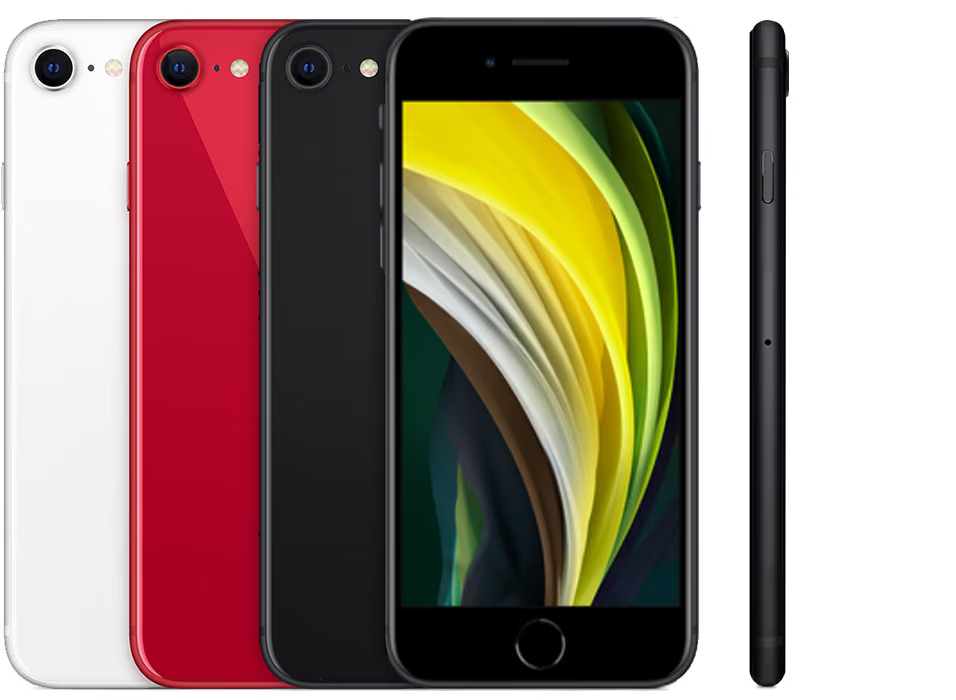
The second iPhone SE put a new processor in a useful old size
The 2020 iPhone SE was attractive if you knew what you wanted from the size and controls of an iPhone 8. It had a 4.7-inch display and the Home button people already understood. Apple used the A13 from the iPhone 11 generation and sold it at a substantially lower starting price. The buyer had a good reason to try the important parts of a familiar routine before spending more. The size made it easy to hold, the camera remained a simpler package and the display gave it less space than the newer designs.
Quick verdict
Retail release in the United States · Archive date
It was a strong launch choice when keeping the Home button or controlling the total cost mattered more than the newer screen and camera options.
Best for: Somebody with simple phone needs, a preference for unlocking with a thumb and an existing routine built around a smaller iPhone.
Main benefit: At $399 the SE combined ordinary services and apps with the generation of processor found in the then-current 11 family.
Biggest drawback: You still had the compact screen and less flexible rear camera. In dark scenes or cramped rooms there were good reasons to consider the 11.
Reviewed version: The second-generation iPhone SE, originally sold from April 24, 2020. It had a 4.7-inch screen and one rear camera.
Compatibility: It ran iOS 13 at launch with Touch ID, Qi charging and Lightning. Its rear Portrait mode worked with people, and the camera lacked Apple's Night mode.
Review context: I evaluate the documented retail hardware and the software available in its release window. Regional variants and software changes are identified where they affect the verdict.
I owned the second SE as part of having every iPhone. This retrospective concerns its US availability starting April 24, 2020. This was the 4.7-inch version. The 2016 SE offered an appreciably smaller four-inch shape. The shared name does not make their handling the same. Apple’s 2020 iPhone SE launch and availability information
An A13 did useful work even if the home screen looked older
The chip gave the phone the ability to do camera processing and run demanding apps of its launch generation. That could amount to a long useful period for someone who simply wanted to replace an ageing device. The phone felt like a continuation of a familiar control scheme and could still have considerably more processing room than the phone it replaced. A buyer who used familiar names in a list of apps could try a bigger page, a few photos or an ordinary transfer before deciding that the higher-priced models offered something their work needed.
Related reading

A newer processor and a new display make different improvements. Typing across a long line, looking at a large photo and watching a film still depended on the physical view. The screen had been a good size for people happy with a phone that could be held and adjusted easily with one hand. It could feel less suitable if your reading regularly involved paragraphs that needed to sit beside a map or controls. The price gave the buyer a chance to make that choice about the shape first.
The lower price did not by itself decide what storage you wanted. Apple began at $399 in the United States for 64 GB, with 128 GB and 256 GB options. A buyer moving from a small older iPhone might find the first version generous. More recent apps and long videos could also leave less of it available than an earlier set of files had used. I would have looked at the local library I expected to keep along with the camera setting I intended to use. It was a choice to make before buying rather than a problem you could solve by adding a card later.
Touch ID could be the best reason to keep this design
The Home button package gave the SE a predictable place to wake and unlock the device. Such a control can be useful when a phone is lying flat on a desk, or if you already know exactly how you want to leave an app and switch to somewhere else. Face ID on the iPhone 11 had a different advantage when used in a suitable position, and it made space for more display in the face of the phone. The smaller SE gave people a way to keep the movement and size they were comfortable with.
The larger areas above and below the screen were an important part of the price and size trade. A viewer got less height for what the display showed than a full-front phone of a comparable body size might offer. A person reading short messages could usefully spend less on the phone and give up little. A reader of long pages or somebody who relied on a broad keyboard could get an immediately visible benefit by picking another shape. I would have tested a regular message with a keyboard open to see how much of what you were answering remained visible.
One rear camera could do a lot of ordinary work
The SE used a single 12-megapixel rear camera. Apple offered Portrait mode through software, and the device could record 4K video. A picture at close range or from across a table was a fair test of the device. For a buyer whose main subjects were easy to reach, the single camera made a straightforward package. An ultrawide view of a room or a tighter optical picture from farther away gave people specific reasons to try other hardware.
Related reading

The 2020 SE did not offer the same dedicated Night mode as the iPhone 11. A low-light scene you often had to photograph was worth comparing in the setting where you actually needed it. A well-lit page or an ordinary photograph in daylight gave the single unit room to do good work. Paying for another phone can make sense if the alternative camera covers a recurring use. The SE’s camera was an important part of the value for somebody satisfied with a familiar field of view.
The front camera stayed less ambitious than the newer iPhone models. A person using the phone for frequent video conversations could compare how the display and camera worked together in their usual room. A small phone might make a good portable connection while giving less space to see several things in a long call. The best comparison involved the camera you would really open and the place from which the phone would connect.
What I would have kept from an older iPhone
An upgrade from the iPhone 8 offered an unusual chance to keep a useful setup. Check whether the old case fits securely and whether a stand can still leave the Home button and charging port accessible. The broad screen and case dimensions were familiar, while adopted accessories are best checked individually. Moving authenticators, locally stored files and data is a different matter. People buying the SE precisely because they wanted a simple transition still had a reason to do the transfer while the old phone was available. That helped preserve the value of keeping the controls they already knew.
My verdict on the 2020 SE
I would have picked the 2020 SE if I wanted Touch ID, a manageable size and a current processor at its lower price. The first SE was the comparison for somebody who specifically wanted the very narrow original shape. The iPhone 11 suited somebody who needed the Ultra Wide, Night mode and a larger display. The iPhone model timeline puts the SE in its April slot, where it gave buyers a useful way to keep the familiar iPhone controls without holding on to older internal hardware.
What worked
At $399 the SE combined ordinary services and apps with the generation of processor found in the then-current 11 family.
The compact frame and Home button kept the main physical controls familiar for someone coming from an iPhone 8.
What bothered me
You still had the compact screen and less flexible rear camera. In dark scenes or cramped rooms there were good reasons to consider the 11.
The small panel allowed less space to increase text and type at the same time. This was clearer in apps than on a home screen.
Who should not buy it
Someone who regularly relied on the newer Night mode or on a larger display to enter and check information.
Alternatives I would consider
iPhone 11. The 11 adds a 6.1-inch display, a dedicated wider camera and Night mode, with Face ID and a higher opening price. Read my iPhone 11 review.
Evidence and sources
The release date refers to general availability in the named market. The archive filing is ten days later. Feature assessments are editorial judgments based on the documented retail model.
Features, compatibility and rated figures from the maker are manufacturer information. My opinions are identified in the review.
Conclusion
Planning what to keep in 64 GB or pricing the next tier made more sense than assuming the opening price described every good configuration.
One email a week with practical Mac workflows, useful comparisons and honest tech recommendations.