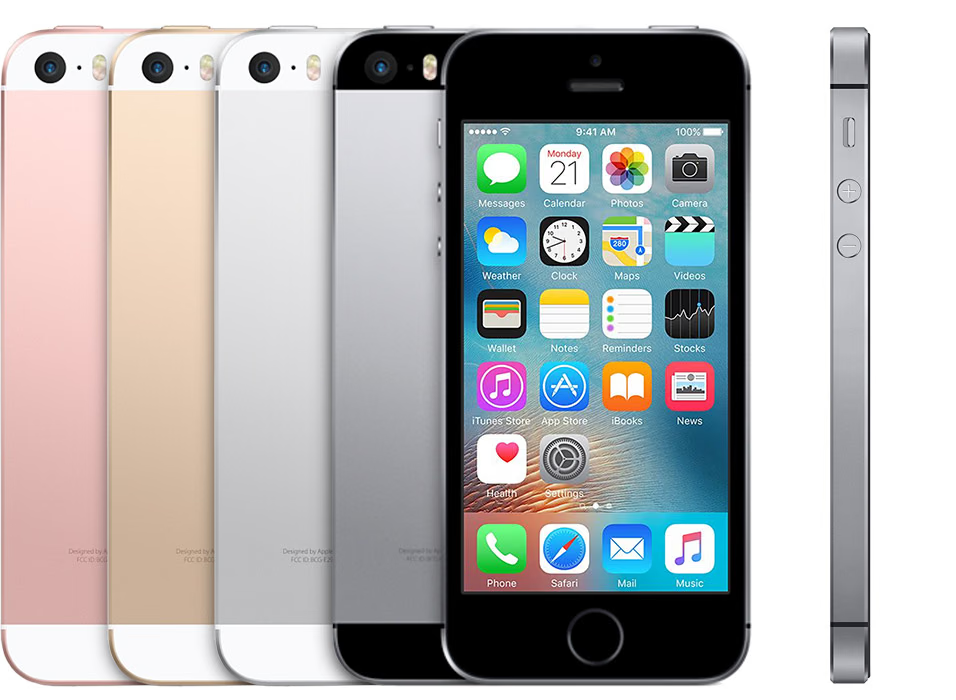
The first iPhone SE made room for people who wanted a smaller phone
The original iPhone SE arrived after two years in which Apple had encouraged buyers to move to a larger display. It gave someone a reason to choose four inches again. A hand could wrap around the narrower case, a pocket could keep the phone without much adjustment, and opening a familiar app did not mean buying old performance. Apple used the A9 from its current 6s models and gave the SE much of the same rear camera work. I would have started by deciding whether small was actually what I wanted, then compared the meaningful differences inside that very familiar shape.
Quick verdict
Retail release in the United States · Archive date
The first SE was a convincing choice if a phone had to be small and you still wanted 2016 performance and camera capabilities.
Best for: A buyer who liked a phone that could sit easily in one hand or a small pocket and mostly looked at individual pieces of content.
Main benefit: The A9, rear camera and familiar compact dimensions put current performance into the size an earlier owner already understood.
Biggest drawback: The older low-resolution front camera and smaller layout mattered for long calling, framing and reading sessions.
Reviewed version: The original four-inch iPhone SE from March 2016 with 16 GB or 64 GB of storage at launch.
Compatibility: The SE used Lightning and supported Apple Pay in the markets and banking arrangements available at the time.
Review context: I evaluate the documented retail hardware and the software available in its release window. Regional variants and software changes are identified where they affect the verdict.
I owned the first SE as part of having every iPhone. This retrospective looks back at the March 31, 2016 launch in the United States and other first markets. The Czech Republic was among the next group in early April. Here the name SE always means the four-inch original rather than the 4.7-inch phones Apple used for the 2020 and 2022 versions. Apple’s first SE announcement and retail dates
A comfortable reach is worth being able to choose
The SE’s shape would have felt immediately familiar to somebody who used the iPhone 5 or 5s. Its width made one-handed taps and typing more accessible to many users. A power button on top was reasonable because there was much less height to cross. Whether the phone was easy to use still depended on the job. Reaching a control is one thing. Reading a dense website or trying to look at a long note and a keyboard at the same time can be easier on a broad display.
Related reading

That makes the size a decision about a person’s usual surroundings. Someone often taking a device out to check a route, answer a short text and put it away can value how little their grip changes. Someone carrying a phone in a large bag mainly for watching long videos may give up little by choosing a larger screen. I would have tried reading a normal page and entering an ordinary reply before buying. The small model stood out because there was room to choose how to carry the phone without giving up the speed of a current processor.
The 1136-by-640 display stayed close to what the 5s already offered. It was sharp at its physical size. A wider iPhone could show more at once at the same comfortable text size, so I would have used the page’s actual readability rather than the pixel density alone to make the comparison. Anybody moving down from a 6s Plus would also feel how much less content was visible across a typical two-handed workspace.
The A9 and the rear camera were the substantial changes
For an owner of an iPhone 5s, the biggest performance improvement came when the handset had to do a lot between finishing one action and going to the next. Render a busy page, make a picture and review it, or open several apps over the course of looking something up. The A9 was useful because it supported present-day software of 2016 in the form an older buyer already liked. Its contribution was more visible in a longer job than the weight of one email might suggest.
The rear camera rose to 12 megapixels and offered 4K recording. Live Photos also gave the owner the option to capture a little activity and sound around a shot. The first SE gave a buyer good reasons to compare it with a 6s when their main camera was the rear one. The small screen was enough to recognise a scene or take a shot, while giving less space to check everything in a detailed image before moving on. It was a useful way to capture something in the moment, particularly if your plan was to inspect or organise the result later on a bigger screen.
The front camera was still a lower-resolution part than the one on the 6s. For a buyer who did most of their photography with the front camera or depended on video conversations, that could outweigh some of the rear-camera appeal. I would have tested the camera I actually expected to use. Confusing the two leaves an apparently accurate statement about the main camera doing more work than it should in a purchase decision.
Related reading

The price worked best outside of a specification contest
In the US, the model began at $399 for 16 GB before the buyer considered trade-in or a financing arrangement. The 64 GB version gave people who recorded video or held a large local library more room. A buyer who usually worked over Wi-Fi and did not keep many files could save by choosing the entry storage. A person recording several clips had more reason to consider the large tier, especially because the phone could not simply accept a memory card later.
Apple left the pressure-sensitive 3D Touch display to the 6s range. Some of its shortcuts were worthwhile to people who had learned them. If you were coming from a 5s it was a distinction you could try before buying, while the rest of the controls continued to feel familiar. Touch ID and Apple Pay were significant features for a small phone in 2016. Apple Pay still depended on the market and bank you actually used. For customers with well-supported cards, the phone could participate without requiring a larger model.
The body was easier to move with small adjustments, and that paid off in one other place. The rigid sides and narrow width could make the phone easy to plant in a familiar stand or connect to a cable while holding it. A case from an older four-inch phone still deserved a check around the controls and camera before being transferred. This was the type of upgrade where the time spent adapting a small existing setup could be low. Someone moving to a broader body had more measurements to consider and could see a different benefit from it once the phone was set up.
My verdict on the first SE
I would have chosen the SE for its combination of a compact shape and a current processor. It was especially easy to make a case for it if you still liked an iPhone 5s but needed an updated rear camera or more room for contemporary apps to work. The iPhone 6s remained the better fit for reading in a wider space, pressure shortcuts and frequent use of the front camera. Someone used to a 6s Plus had still more reason to keep the larger phone.
The iPhone model timeline gives the first SE its own entry because it interrupted the idea that a newer device necessarily had to extend the preceding shape. It gave a 2016 buyer a strong, immediate reason to choose the dimensions of an earlier phone. You could still have its newer abilities fairly close to hand.
What worked
The A9, rear camera and familiar compact dimensions put current performance into the size an earlier owner already understood.
The updated rear camera could record 4K and make Live Photos in the familiar body.
What bothered me
The older low-resolution front camera and smaller layout mattered for long calling, framing and reading sessions.
The 16 GB tier gave limited space to keep footage alongside apps and a local library.
Who should not buy it
A buyer choosing mainly for a better front camera, 3D Touch or a large typing area.
Alternatives I would consider
iPhone 6s. A larger iPhone with the same generation of processor, a stronger front camera and a pressure-sensitive display. Read my iPhone 6s review.
Evidence and sources
The release date refers to general availability in the named market. The archive filing is ten days later. Feature assessments are editorial judgments based on the documented retail model.
Features, compatibility and rated figures from the maker are manufacturer information. My opinions are identified in the review.
Conclusion
At $399 for the US entry version the SE appealed to buyers with a definite preference for size rather than a different generation of software.
One email a week with practical Mac workflows, useful comparisons and honest tech recommendations.