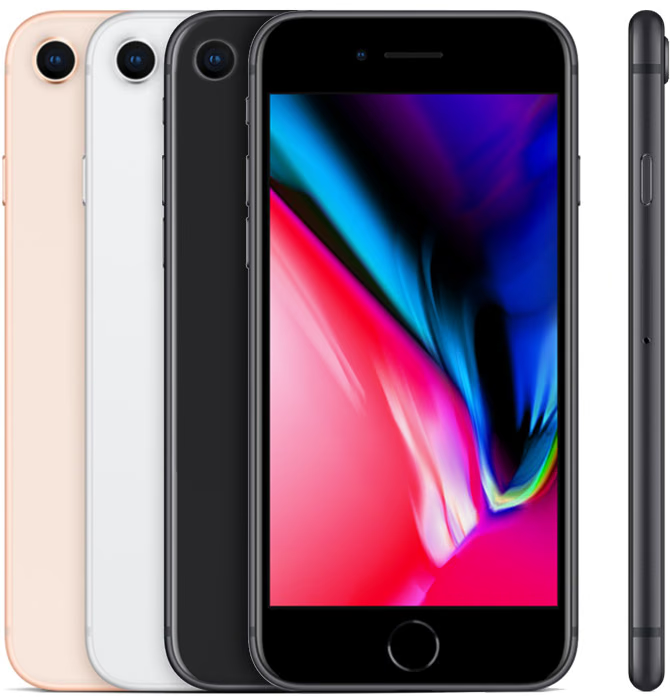
The iPhone 8 gave the familiar shape a different place to charge
The 4.7-inch iPhone 8 was easiest to judge on a desk where you set down the phone anyway. A compatible Qi pad could charge it as it sat there, while the Lightning connector remained available for a cable. That was a physical change you could try without learning a new interface. The glass back, a faster processor and some camera improvements accompanied it. Although Apple had announced the iPhone X at the same event, the iPhone 8 was the smaller Home-button model you could actually buy in September.
Quick verdict
Retail release in the United States · Archive date
The iPhone 8 made sense if you wanted a smaller Home-button phone and could put wireless charging to regular use.
Best for: A buyer who liked Touch ID and set the phone in the same place repeatedly through the day.
Main benefit: A glass back and Qi support added a useful alternative to attaching a cable each time.
Biggest drawback: The screen size and ordinary controls offered less change for someone already using an iPhone 7.
Reviewed version: The smaller 4.7-inch Apple iPhone 8 at the September US launch.
Compatibility: Qi charging depended on the chosen pad, charger and case. The Lightning connector remained available for wired charging.
Review context: I evaluate the documented retail hardware and the software available in its release window. Regional variants and software changes are identified where they affect the verdict.
I owned the 8 as part of having every iPhone. This review returns to the US retail release on September 22, 2017. Both iPhone 8 sizes went on sale that day. The iPhone X’s November availability belongs to a separate comparison. Apple’s account of the September release
The best charging change was having a place for the phone
Put a small charging pad where the phone normally rests while you work and attaching a cable becomes a decision you have to make less often. That helps when you put the phone down several times during a longer task. There is still a cable from the pad to a supply, and the phone has to sit in a suitable position on the pad. The useful part of the setup comes from removing a small movement during your ordinary routine. I would have judged the feature from that kind of use before looking at how fast it could work.
Related reading

Qi gave people a way to use compatible charging surfaces from sources other than Apple. It was worth checking the actual combination of pad, charger and case. Larger gaps or ingredients in a case could change whether the charge reached the device as expected. For a person who wanted to keep using the phone while it got power, a cable remained more practical than balancing it above a pad. The new approach answered a different case and did not need to answer every other one to be valuable.
The glass rear surface supported that new approach and gave the phone another large area that could need protection. A buyer who liked the metal back of a 7 had to consider that difference as much as the one shown in charging demos. A case can improve the grip and protect the glass, while changing how it feels and whether it charges happily on a particular pad. The phone also supported fast wired charging with suitable separately sold equipment. I would have decided which charging method solved an actual problem before buying a drawerful of accessories. Apple’s design and charging details for the iPhone 8
The camera kept one familiar viewpoint
The smaller iPhone 8 had a single 12-megapixel rear camera with optical stabilisation. A different image processor and new video options could matter even with a familiar field of view. If you frequently filmed a short moving scene, recording 4K at up to 60 frames per second could make the motion more useful to inspect or edit later on capable equipment. That option used more space and depended on the work you expected to do afterward. A regular clip you wanted to send to somebody might be most convenient at a smaller size.
Still photos have another set of priorities. Choosing the right angle and getting a readable enough picture when light is difficult matter before inspecting more pixels. The ordinary iPhone 8 could benefit from camera processing changes and keep its compact layout. A buyer interested in separating a subject from its background with Apple’s dual-camera tools had a reason to distinguish the 8 Plus. The size and cost difference were worth weighing against how often the second lens or the portrait features would enter the picture.
The display was still 4.7 inches and offered True Tone for adjusting to ambient light. This could make a page more comfortable to look at in an ordinary room. Colour-sensitive comparison is a different task. I would have checked the display settings if I needed to judge the same image beside another screen in stable light. A person using the phone for short messages would experience a different sort of benefit from the same adjustment than someone checking a set of colour references.
Related reading

Wireless charging also made interruptions worth thinking about. If the phone regularly went back onto the pad between calls, short periods could add up without its owner doing anything beyond putting it down as usual. Keeping a cable on one side of a workspace allows more freedom to look at the display while doing a longer job. The useful way to compare the two setups was to ask where you wanted the device to be and when it needed to be ready to leave. A pad with no place to stay, or one that could easily be nudged away from a good charging position, was a weaker improvement than it appeared when set up carefully at a demonstration. I would keep the ordinary cable in the bag on a trip and value the new charging option at the places where it could stay put.
Familiar controls were part of the value
The A11 Bionic gave the iPhone 8 the generation of chip Apple also used for the X. That was a good reason not to view the phone as a previous model being sold under a different name. Faster processing supported more complex camera work and heavier apps. The size of the benefit depended on the software. The Home button and Touch ID kept a familiar way to unlock the device and get out of an app. That could matter to a buyer who knew they liked the existing grip or who wanted to replace an older phone without making a more fundamental adjustment to how it was used.
The launch offered 64 GB or 256 GB. The lower tier gave somebody who stored mainly photos and a handful of apps more room than the 32 GB entry point on the iPhone 7. A large video library supplied a reason to look at the larger tier and how it would eventually be backed up. The bigger storage choice was less interesting to someone who already moved their work off the phone regularly.
My verdict on the smaller iPhone 8
I would have chosen the iPhone 8 at launch for somebody who valued the smaller familiar body, successful everyday charging and a single dependable camera. An owner of an iPhone 7 could compare the charging routine and ask whether it improved enough to justify replacing a recent device. Someone who used a larger display for reading or wanted the second camera had a reason to try the 8 Plus. The iPhone model timeline keeps the 8’s particular role visible. It made the established design better for a buyer who knew why they wanted to keep it.
What worked
A glass back and Qi support added a useful alternative to attaching a cable each time.
The rear camera added more capable video options while keeping the simpler single-camera layout.
What bothered me
The screen size and ordinary controls offered less change for someone already using an iPhone 7.
The added rear glass gave the phone a second glass surface to consider when carrying it.
Who should not buy it
Someone buying for a second rear lens or the larger full-front shape shown on the iPhone X.
Alternatives I would consider
iPhone 8 Plus. The Plus gave a wider layout and dual rear cameras while keeping the same approach to Qi and Touch ID. Read my iPhone 8 Plus review.
Evidence and sources
The release date refers to general availability in the named market. The archive filing is ten days later. Feature assessments are editorial judgments based on the documented retail model.
Features, compatibility and rated figures from the maker are manufacturer information. My opinions are identified in the review.
Conclusion
The new chip and better charging options were useful if the established shape still fit. Buyers needed to assess accessories separately.
One email a week with practical Mac workflows, useful comparisons and honest tech recommendations.