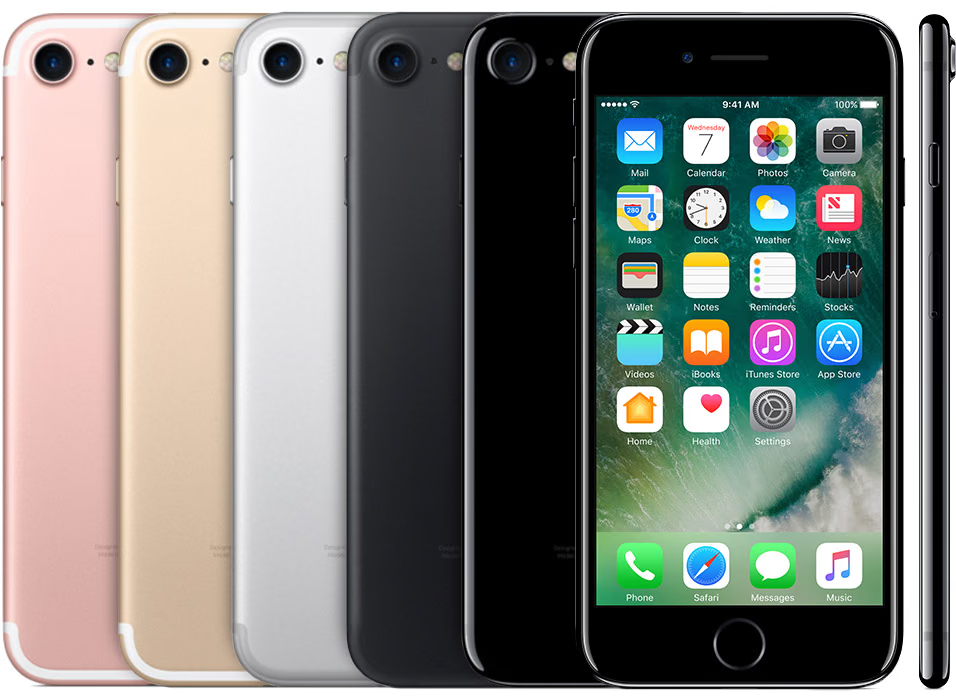
The iPhone 7 was easiest to judge with the headphones you already had
The 4.7-inch iPhone 7 made several useful changes to a shape that had already sold for two generations. It had optical image stabilisation, stereo speakers and a degree of resistance to water and dust. It also made a buyer think about what they plugged into the bottom of the phone. For someone who used headphones every day, a decision about a cable had more immediate consequences than a processor that could handle more demanding work. The iPhone 7 was good enough in other ways to make that a decision worth taking seriously.
Quick verdict
Retail release in the United States · Archive date
The smaller iPhone 7 had a strong launch case if you needed stabilisation without choosing a bigger phone and had a suitable headphone setup.
Best for: A buyer who regularly used the rear camera and could already charge and listen in ways the phone supported.
Main benefit: Optical stabilisation helped the ordinary iPhone 7 capture more usable frames of still subjects.
Biggest drawback: Moving wired listening and charging to the same connector complicated certain routines.
Reviewed version: The 4.7-inch iPhone 7 sold at the US launch.
Compatibility: Lightning EarPods and a 3.5 mm adapter shipped in the box. The AirPods announced alongside the phone arrived later.
Review context: I evaluate the documented retail hardware and the software available in its release window. Regional variants and software changes are identified where they affect the verdict.
I owned the iPhone 7 as part of having every iPhone. This retrospective covers the 4.7-inch phone as sold in the United States on September 16, 2016. The 7 Plus arrived alongside it with a separate camera arrangement, so a feature described for that model does not automatically belong to this one. Apple’s iPhone 7 and iPhone 7 Plus launch announcement
The audio decision had to include the charger
Apple removed the 3.5 mm headphone jack from both sizes. It included Lightning EarPods and a Lightning-to-3.5 mm adapter with the phone at launch. The first day could therefore go quite smoothly for someone willing to keep a little adapter beside older headphones. The change became more visible for a person who charged the phone while using wired audio, since both jobs now wanted the same connection. That might matter at a desk, on a long flight or in a car set up for a particular cable.
Related reading

An adapter sitting at home cannot help when you discover on a journey that you need it. A person with one pair of wired headphones could leave the adapter attached to that pair. Somebody switching between several pairs, portable speakers and a vehicle would have more places to keep track of. Choosing a compatible splitter or dock would add parts, cost and another question about charging and remote controls. A buyer who already used Bluetooth most of the time faced a smaller transition.
Apple had demonstrated its new AirPods, but they were still an upcoming accessory during the September window. Orders became available in December. Ordinary compatible Bluetooth headphones were already another option. I would have valued solutions I could actually use at launch if audio was essential, and considered the promise of another accessory separately. The built-in stereo speakers helped when listening to a short video without headphones, though they did not take over every use of a wired pair. Apple’s later AirPods retail notice
The main camera was more useful than its headline resolution suggested
Apple gave the smaller iPhone optical stabilisation for the rear camera, a feature it had reserved for the bigger model in the previous two years. The rear camera remained at twelve megapixels and used a brighter lens than the preceding iPhone. Improvement meant what the camera could do under conditions its owner really encountered. A steady indoor subject photographed with a little hand movement is a useful test. Stabilisation can manage some movement of the camera. It cannot keep a walking subject from blurring when the light is low.
A buyer interested in photos had separate reasons to try the bigger phone. The iPhone 7 Plus added a dedicated telephoto camera. The regular iPhone 7 gave you one rear perspective with optical stabilisation and was easier to carry. Many pictures are taken at a distance where a wider view already does the right job. For those pictures the smaller phone was a good example of gaining something genuinely useful without moving to the biggest case in the range.
Apple also improved the front camera and widened colour support in the imaging and display system. A person spending time with regular video calls could compare the picture they sent from the same room and in the same light rather than judging only the rear camera. A photo that was going to be opened on a different device would also depend on how that device handled the file and its colours. That is a useful qualification when somebody sees brighter colours on a store display but shares mainly with people who use different equipment.
Related reading

A button could be solid and still feel like a control
The Home button became a solid surface working with the Taptic Engine. A press could feel as if there were a conventional button even though the effect came from the phone. For much of iOS the usual actions remained familiar. The different mechanism mattered when setting up the strength of the feedback, using certain restart gestures or relying on a reason to feel the button without watching the screen. The useful way to evaluate it was to try a handful of repeated unlocks and app exits, then see if the new response stayed easy to understand.
The water and dust resistance rating gave the iPhone 7 a useful change in ordinary conditions. A wet day or an accidental splash happens even when owners take care. Apple specified IP67 under controlled conditions and explained that resistance could decrease with normal wear. I would not have considered that rating a reason to make a habit of getting the phone wet. It was a welcome property for a device expected to be carried from place to place, alongside the camera’s improvement in conditions a person could recognise.
It was worth trying audio in the place it would actually have to work. Connecting a simple wired pair at a desk tests very little of a commute with a phone in one pocket and familiar controls on the cable. A person who depended on the microphone for a spoken reply or needed an in-line remote ought to test those functions with the adapter they would carry. Bluetooth brings its own setup and charge requirements, while the included hardware let a buyer postpone changing all the headphones. Planning around one set of earphones with a known path was a better way to move over than buying several cables on the first day. Someone who planned to keep a large downloaded music library could also check how much room the 32 GB entry model really left once apps and photographs occupied their share.
Choosing the smaller iPhone 7 in 2016
I would have chosen the iPhone 7 if I liked the 4.7-inch shape and wanted the better camera without adding the weight and width of the iPhone 7 Plus. The starting 32 GB storage also made the entry model easier to consider than a preceding 16 GB phone. A buyer with a working 6s who depended on charging while using wired headphones still had a good practical reason to wait or work out that setup first.
The iPhone model timeline shows the 7 at the point where Apple improved how the smaller phone handled regular use and moved a frequent connection to a different standard. A sensible launch decision considered both of those changes in the place where you intended to use the phone. The stronger main camera was an immediate gain. The audio change was straightforward once you knew which headphones and charging arrangement would actually travel with it.
What worked
Optical stabilisation helped the ordinary iPhone 7 capture more usable frames of still subjects.
IP67 resistance and stereo speakers made the phone more adaptable for ordinary carrying and short videos.
What bothered me
Moving wired listening and charging to the same connector complicated certain routines.
The announced AirPods could not be bought in the September release window.
Who should not buy it
Someone who depended on existing simultaneous wired charging and listening.
Alternatives I would consider
iPhone 7 Plus. The larger launch sibling added a separate telephoto camera and kept the same approach to audio. Read my iPhone 7 Plus review.
Evidence and sources
The release date refers to general availability in the named market. The archive filing is ten days later. Feature assessments are editorial judgments based on the documented retail model.
Features, compatibility and rated figures from the maker are manufacturer information. My opinions are identified in the review.
Conclusion
The camera and physical improvements had a clear everyday use. A buyer had to account for the audio equipment and any adapters in the actual purchase.
One email a week with practical Mac workflows, useful comparisons and honest tech recommendations.