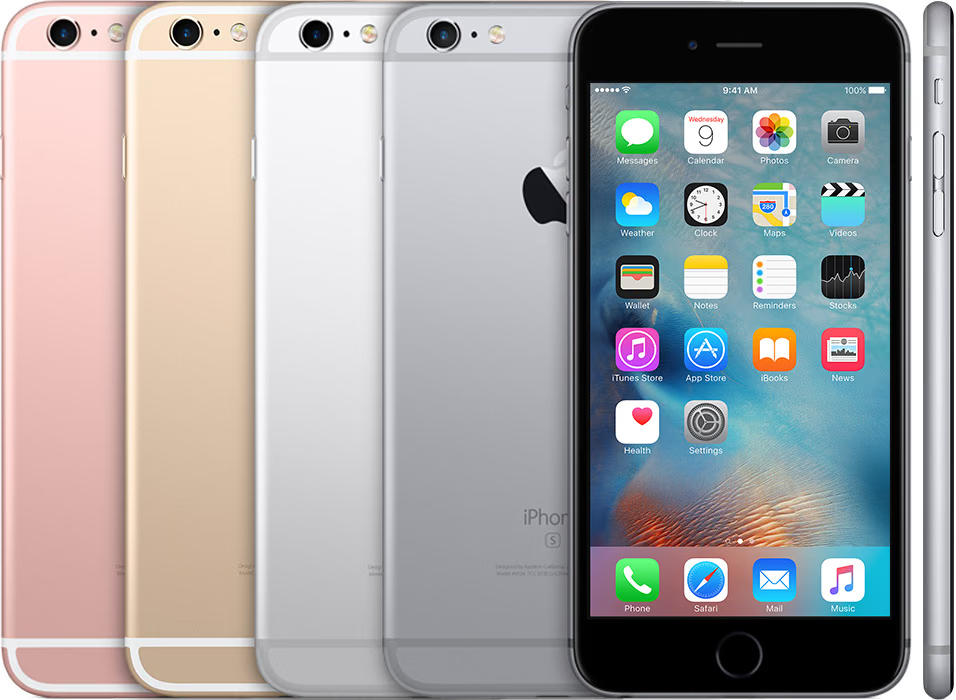
The iPhone 6s Plus made a better argument for carrying the bigger phone
The iPhone 6s Plus should be reviewed from the distance at which someone might hold it to take a video or read a long message. The headline pressure gestures belonged to both of the new 6s models. On the Plus they appeared on a 5.5-inch display, with a larger battery and a camera that added optical stabilisation for video. Those differences offered specific uses to somebody who could carry enough phone to get them. The improvement over the iPhone 6 Plus and the choice against the smaller 6s were two different decisions.
Quick verdict
Retail release in the United States · Archive date
The 6s Plus was worth the weight if you used both the camera and the display for sustained jobs.
Best for: A buyer who recorded short handheld clips and wanted the space to read and review them on one device.
Main benefit: Optical stabilisation supported video as well as stills. The 1080p screen was large enough to inspect an ordinary clip directly.
Biggest drawback: At 192 grams it asked more of hands and pockets than the 6 Plus and either smaller model.
Reviewed version: The 5.5-inch iPhone 6s Plus at its September 2015 retail launch.
Compatibility: 3D Touch shortcuts depended on the app. The Plus offered optical video stabilisation without changing the overall size class of the previous Plus.
Review context: I evaluate the documented retail hardware and the software available in its release window. Regional variants and software changes are identified where they affect the verdict.
I owned this model as part of owning every iPhone. This review looks at the September 25, 2015 US launch of the 6s Plus. Its options included 16 GB, 64 GB and 128 GB, and Apple launched it alongside the 4.7-inch iPhone 6s the same day. Apple’s retail details and model comparison
Video could justify this particular camera
The two 6s phones supported 4K capture. The Plus also extended optical stabilisation to video. Walking a short distance with the camera pointed in roughly one direction or keeping a view of a stationary object can make little movements noticeable. The ability to compensate for some of the hand’s motion was especially useful because video records the movements as well as the thing you are trying to show. It could do more for the quality of a particular clip than changing the phone’s camera setting to its largest resolution.
Related reading

Consider what you expect a clip to contain. Steadiness helps when you plan to watch a detail, read writing on something in the frame or show the subject beside the surroundings. It also helps when the hand is reasonably still and only needs a small correction. An active subject moving without warning and a person walking over uneven ground introduce larger changes. Choosing a stationary position and leaving enough room in the composition can still make a bigger difference. Getting the Plus for video was best understood as making a task easier rather than avoiding the need to think about it. Apple’s iPhone 6s Plus camera and stabilisation specifications
Storage went along with that decision. A few clips could take up a greater proportion of a 16 GB phone than plenty of ordinary snapshots. I would have compared the size of my normal local library with how often I could move video off the phone. People interested in working with 4K clips could get meaningful use from a higher tier and a planned way to store recordings, even if the new resolution was only useful in a few specific jobs.
A larger view changed the way to approach a small layout
Apple kept the 1920-by-1080 display that distinguished the first Plus. The ability to read a line and look at something beside or below it was a better example of the size than watching the same full-screen colour on the two iPhones. On a page with comments or an email with a quoted note, a bit more display gives a reader more context. At the same physical text size there is more visible material. Alternatively, a reader can enlarge the text and give up less room for the surrounding context.
3D Touch offered an extra way to use that space in apps that supported it. A pressing gesture could bring up a preview while the original list was still the place to return to. That was one way to use the larger screen during a search or an exchange with several related messages. The gesture made fewer demands on waiting and navigation when it exposed the useful bit of the preview. Software had to decide what would usefully fit in that view and which controls could be invoked conveniently.
Some uses still worked better at a table. The 6s Plus weighed 192 grams, compared with 172 grams for the original 6 Plus. A larger and heavier phone is easier to manage with two hands when typing, tracing a page or trying an unfamiliar gesture. It has to share the same pockets and bags with other things. I would have compared both 6s phones with the case and carrying setup I expected to use. It is one of the launch decisions where an extra few minutes of ordinary carrying tells a buyer something the specifications cannot.
Related reading

More time away from a charger was a separate benefit
Apple published higher usage estimates for the Plus than for the 6s in a number of tests. On a long day out, a larger battery could make a difference even if the buyer basically liked the smaller model better. I would have looked at which periods in my day actually kept the screen on or made the mobile radio work for long stretches. Reading something saved on the phone asks a different amount from the battery than streaming video in an area with weak reception.
Large phones can also encourage you to use their screens more. Somebody who formerly carried a tablet could use one battery for more work after switching to the Plus. Longer expected life is useful in that situation, with the actual time depending on the jobs that the extra screen takes on. The model made the most sense as a combination of more space and capacity. A buyer who only needed to cover one occasional long evening might be happier with the smaller phone and another way to provide power.
Sound and placement gave the larger phone another practical test. If you planned to rest it against an object, check that the camera stayed clear and the microphone was exposed. A thin case could protect the phone when setting it down while changing how easily it fitted a mount. Someone who regularly recorded from a fixed place might get enough of the desired steadiness that way and have less reason to carry the Plus for its optical stabilisation. The broad display would still be useful when checking the result in the room before deciding whether to film another take.
My verdict on the 6s Plus
For somebody who often filmed short scenes, read on a journey and wanted to use only one device, I would have bought the 6s Plus. The camera, battery and display could each contribute on a single day. The same price and size trade looked weaker for someone who used one hand most of the time or used a separate tablet for longer sessions. The iPhone 6s ran the same generation of software and gave people access to 3D Touch in a smaller device.
I would also have compared it with the 6 Plus for any buyer satisfied with the existing large display. The earlier phone already gave reading its space and carried a useful battery. Shooting more flexible video and processing heavier work gave the newer model a more persuasive reason to upgrade than the diagonal. The iPhone model timeline puts both generations together so the difference is easier to see.
What worked
Optical stabilisation supported video as well as stills. The 1080p screen was large enough to inspect an ordinary clip directly.
A larger battery gave the phone better official playback and talk-time estimates than the 6s.
What bothered me
At 192 grams it asked more of hands and pockets than the 6 Plus and either smaller model.
Handling the phone with one hand remained less practical for longer writing and for controls at the opposite edge.
Who should not buy it
Someone who used a single hand for most interactions and barely used the camera for more than occasional pictures.
Alternatives I would consider
iPhone 6s. The smaller model shared the A9, the larger main camera sensor resolution and pressure gestures. Read my iPhone 6s review.
Evidence and sources
The release date refers to general availability in the named market. The archive filing is ten days later. Feature assessments are editorial judgments based on the documented retail model.
Features, compatibility and rated figures from the maker are manufacturer information. My opinions are identified in the review.
Conclusion
The launch value lay in keeping a wider workspace and improving the work you could do with the camera.
One email a week with practical Mac workflows, useful comparisons and honest tech recommendations.