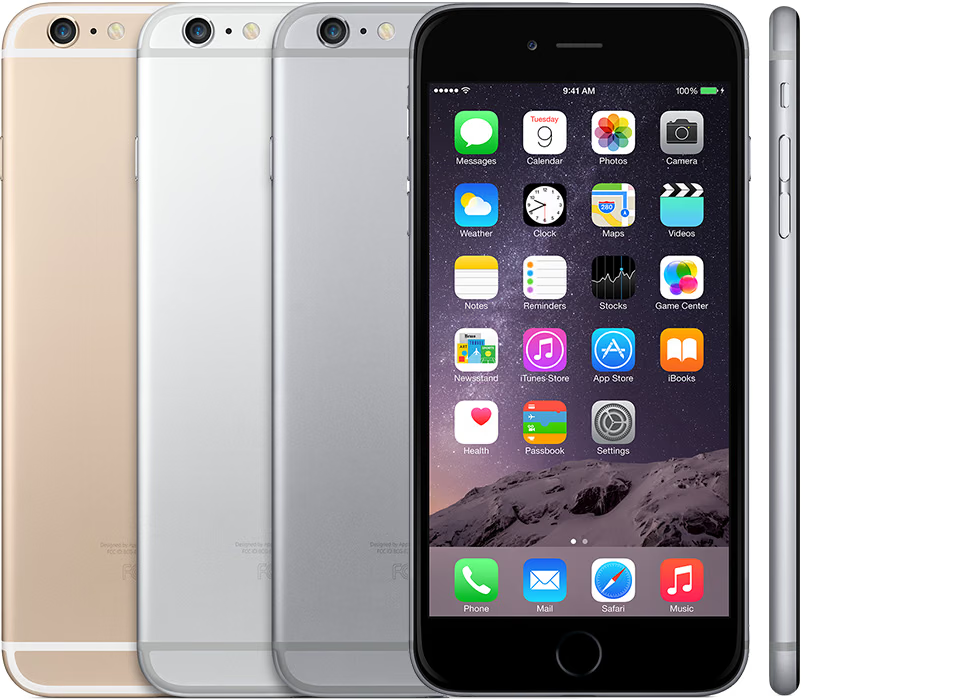
The iPhone 6 Plus was the first iPhone I would choose for long reading
The iPhone 6 Plus created a different choice from the one between the ordinary iPhone and the previous year’s model. A 5.5-inch display brought a handset quite close to a small tablet for some tasks. It was especially useful where you needed to sit with a page or inspect an image and could put your second hand to work. The size followed you after you put the screen away. The right question for a buyer was how often an extra-broad page made up for more effort carrying and reaching around the phone.
Quick verdict
Retail release in the United States · Archive date
Choose the first Plus in its launch context if the display, battery and steadier still photos have clear places in your day.
Best for: A regular reader or traveller who benefits from carrying a wider screen without a second device.
Main benefit: The full HD panel made messages, maps and a wider landscape layout easier to keep visible together.
Biggest drawback: The taller, wider case was harder to handle in motion and carried more material above and below the screen.
Reviewed version: The first 5.5-inch iPhone 6 Plus in the US launch lineup, before the 6s Plus.
Compatibility: The large display could offer alternate layouts in compatible apps. Apple Pay became available after the September retail launch.
Review context: I evaluate the documented retail hardware and the software available in its release window. Regional variants and software changes are identified where they affect the verdict.
I owned the iPhone 6 Plus as part of having every iPhone. Apple put it on sale in the first markets, including the United States, on September 19, 2014. This review is about the first Plus, rather than the next year’s 6s Plus. Both sized iPhone 6 models could be bought on the same launch day subject to stock, so the choice between them could start from what you needed rather than when Apple planned to deliver each one. Apple’s report on the September 19 launch
How much more could you use at once?
The 6 Plus had a 1920-by-1080 panel rated at 401 pixels per inch. It gave a reader a bigger and denser area than the iPhone 6. A good example is two displays of a route at the same map scale. Bigger gives more room to see what comes after the next turn. The difference matters if the reader is interested in a sequence rather than one detail. The same useful overview applies to a long message thread, an annotated image or a small section of a spreadsheet.
Related reading

In landscape on compatible apps, the large design could support a view with more than one part, such as a list beside the item you chose. Switching to a separate opening and returning every time can make reading down a list feel like a succession of small interruptions. Seeing the current choice alongside its neighbours can be easier when the interface fits it. A person thinking about choosing the Plus for this purpose ought to check the apps that mattered most. A screen alone cannot tell an app when to offer a second pane.
There was an important distinction in choosing the phone to replace a tablet. An iPad still provided more room for a long session, especially with input controls visible. The Plus could take the place of a second device for a journey that needed one useful document, a map and some writing. A buyer who often wanted an hour-long workspace would benefit from checking their actual reading and writing habits before assuming the phone covered them. The benefit was real in between a brief glance and a long desk session. Apple’s iPhone 6 Plus technical specifications
A big screen made a different phone in the pocket
Apple listed the 6 Plus at 172 grams and 7.1 millimetres thick. It was thin for the area it occupied, and the extra width and height deserved more attention than that alone. The phone also had substantial areas above and below the display for its camera and Home button. A buyer looking only at a 5.5-inch screen number would miss some of the size they were going to carry. Try it seated, then get up and use it to answer something with one hand. That shows both the benefit of the thin profile and the disadvantages of the longer phone.
The Home button gesture for Reachability could bring a high control down the screen. It was helpful for a moment within a task and left the full width as it was. I would have used two hands for a long message or anything that wanted attention at the far edge. Reaching every caller or text was not equally important. Someone who could pause what they were doing had a much better argument for the Plus than someone always carrying a bag in the other hand. The device did not need to feel awkward in all situations to be a poor choice for the ones you ran into most.
The 6 Plus also carried a battery advantage. Apple listed a substantially longer talk-time and video-playback estimate than with the 6 under its stated testing conditions. Those figures were useful for comparing two phones as sold. Actual time away from a cable depended on network quality and screen use. Choosing the Plus for battery made more sense if you were already comfortable with the size. It could be an expensive way to fix a shorter period away from a charger if you did not actually need its display.
Related reading

The camera was a second reason to prefer the Plus
The wider phone included optical image stabilisation for still photos. Its mechanism helps compensate for some movement from the user, giving the camera a better chance at a usable frame in dim light with a steady subject. An indoor photo of a sign or a seated group asks different things of the camera from a photo of a moving child. Stabilisation alone cannot hold the subject still. Both phones had the eight-megapixel camera and faster focusing technology. I would have tried the Plus for the conditions where the improvement could help rather than assuming the cameras were different in every bright scene.
The display was also useful for assessing a picture before leaving the location. An object near the edge, a slight tilt or the detail around a face can be easier to notice with a bigger image. That capability applied once the photograph was taken and did not depend on the stabiliser. At launch it justified some of the phone’s area even to a buyer who took pictures in good light. A photographer interested in taking long hand-held videos could not count on the still-camera optical stabilisation behaving like the later 6s Plus video feature. Apple’s specifications at the 2014 introduction
The bigger model earned a place of its own
An eligible US buyer saw the 16 GB model quoted at $299 with a two-year contract, $100 above the 16 GB iPhone 6 under its launch terms. The difference bought the screen, battery and optical stabilisation. An owner with a large local photo or video library also had to budget for enough storage. It was possible to buy extra space in the ordinary iPhone 6 and carry less phone for a similar upfront price. Those were competing ways to improve a daily routine.
I would have bought the 6 Plus for long reading and time away from a desk, if my usual pocket and hand could accommodate it. For short messages and frequent use in motion, the iPhone 6 was a more flexible choice. Seeing both in the iPhone review timeline matters because the first Plus was a meaningful different model. It gave a buyer a small, dependable view for things that were just too broad to see comfortably through earlier iPhones.
What worked
The full HD panel made messages, maps and a wider landscape layout easier to keep visible together.
Optical stabilisation improved the chances of a usable photo of a still subject when the person holding the phone moved slightly.
What bothered me
The taller, wider case was harder to handle in motion and carried more material above and below the screen.
The screen size alone could not give an old app a well-designed second pane, so some extra space was used mainly for magnification.
Who should not buy it
Someone who keeps one hand occupied during much of the day and mostly handles brief notifications and messages.
Alternatives I would consider
iPhone 6. The 4.7-inch sibling shared the A8 and much of the software while being easier to hold and carry. Read my iPhone 6 review.
Evidence and sources
The release date refers to general availability in the named market. The archive filing is ten days later. Feature assessments are editorial judgments based on the documented retail model.
Features, compatibility and rated figures from the maker are manufacturer information. My opinions are identified in the review.
Conclusion
The price premium bought specific physical and camera advantages. Their value depended on the work you did with the wider phone.
One email a week with practical Mac workflows, useful comparisons and honest tech recommendations.