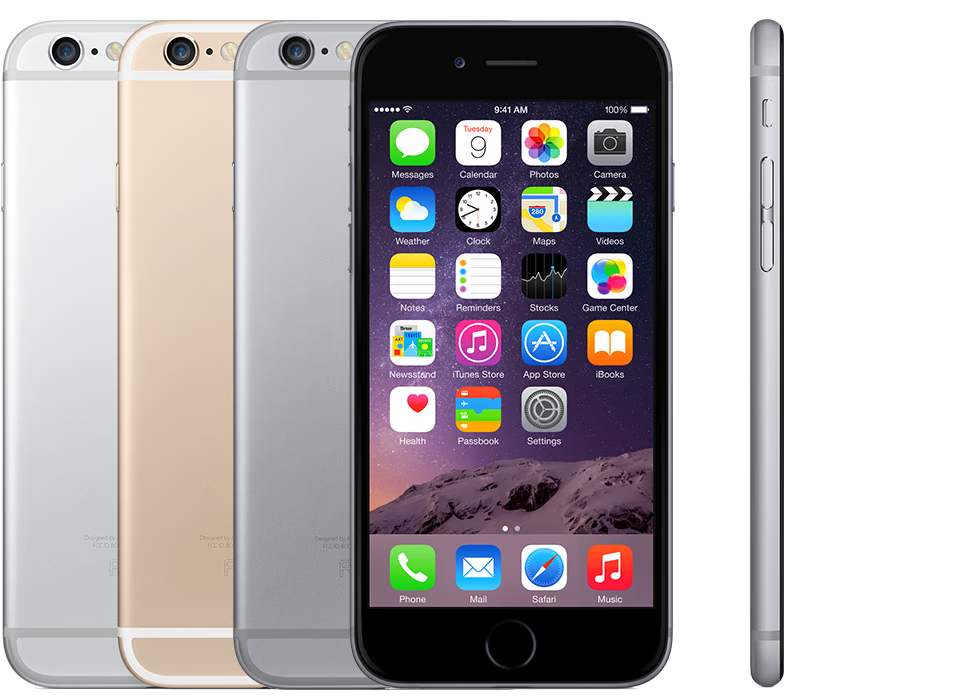
The iPhone 6 made a bigger display part of the ordinary iPhone
When Apple made two larger iPhones in 2014, the smaller one gave buyers the more consequential everyday choice. The iPhone 6 had a 4.7-inch display, up from four inches on the 5s. That grew the width of the phone as well as its height. A message gets easier to read when you can show more words at a comfortable size. The same change gives a thumb farther to travel across the screen. Apple managed to make the device thin and light enough for its bigger size to make sense over a normal day, though it still mattered which hand you used to hold it.
Quick verdict
Retail release in the United States · Archive date
The iPhone 6 was the most adaptable launch choice for somebody who wanted more display than the 5s could offer.
Best for: A buyer who would use the more comfortable space to type or read while still carrying the phone in a typical pocket.
Main benefit: The larger 4.7-inch screen gave familiar apps more room to show the text and the controls together.
Biggest drawback: An extra bit of width changed how easy the phone was to reach with one thumb. The new camera lacked the Plus's optical stabilisation.
Reviewed version: The 4.7-inch iPhone 6 introduced in 2014, with the US launch configuration.
Compatibility: The phone used Lightning and model-specific LTE bands. Apple Pay required a later software release and a participating card issuer and merchant.
Review context: I evaluate the documented retail hardware and the software available in its release window. Regional variants and software changes are identified where they affect the verdict.
I owned the iPhone 6 as part of having every iPhone. This review returns to the September 19, 2014 US retail release. It concerns the 4.7-inch phone. The 5.5-inch iPhone 6 Plus reached stores on the same day and provides a helpful second reference for what the two sizes could actually do. Apple’s report confirming the September 19 launch
More width made familiar information easier to handle
The iPhone 5 had extended the preceding screen mainly by making it taller. The iPhone 6 moved to 1334 by 750 pixels and grew the screen in both directions while retaining 326 pixels per inch. Extra width could make room for one more word on a line or more visible space in a keyboard. There was a practical benefit for a page with several narrow labels beside each other. It became possible to make small details easier to see without making each line look excessively short.
Related reading

A reader could turn that idea around. Instead of holding more small text, a wider display can show much the same material at a larger size. That is a good reason to look at an accessibility setting and the reader’s own important apps in the store. An exact layout changed with the app and how it handled the new screen. A person choosing an older iPhone because it fit a pocket could still gain more from the four-inch dimensions than the new canvas. In the middle of an upgrade from a 5 or 5s, getting the right geometry was a more useful test than comparing home-screen backgrounds.
Reachability helped with some controls by lowering the top of the interface with a double touch of the Home button. That made a button easier to reach at a particular moment. Scrolling, typing and holding the phone in the normal position still depended on the size of the hand. I would have taken a minute to look at a usual message and make a reply without putting the phone on a surface. It separates the benefit of a wider view from the cost of having to adjust your grip while interacting with it.
Why thin was useful here
The aluminium body began to curve into the front glass, and the power button moved to a side where it was easier to reach on a taller phone. Apple listed the iPhone 6 at 129 grams and 6.9 millimetres thick. It had gained 17 grams over the iPhone 5s while growing substantially in area. Both details improve the way to think about the design. An ordinary pocket may accommodate the thickness well when the extra width still changes how the phone feels as you sit or move.
The smooth shape left less of a flat band to catch with a fingertip. Somebody deciding whether to use a case needed to consider grip as well as protection from a fall. A thin case could give the fingers a little more to hold, while making the new phone larger in each dimension. That would be a complication if your earlier phone fitted a small car cradle exactly. I would try its intended case beside the actual place it would go, whether a jacket pocket or a stand, before deciding that a millimetre on the specification sheet answered the question. Apple’s dimensions and hardware specifications
The camera question helped choose between the two sizes
Apple stayed at eight megapixels for the rear camera. Focus Pixels gave the camera a way to focus faster. That matters when the subject is around for only the amount of time it takes to open the camera and move into place. A person taking many photos of static documents could value the bigger view enough to upgrade even if their preceding phone already got the focus right. The longer screen was also a useful way to inspect the result while still in front of the subject.
The 6 Plus had optical image stabilisation for stills. It could counter some of the movement of the hand. A subject moving through a poorly lit room could still look blurred, since moving the lens to steady the camera does not keep the subject itself still. That is a more precise reason to consider the Plus than saying it simply took better pictures. I would give the Plus more weight for subjects where steadiness made a difference. I would choose the smaller phone if I did most of my photography in brighter circumstances and wanted easier handling.
Related reading

Apple also supported higher frame rate modes for video and a 128 GB option for people carrying substantial files. Those capabilities were more relevant to somebody who worked with video on the device. The two launch sizes shared the A8 and the operation of most apps, so the reasons to choose one were mainly about display, camera steadiness, battery and the physical object. Apple’s original comparison of iPhone 6 and 6 Plus
A payment feature remained a future part of the offer
Apple showed Apple Pay as part of the iPhone 6 story. At the end of September the phone had the required hardware. The service itself had an October US release. It depended on a supported payment card, a participating merchant and the software update once available. A person ordering in September had reason to value the possibility, although the greater width and the new camera were things you could judge as soon as you opened the box. Expanding this particular feature also depended on agreements outside the device.
Part of the launch was iOS 8, with changes such as text prediction and more options for messages and sharing. An owner of a previous compatible device could try some of those features first. The larger screen could make a different difference to the same software. A keyboard with a suggestion row uses space you could otherwise devote to the message. More display keeps a little bit of what you are responding to in sight while you type. The more useful argument for buying a phone was what that combination did in an existing routine.
My verdict on the 4.7-inch model
I would have picked the iPhone 6 for the extra room to read and write at launch. It made those changes more comfortably for people who were willing to move up from the iPhone 5s but still used a regular pocket for the phone. The iPhone 6 Plus had a much better case for extended reading or a steadier still camera. The iPhone 5s retained the appeal of a narrower design.
The iPhone 6 is worth its own place in the iPhone review timeline because this size changed what Apple considered normal. The phone was still small enough for familiar tasks on the move while giving much more room to view the content once you opened it. That was a useful balance even before the new service Apple advertised with it was ready to use.
What worked
The larger 4.7-inch screen gave familiar apps more room to show the text and the controls together.
A thin design and a power button on the side made it easier to manage the extra height.
What bothered me
An extra bit of width changed how easy the phone was to reach with one thumb. The new camera lacked the Plus's optical stabilisation.
Some older cases, docks and perfectly sized holders had to be replaced or checked before the upgrade.
Who should not buy it
Someone whose main interest was using the optical stabiliser offered by the Plus or retaining the narrow size of the 5s.
Alternatives I would consider
iPhone 6 Plus. The larger first-wave iPhone gave long reading and still photos more room at the expense of handling and size. Read my iPhone 6 Plus review.
Evidence and sources
The release date refers to general availability in the named market. The archive filing is ten days later. Feature assessments are editorial judgments based on the documented retail model.
Features, compatibility and rated figures from the maker are manufacturer information. My opinions are identified in the review.
Conclusion
The useful part of the upgrade was the larger view on the day you bought it. Later payment support was a separate benefit.
One email a week with practical Mac workflows, useful comparisons and honest tech recommendations.