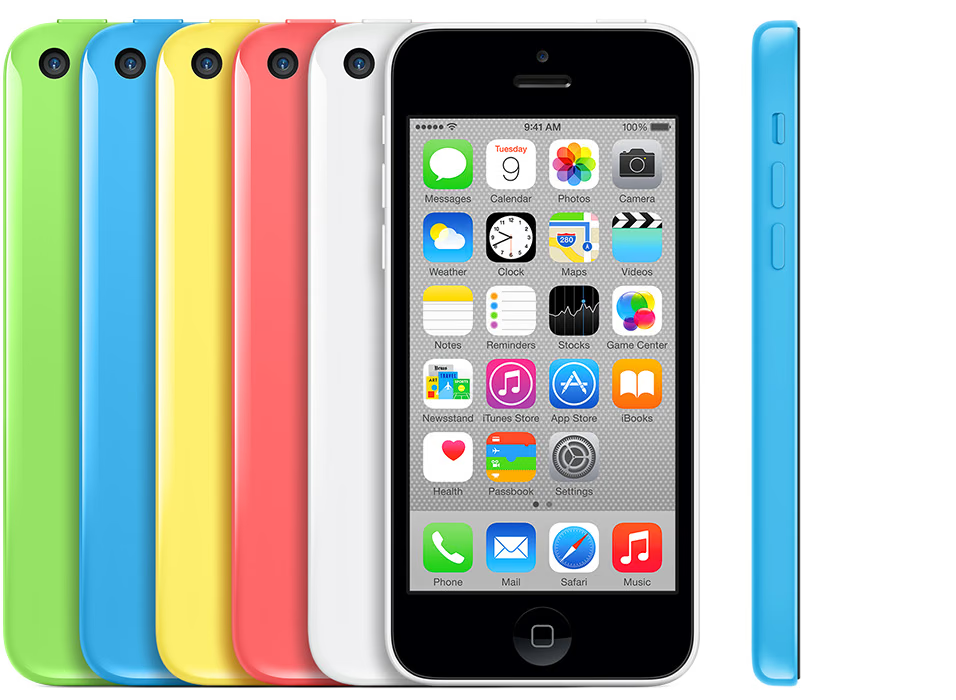
The iPhone 5c made the previous year’s hardware its own phone
The useful way to read the iPhone 5c is to put it beside the iPhone 5 and the 5s that shared its release day. It kept the 5’s general performance and screen size. Apple gave it a different body, a better front camera and support for additional LTE bands. The 5s beside it made a separate offer around new hardware. The 5c made sense to a buyer who already knew what they wanted a four-inch iPhone to do and wanted to spend less at the start of a qualifying US contract.
Quick verdict
Retail release in the United States · Archive date
The iPhone 5c was the useful lower-cost choice for someone who wanted a new four-inch iPhone without a particular need for Touch ID.
Best for: A buyer who wanted familiar iPhone apps and a different colour, or needed extra storage on the same eligible US contract budget.
Main benefit: The A6 and the sharp four-inch screen supported everyday work at a lower upfront cost than the 5s.
Biggest drawback: It weighed more than the iPhone 5 and kept a Home button without fingerprint recognition.
Reviewed version: The iPhone 5c in its initial 16 GB and 32 GB versions. Apple later sold an 8 GB edition in some markets.
Compatibility: Lightning accessories and LTE service depended on fit, the exact model and carrier bands. The 5c's shell was a different size from the iPhone 5.
Review context: I evaluate the documented retail hardware and the software available in its release window. Regional variants and software changes are identified where they affect the verdict.
I owned the 5c as part of having every iPhone. I liked that Apple took the outer design seriously on the less expensive of two new phones. Apple confirms that it went on sale on September 20, 2013, sharing a launch date with the 5s in the United States and ten other listed markets. The prices here refer to the US launch and its two-year contract requirements. Apple’s comparison and launch terms
Living with the plastic was part of the choice
The colour came from the outer polycarbonate shell. Apple built it around a steel structure. The colours gave a buyer something other than a silver or dark metal case to recognise. It also made the model easy to tell apart from a 5s on a table. I like that a buyer could choose a bright phone without depending on a case to make it distinctive. A case still had the job of giving the phone more protection, and a compatible clear or open case could leave some of the colour visible.
Related reading

The new outer design came with different dimensions and weight. At Apple’s listed 132 grams the 5c was 20 grams heavier than the iPhone 5 and the 5s. The rounded profile played its own part in how the device sat in a hand. Weight still mattered if you intended to carry it alongside other objects all day. Someone who had chosen the 5 mainly for how little it weighed had a concrete reason to pay attention to the 5c in a shop before moving over. Someone coming from a model with a thicker body could instead find it easy to handle.
Fit also mattered because the four-inch label only gave the screen diagonal. The 5c’s shell made it a little wider and deeper than the 5. A case that fitted the preceding phone would not automatically protect the edges and line up with the controls on the 5c. A charger with a Lightning lead had a better chance of remaining useful than a tight dock designed around another iPhone body. Apple’s original iPhone 5c announcement
What the familiar hardware still did well
Apple used the A6 processor, a four-inch Retina screen and an eight-megapixel rear camera. That package had already made a good basis for full webpages, small videos and local apps on the iPhone 5. A person shopping on launch day could therefore look at real apps of the time and see what they could do. The phone made good sense for calls, messaging, everyday photography and reading. The extra performance in the 5s made more sense when somebody had plans for apps that could use it or wanted a particular 5s feature right away.
The display kept its 1136-by-640 shape. It accommodated widescreen material well in landscape. It also made a narrow phone easy to carry, at the expense of width for a large document. A buyer who spent an hour at a time reading small text might rather have changed the text size or picked a larger device. A person who mostly needed a route number, a short review or the passage in a message they had just received could get on with it quickly. The sharp panel helped when the useful bit of text was small.
The camera was suited to routine photographs and familiar video. The front camera was a distinct improvement over the one on the preceding model according to Apple’s launch material. If many of your calls used the front camera in an ordinary room, checking that view gave you a good reason to distinguish this version from a used iPhone 5. The rear camera decision depended more on the differences between the 5c and 5s. The 5s offered extra options such as its new flash arrangement and slow-motion capture. These helped certain scenes. For simply photographing a page and sending the useful part, they were less likely to decide what you should buy.
Related reading

A new system reached older models too
The 5c arrived with iOS 7. Its redesign left the phone looking different from an iPhone 5 in an earlier advertisement, even where the hardware underneath had stayed close. Control Center made certain adjustments accessible without going through the full Settings app. The photo interface and the way apps appeared had changed. A buyer could ask about the changes they would use most. For someone who often moved between music controls and messages, those changes could be much more visible than a new colour.
Apple also made iOS 7 available to compatible older models. Having the new interface by itself was a weak reason for an iPhone 5 owner to buy the 5c. The comparison was more direct for someone new to the line or upgrading from a device that had an older screen and connector. At that point the price, support for the relevant carrier bands and ability to buy the colour you wanted were real parts of the deal.
The 5c still used the Home button without Touch ID. This was worth naming in ordinary terms. Someone who unlocked a phone dozens of times could feel the difference many times a day. A person who rarely locked it or mainly needed it for calls could put less value on a fingerprint reader. A choice between two models can make more sense when you put the thing you repeat most ahead of features that will appear in only a few uses.
Which version would I have chosen?
With qualifying US service, the 16 GB 5c started at $99 and the 32 GB model at $199. The 16 GB 5s was also $199 under the quoted terms. That makes the practical comparison at the crossover about storage and features. Someone carrying a large collection of music or local video could choose the 32 GB 5c for the room. Somebody with a modest library and a reason to prefer Touch ID could choose the 16 GB 5s. The monthly service cost and eligibility also mattered. The reduced upfront price alone would tell a buyer little about the full two years.
I would have chosen the 5c as the more economical new iPhone for ordinary reading, messaging and photography, especially when changing carriers or moving from a generation before the iPhone 5. The bigger changes on the 5s could justify choosing differently if one of them solved a frequent problem. Both belong in the iPhone model timeline. The 5c is worth judging as its own decision about price, colour and a familiar set of capabilities.
What worked
The A6 and the sharp four-inch screen supported everyday work at a lower upfront cost than the 5s.
More LTE bands and an updated front camera gave an owner concrete differences to check against a used iPhone 5.
What bothered me
It weighed more than the iPhone 5 and kept a Home button without fingerprint recognition.
Moving from an existing iPhone 5 to get iOS 7 alone offered little extra because the software was available as an update.
Who should not buy it
Someone who unlocked the phone repeatedly and valued Touch ID enough to give up extra storage.
Alternatives I would consider
iPhone 5s. The premium sibling added fingerprint unlock and a stronger camera at the same screen size. Read my iPhone 5s review.
Evidence and sources
The release date refers to general availability in the named market. The archive filing is ten days later. Feature assessments are editorial judgments based on the documented retail model.
Features, compatibility and rated figures from the maker are manufacturer information. My opinions are identified in the review.
Conclusion
The 32 GB model was an interesting alternative to the 16 GB 5s at the same quoted upfront price.
One email a week with practical Mac workflows, useful comparisons and honest tech recommendations.