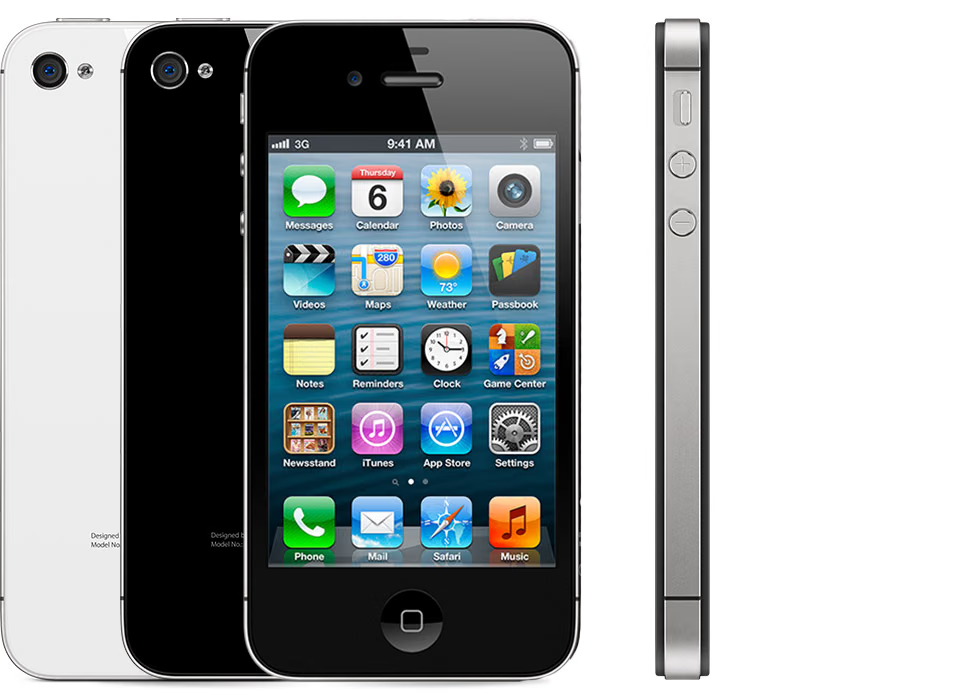
The iPhone 4S was an excellent camera upgrade with an unfinished assistant
The most interesting thing to do with the iPhone 4S at launch was to ask it for something while the screen was out of sight. Setting a reminder gives a better test of that idea than asking the phone to tell a joke. You have a useful result if the right instruction survives the gap between thinking of it, saying it and looking for it later. Siri showed that this could work. The camera gave people something more dependable to judge on the same device. I would have made the buying decision around those two very different strengths.
Quick verdict
Retail release in the United States · Archive date
The 4S was a good upgrade for camera users. Siri had value when its launch languages and services covered a job you repeated.
Best for: People who wanted a more capable compact camera with the size and screen they already liked.
Main benefit: An eight-megapixel camera and 1080p video made the rearranged internals useful straight away.
Biggest drawback: The early voice assistant had a limited choice of languages and could depend on a connection.
Reviewed version: Apple iPhone 4S at its October 2011 US launch, with 16 GB, 32 GB and 64 GB storage options.
Compatibility: Siri beta availability depended on language and connection. Some features benefited earlier iPhones after installing iOS 5.
Review context: I evaluate the documented retail hardware and the software available in its release window. Regional variants and software changes are identified where they affect the verdict.
I owned the 4S as part of having each iPhone. This retrospective looks at the launch hardware and software that arrived in the first wave on October 14, 2011. The Czech Republic was in the next group on October 28. That is why the date in the archive follows the US sale rather than the later Czech release. Apple’s original availability report
Asking for one small thing was where Siri worked best
Siri arrived as a beta. Apple showed a range of actions, some more dependent on language and the services available in a region than others. You could ask for a timer, dictate a short message or call a contact. An instruction with an obvious completion was easiest to assess. A timer can be checked immediately. A dictated message sends your words to somebody else, so being able to see it and correct it before sending matters as much as the speed of speaking.
Related reading

I would have started with reminders because the phone could help at the moment the idea appeared. Imagine carrying a plate out of a kitchen and remembering that you have to fetch something when you leave. A short request can keep that thought from being lost in the next piece of work. The gain is in reaching the reminder tool without opening it and moving through its screens. If the assistant misunderstands the noun or the time, you need a way to fix both. Verifying the important part of the result is what makes a convenient method usable.
This was a more fragile proposition away from an appropriate connection. Speech recognition and service lookups used a network. Launch languages included English, French and German, with more specific regional support for some functions. Czech was outside that launch group. Even for fluent English use, the places and services behind a question depended on where it was being asked. Trying one local request and one simple device action told you more about the software you could use than trying to repeat an American stage demonstration in Czech.
There was room in the phone for both Siri and direct controls. A short request can beat navigating a small screen when your hands are occupied. On a quiet train or in a shared office, tapping can be a better way to avoid telling everyone what you are doing. A design with both methods lets the user choose according to the room and the job. The early assistant made a good case for keeping speech available as one of those methods even with gaps in its coverage. Apple’s Siri beta and language notes at launch
The camera made a stronger case for upgrading
The rear camera went to eight megapixels and full HD video. Apple also changed the lens and sensor and gave the phone faster hardware for processing pictures. The useful question was how much a short use became easier. A buyer photographing an active child has much less control over the moment than someone arranging a still life. Getting the camera ready and making the first exposure while the useful expression is still there has more value than extra fine detail in one file. A camera update that improves detail and reduces the work of capturing it makes sense on a phone that is carried nearly everywhere.
In a darker room the buyer still faced the practical limits of a small camera. Flash can make a nearby face readable while leaving distant parts of the picture dark. Holding the device still helps with some subjects and cannot stop a subject from moving. I would have compared pictures at the size where I planned to share them. Setting that definition before comparing images is an easier way to consider a phone camera than inspecting each pixel against a dedicated camera with a much larger lens.
Video makes the storage decision more visible. A buyer who kept the phone clear by moving photos and videos to a computer could start with 16 GB. The new 64 GB choice made more sense for a bigger local library or a tendency to record repeated clips before moving them. Extra storage was a practical choice for a particular use. It could not make a long recording valuable if the problem came from how the microphone heard a room or how long you could keep the picture steady.
Related reading

An upgrade can be experienced through an update
The A5 chip replaced the older processor in the iPhone 4. More capable graphics were visible to people with appropriate games. Faster work in the camera and while opening apps mattered to a wider group. The screen and the feeling of the outer case were very familiar, so I would have tried the existing iPhone 4 with iOS 5 before assuming I needed the 4S for a different home-screen experience.
iOS 5 gave supported older devices features such as Notification Center and iMessage. Notifications being easier to review was valuable chiefly because the phone had more apps with a reason to interrupt you. The system gave people a way to read back what had arrived rather than treating each alert as a separate moment. iMessage added an option for sending messages between supported Apple devices. You could benefit without owning the exact same iPhone as the recipient, which gave it a wider immediate reach than the first version of FaceTime had enjoyed.
Apple also introduced iCloud with services for content and device backups. It put useful distance between a phone and the computer that previously had to participate in many of its routine jobs. Setup, connection speed and what exactly was backed up still mattered if you relied on it. I would have understood those terms before depending on the software. Using a compatible older phone could show how the service worked before a buyer took on the cost of a newer phone.
My verdict on the 4S
The iPhone 4S stands out for the things it improved within a familiar design. It kept a strong screen and a deliberate physical shape, then improved the camera enough to matter in ordinary use. In its October 2011 launch window I would have picked it for someone moving up from the iPhone 3GS who also wanted a better compact camera. I would have asked an iPhone 4 owner what problem was left after trying iOS 5. A better answer than simple enthusiasm for Siri was a regular task, a supported language and a place where speech was comfortable.
The review belongs between the 4 and the 5 in the iPhone timeline. Its big contribution was a useful new way to ask for one small action, alongside a camera that could stand on its own as a reason to upgrade. Which of those changes mattered most depended on what you needed the phone to do with your hands occupied or the moment already moving.
What worked
An eight-megapixel camera and 1080p video made the rearranged internals useful straight away.
The A5 gave apps more room to process photos and made graphics improvements relevant to suitable games.
What bothered me
The early voice assistant had a limited choice of languages and could depend on a connection.
The 3.5-inch screen and familiar exterior offered little change to somebody looking for a larger view.
Who should not buy it
Someone expecting Czech voice support or whose goal was a meaningfully bigger display.
Alternatives I would consider
iPhone 4. It retained the same basic size and could use iOS 5, while the 4S offered the camera and Siri improvements. Read my iPhone 4 review.
Evidence and sources
The release date refers to general availability in the named market. The archive filing is ten days later. Feature assessments are editorial judgments based on the documented retail model.
Features, compatibility and rated figures from the maker are manufacturer information. My opinions are identified in the review.
Conclusion
The strongest reason to choose it on day one was photography. Voice was another useful control to try where it fitted.
One email a week with practical Mac workflows, useful comparisons and honest tech recommendations.