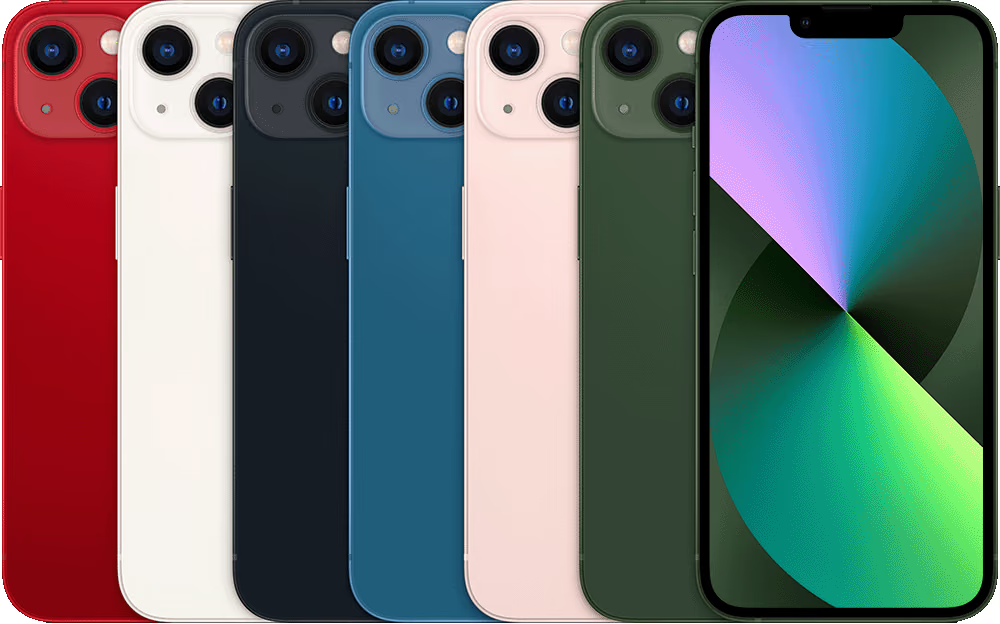
The iPhone 13 made the everyday 6.1-inch model easier to choose for a long day
The regular iPhone 13 kept a screen size and case profile many buyers already knew from the 12. The useful upgrade was what you could do for longer and in a wider range of light. Apple claimed better battery life, put sensor-shift stabilisation on the main camera and doubled the starting storage. These were ways to make the phone more comfortable for someone who intended to record, read or spend long periods away from a charger. The 13 Pro offered real differences in lenses and refresh rate, which made it possible to judge what the regular 13 gave you on its own.
Quick verdict
Retail release in the United States · Archive date
I would have chosen the 13 when the regular size worked and better ordinary photography and storage mattered more than a dedicated telephoto or adaptive fast screen.
Best for: Someone who regularly captured stills or videos on the main camera and intended to keep enough files and apps on the phone without buying additional storage immediately.
Main benefit: Sensor-shift optical stabilisation reached the standard iPhone, alongside the larger base storage and a brighter display.
Biggest drawback: It had no dedicated telephoto or ProMotion. Picking the regular model still meant deciding whether their use was important enough to upgrade.
Reviewed version: The 6.1-inch iPhone 13 sold from September 24, 2021 with two rear cameras and 128 GB at entry.
Compatibility: It started on iOS 15 with Lightning, MagSafe, compatible 5G and A15. Cinematic video at launch had its own format limits and needed the right workflow.
Review context: I evaluate the documented retail hardware and the software available in its release window. Regional variants and software changes are identified where they affect the verdict.
I owned the iPhone 13 as part of having every iPhone. This retrospective concerns the September 24, 2021 US retail launch. The mini, Pro and Pro Max arrived that day too. Choosing among them involved several available sizes and a good chance to compare what the extra camera and display features did. Apple’s September release of all four iPhone 13 models
Battery life made more difference for some people than for others
Apple’s launch estimate put the iPhone 13 at up to two and a half hours longer than the iPhone 12 in a day of use. That is a company estimate and a practical reason to look more closely, with the outcome depending on what a person actually did. Having a lot of small operations spaced out from the time you leave home until you return is one good way to judge an upgrade. Constant navigation or a long stretch of video recording is a different use. Paying for the newest device may matter most when you need it to finish a recurring day without requiring a stop to charge near the end.
Related reading

I would compare the size of the 13 with the mini before discussing which one should last longer. You might find the smaller phone much easier to live with in every other way. The 6.1-inch model would be more useful to someone whose most important activity took place late in a long day. Batteries are also subject to differences in network, brightness and how much work each app does. I would think about the least convenient moment to run low and decide how often it happened.
The smaller camera area at the top of the screen kept the shape recognisable and left a little more room around it. It was less important than more physical space to read or finish a useful action. A buyer who wanted a 6.1-inch display could judge the phone with an ordinary map or document before deciding that the amount of extra space above the content affected their use. Apple’s design and battery comparisons
The main camera inherited a useful kind of stabilisation
Apple added sensor-shift optical stabilisation to the main rear camera. It helps manage some small movements of the phone while capturing an image. That is useful for a nearby detail in dim light or a person trying to keep the edges of a short clip steady. A moving subject and a moving camera are two distinct problems. Trying to photograph both a still sign and a moving subject gives a better idea of which change the phone can make on its own.
The regular 13 kept a Wide and an Ultra Wide. A person who wanted to fit more of a room into a picture could use the additional view. Someone who frequently had to work from farther away still had a reason to try the Pro’s separate longer lens. I would have looked through the camera modes for a subject that fit or did not fit before thinking about whether the rest of the Pro could be useful. The stronger main camera stood up as a reason to buy the regular phone if one broad point of view already did the most important work.
Apple also introduced Cinematic mode, which could move focus between subjects and allow adjustments afterward on supported software. The first release had a 1080p limit at 30 frames per second. That could still produce a useful result if moving attention from one speaker to another was part of the shot. A normal clip with a steady focus could be the easier way to communicate a simple moment. Choosing the new mode made sense if the thing that changed in the scene was the thing you wanted somebody to notice.
Related reading

Storage and display were clear ways to choose a tier
The regular 13 started with 128 GB. This gave someone who kept plenty of messages, photos and a few clips more room than a 64 GB iPhone 12. An owner with a very large local collection still had a reason to compare the next tier and the way it could be backed up. Someone who bought a new phone for the camera might count space during a long trip rather than looking only at unused storage on the first day.
The display did not offer the Pro’s adaptive high refresh rate. This was visible in situations such as scrolling through a long list, and less important when a page was still and you were reading it. A person who cared about the feel of frequent motion could check both. The 6.1-inch screen was sharp and comfortable for static jobs, and the main choice at launch was how often you expected to show movement or take a picture from farther away.
Agree on the amount of scene you want in a video
A family event or a short work clip can be a good reason to try all the framing options. Before using Cinematic mode by habit, film a person speaking against a changing background. See if a separation between the speaker and the background helps or obscures what happened. Someone filming a demonstration might want the viewer to see a work surface or the hands at the same time. A plain clip could often be easier to share and explain. The better Wide camera helped whichever presentation you chose.
My verdict on the regular 13
I would have chosen the iPhone 13 for someone who wanted reliable everyday room for reading, photography and storage and did not depend on the Pro’s camera or refresh rate. The iPhone 12 remained a reasonable comparison for an owner who rarely needed longer battery life or the new recording options. The iPhone 13 mini was a better physical choice for someone who knew a smaller phone would help throughout the day. The iPhone model timeline puts those choices in the generation where 128 GB and the improved main camera became part of the regular offer.
What worked
Sensor-shift optical stabilisation reached the standard iPhone, alongside the larger base storage and a brighter display.
The larger display made the year's brightness update at least as applicable here as on the mini while retaining the two standard fields of view.
What bothered me
It had no dedicated telephoto or ProMotion. Picking the regular model still meant deciding whether their use was important enough to upgrade.
A focus transition that looked right on the phone needed to make sense in the format and editing context the viewer would actually receive.
Who should not buy it
A buyer regularly shooting details from a fixed distance or trying to see a very small detail in focus.
Alternatives I would consider
iPhone 13 Pro. The Pro adds a longer rear view, macro and the faster display at the same 6.1-inch diagonal but with a heavier build. Read my iPhone 13 Pro review.
Evidence and sources
The release date refers to general availability in the named market. The archive filing is ten days later. Feature assessments are editorial judgments based on the documented retail model.
Features, compatibility and rated figures from the maker are manufacturer information. My opinions are identified in the review.
Conclusion
The higher entry capacity and useful camera hardware made sense even for people who would only use Cinematic mode occasionally. A lower-priced equivalent 12 still deserved comparison.
One email a week with practical Mac workflows, useful comparisons and honest tech recommendations.